
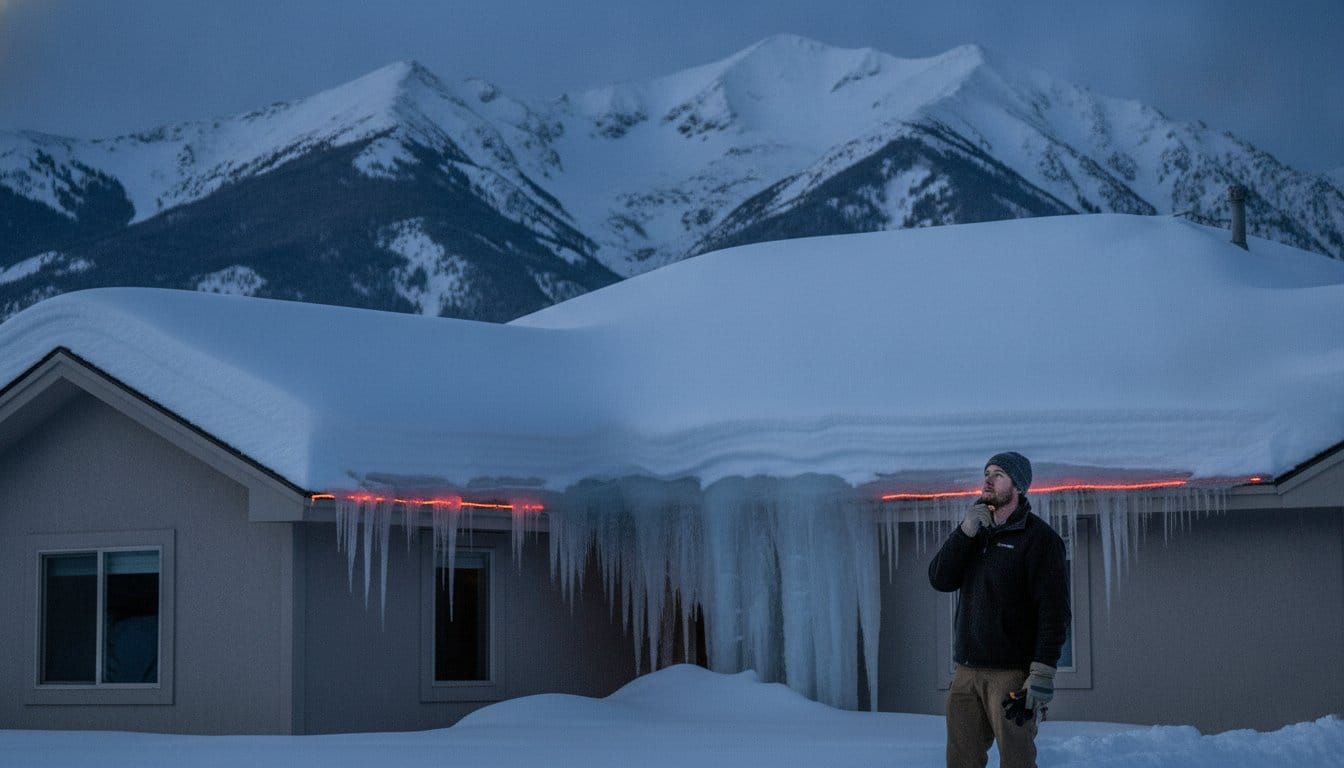
Your roof’s unique architecture, not just the heavy Wasatch snow, is the primary reason ice dams threaten your home’s structural integrity. Most Utah homeowners wait until they see a massive icicle or a damp spot on the ceiling before they realize there’s a problem. It’s exhausting to deal with the annual cycle of emergency steaming costs and the constant worry that this winter might be the one that leads to permanent water damage. Performing a professional ice dam risk assessment Utah is the only way to break this cycle before the first blizzard arrives.
We believe that prevention is the highest form of craftsmanship. This guide will help you identify your property’s specific vulnerabilities and explain why professional-grade systems are the only reliable way to protect your investment. You’ll learn how to evaluate your roof’s risk level, understand the critical differences between retail heat tape and code-compliant self-regulating heat cable, and build a permanent plan for winter safety. We’ll also cover essential Utah electrical code requirements to ensure your protection system is as safe as it is effective.
Key Takeaways
- Understand why Utah’s unique freeze-thaw cycles and high elevation necessitate a proactive, technical approach to roof safety.
- Identify high-risk architectural zones like north-facing eaves and complex valleys that naturally collect dangerous snow reservoirs.
- Learn why even the best insulation can’t stop thermal bridging and why active protection is often required for total security.
- Discover how to conduct a preliminary ice dam risk assessment Utah to spot early warning signs like compressed insulation or attic light gaps.
- Gain clarity on how custom-designed self-regulating heat cable systems provide a permanent, code-compliant shield for your home’s structure.
Understanding Ice Dam Risk Assessment in Utah’s Climate
An ice dam risk assessment Utah is far more than a cursory glance at your roofline from the sidewalk. It is a systematic, technical evaluation of how your home’s unique architecture, thermal performance, and geographic orientation interact with the local environment. While a standard visual inspection might identify an existing icicle, a professional risk audit uses structural data and thermal analysis to predict where water will infiltrate before the first winter storm arrives. This process identifies the “math” of your roof, calculating how snow loads and heat loss will behave during a typical Wasatch winter.
Utah’s climate creates a unique set of challenges that make these assessments mandatory for property protection. High elevation combined with aggressive freeze-thaw cycles means your roof can experience melting temperatures during a sunny afternoon and sub-freezing conditions by nightfall. Climate trends heading into 2026 show shifting risk zones along the Wasatch Front, where traditionally “safe” lower-elevation homes are now experiencing increased ice accumulation due to more volatile moisture patterns and rapid temperature swings.
The Anatomy of a Utah Ice Dam
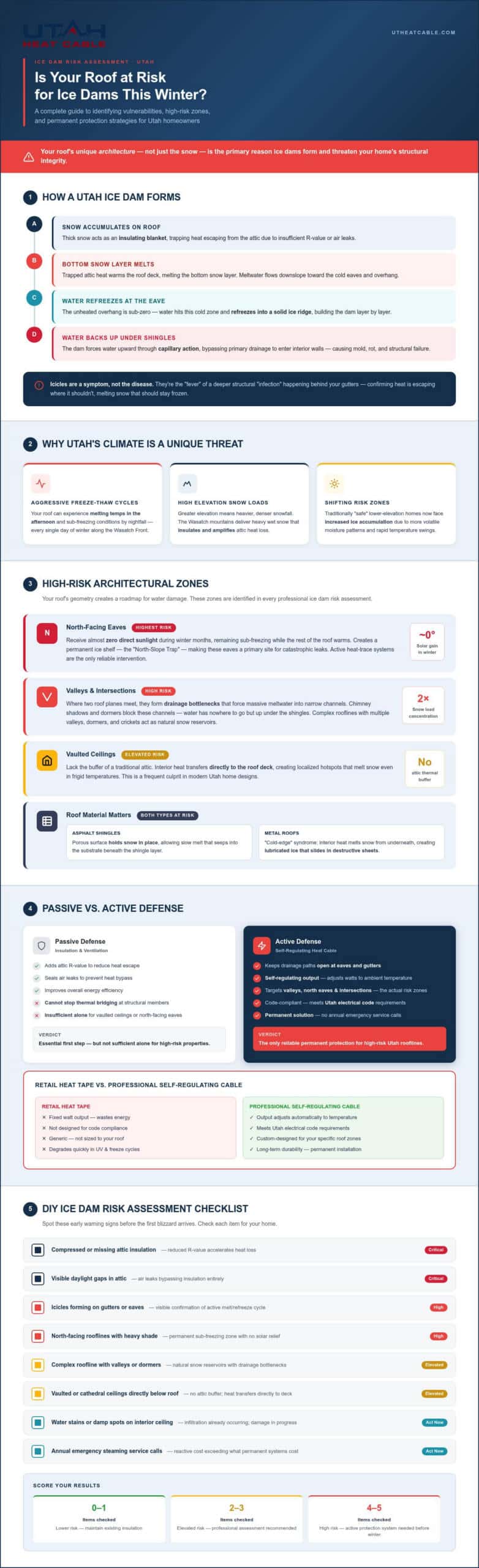
Understanding the physics of your roof deck is the first step toward long-term protection. Thick snow actually acts as an insulator, trapping heat that escapes from your attic due to insufficient R-value or air leaks. This trapped heat melts the bottom layer of snow, which then flows down the roof until it reaches the cold eaves. Once that water hits the unheated overhang, it refreezes into a solid ridge of ice. In this scenario, icicles are merely the “fever” indicating a deeper structural “infection” occurring behind your gutters.
Why “Wait and See” is a Costly Strategy
Relying on emergency steaming services every February is a reactive approach that drains your maintenance budget without solving the underlying problem. The cost of a few emergency call-outs often exceeds the investment required for a permanent, professional-grade de-icing system. Beyond the immediate expense, a “wait and see” attitude invites hidden damage such as mold growth in attic insulation and wood rot in your rafters. Ice dams create a standing pool of water that moves upward under shingles through capillary action, bypassing your roof’s primary drainage system to enter your home’s interior walls.
Architectural Vulnerabilities: The High-Risk Zones
Your roof’s geometry often creates a roadmap for water damage. During a comprehensive ice dam risk assessment Utah, we look past the shingles to identify how specific architectural features interact with the sun and wind. For instance, vaulted ceilings are a frequent culprit because they lack the buffer of a traditional attic. This design allows interior heat to transfer directly to the roof deck, creating localized hotspots that melt snow even in frigid temperatures. Whether you have asphalt shingles or a metal roof, the underlying physics of heat loss remains the same, though the risks manifest differently.
Asphalt shingles are porous and hold snow in place, allowing it to melt slowly and seep into the substrate. Metal roofs, while slick, often suffer from “cold-edge” syndrome where the entire panel stays cold, but the interior heat still melts the snow from underneath. This creates a layer of lubricated ice that can slide off in large, destructive sheets. Identifying these variables is essential for designing a system that actually works.
The North-Facing Roof Challenge
The “North-Slope Trap” is perhaps the most persistent issue for Utah homeowners. Because these eaves receive almost zero direct sunlight during the winter months, they remain at sub-freezing temperatures while the rest of the roof might be warming up. This creates a permanent shelf for ice to accumulate. To protect these areas, we often recommend this guide on north-facing roofs which outlines how targeted heat-trace systems provide the necessary thermal energy to keep drainage paths open. Without this active intervention, north-facing eaves become a primary site for catastrophic leaks.
Valleys and Intersections: The Snow Collectors
Complex rooflines with multiple valleys, dormers, and crickets act as natural reservoirs. When two roof planes meet, they create a drainage bottleneck that forces massive amounts of meltwater into a narrow channel. If that channel is blocked by a shadow zone created by a large chimney or a second-story wall, the water has nowhere to go but up. A professional custom design-build solution ensures that these intersections are equipped with the right balance of snow retention and self-regulating cable to manage these concentrated loads safely.
Key areas we evaluate during an audit include:
- Valleys: Where two planes funnel water into a single, high-volume path.
- Dormers: Which create vertical walls that trap blowing snow and block sunlight.
- Crickets: Small peaks behind chimneys that can collect debris and ice, leading to flashing failure.
Passive vs. Active Defense: Where Does Your Risk End?
A thorough ice dam risk assessment Utah often reveals a sobering reality: even a home built to the highest modern standards can still fall victim to ice accumulation. Passive defense strategies, such as insulation and ventilation, are designed to keep the roof deck cold by separating the living space from the exterior. However, in high-alpine environments or during severe Wasatch winters, these measures often reach their physical limits. When passive systems fail, active intervention becomes the necessary shield for your property.
Thermal bridging is one of the primary reasons passive solutions fall short. While you might have R-60 blown-in insulation, the wooden rafters of your roof structure act as conductors. These “bridges” allow heat to bypass your insulation entirely, creating warm strips on the roof deck that initiate the melt-refreeze cycle. Additionally, roof snow retention systems play a vital role in managing the physical risk of heavy snow loads; they prevent dangerous “roof avalanches” while keeping snow in place for controlled melting.
Insulation and Ventilation: The Passive Baseline
Current 2026 Utah building standards often suggest R-60 insulation for optimal thermal performance. During an assessment, we check for compressed batts or air leaks that compromise this value. We also look for signs of poor ventilation, such as blocked soffit vents or stagnant air in the attic gables. If your attic cannot “breathe,” heat builds up and turns your roof into a radiator. Even with perfect ventilation, the extreme temperature differentials in mountain towns like Park City can still cause ice dams to form on unheated eaves.
The Active Solution: Self-Regulating Heat Cable
When passive measures aren’t enough, active systems provide a reliable “path of least resistance” for meltwater. It’s critical to understand the technical difference between self-regulating vs constant wattage heat cable. Unlike cheap retail “heat tape” that often burns out after one season, professional-grade self-regulating cable adjusts its power output based on the ambient temperature. This technology ensures the cable is only as hot as it needs to be, providing energy-efficient protection that keeps gutters and downspouts clear all winter long. By designing a custom layout, we ensure that water has a clear, heated path from the roof’s edge all the way to the ground.
The DIY Ice Dam Risk Assessment Checklist
While a professional audit provides the technical data needed for a permanent solution, you can begin your own ice dam risk assessment Utah by walking through a few critical steps. Identifying vulnerabilities early allows you to prioritize repairs before the first heavy snow accumulation. Use this checklist to evaluate your home’s readiness for the coming winter months.
- Step 1: Map your roof orientation. Take note of every north-facing eave and any area shaded by nearby trees or second-story walls. These zones stay frozen longer and are your primary risk areas.
- Step 2: Inspect the attic space. Look for water stains on the rafters or compressed insulation near the eaves. If you see light gaps coming from the roofline, it means heat is escaping and melting the snow above.
- Step 3: Audit your gutters. Ensure they are sloped correctly toward the downspouts. Any debris, even a thin layer of pine needles, will trap water and accelerate ice formation.
- Step 4: Review historical problem spots. Think back to previous winters. If you consistently saw massive icicles in the same corner every February, that is a structural “hot spot” that requires active protection.
- Step 5: Identify internal heat leaks. Check for recessed lighting or unsealed attic bypasses in the rooms directly below the roof. These fixtures act like chimneys for interior heat.
Evaluating Gutter and Downspout Health
Functional drainage is the backbone of any winter protection plan. When downspouts freeze solid, meltwater backs up behind the ice and eventually forces its way under your fascia boards and into your soffits. A professional gutter heat trace system is often the missing link in a home’s defense strategy. Before the first freeze, test your downspouts by running a garden hose through the gutters; if the water doesn’t exit freely at the bottom, your risk of ice backup is significantly higher.
Spotting the “Silent Killers”: Internal Signs of Risk
Water damage often starts long before you see a drip. Look for peeling paint or bubbling wallpaper near the junction where your walls meet the ceiling. These are classic signs that moisture is already infiltrating the wall cavity from an ice dam. High humidity levels or persistent condensation on your windows can also indicate that your attic ventilation isn’t managing moisture correctly. By aiming a handheld infrared thermometer at your ceiling’s corners on a cold day, you can identify specific cold spots where insulation is failing or heat is escaping through the top plate. If your DIY check reveals multiple red flags, it is time to schedule a professional ice dam risk assessment Utah to secure your home.
Professional Assessment and Custom System Design
A professional ice dam risk assessment Utah is the transition from identifying a problem to implementing a permanent solution. While a DIY checklist helps you spot red flags, a licensed electrical contractor brings the technical precision necessary to design a system that handles the Wasatch Front’s specific snow loads. We don’t just throw cable on a roof; we use a design-build approach that accounts for the “math” of your architecture. This ensures that every valley and eave has the exact wattage needed to maintain a clear drainage path. This custom engineering prevents the over-engineering that leads to high utility bills while avoiding the under-engineering that allows ice to persist.
Advanced controllers and automation are the brains of a modern de-icing system. By using sensors that detect both moisture and temperature, these controllers ensure your self-regulating heat cable only draws power when the environmental conditions actually require it. This precision significantly reduces long-term energy costs compared to manual systems that often get left on for days at a time. It’s about providing the right amount of heat at the right moment.
Meeting the 2026 Utah Electrical Code
Safety is as important as performance. Current 2026 Utah electrical standards require specific GFCI protection and dedicated circuits for all heat-trace installations. DIY “plug-and-play” systems often fail to meet these requirements, creating potential fire hazards or tripping breakers when you need protection most. When a professional handles your installation, you receive a code-compliant system that protects your insurance coverage. Having a documented “Certificate of Completion” from a licensed specialist also adds tangible value to your home during a resale; it proves the property is shielded from winter water damage by a system that meets every local safety standard.
Next Steps: Securing Your Utah Property
The best time to address your roof’s vulnerabilities is before the first snowflake falls. Designing and installing a custom system during the summer or fall months ensures you aren’t competing for emergency services during a mid-winter blizzard. Learning the nuances of winterizing your roof with heat cable is a proactive investment in your home’s structural longevity. If your DIY assessment revealed any signs of risk, it’s time to move toward a permanent fix. You can schedule your professional ice dam risk assessment today to ensure your property remains a safe, dry sanctuary regardless of what the 2026 winter season brings.
Secure Your Home Before the First Freeze
Understanding the architectural “math” of your roof is the difference between constant winter anxiety and total peace of mind. While a DIY checklist reveals obvious vulnerabilities like north-facing eaves or attic heat leaks, a technical ice dam risk assessment Utah provides the data needed for a permanent, engineered solution. Protecting your property requires moving beyond temporary fixes. It means embracing a professional-grade defense that respects the unique demands of our high-alpine environment.
As a Licensed Electrical Contractor and Custom Design-Build Specialist, we bring elite expertise in high-alpine Utah climates to every project. We don’t just clear ice; we design systems that prevent it from ever taking hold. Don’t wait for a ceiling leak to discover your roof’s hidden weaknesses. Request a Professional Ice Dam Risk Assessment from Utah Heat Cable today and ensure your home is ready for the coming winter. Your property is your greatest investment, and it deserves the highest standard of workmanship.
Frequently Asked Questions
How do I know if my Utah home is at high risk for ice dams?
High-risk homes typically feature north-facing eaves that receive little winter sun or complex architectural details like dormers and valleys. If your home has vaulted ceilings or insufficient attic insulation, heat loss is likely melting snow from underneath. A professional ice dam risk assessment Utah can identify these thermal bypasses and structural vulnerabilities before they lead to interior water damage. Identifying these red flags early is the best way to prevent a mid-winter emergency.
Does a new roof prevent ice dams from forming?
A new roof alone won’t stop ice dams because they’re caused by heat loss and architectural design rather than shingle quality. While new shingles and modern underlayment provide better water resistance, they don’t address the underlying temperature imbalance between the heated living space and the cold eaves. Without improving insulation, ventilation, or adding active heat-trace systems, the same physics that caused dams on your old roof will eventually affect the new one.
Is it normal to have large icicles on my gutters in the winter?
Large icicles are not a normal part of a healthy roof; they’re an indicator of excessive heat loss or poor drainage. When you see massive ice formations hanging from your gutters, it means snow is melting on the upper roof and refreezing at the unheated edge. This cycle puts immense weight on your gutter system and indicates that water is likely backing up under your shingles, which can rot your fascia boards and roof deck.
Can I perform my own ice dam risk assessment?
You can perform a preliminary check by mapping shaded roof zones and inspecting your attic for water stains or compressed insulation. However, a professional ice dam risk assessment Utah uses technical tools to find hidden thermal bridges that the naked eye misses. Professionals evaluate the entire system, including electrical capacity and code compliance, to ensure that any proposed solution is both safe and effective for long-term property protection and seasonal peace of mind.
Does homeowners insurance cover damage caused by ice dams?
Most homeowners insurance policies cover the resulting interior damage from an ice dam, such as ruined drywall or mold, but they rarely pay for the professional removal of the ice itself. They also don’t cover the cost of installing prevention systems like heat cable. It’s always better to invest in a permanent solution than to rely on a claim, as repeated water damage can lead to higher premiums or even policy cancellations over time.
What is the most effective way to stop ice dams permanently in Utah?
The most reliable method for permanent protection in Utah is a custom-designed self-regulating heat cable system. This active defense creates a clear path for meltwater to reach the ground regardless of the outside temperature. When paired with optimized attic insulation and snow retention, these systems address both the thermal cause and the physical symptoms of ice accumulation. This multi-layered approach ensures your roof remains clear during even the heaviest Wasatch snow cycles.
How much does a professional heat cable system cost to run?
Operating costs vary based on the total linear footage of the cable and local utility rates. By using advanced controllers with moisture and temperature sensors, you ensure the system only draws power when environmental conditions actually require it. This automation prevents the system from running during dry, cold spells or warm, sunny days. Modern self-regulating technology is much more energy-efficient than older constant-wattage systems that lack intelligent, automated control options.
Why should I hire a licensed electrician for heat cable installation?
Hiring a licensed electrical contractor is essential because heat-trace systems require dedicated circuits and specific GFCI protection to meet 2026 Utah electrical codes. A professional ensures the system is grounded correctly and can handle the high startup current typical of self-regulating cables. Improper DIY installations can lead to circuit overloads or fire hazards, whereas a professional installation provides a certificate of completion that protects your home’s resale value and your insurance status.