
A cable that adjusts its heat output isn’t automatically right for every application. In a heat trace consultation, the key question is whether self-regulating or constant-wattage cable better fits the equipment, operating conditions, and freeze-protection goal.
Electric heat tracing can help protect pipes and process equipment from freezing, but the cable type and system design determine how it performs. This guide explains how heat tracing offsets heat loss, how the two cable types differ, and what can undermine a system.
For operations across Northern Utah and the Wasatch Front, understanding those choices can make planning for de-icing and cold-weather protection more straightforward. We’ll also cover what a consultation can assess, from cable selection and controls to insulation, electrical connections, and signs that an existing system needs attention.
Key Takeaways
- Understand how electric tracing offsets heat loss and what can leave a line with cold spots.
- Recognize how design issues, damaged insulation, water intrusion, and controller problems can affect system performance.
- See how self-regulating and constant-wattage elements differ, and what that means when selecting a heating approach.
- Learn when Utah Heat Cable’s de-icing services, controller options, or sidewalk and driveway systems may support your cold-weather plan.
How Do Electric Heat Tracing Systems Operate?
Heat tracing adds warmth to a pipe or piece of equipment to offset heat loss. The right method depends on the process, the temperature to maintain, and the available heat source.
Heat Tracing Basics and Applications
Heat tracing is used to prevent liquids from freezing, materials from solidifying, or process temperatures from falling out of range. Systems are commonly designed to activate when temperatures fall below a threshold between 40 and 50 degrees Fahrenheit. Insulation reduces heat loss, helping direct applied energy toward the pipe or equipment.
Cold spots can indicate damaged insulation, uneven cable placement, or a failed electrical connection. Troubleshooting starts by locating the affected section, then inspecting the cable route, connections, and temperature controls. Safety is essential: prolonged water contact with electrical heat-tracing systems is dangerous, and connections must meet applicable safety standards. A useful consultation considers system design, electrical faults, and installation continuity.
Trace Heating System Types
Electric heat tracing transfers heat from a cable to a pipe or surface. Steam tracing instead uses a tube carrying high-temperature fluid, often to compensate for heat lost through process-pipe insulation. Fluid tracing can also use another heated fluid; the choice depends on process needs and the equipment being protected.
For US projects, IEEE 515 and IEEE 622 are identified among standards applied to electric trace-heating design and installation. These identifiers alone don’t establish every code requirement for a facility. When a line stays cold, a technician can inspect wiring and connections, then perform continuity checks on each cable section. Fuses or circuit breakers may provide electrical protection, while controller faults can prevent heat from reaching the intended temperature.
Common industrial heat tracing system failures
An industrial heat-tracing failure can start with incorrect sizing or a design that doesn’t match process requirements. A line carrying a freeze-sensitive liquid needs suitable temperature control, while a process line may need heat to prevent material from solidifying. If the design doesn’t account for the application, sections can remain cold even when the circuit is energized.
Insulation problems are another common source of trouble. Water intrusion can reduce insulation efficiency, while damaged insulation allows more heat to escape from the pipe. This can increase the risk of material solidifying inside the traced system. Controller malfunctions and calibration issues can also leave the system operating at the wrong temperature; a failed steam trap can disrupt steam tracing.
Integration with existing process systems means matching the heat trace to the line’s operating needs and temperature-control requirements. Monitoring should include regular checks during a special inspection round, with attention to insulation condition, controller operation, and circuit performance. Older systems connected to the grid only by a fuse may have faults that go unnoticed, so monitoring helps expose problems before a cold spot becomes a process interruption.
Correct sizing, sound insulation, and functioning controls support reliability by directing heat where the process needs it. Finding a fault early can help limit avoidable energy use and disruption, though it can’t correct an underlying design mismatch. For an industrial system showing recurring cold spots or control issues, request an industrial heat trace assessment to plan the next troubleshooting step.
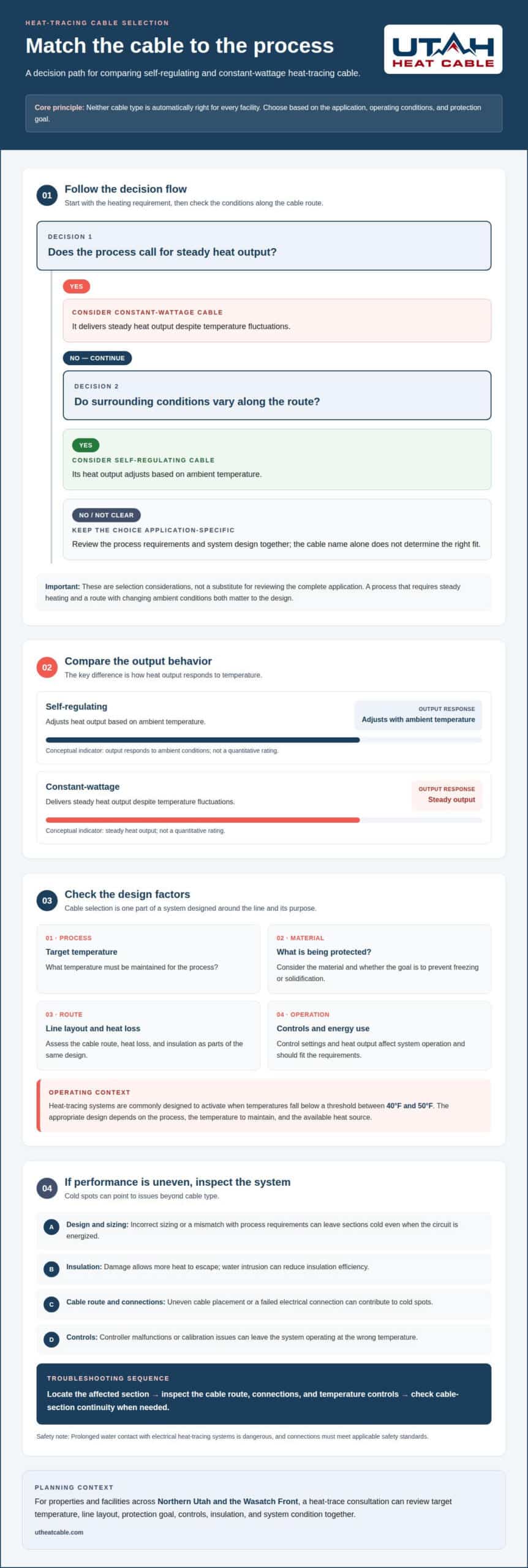
Self-regulating and constant-wattage heating elements
Self-regulating and constant-wattage cables differ in how their heat output responds to temperature. Self-regulating cable adjusts its output based on ambient temperature. Constant-wattage cable delivers steady heat output despite temperature fluctuations. That distinction helps determine which type fits an application.
For a chemical process line, selection starts with the required temperature and the material being protected. If surrounding conditions vary along the route, self-regulating cable adjusts its output with ambient temperature. If the process calls for steady heating, constant-wattage cable maintains consistent output as temperatures fluctuate. Neither type is automatically right for every facility.
System design means assessing heat loss, insulation, controls, and operating requirements together. Steady-output cable may suit one application, while cable that responds to ambient temperature may better fit another. The objective is to match cable performance to the process, not to choose by name alone.
During a heat trace consultation, a specialist can review the target temperature, line layout, and whether the goal is freeze prevention or preventing material from solidifying. Those details guide cable selection and control planning. Energy use also matters, since heat output and control settings affect system operation. Comparing the two cable types gives facilities a practical basis for planning.
Utah Heat Cable
Utah Heat Cable can help connect your heat-tracing questions to a practical cold-weather plan for a property or facility in Northern Utah and the Wasatch Front. If you’re weighing de-icing needs, the discussion can consider how De-Icing Services, Roof Snow Retention, Controller Options, and Sidewalk and Driveway Deicing Systems fit the areas you need to protect.
Bring details about recurring ice or snow buildup and the outcome you need, such as a clearer walkway or roof snow retention. That gives the conversation a useful starting point without assuming one system fits every site. Contact Utah Heat Cable to discuss your de-icing plans.
Plan Your Next Step Before Winter
Use your heat trace consultation to turn the site’s priorities into a practical plan. Identify the areas that need attention, the protection that matters most, and how the system should fit the property’s use. A clear scope focuses the next conversation, whether you’re planning ahead or addressing recurring cold-weather problems.
Utah Heat Cable offers Self Regulating Heat Cable, Constant Wattage Heat Cable, and De-Icing Services. These options can support different property needs, so the right discussion starts with the area and outcome you want to address across Northern Utah and the Wasatch Front.
Take the next step with a focused request, and move toward a more prepared winter season.
Thoughtful planning can help you prepare for colder weather with greater confidence.
Frequently Asked Questions
What types of heat tracing systems are available?
Common heat-tracing options include electric cable heating and fluid-based tracing, such as steam tracing. Electric systems use self-regulating or constant-wattage cables; steam tracing carries heated fluid through a tube alongside the process equipment. The right fit depends on the temperature goal, whether a pipe or tank needs protection, available utilities, and operating conditions.
How do you size a heat tracing system for pipes or tanks?
System sizing matches heat loss from the pipe or tank with the cable output and layout needed to maintain the target temperature. Key factors include equipment dimensions, contents, insulation, exposure, fittings, and available electrical supply. Tank surface area affects the calculation, while pipe valves and connection points can create additional heat-loss areas. Controls must also suit how the equipment operates.
What information is needed for a heat trace consultation?
Share the Utah site location, the equipment involved, and the protection goal. Pipe or tank dimensions, materials, insulation details, operating and target temperatures, and recurring cold spots help define the project. Existing drawings or photos can show routing and access, while information about available power and controls helps shape a practical system plan.
How much does heat tracing design, installation, and operation cost?
Electric heat tracing uses cable installed along the equipment, while steam tracing carries heated fluid through a separate tube. Electric systems need a suitable electrical supply and controls; steam tracing depends on steam availability and functioning steam traps. When comparing the two, consider process requirements, existing utilities, and maintenance needs.
How do electric and steam heat tracing compare?
Electric heat tracing uses cable installed along the equipment, while steam tracing carries heated fluid through a separate tube. Electric systems need a suitable electrical supply and controls; steam tracing depends on steam availability and functioning steam traps. For a facility choosing between them, process requirements, existing utilities, and maintenance needs are important comparison points.