
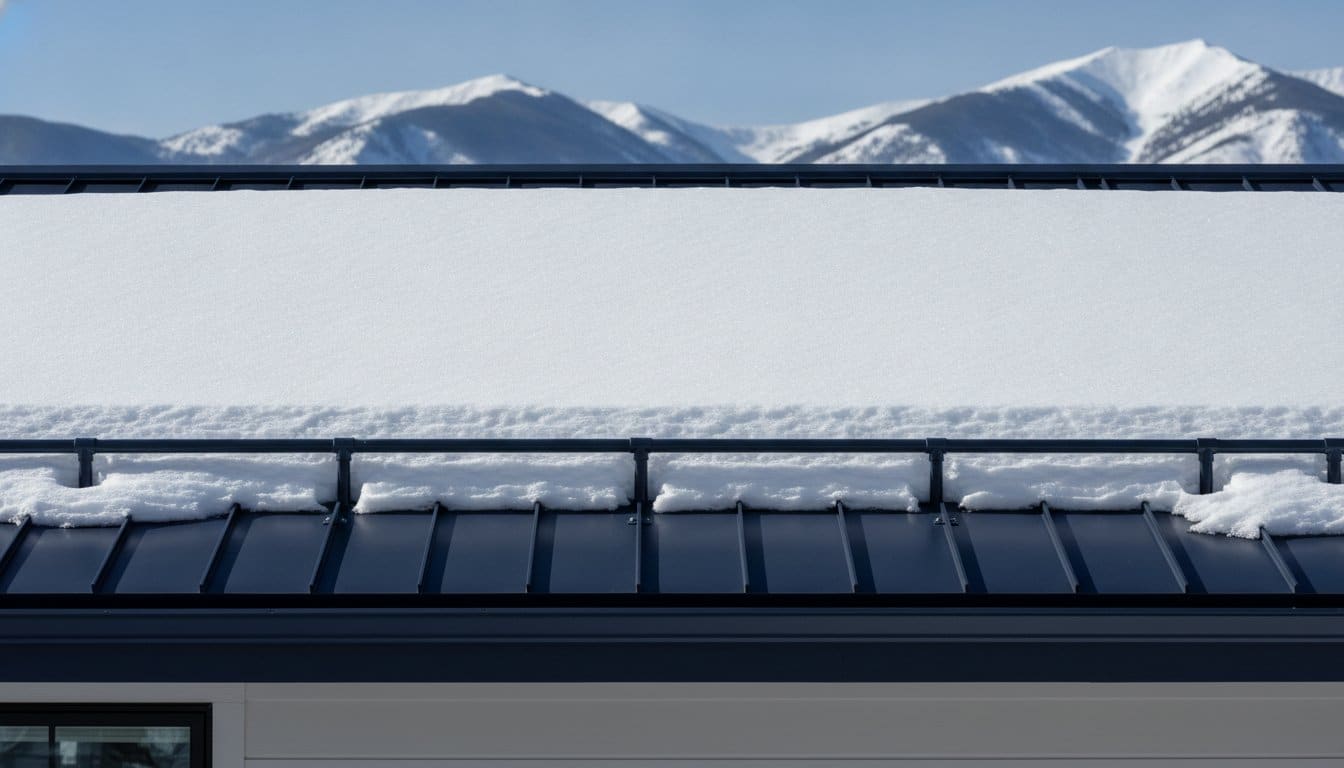
A single heavy snowfall in the Wasatch Range can turn a beautiful roof into a liability in seconds. When that mass of ice and snow finally loses its grip, it doesn’t just slide; it avalanches, posing a genuine threat to your family and your property’s curb appeal. Finding the right architectural snow retention systems is about more than just bolting on a few guards. It’s about precision engineering that respects your building’s design while providing a necessary shield against the elements.
You shouldn’t have to choose between a safe perimeter and a home that looks like a masterpiece. It’s common to worry that safety gear will look like an eyesore or, worse, rip right off the eaves during a record-breaking winter. We’re here to show you that it’s possible to have a system that is both nearly invisible and structurally sound. This guide explains how to select and engineer the perfect setup to preserve your aesthetic while preventing dangerous rooftop slides. We’ll explore why modern ASCE 7-22 standards matter and how professional design ensures your home stays protected all season long.
Key Takeaways
- Learn how architectural snow retention systems use mechanical friction to prevent dangerous “roof avalanches” from damaging your property or injuring visitors.
- Compare the benefits of discrete pad-style guards against the clean, horizontal lines of pipe-style systems to find the perfect match for your building’s aesthetic.
- Understand the specific engineering requirements for our region, ensuring your system is rated for actual roof snow weight rather than just general ground averages.
- Discover how to satisfy strict HOA requirements by selecting high-quality materials that blend seamlessly into your existing roofline.
- Explore the vital synergy between mechanical snow guards and self-regulating heat cable to address both sliding snow and ice dam formation.
What Are Architectural Snow Retention Systems?
At its core, an architectural snow retention system is a precision-engineered solution designed to manage the way snow moves on a roof. Unlike generic store-bought clips, these systems are mechanical devices specifically calculated to increase the friction between the roofing material and the snowpack. While a basic Snow guard might offer some resistance, true architectural snow retention systems are integrated into the building’s structural design. They act as a protective barrier, holding snow in place until it can melt or shed in small, manageable amounts. This prevents the sudden release of thousands of pounds of frozen mass, commonly known as a roof avalanche.
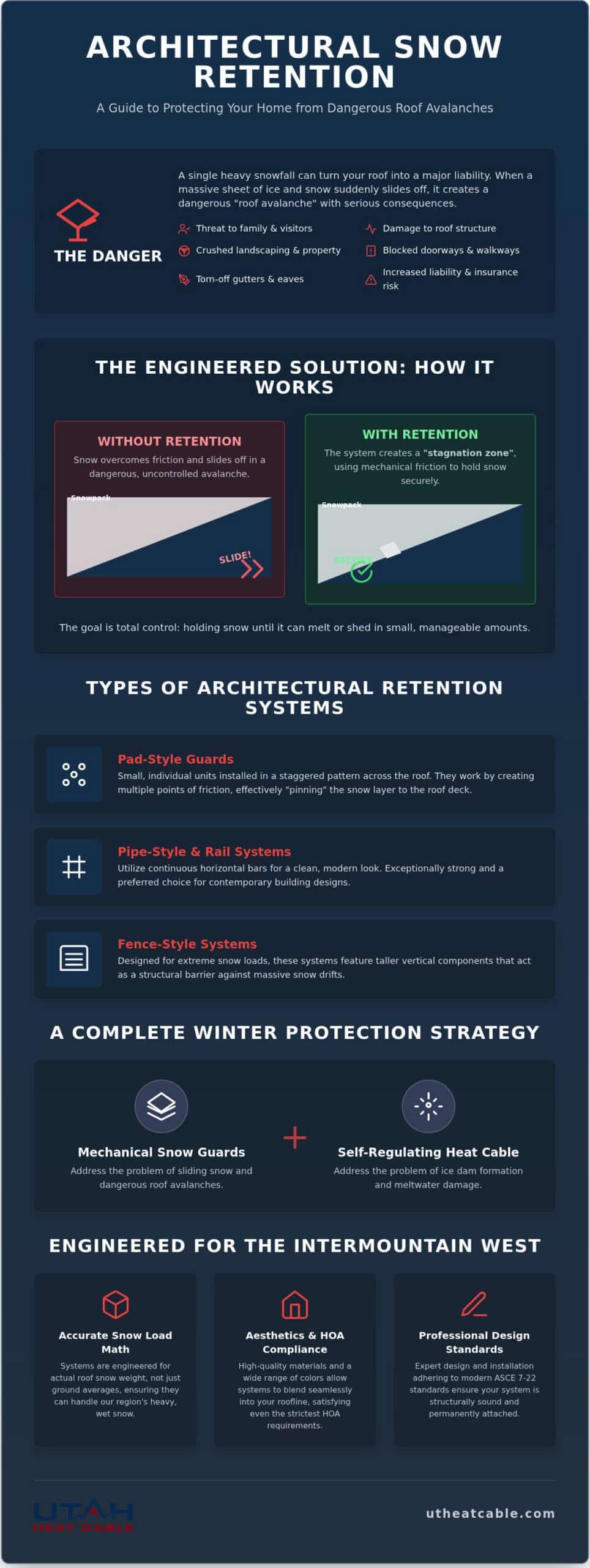
The goal is simple: total control. When snow accumulates on a high-pitch roof, gravity is constantly trying to pull it down. Without a retention system, that snow eventually overcomes the friction of the shingles or metal panels. This leads to a catastrophic slide that can crush expensive landscaping, tear off gutters, and block vital entryways. By choosing architectural snow retention systems, you ensure the setup is strong enough to handle the specific snow loads of the Intermountain West while remaining visually compatible with your home’s custom design.
The Mechanics of Snow Retention
Understanding how snow behaves is the first step in effective management. Snow moves in two primary ways: creeping and sliding. Creeping is the slow, internal movement of the snow layer as it settles, while sliding occurs when the entire pack loses its grip on the roof surface. Smooth materials like metal, slate, and tile have very low friction coefficients, making them high-risk surfaces for avalanches.
Engineered systems create what professionals call a stagnation zone. This is a specific area directly behind the retention device where the snow is held static. By strategically placing these zones across the roof, the weight is distributed evenly. This prevents the snowpack from gaining the momentum it needs to slide off the eaves. It turns a potential hazard into a controlled, stationary load that protects the perimeter of your property.
Why Safety Isn’t the Only Factor
While protecting people on the ground is the top priority, these systems also safeguard your investment. A massive snow slide doesn’t just fall; it exerts immense downward pressure on the roof deck and the eaves. If the snow isn’t held in place, it can buckle structural components or cause premature wear on the roofing material itself. Proper retention keeps the load balanced and static, preserving the structural integrity of the roof deck over the long term.
For commercial properties and HOAs, the conversation often turns to liability. An uncontrolled roof avalanche is a predictable risk in snowy climates. By installing a professional-grade retention system, property managers demonstrate a commitment to safety and prevent costly insurance claims. These systems also preserve the lifespan of your gutters. When snow slides, it often catches the gutter lip and rips the entire run off the fascia. Architectural retention keeps that weight off the gutters, ensuring they stay functional and securely attached for years. If you’re concerned about the danger these sudden slides pose to people below, learning how to prevent snow slides on walkways and entrances is an equally important part of a complete winter safety strategy.
Types of Architectural Retention: From Pipe-Style to Pad-Style
Selecting the right hardware for your roof is a balancing act between structural physics and visual harmony. Every roof has a unique personality, and choosing architectural snow retention systems that complement that character ensures the safety features don’t detract from the building’s profile. There are four primary categories of retention hardware used in professional installations:
- Pad-Style Guards: These are small, individual units installed in a staggered pattern across the roof. They work by creating multiple points of friction, effectively “pinning” the snow layer to the roof deck.
- Pipe-Style and Rail Systems: These utilize continuous horizontal bars. They provide a clean, modern look and are exceptionally strong, making them a favorite for contemporary designs.
- Fence-Style Systems: Designed for extreme snow loads, these systems feature taller vertical components that act as a structural barrier against massive snow drifts.
- Cleats and Brackets: Specialized hardware designed specifically for the unique mounting requirements of slate, tile, and synthetic materials.
The choice between these styles often comes down to the specific snow load requirements of your ZIP code and the pitch of your roof. While a single row of rails might suffice for a shallow pitch, a steep custom home in a high-elevation canyon may require a multi-tier approach to manage the weight safely.
Selecting Based on Roof Material
The material of your roof dictates the installation method. For standing seam metal roofs, clamp-on systems are the gold standard because they don’t penetrate the metal panels. This preserves your roof’s weather-tight warranty while providing a secure anchor point for the retention bars. Asphalt shingles, on the other hand, typically utilize pad-style guards that are fastened into the roof deck during or after shingle installation.
If you’re working with high-end materials like slate or tile, the engineering becomes even more specialized. The National Slate Association offers a detailed guide to snow retention systems that explains how custom brackets must be woven into the courses of the roof to prevent cracking the stone. Synthetic slate and tile also require custom-fit brackets that maintain the high-end look while providing a reliable mechanical bond to the structure below.
The Aesthetic Impact of Different Styles
Modern architectural snow retention systems are designed to be as unobtrusive as possible. Advanced powder-coating technology allows us to color-match the hardware to your specific roofing material, making the system virtually disappear into the roofline. For historical renovations or high-end custom builds, decorative finials can be added to rail systems to provide an elegant, old-world finish that enhances the architecture.
Rail systems generally offer a more modern, streamlined appearance that follows the horizontal lines of the eaves. In contrast, staggered pad guards can create a more traditional, textured look that fits well with cottage or Tudor-style designs. If you want to ensure your safety system doesn’t clash with your home’s curb appeal, it’s wise to review design options with a specialist who can show you how different finishes look under real-world lighting conditions.
Engineering for the Intermountain West: Load Math and Safety
In the Intermountain West, snow isn’t just a seasonal decoration; it’s a structural load that requires rigorous calculation. Most “one size fits all” kits found online fail in Utah, Idaho, and Wyoming because they don’t account for the extreme variability in our mountain climates. Professional architectural snow retention systems must be designed using the latest ASCE 7-22 standards, which recently updated ground snow load maps based on more extensive historical data. These new standards, now part of the 2024 International Building Code, show that ground snow loads are on average 12% higher than previous estimates.
There’s a massive difference between ground snow load and actual roof snow weight. While ground data provides a baseline, engineers must adjust for the roof’s slope, thermal properties (R-value), and the new “Winter Wind Parameter” (W2) that accounts for drifting. Current standards have also increased the rain-on-snow surcharge to 8 psf from the previous 5 psf, acknowledging that a wet snowpack is significantly heavier. We use vector force math to determine how much pressure is actually pushing against the guards. On a steep pitch, gravity tries to pull the snowpack downslope; the steeper the roof, the higher the vector force. If your system isn’t engineered for these specific forces, it’s just a matter of time before the hardware fails.
Utah-Specific Weather Challenges
Residents along the Wasatch Front deal with the “Lake Effect,” which produces notoriously heavy, wet snow. This moisture content adds significant weight compared to drier mountain powder. We also face intense freeze-thaw cycles. When snow melts during the day and refreezes at night, it creates a dense layer of ice at the bottom of the snowpack. This ice layer acts like a lubricant, increasing the risk of a slide. Additionally, our high-altitude UV exposure can degrade cheap plastic guards or inferior coatings, which is why we insist on specialized, durable materials that can withstand Utah’s thin air. Property owners near the Idaho border face similarly extreme conditions, and understanding the specific demands of Bear Lake roof snow protection illustrates just how critical site-specific engineering is when lake-effect snow loads can reach 60 lbs per square foot.
Common Engineering Failures
The most frequent failure we see is the “rip-off” effect, which happens when guards are spaced too far apart. If the distance between rows is too great, the sheer weight of the snow overcomes the fasteners. It’s also vital that fasteners are compatible with the substrate; using the wrong screw for a specific metal gauge or wood deck leads to pull-out. Finally, we strongly advise against adhesive-only systems in our climate. In extreme cold, the bond between the adhesive and the roof can become brittle and snap, leaving you with no protection exactly when you need it most.
Design Integration: Balancing Safety with Curb Appeal
Homeowners often worry that installing safety hardware will transform their custom residence into something resembling an industrial warehouse. In reality, modern architectural snow retention systems are designed to be as visually discreet as they are structurally robust. Achieving this balance requires a shift away from “one-size-fits-all” hardware toward a customized approach that respects the building’s lines. By focusing on material selection and strategic placement, we can create a safety perimeter that protects your property without compromising its curb appeal.
Getting approval from strict HOA boards is often the biggest hurdle for mountain residents. Most associations reject snow guards that appear bulky or inconsistent with the neighborhood’s aesthetic. We navigate this by providing detailed submittal packages that highlight “invisible” design choices. Using powder-coated aluminum matched to the specific RAL color of your roof or choosing premium materials like copper and stainless steel often turns a potential rejection into a quick approval. These materials don’t just look better; they resist the corrosion and fading common in high-altitude environments.
Placement is just as important as the hardware itself. Rather than cluttering every square inch of the roof, we focus on protecting “impact zones.” These are the critical areas where an avalanche would cause the most damage, such as grand entrances, garage doors, and expensive landscaping. By concentrating retention power where it’s needed most, we maintain a minimalist look while ensuring total safety for pedestrians and vehicles below. If you’re ready to see how these systems can blend into your specific roofline, you can request a custom design consultation with our team.
Architectural Specs and Customization
The most successful projects occur when we work directly with architects during the initial design phase. This allows us to integrate architectural snow retention systems into the blueprints, ensuring that structural supports are in place exactly where the guards will sit. For existing homes, we utilize custom powder coating to match any manufacturer’s finish. Whether your roof is a weathered bronze metal or a specific shade of synthetic slate, we ensure the hardware is a perfect tonal match that disappears under sunlight.
Preserving Historical Integrity
Utah is home to many beautiful historical buildings that require a delicate touch. Installing modern hardware on a century-old slate or tile roof can be disastrous if the technician doesn’t understand the material’s fragility. We select period-appropriate guards that mimic the master craftsman look of the original era. These high-quality metal finishes provide the necessary strength to hold heavy snow while honoring the building’s architectural heritage. We use specialized mounting brackets that weave into the existing courses, preventing any damage to the original stone or tile while maintaining the roof’s waterproof integrity.
Professional Installation and Heat Trace Integration
While architectural snow retention systems are excellent at stopping dangerous roof avalanches, they can occasionally create a secondary challenge. By holding a large mass of snow in place, these mechanical barriers can inadvertently trap meltwater. If that water doesn’t have a clear path to the eaves, it refreezes behind the retention rails during the cold Utah nights. This cycle leads to ice damming, which can force water under your shingles or metal panels and cause interior damage. To truly protect your home, you need a solution that addresses both the physical weight of the snow and the thermal behavior of the ice.
The solution lies in the synergy between mechanical guards and self-regulating heat cable. When we integrate these two technologies, the retention system keeps the heavy snowpack stationary while the heat cable maintains open drainage channels. This prevents ice from building up into a solid block behind your snow rails. This integrated approach ensures that as the sun melts the top layer of snow, the water flows safely through the retention system, into the gutters, and down the spouts without ever refreezing on the roof deck.
Because this integration involves high-voltage components, a licensed electrical contractor is essential. A standard roofer might understand how to bolt on a guard, but they aren’t trained to handle the complex electrical load and grounding requirements of a professional de-icing system. We ensure that your entire setup is code-compliant and safe, providing a level of reliability that a general contractor simply can’t match. It is the difference between a temporary fix and a permanent structural solution.
Designing a Holistic Roof Protection System
A holistic design starts with the strategic positioning of heat cable in relation to your snow guards. We don’t just throw cable on the roof; we engineer paths that guide water around the stagnation zones created by the retention hardware. By using automated controller options, the system only draws power when the temperature and moisture levels demand it. This keeps your operating costs low while providing maximum protection. Every roof penetration is sealed according to strict electrical and building codes, ensuring your home’s envelope remains watertight and secure.
The Utah Heat Cable Advantage
We take pride in being the “expert who teaches the experts.” Our team doesn’t just install hardware; we design custom systems tailored to the unique microclimates found in the Intermountain West. Whether you’re dealing with the heavy snow of Park City or the freeze-thaw cycles of the Salt Lake Valley, we focus on long-term prevention rather than temporary fixes. We treat every home with the precision of a master craftsman, ensuring your safety system is as durable as the building it protects. Contact us for a custom architectural snow retention consultation to ensure your property is ready before the first flake falls.
Securing Your Property for the Seasons Ahead
Managing winter weather in the Intermountain West requires more than just a reactive approach; it demands a system that respects both the laws of physics and the architectural beauty of your home. By choosing architectural snow retention systems that are precision-engineered for our specific regional snow loads, you eliminate the threat of roof avalanches while maintaining your property’s curb appeal. Whether you’re navigating strict HOA guidelines or preserving a historical landmark, the right hardware ensures your building remains a safe haven for everyone below.
We believe that true protection comes from a holistic design that combines structural retention with professional heat trace integration to prevent ice dams. As a licensed electrical contractor specialized in the unique challenges of Utah, Idaho, and Wyoming, we provide the expert design required for high-end luxury homes and commercial structures. Don’t wait for the first heavy accumulation to discover the weaknesses in your roof’s defense. Protect your property with a custom engineered snow retention system from Utah Heat Cable. We’re here to provide the peace of mind that comes from professional-grade security and master craftsmanship.
Frequently Asked Questions
Do snow guards cause ice dams on metal roofs?
Snow guards themselves don’t cause ice dams; heat loss from the building is the primary culprit. However, because these systems hold snow in place, they can trap meltwater that refreezes into ice during cold nights. This is why we recommend integrating self-regulating heat cable with your retention hardware. This combination prevents ice from building up behind the rails while keeping the heavy snowpack from sliding off the eaves.
How many snow guards do I actually need for my roof pitch?
The number of guards depends on your roof’s pitch, the length of the run from eave to ridge, and your local ground snow load. A steep 12:12 pitch in a high-elevation area like Park City requires significantly more hardware than a shallow pitch in the valley. We calculate the exact spacing using vector force math to ensure the system can handle the specific weight of your local snowpack.
Can architectural snow retention be installed on an existing roof?
Yes, most architectural snow retention systems can be retrofitted onto an existing roof. For standing seam metal roofs, we use specialized clamps that attach to the seams without any penetrations. If you have shingles, tile, or slate, we utilize custom brackets designed to weave into the existing material. This allows us to provide professional-grade protection even if the system wasn’t included in the original build.
Will snow guards void my roof warranty?
Snow guards won’t void your warranty if they are installed using manufacturer-approved attachment methods. For metal roofs, clamp-on systems are specifically designed to preserve the weather-tight warranty because they don’t pierce the panels. On other roof types, using a professional installer who understands the specific fastener requirements of your material ensures that your structural and material warranties remain fully intact throughout the life of the system.
How much snow weight can a rail system typically hold?
A professionally engineered rail system can hold thousands of pounds of pressure, but the exact capacity depends on the bracket spacing and fastener strength. We design these architectural snow retention systems to exceed the minimum standards set by local building codes. By calculating the “roof snow load” rather than just the ground average, we ensure the hardware is strong enough to withstand record-breaking Intermountain West winters.
Do I need snow guards if I already have heat cable installed?
Yes, because heat cable and snow guards serve two entirely different purposes. Heat cable is designed to create drainage paths and prevent ice dams, but it isn’t strong enough to stop a massive snowpack from sliding. Snow guards provide the physical strength needed to prevent dangerous roof avalanches. For comprehensive safety, you need the mechanical retention of guards and the thermal protection of heat cable working together. A complete winter safety plan should also address ground-level hazards; understanding how to prevent snow slides on walkways and entrances ensures your entire property perimeter is protected from sudden roof avalanches.
What is the best material for snow guards in high-salt or high-UV environments?
High-grade aluminum with specialized powder coatings or stainless steel are the best choices for durability. While we don’t have coastal salt spray, Utah’s winter road salt and intense high-altitude UV exposure can be very corrosive. Copper is another premium option that naturally resists corrosion and develops a beautiful patina over time. We select materials that match your roof’s lifespan to ensure the system doesn’t fail before the shingles do.
How do I maintain my snow retention system after a heavy winter?
You should perform a simple visual inspection every spring after the snow has fully melted. Check for any loose fasteners, bent rails, or signs of movement in the brackets. It’s also important to clear any debris, like leaves or pine needles, from the stagnation zones behind the guards. This ensures that your drainage paths remain open and your system is ready to perform safely when the next winter season arrives.