
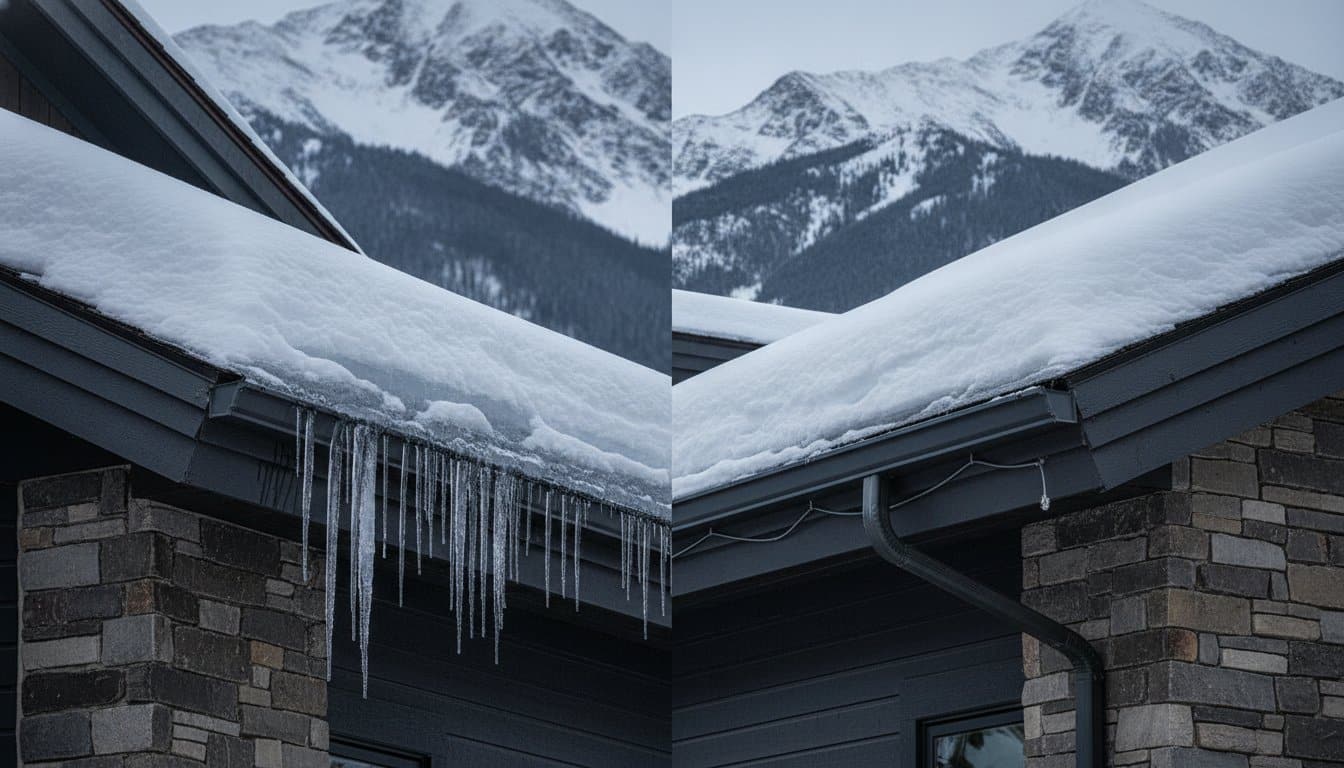
That $50 roll of hardware store heat tape isn’t just an inefficient heater; it’s often a false sense of security that leads to thousands in structural damage when the first real mountain blizzard hits. You’ve likely felt that familiar knot of anxiety while watching massive icicles form on your eaves, wondering if your gutters will hold or if meltwater is already seeping behind your fascia. A professional gutter heat trace system is designed to eliminate this risk, but many homeowners are understandably confused by the technical gap between DIY kits and the commercial-grade protection their property actually requires.
We agree that protecting your property shouldn’t feel like a gamble or result in astronomical energy bills. This guide promises to help you master the essentials of high-performance de-icing so you can protect your roof and keep your drainage clear all winter long. We’ll provide a practical maintenance checklist for the 2026 season, explain the critical differences between cable types, and show you what to look for in a professional installer to ensure your system meets the latest electrical safety codes. By the end of this walkthrough, you’ll have the confidence to choose a solution that offers permanent peace of mind.
Key Takeaways
- Understand how a professional gutter heat trace system creates a permanent drainage path to prevent ice dams from compromising your roof’s structural integrity.
- Learn why professional-grade self-regulating cables provide superior efficiency and longevity compared to standard retail constant-wattage options.
- Identify the critical visual inspection points for your pre-winter checklist, from checking cable clips to clearing debris before the October deadline.
- Discover how adhering to NEC Article 426 standards and professional spacing prevents hazardous “cable burn” on your roofing materials.
- Gain a clear perspective on why custom de-icing designs are necessary to withstand the intense UV rays and heavy snow loads unique to the Wasatch Front.
What is a Gutter Heat Trace System and How Does it Work?
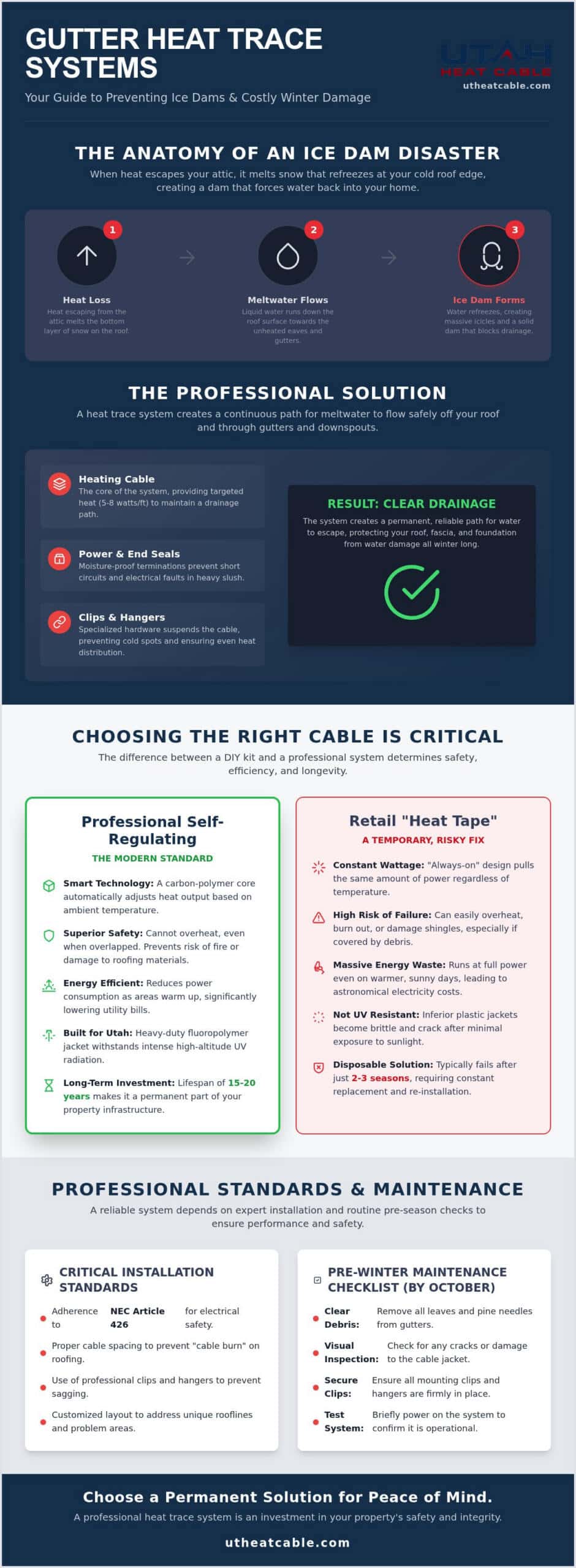
A gutter heat trace system is a specialized electrical circuit designed to maintain an open path for meltwater. It isn’t a heater for your entire roof; it’s a precision tool that ensures liquid water can reach the ground without refreezing. When heavy snow accumulates, heat escaping from your attic causes the bottom layer of snow to melt. As this water reaches the unheated eaves and gutters, it quickly solidifies into ice dams. These dams act like a reservoir, backing up water under your shingles and eventually causing expensive structural damage to your interior plaster and exterior facade. By maintaining a temperature just above freezing, the system prevents this cycle from starting.
Many homeowners use the term “heat tape” to describe these installations, but that’s a misnomer in the professional world. Retail-grade heat tape is often a constant-wattage product with a short lifespan and high risk of failure. In contrast, a professional-grade heat trace system uses industrial-strength cables built to withstand decades of exposure to high-altitude UV rays and sub-zero temperatures. It’s the difference between a temporary fix and a permanent piece of property infrastructure. For a deeper look at how this process works from the ground up, our complete guide on winterizing your roof with heat cable covers the full technical strategy for long-term water management.
The Science of Self-Regulating Technology
Understanding How Heat Trace Systems Work starts with the carbon-polymer core found in self-regulating cables. This material acts like a series of microscopic thermostats along the entire length of the cable. When the temperature drops, the core contracts, creating more electrical paths and increasing heat output. As the gutter warms up or dries out, the core expands and reduces its energy consumption. This technology provides a massive safety benefit because the cable can’t overheat or burn out, even if it’s overlapped in a tight valley or downspout. It’s a responsive material that works only as hard as the weather requires.
Anatomy of a Complete System
A reliable de-icing solution is more than just a length of wire. While the heating cable is the heart of the installation, its performance depends on specialized components designed for extreme environments. A complete system includes:
- The Heating Cable: The primary source of heat, typically rated for 5 to 8 watts per foot in residential gutter applications.
- Power Connection Kits and End Seals: These provide moisture-proof terminations that prevent short circuits and electrical faults during heavy slush.
- Gutter Clips and Downspout Hangers: Specialized hardware that keeps the cable suspended and prevents it from resting directly on debris or sagging under heavy snow loads.
Without these professional components, a system is prone to shifting. If the cable moves, it can leave “cold spots” where ice will inevitably form, rendering the entire installation ineffective against the weight of a heavy winter storm.
Choosing the Right System: Self-Regulating vs. Constant Wattage
Selecting the hardware for your gutter heat trace system is a decision that impacts your property for the next two decades. While big-box retail stores offer “heat tape” kits that seem like a bargain, these products are often disposable solutions designed to last only two or three seasons. Professional-grade cables are built as permanent infrastructure. They feature heavy-duty fluoropolymer jackets designed to withstand the intense UV radiation found at high altitudes in the Mountain West. Without this UV protection, inferior cables become brittle and crack, leading to short circuits and system failure exactly when the snow begins to stack up.
The technical standard for residential gutters is 5 to 8 watts per linear foot. This range provides enough thermal energy to keep a drainage channel open without wasting excessive electricity. Constant wattage cables, which were the industry standard decades ago, pull the same amount of power regardless of the temperature. They run at full tilt even on a sunny 40-degree day, leading to high utility bills and a shorter lifespan. Investing in a professional system might require a higher initial outlay, but the 15 to 20 year lifespan and reduced operating costs make it the more economical choice for long-term property care.
Self-Regulating Cables: The Modern Standard
Self-regulating technology has become the gold standard for residential and commercial applications because of its inherent safety and intelligence. A self-regulating cable is essentially a smart heater that thinks for itself, adjusting its thermal output based on the precise temperature of its immediate environment. This is particularly useful in Utah, where one side of a roof might be buried in snow while the other side is warmed by the afternoon sun. The cable will automatically “turn down” the heat in the sunny sections while maintaining full power in the frozen valleys. This granular control prevents the system from burning out and ensures every watt of electricity is used effectively.
Advanced Controllers and Sensors
The real secret to an efficient gutter heat trace system lies in the controller. Many entry-level systems are “always on” or rely on a simple manual switch, which leads to massive energy waste. Modern automated controllers use ambient temperature sensors or moisture-sensing “snow switches” to activate the system only when freezing conditions and precipitation coexist. Ambient sensors typically trigger the system when the air drops below 38 degrees, but snow sensors are even more precise. They detect actual moisture on the roof, ensuring the cables aren’t drawing power on a dry, cold night. If you’re unsure which setup fits your roof’s unique layout, exploring custom Controller Options can help tailor the system to your specific energy goals. These units can even integrate with smart home platforms, giving you a professional walkthrough of your system’s status from your phone.
The Ultimate Gutter Heat Trace Maintenance Checklist for 2026
The performance of your gutter heat trace system during a January blizzard depends entirely on the work you do in the fall. In Utah, we recommend October 31st as the final deadline for all pre-winter inspections. Once the roof becomes slick with frost or buried under the first few inches of snow, it’s often too late to safely address mechanical failures or electrical shorts. A proactive approach doesn’t just protect your gutters; it prevents the catastrophic ice dams that compromise your home’s thermal envelope.
Visual inspection is your first line of defense. You’ll want to walk the perimeter of your property to look for cable sagging or sections where the heater has pulled away from the gutter floor. If a cable isn’t in direct contact with the base of the gutter, it won’t be able to melt a path for water. Additionally, clearing out organic debris is a non-negotiable safety step. While a professional system is designed for safety, dry leaves trapped against a heating element represent a fire risk that’s easily avoided with a standard cleaning.
For a truly comprehensive audit, a professional “Megger” test is essential. This insulation resistance test allows a technician to verify that the cable’s protective jacket hasn’t been nicked or degraded. If moisture reaches the internal core, it will trip your breakers and leave you without protection during the coldest nights of the year. Verifying this integrity now ensures your system is ready to handle the heavy slush of a late-season storm.
Electrical Safety Audit
Testing your Ground Fault Circuit Interrupter (GFCI) is the most critical electrical step. These breakers are designed to trip if they detect even a tiny leak of current, which is common if moisture has entered a power connection kit. You should also inspect all visible connections for signs of corrosion or “arcing” marks. Finally, ensure your controller is calibrated. If your sensors are still set to summer bypass mode, the system won’t activate when the temperature drops, leaving your eaves vulnerable to the first freeze.
Mechanical Stability Check
The physical weight of ice and sliding snow can easily displace a gutter heat trace system. Inspect your downspout hangers to ensure the cable is still suspended properly and reaches the very exit of the pipe. If the cable stops even six inches short of the bottom, an “ice plug” will form, backing up water through the entire system. If your roof lacks snow guards, check for areas where heavy snow slides might have caught the cable and pulled it out of its clips. Re-securing these points now prevents a total system failure in mid-winter.
Installation Standards: Why Professional Placement Matters
Proper installation of a gutter heat trace system isn’t just about functionality; it’s about strict adherence to the National Electrical Code (NEC) Article 426. This specific regulation governs fixed outdoor electric de-icing and snow-melting equipment. Because these systems are permanently wired and constantly exposed to moisture, the code requires dedicated circuits and specialized ground-fault protection. A licensed electrical contractor ensures that your system doesn’t just work when the snow falls, but remains safe for the entire lifespan of your property infrastructure.
Calculating the correct cable length is far more complex than measuring a straight line along your gutters. Professionals utilize a precise “zig-zag” pattern on the roof edge to prevent ice from forming above the gutter line, which is where most leaks begin. We also factor in downspout loops, where the cable must travel down the pipe and back up to ensure the exit remains open. If the spacing is incorrect, you risk “cable burn.” This occurs when excessive heat concentration damages delicate roofing materials or warps plastic gutters, leading to permanent property damage that a professional installation would have easily avoided.
The Danger of DIY Heat Tape
Retail-grade “plug-in” cables are often marketed as a quick fix, but they carry significant long-term risks. These non-regulating products can’t adjust their thermal output, meaning they can overheat if they’re accidentally overlapped or buried under heavy, insulating snow. This creates a legitimate fire hazard on your roof. Beyond the physical risk, insurance companies may deny claims for fire or water damage if the system wasn’t installed by a professional or fails to meet local building codes. Choosing professional De-Icing Services ensures your installation is documented, compliant, and backed by seasoned craftsmanship.
Custom Design for Complex Rooflines
Every roof has a unique thermal profile that requires a tailored approach. North-facing slopes and deep valleys accumulate snow at significantly higher rates than southern exposures, requiring specialized cable density to handle the increased meltwater volume. For commercial flat roofs, the drainage challenges differ vastly from residential pitched roofs, often requiring different mounting hardware and drainage layouts. A professional design also ensures that your heat trace works in harmony with your Roof Snow Retention systems. This prevents heavy snow slides from catching the cable and stripping it right off your eaves during a mid-winter thaw.
Customizing Your De-Icing Solution for Utah’s Extreme Winters
Utah’s Wasatch Front presents a specific set of environmental challenges that standard de-icing kits aren’t built to handle. The heavy lake-effect snow from the Great Salt Lake creates a moisture load that can quickly overwhelm a generic gutter heat trace system. When this volume of snow is combined with our rapid freeze-thaw cycles, the resulting ice dams can be massive. In high-altitude regions like Park City or Brian Head, the problem is compounded by intense UV rays that degrade the outer jackets of inferior cables in just a few seasons. Homeowners in these mountain communities often require Park City heat cable solutions engineered specifically for high-altitude extremes to ensure their systems survive the punishing combination of heavy snowfall and intense solar exposure. We’ve seen many systems fail prematurely. High elevation sun is simply more punishing on protective materials.
Compliance with local Utah building codes is also a major factor for any permanent installation. In many municipalities, a professional heat trace setup requires specific electrical permits and inspections to ensure the system is safely integrated into your property’s main panel. As a licensed electrical contractor, we specialize in navigating these requirements for residential and commercial properties across Utah, Idaho, and Wyoming. This local oversight ensures your system is code-compliant and safe for long-term operation.
Preparing for Heavy Snow Loads
For maximum safety, we often recommend combining your heating system with professional Roof Snow Retention. Heavy snow slides can destroy unprotected heat cables by physically shearing them from their mounting clips as hundreds of pounds of ice move down the roof slope. Industrial-grade materials and reinforced mounting hardware are necessary for high-mountain HOAs where snow accumulation is measured in feet rather than inches. This dual-layered approach ensures the snow stays in place until it can be safely melted and drained through the heated channel. It’s about total roof management, not just melting ice.
Working with a Local Specialist
A custom design accounts for your home’s specific orientation. There’s a significant difference between a shaded north-facing valley and a sun-soaked southern eave. We provide the regional expertise needed to troubleshoot and maintain these systems throughout their 20-year lifespan. Our team understands the unique pressures of the Mountain West climate. Protect your property with a custom heat trace design from Utah Heat Cable to ensure your home is ready for whatever the Wasatch Front delivers this season. Precision matters when the temperature drops.
Secure Your Property Before the First Freeze
A professional gutter heat trace system is more than just a seasonal convenience; it’s a critical component of your home’s structural defense. We’ve explored how self-regulating technology adapts to the volatile Wasatch Front climate and why adherence to NEC safety standards is essential for long-term reliability. By prioritizing an October inspection and choosing industrial-grade materials over retail kits, you’re ensuring that meltwater always has a clear path to the ground. These proactive steps eliminate the stress of ice dams and protect your investment for decades to come.
As a licensed electrical contractor, Utah Heat Cable provides custom industrial-grade designs specifically engineered for properties across Utah, Idaho, and Wyoming. We understand the precise requirements of high-altitude environments and the necessity of code-compliant installations. Get a Professional Heat Trace Design & Quote for Your Utah Property to start your winter season with a proven solution. Taking action now allows you to watch the snow fall with the confidence that your property is fully protected.
Frequently Asked Questions
How much does it cost to run a gutter heat trace system per month?
Operating costs for a standard residential system typically range from $30 to $80 per month during the peak of winter. Your actual utility impact depends on the total linear footage of the cable and the local electricity rates in your area. Utilizing automated controllers with moisture and temperature sensors will keep these costs on the lower end by ensuring the system only draws power when it’s actually needed to prevent ice buildup.
Can I install a gutter heat trace system myself?
While big-box stores sell “plug-in” kits, a permanent gutter heat trace system should be installed by a licensed electrical contractor. These professional systems require dedicated circuits and must adhere to NEC Article 426 safety standards to prevent fire hazards. Professional installation ensures that the power connection is moisture-proof and that the system is correctly grounded for long-term safety in wet mountain conditions. If you’re weighing your options, reviewing the full breakdown of winterizing your roof with heat cable using professional-grade self-regulating systems can help clarify why DIY kits fall short of the protection your property requires.
Will heat cables melt my gutters or damage my roof?
Professional self-regulating cables are designed to operate at safe temperatures and won’t melt metal or vinyl gutters. Damage to roofing materials, often called “cable burn,” only occurs if inferior constant-wattage products are used or if the installation lacks proper spacing. A correctly designed layout keeps the heat output low enough to protect your shingles while remaining effective enough to maintain an open drainage path.
How long do professional-grade heat trace cables last?
Industrial-grade cables typically have a lifespan of 15 to 20 years when they are properly maintained. This durability comes from high-quality UV-resistant jacketing that can withstand the intense sun exposure found at high altitudes. Retail-grade heat tape often fails after just two or three seasons because its outer layer becomes brittle and cracks, leading to internal electrical shorts.
Do I need to turn my heat cables off during the day?
You don’t need to manually manage the system if you’ve invested in an automated controller. These units use sensors to detect ambient temperatures and moisture, shutting the power off automatically when the weather warms up. If you have a manual switch, it’s best to turn the system off once the sun has cleared the snow from your roof to avoid wasting electricity on a dry gutter.
What happens if my heat cable system trips the breaker?
A tripped breaker is usually a sign that moisture has entered a connection kit or that the cable’s insulation has been compromised. This triggers the Ground Fault Equipment Protection (GFEP) to prevent a fire or electrical shock. If your breaker trips repeatedly, don’t keep resetting it. You should have a specialist perform a “Megger” test to locate the fault and ensure the system’s integrity before the next storm arrives.
Can I use heat cables on a metal roof?
Yes, heat cables are very effective on metal roofs, but they require specialized mounting clips that don’t pierce the metal surface. Metal roofs are prone to sudden snow slides that can strip cables right off the eaves. Because of this risk, it’s vital to use heavy-duty fasteners and often combine the cable system with snow guards to keep the heating elements secure throughout the winter.
Does a gutter heat trace system replace the need for snow guards?
No, these two systems serve different protective functions. A gutter heat trace system focuses on melting ice and creating a path for water, while snow guards are designed to hold heavy snow packs in place. Without snow guards, a massive slide can still damage your gutters or injure someone below, regardless of how well your heat cables are working. Using them together offers the most complete protection for your property.