
What if the best way to reduce falling-snow liability is to control the hazard before it reaches a walkway? Roof snow slides, falling ice, and runoff that refreezes near an entrance can put visitors at risk, leaving property owners unsure who is responsible and what to address first. Preventing falling ice and snow liability starts with recognizing these hazards and planning ahead, not waiting for an incident.
That uncertainty is understandable. Responsibility can depend on the property, who maintains shared areas, and local rules, so no single answer fits every situation. This guide explains factors that may affect responsibility and practical ways to reduce risk, from identifying roof-edge and drainage hazards to keeping clear maintenance records. You’ll also learn how roof snow retention and heat cable can support a broader winter hazard-control plan, alongside a repeatable inspection and response process.
Key Takeaways
- Falling roof snow and ice pose different hazards from slips on icy ground; responsibility may depend on control of the area, notice, conditions, and local rules.
- For preventing falling ice and snow liability, map roof-edge fall zones, inspect changing conditions, restrict access to hazards, and document each response.
- Distinguish roof snow retention, which can help manage snow slides, from heat cable, which can address ice and meltwater paths.
- Build a repeatable winter plan with assigned inspections and clear records, then verify the rules that apply to your property’s specific jurisdiction.
How Falling Roof Snow and Ice Can Create Property Liability Concerns
A person slipping on an icy walkway faces a different hazard from someone struck by snow or ice falling from above. Both can raise property-safety concerns, but roof-originating incidents call attention to conditions overhead: accumulated snow, ice near the eaves, and where a slide could land. The broader legal concept of Premises Liability concerns responsibility for unsafe conditions on property, but the facts and rules that apply vary by location.
Responsibility may depend on who controls and maintains the roof or the area below, what conditions existed, whether a hazard was known or reasonably apparent, and what actions followed. Leases, shared-area arrangements, and local requirements can also affect the picture. No single inspection, warning, or maintenance measure guarantees a particular legal outcome. Understanding these factors helps guide prevention without assuming who would be responsible in a specific incident.
Why roof edges, entrances, and walkways need separate attention
A falling-snow hazard is snow or ice that may slide or drop from a roof into an area people use. A roof edge above an entrance may expose visitors to a sudden slide, while melting snow can travel along a drainage path and refreeze as a ground-level slip hazard. These are related risks, but they call for different observations: what could fall from above, and where water could freeze below.
Map the areas beneath roof edges, including sidewalks, parking spaces, building entrances, and shared HOA paths. A route used by residents or visitors may pass directly through a potential slide zone, even if the roof itself is outside the area they normally notice. Conditions can change as snow accumulates, temperatures fluctuate, or meltwater moves. That’s why preventing falling ice and snow liability begins with assessing the roof and the spaces below it as one connected safety picture, while addressing each hazard on its own terms.
How to Reduce Falling Snow and Ice Hazards Around a Property
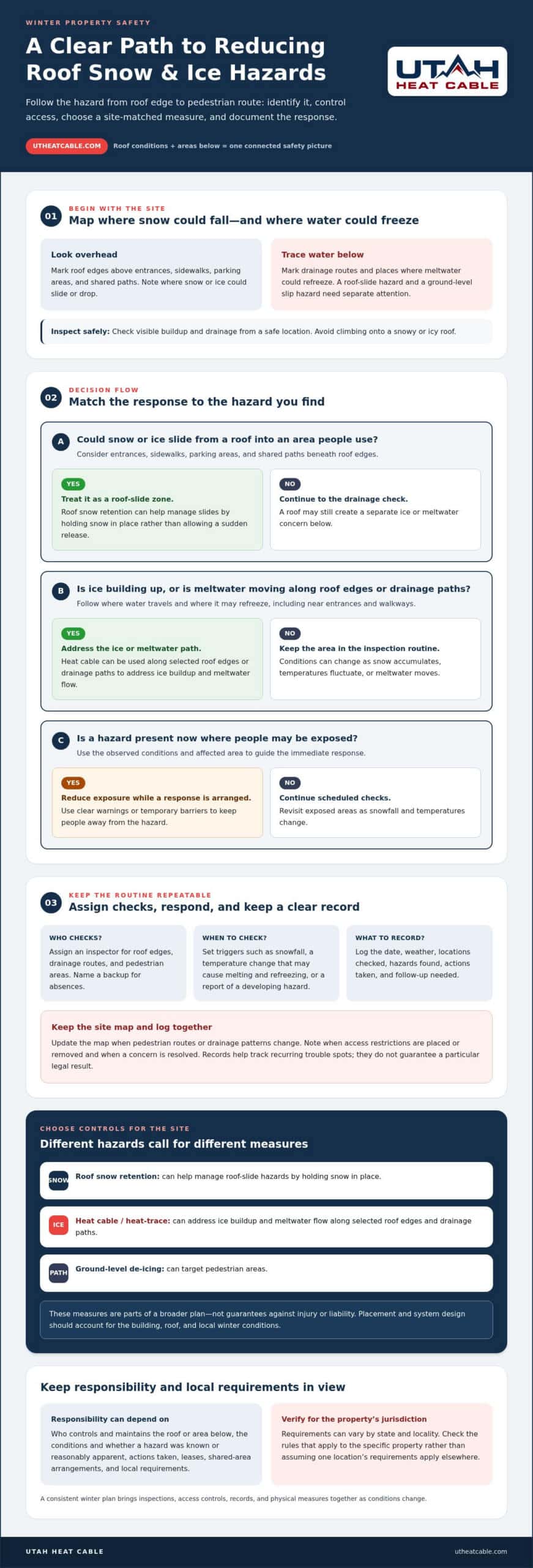
A useful prevention routine connects what’s happening on the roof with the paths people use below. Start with a site walk before winter, then revisit exposed areas as snowfall and temperatures change. Roofing professionals like Miller’s Home Improvement often recommend inspecting rooflines and drainage points before winter storms hit to identify where snow and meltwater may present hazards. For preventing falling ice and snow liability, the goal is to spot hazards early, reduce exposure, and make each response clear and repeatable.
- Identify fall zones. Map roof edges above entrances, sidewalks, parking areas, and shared paths. Note where snow could slide and where meltwater could drain.
- Inspect conditions. Check visible buildup, changing snow conditions, and drainage routes from a safe location. Avoid climbing onto a snowy or icy roof.
- Control access. If a hazard develops, use clear warnings or temporary barriers to keep people away while a response is arranged.
- Record responses. Log the conditions observed, areas affected, actions taken, and any follow-up needed.
Build a practical winter hazard-control routine
Roof snow retention and heat cable address different parts of the risk. Snow-retention systems can help manage roof slides by holding snow in place rather than allowing a sudden release. Heat cable is used along selected roof edges or drainage paths to address ice buildup and meltwater flow. Neither is a complete safety plan by itself; placement and system design should account for the building, roof, and local winter conditions. Industry specialists like Pro Torch Roofing note that understanding your underlying roof assembly and materials is vital when assessing how runoff and snow accumulations perform in cold weather.
Keep the site map with your inspection notes, and update it if pedestrian routes or drainage patterns change. Applicable codes and local requirements may also affect the right response, so don’t assume one approach fits every property. OSHA’s winter weather hazard guidance offers practical information on reducing snow and ice risks. For a site-specific approach, explore roof snow-retention and heat-cable systems as part of a broader hazard-control plan.
Create a Documented Snow and Ice Prevention Plan for Your Property
A written plan turns winter checks into a consistent routine, especially for properties with multiple entrances, buildings, or shared paths. Assign a person to inspect roof edges, drainage routes, and pedestrian areas, and name a backup for absences. Set clear triggers for an inspection, such as a snowfall, a temperature change that may cause melting and refreezing, or a report of a developing hazard.
Keep a log that records the date, weather conditions, locations checked, hazards found, actions taken, and any follow-up. Note when access restrictions are placed or removed, and document when a concern is resolved. These records help managers track recurring trouble spots and refine the plan through the season. They don’t guarantee a particular legal result.
Requirements can vary by state and locality. A property in Utah may be subject to different rules from one in Idaho or Wyoming, and city or county requirements may also matter. Verify the requirements for the property’s specific jurisdiction rather than applying one location’s rules across the region.
Match prevention measures to the site and keep clear records
Choose controls based on where snow could slide, where ice forms, and how people move around the property. Roof snow retention can help manage roof-slide hazards; heat-trace systems can address selected roof edges and drainage paths, while ground-level de-icing can target pedestrian areas. These measures work as parts of a broader plan, not as guarantees against injury or liability.
A licensed electrical contractor can design code-conscious heat-trace and snow-melt systems around a property’s layout and conditions. Explore roof de-icing and snow-melt services as one option within site-specific controls. A well-organized plan brings inspections, records, and physical measures together, so responsibilities stay clear as winter conditions change. Plan a property-specific winter protection system for your site.
Set Up Your Property for a Safer Winter
The next useful step is to turn winter preparation into a routine that fits how your property is used. Choose who will monitor conditions, decide how concerns will be reported, and set a time to review the plan before snow arrives. Consistent preparation can make preventing falling ice and snow liability a more manageable part of property care, though no system can guarantee a particular legal outcome.
For added protection, Utah Heat Cable designs property-specific heat-trace, snow-retention, and snow-melt systems. As a licensed electrical contractor, the team develops custom regional solutions for homes, businesses, industrial sites, and HOAs across Utah, Idaho, and Wyoming. A system can support your broader safety plan while addressing hazards specific to the site.
Plan a property-specific winter protection system, and take a practical step toward a more prepared season.
Frequently Asked Questions
Is a property owner automatically liable when snow or ice falls from a roof?
No. A roof slide by itself doesn’t establish who is responsible. The circumstances may include who controlled the roof and landing area, whether the event could reasonably be anticipated, and what precautions were taken. For preventing falling ice and snow liability, keep the focus on practical risk reduction, not assumptions about a legal outcome. Applicable standards can vary by jurisdiction.
Can liability concerns differ while snow is still falling?
Yes, active snowfall can affect what’s practical and when a hazard can be addressed, but it doesn’t create a universal exemption or deadline. For example, a manager may need to monitor a roof-edge risk as conditions shift, then respond when it’s safe and feasible. Property owners in Utah, Idaho, and Wyoming should verify the local requirements that apply to their specific site.
Can warning signs alone prevent a falling-snow hazard?
No. A sign can alert people, but it won’t hold roof snow or redirect melting water. If used temporarily, place warnings where people can see them before entering the affected area, and consider whether barriers or a safer alternate route are also needed. Reassess signs after weather or site conditions change, since a notice that’s obscured or poorly placed may not be effective.
What records should a property manager keep during winter?
Keep a dated record that distinguishes what staff observed from what they inferred, and note who was notified and when. For example, record the specific building entrance or roof edge involved rather than writing only “north side.” Preserve original photos with their dates, and attach incident reports or relevant communications to the same event record. These details support follow-through but don’t decide legal responsibility.