
Winter roof problems often start not with snowfall, but with snow that melts and refreezes. For homeowners, avoiding winter roof damage means watching for ice dams, blocked drainage, trapped water, and shifting snow. Leaks and ice buildup can be concerning, especially when it’s not clear what’s safe to inspect yourself.
This guide explains common winter roof risks, warning signs you can check safely from the ground, and practical steps to take before storms arrive. You’ll learn how to monitor drainage and indoor moisture, when recurring ice may call for targeted heat cable, and how roof snow retention can help manage snow movement. The goal is a useful seasonal routine and a clearer way to decide which protection may suit your property.
Key Takeaways
- Melting snow, blocked drainage, and repeated freeze-thaw cycles create different winter roof risks. Learn which warning signs deserve attention.
- For avoiding winter roof damage, build a safe routine around ground-level checks, clear drainage access, and monitoring for moisture indoors.
- Heat cable can help manage recurring ice buildup in targeted areas, while snow retention helps control snow movement where appropriate.
- Specialized systems address specific conditions. They complement sound roof construction and routine maintenance rather than replacing them.
What causes winter roof damage, and which risks should you watch?
Winter roof problems often begin when water can’t drain freely. Snow melts as roof surfaces warm, then runoff reaches colder eaves and refreezes. Ice can build along the edge, blocking drainage and allowing water to collect behind it. That water may work beneath roofing materials and contribute to interior leaks. An ice dam is not simply snow sitting on a roof: it’s a ridge of ice that obstructs normal meltwater drainage. See how ice dams form on roofs, and explore our ice dam prevention guide for more detail.
Blocked gutters and downspouts can also slow runoff, while accumulated snow adds weight to the roof. Repeated freezing and thawing may widen small gaps as moisture freezes and expands, increasing the chance of water entry. These risks are related but different: an ice dam is a drainage problem, while snow accumulation is a load and movement concern. Avoiding winter roof damage starts with identifying which condition you’re seeing.
How Utah, Idaho, and Wyoming winter conditions affect roof risk
Winter exposure varies across Utah, Idaho, and Wyoming. Even nearby properties can face different combinations of snowfall, sun, wind, and temperature swings. Roof shape and orientation affect where snow collects and where surfaces warm; drainage paths influence whether meltwater can escape. Insulation and ventilation also affect roof temperatures and melting patterns. A recurring ice buildup in one area may call for targeted heat cable, while another roof may need attention to drainage or snow movement. Heat cable and snow-retention systems address different conditions, and neither replaces sound construction or routine maintenance.
How to reduce winter roof damage with a safe seasonal routine
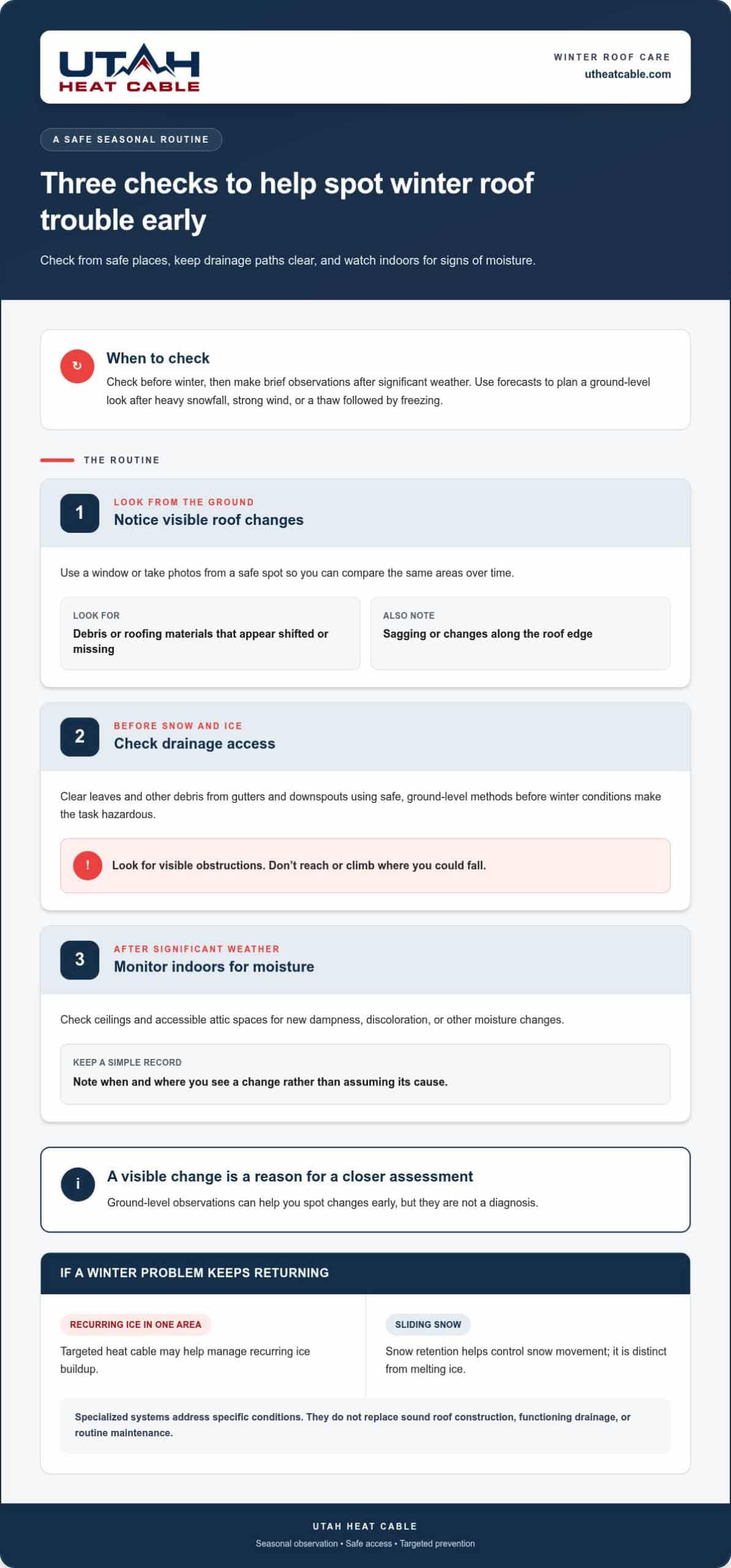
A check before winter, followed by brief observations after significant weather, can help you spot changes early without taking unnecessary risks. Make these steps part of your routine for avoiding winter roof damage:
- Inspect from the ground. Look for debris, roofing materials that appear shifted or missing, sagging, and changes along the roof edge. Use a window or take photos from a safe spot so you can compare the same areas over time.
- Check drainage access. Before snow and ice make the task hazardous, clear leaves and other debris from gutters and downspouts using safe, ground-level methods. Look for visible obstructions, and don’t reach or climb where you could fall.
- Monitor inside. Check ceilings and accessible attic spaces for new dampness, discoloration, or other moisture changes. Note when and where you see them rather than assuming the cause.
What to inspect before and during winter
Before winter, check that gutters and downspouts look attached and unobstructed, and note any visible changes along the roof edge. During the season, use forecasts to plan ground-level observations after heavy snowfall, strong wind, or a thaw followed by freezing. Check indoors for new signs of moisture after these conditions. A visible change is a reason to arrange a closer assessment, not a diagnosis.
Never walk on an icy roof or try to remove snow using unsafe methods; a fall or falling snow can cause serious injury. If ice repeatedly builds up in the same area, a targeted heat-cable system may help manage the condition. Roof heat cable and snow-retention systems can be part of a broader prevention plan, depending on the problem you’re addressing.
When winter roof protection calls for a specialized system
Routine upkeep is a useful starting point, but a recurring winter problem may call for a targeted measure. Match the system to the condition you’re trying to manage rather than expecting one solution to address every roof concern.
| Option | Best suited to | Role |
|---|---|---|
| Routine maintenance | Seasonal debris and drainage checks | Supports clear runoff and helps identify visible changes early. |
| Roof heat cable | Recurring ice buildup in specific areas | Provides targeted heat-trace for ice management; it doesn’t prevent every type of roof damage. |
| Snow retention | Managing sliding snow | Helps control snow movement and is distinct from melting ice. |
How to match a prevention option to the problem
If ice repeatedly forms in the same roof area, professionally designed heat-trace systems may help manage that pattern. Roof de-icing and snow-retention systems address different conditions, so the right approach depends on the property and the issue. Snow retention manages how snow moves; it isn’t a de-icing method. For further background, see this roof heat cable winterizing guidance.
Neither system replaces sound roof construction, functioning drainage, or ongoing maintenance. Avoiding winter roof damage starts with understanding what’s driving the problem. Utah Heat Cable’s licensed electrical contractor team designs custom heat-trace and snow-retention systems for properties across Utah, Idaho, and Wyoming.
Prepare your roof before the next winter cycle
Use the next clear-weather window to turn what you’ve noticed into a practical plan. Keep a simple record of recurring trouble spots, such as where ice forms or snow shifts, so decisions about protection reflect your property’s actual pattern. A targeted system can help address a specific winter condition, but lasting protection still depends on the roof as a whole. That distinction helps you avoid relying on a one-size-fits-all fix.
If recurring ice or sliding snow deserves a closer look, Utah Heat Cable’s licensed electrical contractor team designs custom heat-trace and snow-melt systems for properties across Utah, Idaho, and Wyoming. Explore professional winter roof protection solutions and take the next step toward a safer, more prepared winter.
Frequently Asked Questions
Can heat cable prevent all winter roof damage?
No. Heat cable is designed to manage targeted ice buildup, not prevent every winter roof problem. It won’t correct damaged roofing, blocked drainage, wind impacts, or snow loads. For avoiding winter roof damage, match the system to the recurring issue and the roof’s layout. A custom design can account for conditions in Utah, Idaho, or Wyoming.
Does snow on a roof always need to be removed?
No, a blanket of snow doesn’t automatically mean removal is necessary. The concern depends on factors such as the roof’s design, snow conditions, and visible changes. Watch for unusual sagging or other signs of distress from a safe location. Don’t climb up or use a ladder to rake snow. Roof snow retention helps manage sliding, but it doesn’t remove accumulated snow.
What should I do if I find a roof leak during winter?
Protect the room first: place a container under active dripping, move belongings, and keep clear of wet light fixtures or electrical equipment. Take photos and note where and when the moisture appeared. Don’t go onto an icy roof to locate the entry point. Arrange a professional assessment of the leak source, especially if water continues to spread or collect.
Is attic condensation the same as a roof leak?
No. A roof leak brings water in through the roof assembly, while condensation forms when moist indoor air meets a colder surface. Frost or moisture spread across several attic surfaces may point to condensation; a concentrated wet area can have other causes. These clues aren’t a diagnosis, and condensation and a leak can occur together, so note the pattern for assessment.