
A small crack in a heat cable can go unnoticed until a freeze-thaw cycle leaves a roof or gutter exposed to ice buildup. Before winter sets in across Utah, Idaho, and Wyoming, use a heat cable maintenance checklist to look for visible wear and prepare for snow and freezing conditions. A visual review can help you spot concerns, but electrical testing and repairs are not do-it-yourself tasks.
This seasonal guide explains what you can safely observe, which warning signs mean you should stop, and how to keep useful notes about system performance. Follow the same routine before winter and after severe weather, when conditions allow. If you find damage, inconsistent heating, or recurring circuit trips, leave diagnosis and repairs to a licensed electrical contractor.
Key Takeaways
- Use a heat cable maintenance checklist to record visible concerns, not to judge electrical performance.
- From a safe, accessible location, look for cable damage or movement, loose-looking fittings, debris, blocked drainage paths, and unusual controller indicators.
- Compare what you observe with the system’s usual winter performance. Persistent ice buildup may warrant a professional assessment.
- Leave electrical testing, controller diagnosis, cable replacement, and wiring repairs to a licensed electrical contractor.
Heat Cable Maintenance Checklist: What to Check Before Winter
A heat cable maintenance checklist is a visual readiness check, not a way to certify that a system is electrically safe or working correctly. Before winter, look for visible problems with cable placement and drainage paths. Leave electrical testing and diagnosis to a licensed professional.
Conditions vary across Utah, Idaho, and Wyoming. A property’s exposure to snow, ice, and repeated freeze-thaw conditions depends on its location, elevation, and roof layout. Heat cable helps manage ice buildup in vulnerable roof and gutter areas. Understanding ice dam formation and prevention can also help explain why clear drainage paths matter.
A visual inspection can flag visible concerns; only a professional electrical assessment can evaluate electrical performance.
When to inspect roof and gutter heat cable
Plan a visual review before the cold season, following the manufacturer’s guidance for your system. If severe weather passes, consider another review when conditions allow and you can see the cable safely. You don’t need to touch it: observe from the ground or another stable location, and don’t take risks to get a closer view.
Never climb onto an icy roof to inspect heat cable. If snow or ice blocks your view, wait for safe conditions or arrange a professional assessment. During each review, note visible damage, changes in cable position, and any drainage obstructions. The checklist below can help you organize what you observe. For broader seasonal preparation, see this guide to winterizing a roof with heat cable.
A Step-by-Step Heat Cable Maintenance Checklist for Visible Issues
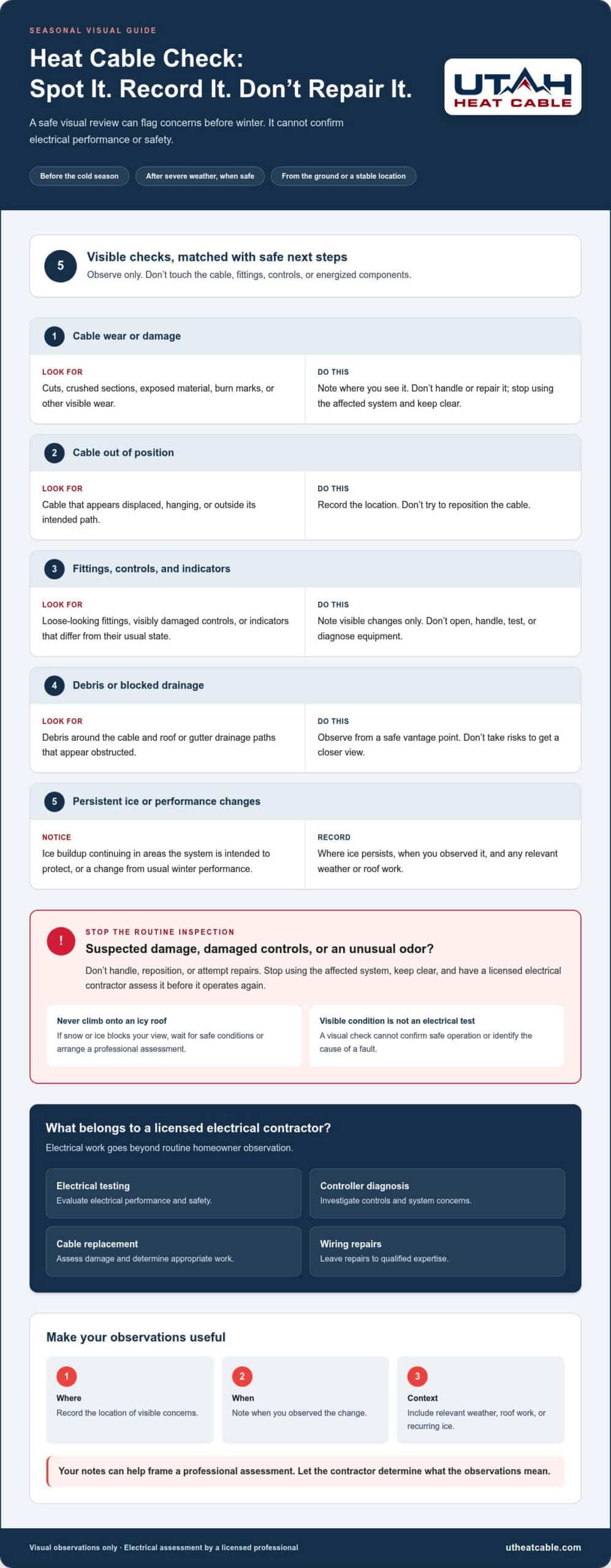
Use this heat cable maintenance checklist from the ground or another safe, accessible location. Don’t touch the cable, fittings, controls, or other energized components. Record what you can see and leave electrical checks to a licensed professional.
- Scan the cable. Look for cuts, crushed sections, exposed material, burn marks, or other visible wear. Note the location of anything unusual.
- Check its position. Look for cable that appears displaced, hanging, or outside its intended path. Don’t try to reposition it.
- Observe fittings and controls. Look for loose-looking fittings or visibly damaged controls. If indicators are visible without opening or handling anything, note whether they differ from their usual state.
- Review the area. From a safe vantage point, look for debris around the cable and check whether roof and gutter drainage paths appear obstructed.
- Write down changes. Record where you spotted an issue and whether ice buildup persists during winter operation. Note when you observed it and any relevant weather or roof work. This gives an electrical contractor useful context.
A cable’s visible condition alone cannot confirm safe electrical operation. Visual checks can flag concerns, but testing and fault diagnosis require qualified expertise. For more background on cable types, see this self-regulating heat cable guide. TRM Heating Cables also outlines electric heating cable system maintenance and repair, including the distinction between visible review and electrical work.
What warning signs should stop a routine inspection?
Stop if you see cuts, crushed or exposed cable, burn marks, visibly damaged controls, or notice an unusual odor. Don’t handle, reposition, or attempt to repair suspected damage. Stop using the affected system and keep clear. Have a licensed electrical contractor assess it before it operates again. If you notice persistent ice buildup or visible damage, Utah Heat Cable installs heat-trace and de-icing systems for residential, commercial, industrial, and HOA properties across Utah, Idaho, and Wyoming.
When Heat Cable Maintenance Needs a Licensed Electrical Contractor
A visual checklist can help you notice changes, but electrical testing, controller diagnosis, cable replacement, and wiring repairs belong to a licensed electrical contractor. These tasks involve system components that shouldn’t be opened, tested, or repaired as part of routine homeowner maintenance. If you see damage or a control problem, stop the inspection and avoid handling the affected equipment.
A professional assessment is also appropriate if ice continues to build up in areas the system is intended to protect, or if you suspect the cable isn’t operating as expected. Persistent ice can have more than one possible cause, so visible symptoms alone can’t confirm what’s happening. A specialist can review the system and determine suitable next steps. Utah Heat Cable provides heat-trace and de-icing services for properties across Utah, Idaho, and Wyoming.
What happens during a professional heat cable assessment?
The review depends on the property and the concern you report. A licensed electrical contractor considers the visible system condition, controls, roof layout, and how the system has performed, including where ice buildup persists. These details help guide the assessment but don’t determine a diagnosis or repair in advance. The contractor decides whether electrical testing is appropriate and what corrective work, if any, is needed.
Share what you observed, such as the location of visible damage or recurring ice, and avoid trying to confirm the cause yourself. A clear record from your heat cable maintenance checklist can help frame the assessment without crossing into electrical work. For a next step, talk with Utah Heat Cable about your system.
Prepare Your System Before Winter Weather Arrives
Make your seasonal observations useful beyond a single inspection. Keep a record of visible changes and how the system performs through winter, so future maintenance decisions have a clear starting point. Include the location of any issue and whether it appeared after severe weather or alongside recurring ice. If your notes point to a concern, let a qualified professional determine what it means rather than attempting electrical tests or repairs yourself.
A heat cable maintenance checklist gives you a plan for winter, but every roof and system has its own layout and demands. Utah Heat Cable’s licensed electrical contractor team designs custom heat-trace and de-icing solutions for properties across Utah, Idaho, and Wyoming. For professional guidance, discuss your heat cable system with a licensed electrical contractor.
Frequently Asked Questions
How often should heat cable be inspected?
Follow the inspection interval in the cable manufacturer’s documentation. Systems and control arrangements differ, so one schedule may not suit every installation. If you don’t have the documentation, a licensed electrical contractor can help establish a system-specific maintenance plan. In Utah, Idaho, and Wyoming, note roof areas that repeatedly accumulate snow or ice when planning future reviews.
Can I repair roof heat cable myself?
No. Roof heat cable repair can involve wiring, weather-exposed connections, and components matched to a particular system, so don’t splice, tape, or reconnect it yourself. Even an apparently simple fix may leave hidden damage or create another fault. Leave the system untouched and have a licensed electrical contractor assess it before any repair.
What should I do if heat cable looks damaged?
Stop using the system if you suspect damage, and don’t handle or patch the cable. From a safe location, note the affected roof or gutter area and when you noticed the issue. Record whether it followed a storm, snow clearing, or roof work. That context can help a licensed electrical contractor plan an assessment without you testing the circuit.
Why is my heat cable not melting snow or ice?
A control issue, cable damage, system layout, or the location of the ice may affect what you observe; a visual check can’t confirm the cause. Heat cable may protect specific areas rather than make every roof surface snow-free. Don’t open the controller or test wiring. Note which section remains icy and under what conditions, then arrange a professional assessment.