
What if the biggest factor in a heated walkway estimate isn’t the walkway’s size, but what’s already beneath and around it? Wyoming winters make safe access a practical concern, while the heated walkway installation cost Wyoming homeowners need to budget for depends on more than square footage.
Existing concrete or pavers, drainage, the area to be heated, and available electrical capacity can all shape the work involved. A system designed around the site accounts for those conditions rather than treating every path alike.
This guide explains what influences an estimate and what site details to gather, from walkway dimensions and surface to controls and electrical considerations. Utah Heat Cable designs and installs custom sidewalk and walkway snow-melt systems in Wyoming, Utah, and Idaho. Use the guidance below to clarify your project scope and plan a safer winter walkway.
Key Takeaways
- The heated walkway installation cost Wyoming property owners receive depends on more than area. Layout, surface, access, and electrical scope also shape the estimate.
- Identify whether your project is new construction or a retrofit. Working around existing concrete or pavers can affect the installation plan.
- Document walkway dimensions, surface condition, and drainage. Also consider snow exposure, shade, and pedestrian traffic when planning the system.
- Utah Heat Cable designs custom walkway snow-melt systems for Wyoming properties, with professional electrical installation and controller options tailored to project needs.
What Determines Heated Walkway Installation Cost in Wyoming?
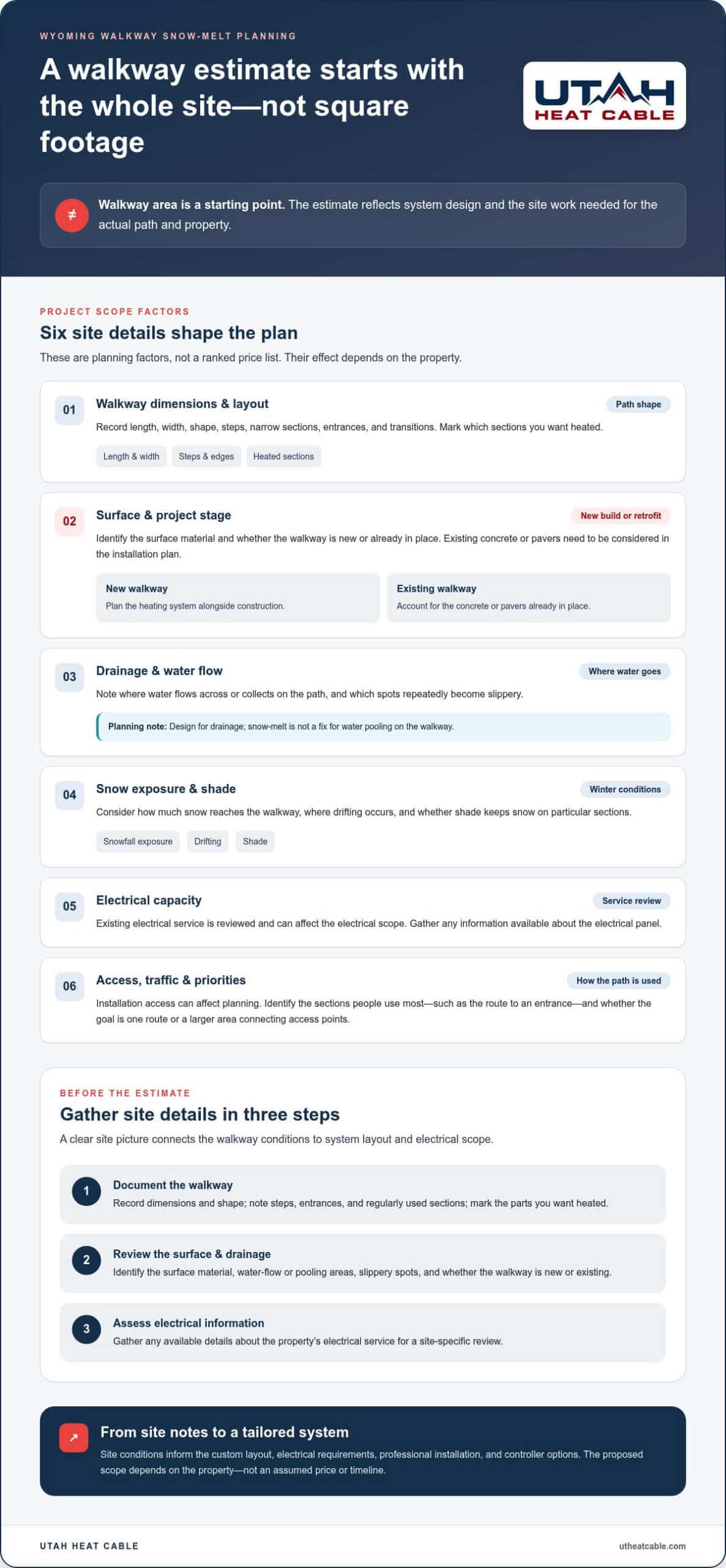
Walkway area is a useful starting point, but it doesn’t tell the whole story. A straight path with clear access and a suitable surface presents a different scope from a winding route with steps, tight edges, or an existing finish that must be worked around. The heated walkway installation cost Wyoming property owners are quoted reflects the system design and the site work needed to install it.
A heated walkway estimate reflects the complete site scope, not area alone. Snow-melt systems use different approaches, as outlined in this Snowmelt System Overview. A useful estimate is based on the specific walkway and property, not a broad per-area assumption.
Which walkway and site details change the project scope?
Start with the path’s length, width, shape, and any steps or narrow sections. Surface material matters, too. A new walkway can be planned around the heating system during construction, while a retrofit must account for existing concrete or pavers and how installation can fit with that surface. Access to the work area can also affect installation planning.
- Drainage and exposure: Note where water flows or collects, how much snow reaches the walkway, and whether shade or drifting keeps snow on particular sections. A snow-melt system should be designed with drainage in mind, not treated as a fix for water that pools on the path.
- Electrical capacity: Existing electrical service is part of the project review and can affect the electrical scope. Gather any available information about the electrical panel.
- Surface and edges: Steps, borders, and transitions influence where heat is needed and how the system fits the path. Identify the sections people use most, such as the route to an entrance.
Before requesting an estimate, note the walkway dimensions, surface type, visible drainage patterns, and electrical details you know. Also distinguish the sections you want heated from the full path. Utah Heat Cable designs custom sidewalk and walkway snow-melt systems for Wyoming properties, with professional electrical installation coordinated to site conditions. Clear site information helps define the project scope behind the heated walkway installation cost Wyoming homeowners are considering.
How Wyoming Conditions and Installation Choices Shape a Walkway Estimate
A walkway’s winter exposure helps determine how a snow-melt system should be planned. A shaded entrance may hold snow or ice differently from a sun-exposed path, while drifting snow and regular pedestrian traffic can affect where heat is most useful. These are design considerations, not assumptions that every Wyoming property faces the same conditions.
Decide whether the priority is a specific route, such as the path to a front entrance, or a larger area connecting several access points. If the project also includes a driveway, Utah Heat Cable’s sidewalk and driveway de-icing systems can be planned for those broader access needs as well as walkways.
What should a Wyoming property owner prepare before planning installation?
A few site notes can make the initial project review more useful. Follow this sequence:
- Document the walkway: Record its dimensions and shape, and note steps, entrances, and sections where people regularly walk. Mark which parts you want heated.
- Review the surface and drainage: Identify the surface material, places where water collects or flows across the path, and spots that repeatedly become slippery. Note whether the walkway is new or already in place.
- Assess electrical requirements: Gather any available information about the property’s electrical service for a site-specific review.
This sequence connects conditions on the ground to system layout and electrical scope. Utah Heat Cable designs systems around property conditions and provides professional electrical installation. Controller options are also part of planning how the system will be operated. To understand the basic choices involved, review these heat cable system basics. Together, your site notes and the project assessment help shape a tailored estimate for the heated walkway installation cost Wyoming homeowners are planning.
Planning a Heated Walkway Project with Utah Heat Cable
Utah Heat Cable designs and installs custom snow-melt systems for sidewalks and walkways at properties in Wyoming, Utah, and Idaho. Planning starts with how you use the path and the conditions it faces. A front entrance, a route between buildings, and a walkway with several transitions each call for a design that fits the property rather than a one-size-fits-all layout.
As a licensed electrical contractor, Utah Heat Cable provides professional electrical installation in the project process, with systems installed safely and according to code. Controller options are considered as part of how the system will be operated. The proposed layout and installation scope depend on the property, so the heated walkway installation cost Wyoming homeowners are planning is determined by project details, not an assumed price or timeline.
What happens when a walkway snow-melt project is planned?
Planning moves from site information to a design and then to installation. Sharing clear details about the walkway helps align the proposed system with the property:
- Review site details: Provide dimensions, surface information, steps, drainage patterns, and areas that commonly become difficult to walk on.
- Plan the system layout: Use those details to shape a custom design and identify electrical requirements.
- Coordinate installation and controls: Professional electrical installation and controller options are incorporated into the project plan.
If your winter access plan includes a driveway as well as a walkway, explore Utah Heat Cable’s sidewalk and driveway de-icing services as part of the broader project.
As you prepare, gather the walkway measurements, surface details, and information about areas that collect water or snow. These details provide a practical starting point for planning the system around your property.
Take the Next Step Toward a Safer Winter Walkway
Planning ahead gives you room to make a considered decision before winter conditions put your walkway to the test. Use an estimate to understand how your priorities, site details, and system choices fit together. That makes the heated walkway installation cost Wyoming homeowners plan for more meaningful and clarifies the project scope before work begins.
Gather your walkway measurements, note the areas that cause concern, and bring any questions about controls or installation to the project assessment. A clear starting point can turn an uncertain project into a practical plan tailored to your home.
Request a heated walkway project assessment and take a confident step toward a safer, more manageable winter entrance.
Frequently Asked Questions
How much does heated walkway installation cost in Wyoming?
There isn’t one standard price for a heated walkway project. The heated walkway installation cost Wyoming property owners receive depends on the planned heated area, installation conditions, system design, and electrical scope. For a more useful estimate, distinguish between the sections you want heated and the full path, and note your preferences for system controls. A project assessment can establish the scope for your property.
Does installing a heated walkway cost more on an existing concrete path?
It can, but the condition and construction of the path determine whether extra work is needed. Sound concrete presents different installation considerations from cracked or uneven pavement that may need attention before work proceeds. Share the path’s age, visible damage, and any past repairs during planning. That context helps identify how the existing surface may affect the installation approach.
Can a heated walkway be installed under pavers in Wyoming?
Yes, a heated walkway can be planned as part of a paver installation, including a new path or a project involving existing pavers. The heating layout needs to be coordinated with the paver assembly and installation sequence so the system suits the site. Note whether the pavers are already in place or still being selected, since that changes the information available for design.
What information do I need for a heated walkway estimate?
Prepare the walkway’s approximate length and width, surface type, steps, and the areas you want heated. Photos can help show access, transitions, and any uneven or damaged spots. Also note where water tends to collect, whether the path is new or existing, and any available information about the electrical panel. These details help make a project assessment more specific and useful.