
Roof heat cables create heated paths that help meltwater move through vulnerable roof edges and drainage channels, reducing conditions that can lead to ice dams. A Utah Heat Cable system should match the roof covering and installation method, rather than heating the entire roof. The goal is targeted snow and ice management.
Choosing a system means looking beyond the cable. Consider the roof covering, cable placement, controls, and other components that support operation. This guide explains how these factors shape a practical snow-melting system for Park City properties and other locations in Utah.
Key Takeaways
- Match system accessories and controls to the areas where meltwater needs a clear drainage path.
- Consider the roof covering and cable placement together, since installation depth affects how the system fits the surface.
- Compare self-regulating and constant-wattage cable options based on the needs of the roof and the planned system.
- For freeze-prone pipes, explore pipe heat cables as a separate solution from roof de-icing.
Snow-melting system accessories
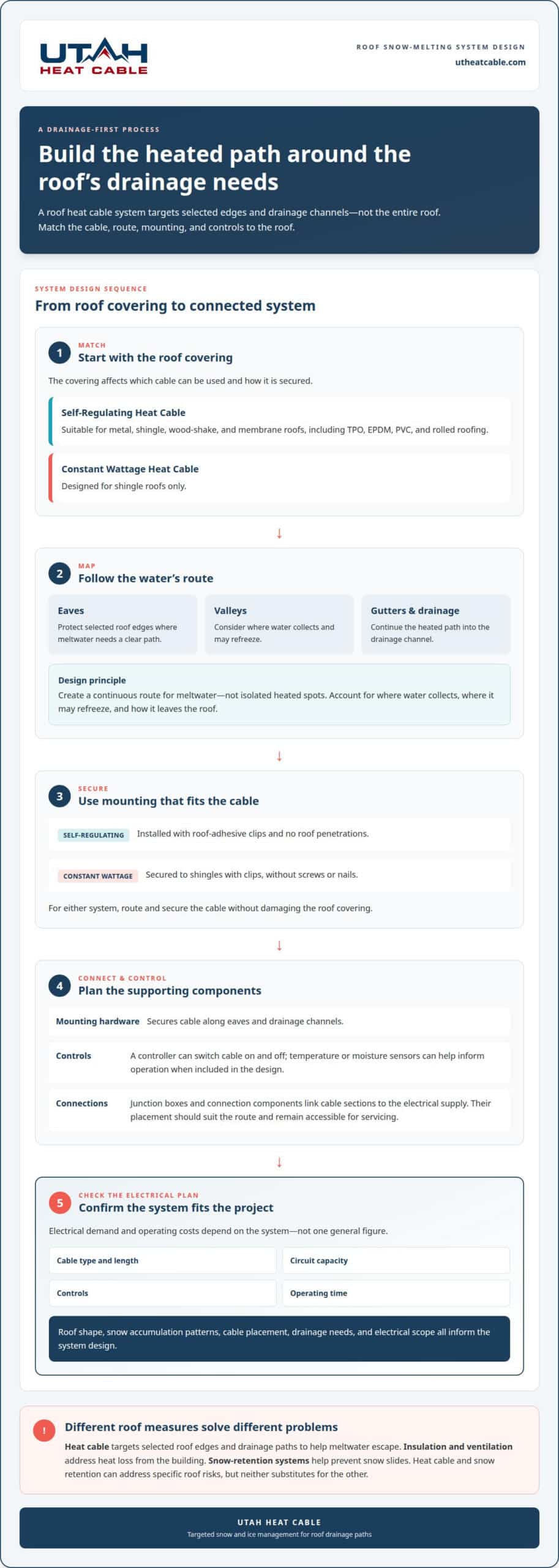
A roof cable is one part of a snow-melting system. Mounting hardware secures the cable along eaves and drainage channels, while electrical components connect the system and controls manage when it runs. The layout should form a continuous route for meltwater rather than isolated heated spots. Utah Heat Cable designs and installs heat-cable systems around the roof’s drainage needs.
Controls influence how the system operates. A controller can switch the cable on and off, while a temperature or moisture sensor can help inform operation when included in the design. Junction boxes and connection components link cable sections to the electrical supply. Their placement matters: connections need to suit the planned cable route and remain accessible for system servicing.
Heat cable differs from other ice-dam prevention measures because it targets selected roof edges and drainage paths to help meltwater escape. Insulation and ventilation address heat loss from the building, while snow-retention systems help prevent snow slides. These measures serve different purposes. For Park City properties, heat cable and snow retention can be designed to address specific roof risks, but neither substitutes for the other.
Park City project planning should account for the roof shape, snow accumulation patterns, cable placement, and electrical scope. These details guide system design and installation. Heat cable and controls do not remove the need to consider the roof’s conditions and drainage paths.
Electrical demand depends on cable type and length, circuit capacity, controls, and operating time. Those factors also shape operating costs, so a single general figure would not describe every roof. A project estimate follows a quote request and depends on the roof layout, cable route, and electrical scope. Warranty coverage and maintenance arrangements are separate terms, not accessories.
Suitable surface coverings and installation depth
Roof covering affects how heat cable can be routed and secured. Utah Heat Cable’s Self-Regulating Heat Cable suits metal, shingle, wood-shake, and membrane roofs, including TPO, EPDM, PVC, and rolled roofing. Constant Wattage Heat Cable is designed for shingle roofs only. For either system, the cable route should follow vulnerable edges and drainage paths without damaging the covering.
Cable placement matters because it determines where heat reaches snow and meltwater. Roof heat cable is routed along selected eaves, valleys, and gutters to support drainage. Utah Heat Cable installs Self-Regulating Heat Cable with roof-adhesive clips and no roof penetrations. Constant Wattage Heat Cable is secured to shingles with clips, without screws or nails. The roof covering and system design guide placement.
Temperature changes can cause melting and refreezing at different points along a Park City roof’s drainage route. A system layout should account for where water collects, where it may refreeze, and how it leaves the roof. A continuous heated path into the drainage channel is central to the design.
Installation pricing depends on roof area, covering type, access, cable route, and the electrical work needed. The price is determined by the project and provided after a quote request. For a roof with several valleys or mixed coverings, those details affect both cable placement and installation scope. You can request a project estimate based on your roof’s layout.
Light-colored surfaces reflect sunlight, while dark surfaces absorb heat from the sun. This is a separate surface characteristic from covering material and cable installation depth, so it can be considered alongside the roof’s physical layout rather than treated as a substitute for routing guidance. Access to tree cover and parks strongly correlates with income in many American cities. That broader pattern provides context for the surroundings considered when reviewing a property, but does not specify a cable route or installation depth.
What types of heat cable does Park City Heat Cable install, and how do they compare?
Two common heat-cable designs are self-regulating and constant-wattage. They operate differently, so the choice should reflect the roof layout, cable route, and control strategy. Utah Heat Cable installs both types. The right choice depends on the areas needing protection and the electrical plan, not the product name alone.
Self-regulating cable adjusts its heat output in response to surrounding conditions along the cable. This can make it useful where roof temperatures vary across eaves, valleys, and shaded sections. Its output still depends on the system design and operating conditions. It needs an appropriate electrical connection and a layout that directs meltwater toward drainage.
Constant-wattage cable produces heat at a consistent rate while energized. That predictable output can suit a defined route, such as an eave leading into a downspout. Cable length, spacing, and the area being protected determine how the system is configured. Controls can manage operation, while the electrical design must match the selected cable.
To compare cable types, consider the roof’s problem areas, covering, drainage route, and control needs. A roof edge with a clear drainage path presents different design requirements from a valley where meltwater collects. Park City’s winter conditions make careful placement and drainage planning important. The decision is about system fit, not a universal winner.
Professional installation brings cable selection, routing, controls, and electrical connections together as one system. A project-specific design helps match those components to the roof’s vulnerable areas.
For another design reference, Warmup snow-melting cables spaced 4 inches on center output 38W/SF. That specification offers a concrete output figure to consider when reviewing a cable proposal; it should be weighed alongside the roof area, routing, and controls already relevant to system selection.
Utah Heat Cable: Pipe heat cables
Utah Heat Cable also installs pipe heat cables to help protect pipes exposed to freezing conditions. Unlike roof systems, pipe heat cables address heat loss along pipe runs. The cable type and placement depend on the pipe layout and surrounding conditions.
Self-Regulating Heat Cable and Constant Wattage Heat Cable suit different applications and system designs. For pipes, the choice depends on the pipe run and the conditions around it. Pipe heat cables address a separate winter risk from roof ice dams, so they may be relevant when a property has both exposed pipes and roof drainage concerns.
For help with pipe heat cables or a related de-icing need in Utah, contact Utah Heat Cable to discuss your property.
Plan ahead for winter roof protection
Before the next cold season, note which roof areas repeatedly collect snow or channel meltwater toward vulnerable edges. A Park City Heat Cable plan starts with those conditions, then matches the system to the roof and its drainage needs. Utah Heat Cable offers a free consultation and quote to help turn concerns about ice dams into a practical plan for protecting your property.
Utah Heat Cable installs Self-Regulating Heat Cable and Constant Wattage Heat Cable, and provides roof de-icing services. Share which roof areas concern you and what winter problems you have noticed. That gives the consultation a practical starting point, since every roof has different drainage and protection needs.
Thoughtful preparation can make winter property care more manageable.
Frequently Asked Questions
What are Snow Melting Cables Designed For?
Snow-melting cables create heated paths where snowmelt needs to drain from a roof. A Park City Heat Cable system can protect areas such as eaves, valleys, and gutters, where water may collect or refreeze. The goal is targeted meltwater management, not clearing snow from every roof surface. Cable placement depends on the roof’s shape and drainage route.
How does heat cable prevent ice dams and roof damage?
Heat cable warms selected roof areas to help meltwater move toward drainage rather than refreeze at cold edges. A heated route through an eave and gutter, for example, can help keep runoff moving. Ice buildup can cause water to back up beneath roofing materials, so managing the drainage path may help reduce related damage. Heat cable does not repair existing roof damage.