
The ice at your roof edge may be a symptom of heat escaping from your home. Ice dams form when that heat melts roof snow and the meltwater refreezes at colder eaves, blocking drainage. Understanding what ice dams are and how to prevent them starts with limiting heat loss through the attic and maintaining airflow beneath the roof.
Icicles can look harmless, but a ridge of ice may trap water that seeps beneath shingles and damages ceilings, walls, or insulation. Utah’s winter snow and freezing temperatures make it important to understand how attic insulation, air leaks, and ventilation affect roof temperatures. This article explains what ice dams are, how they form, which signs to watch for, and how to reduce the risk of water backing up at the roof edge.
Key Takeaways
- Look for heat-leak paths around attic hatches, lights, ducts, and chimneys; sealing these gaps can help limit warm air entering the attic.
- Balanced airflow matters: clear soffit vents can bring in cool air while roof vents let warmer air escape.
- Keep gutters and downspouts clear so melting snow can drain instead of backing up at the roof edge.
- Pay attention to icicles, water stains, or ice near exterior vents, as these signs can point to a developing roof drainage problem.
Attic insulation and ventilation
In Utah, insulation, air sealing, and ventilation affect how much heat reaches the roof. These measures address uneven roof temperatures, which can contribute to snowmelt and water damage.
Attic Insulation and Heat Loss
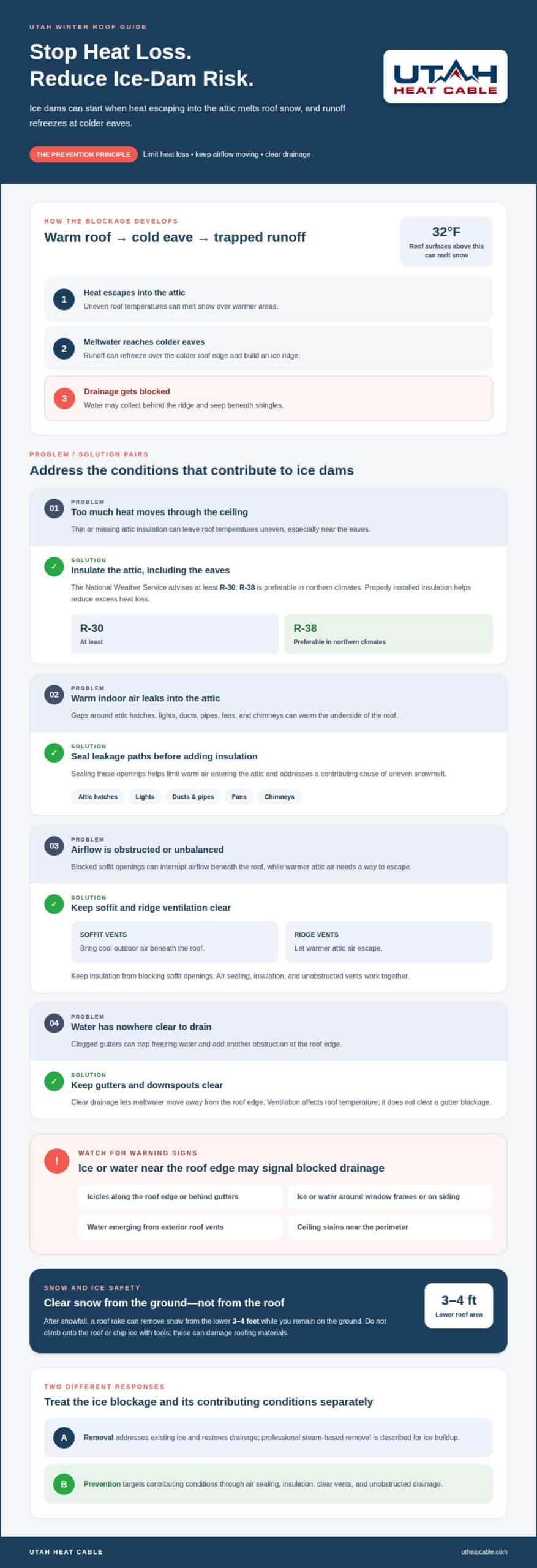
Attic insulation slows heat moving through ceilings and into the attic, helping keep roof temperatures more consistent. The National Weather Service advises an attic insulation value of at least R-30, with R-38 preferable in northern climates. Insulation near the eaves matters too: thin or missing coverage there can leave cold roof edges beside warmer roof areas. That temperature difference can encourage melting and refreezing, while properly installed insulation helps reduce excess heat loss.
Sealing Attic Air Leaks
Attic air leaks are gaps around ceiling openings, such as attic hatches, lights, ducts, pipes, fans, and chimneys. Warm indoor air escaping through these openings can heat the underside of the roof and melt snow unevenly. To prevent ice dams, seal these leakage paths before adding more ceiling insulation. The cost of professional ice dam removal depends on the conditions of the roof and the work required; the price is provided after a quote request. If water stains or other signs of water damage appear, removal addresses the existing ice, while sealing gaps helps reduce a contributing cause.
Soffit and Ridge Ventilation
Soffit vents bring cool outdoor air beneath the roof, while ridge vents let warmer attic air escape. This airflow helps keep the attic closer to outdoor temperatures and may reduce freeze-thaw cycles on the roof. Keep insulation from blocking soffit openings so air can move along the underside of the roof. Gutters must also drain properly, but ventilation affects roof temperature rather than clearing a gutter blockage. Air sealing, insulation, and unobstructed vents work together to limit heat loss and reduce the risk of ice dams.
What Are Ice Dams and How Do You Prevent Them?
Winter freeze-thaw weather can turn roof snowmelt into a blockage at the eaves. Understanding how ice dams form helps you spot warning signs and choose prevention measures suited to your roof.
Ice Dam Formation
An ice dam forms when heat loss melts snow on warmer roof areas, then meltwater refreezes over colder sections. This cycle may continue for several days, building a ridge that obstructs drainage. Roof surfaces above 32°F can melt snow while colder areas remain below freezing. Limiting heat loss through attic insulation and sealing helps reduce uneven melting, rather than simply addressing ice after it builds up.
Ice Dams at Roof Edges
At the eaves, meltwater reaches an overhang that receives less heat from the home and refreezes. The growing ridge can block later runoff, allowing water to collect behind it and seep beneath shingles. Low- or flat-pitched roofs may be more susceptible because water drains less readily. Clogged gutters can also trap freezing water and add another obstruction along the roof edge.
Ice Dam Warning Signs
Icicles along the roof edge or behind gutters may signal blocked drainage, especially after repeated thawing and freezing. Watch for ice or water around window frames, on siding, or emerging from exterior roof vents. Ceiling stains near the perimeter can indicate water has entered the home. Monitor spaces directly beneath the roof for intrusion; if water damage appears, request professional ice dam removal.
Prevention for Different Roof Types
Prevention starts with reducing heat loss and keeping drainage paths clear, regardless of roof shape. Low-pitched or flat roofs need particular attention because runoff moves less freely. After snowfall, a roof rake can remove snow from the lower 3-4 feet while you remain on the ground. Don’t climb onto the roof or chip ice with tools, which can damage roofing materials. Clear gutters and downspouts so meltwater has a route away.
What causes ice dams?
Ice dams develop when roof heat loss and winter weather interrupt normal drainage. Their effects can reach beyond roofing materials to interior ceilings, walls, and insulation.
Blocked Roof Drainage
An ice dam is a ridge of ice along a roof edge that blocks melting snow from draining. As water collects behind it, runoff can back up beneath shingles and enter the attic or living space. Low-pitched roofs may drain less easily, while heat escaping through the ceiling can warm roof areas unevenly. These factors can combine during snowfall and temperature changes, increasing the risk of water intrusion and damage.
Snowmelt and Refreezing
Snowmelt refreezes when runoff travels from a warmer roof surface to a colder eave. Daytime melting followed by overnight freezing can gradually build ice along the edge. Clogged gutters may trap water and add to the blockage. Roof pitch, snow cover, and changing temperatures affect where ice forms and how readily water drains, so the same weather can affect different roof areas in different ways.
Once water gets beneath shingles, it can wet roof sheathing, insulation, ceilings, and walls. Persistent moisture can damage wood and support mold growth if affected areas do not dry properly. If an ice dam causes a leak, monitor the area beneath the roof and arrange professional steam-based removal, especially if interior water damage is visible. Avoid chipping ice with tools, which can damage roofing. Wait until wet ceilings and walls have dried before repairing them.
Professional removal addresses the immediate ice blockage, while sealing attic leaks and limiting heat loss can reduce contributing conditions. The measures solve different parts of the problem: removal restores drainage, and prevention targets the causes.
Utah Heat Cable
Utah Heat Cable provides roof de-icing services for properties where recurring roof-edge ice needs a targeted response. Steam-based de-icing can clear ice buildup, but it does not replace attic insulation, air sealing, or clear drainage. Those measures address heat loss and other contributing conditions, while de-icing tackles the ice itself.
For winter property planning, roof snow retention can help manage snow movement, while controller options support de-icing system operation. Sidewalk and driveway de-icing systems address ice on walking and vehicle surfaces, separately from roof drainage. The right approach depends on where ice forms and what problem needs attention.
Contact Utah Heat Cable to discuss de-icing or snow retention for your property.
Plan Your Roof Protection Before Winter
Use the months before winter to consider how recurring ice affects your roof’s drainage and your property-care plans. Planning ahead gives you time to distinguish between an existing ice blockage and measures intended to reduce future buildup, rather than waiting for a leak to dictate the next step.
For recurring roof-edge ice, Utah Heat Cable offers Self-Regulating Heat Cable, Constant Wattage Heat Cable, and roof de-icing services. These options can support a winter roof plan alongside attention to the home’s insulation and airflow. Consider where ice tends to form and whether you need immediate removal or prevention for future seasons.
Understanding what ice dams are and how to prevent them helps you choose a practical next step for your home. A clear plan can help you prepare for winter conditions and make roof protection part of your seasonal routine. If your seasonal household planning also involves supporting aging family members safely at home during the colder months, Elite Caregivers United LLC offers dedicated in-home personal care services.
Take the next step toward a more prepared winter.
Frequently Asked Questions
Does insurance cover damage from ice dams?
Homeowners insurance may cover damage to the home caused by water entering because of an ice dam, but coverage depends on the policy. Personal belongings may be treated differently, so review your policy terms for both the building and its contents. If a leak occurs, document the affected areas and protect belongings from further moisture while the damage is assessed.
How Do Ice Dams Form?
Ice dams form when snow melts on warmer roof areas and refreezes near colder eaves, gradually creating an obstruction. For example, snow may soften above a heated room, then freeze again near the overhang. Repeated freeze-thaw cycles can extend the ridge and trap runoff on the roof, increasing the chance of leaks beneath roofing materials.
How do you remove ice dams?
Professional roof de-icing uses steam to melt ice without striking shingles with tools. Avoid climbing onto a snowy roof or chipping at a ridge, since falls and roof damage are serious risks. If water is already entering the home, monitor the affected ceiling and walls, and arrange professional removal promptly. Wait until wet materials have dried before making interior repairs.
What causes different roof surface temperatures?
Heat escaping from living spaces can warm roof areas above rooms, while eaves receive less warmth from inside the home. Snow cover, attic insulation, air leakage, and ventilation all influence how heat moves through the roof. For example, a gap around an attic hatch may warm one section more than nearby roof edges, creating uneven melting.
What is an ice dam?
An ice dam is a buildup of ice at a roof edge that obstructs water draining from melting snow. The trapped runoff can seep beneath shingles and affect the attic, ceilings, walls, or insulation. Icicles alone do not prove that a dam is present, but ice accompanied by water stains or interior leaks deserves attention and monitoring.