
What if the most important part of a de-icing system isn’t where ice forms, but where the meltwater needs to go? Ice at the roof edge can become a bigger problem when water has no clear route through the gutters and downspouts. In Idaho, roof and gutter de-icing systems work best when heat cable is planned around that full path, not just the most visible icy spot.
If you’re concerned about blocked drainage, winter leaks, or which areas need heat cable, the design depends on your roof shape and how water moves off it. This guide explains how roof and gutter components work together, which site conditions shape a system, and how professional, code-conscious installation can support safe drainage. It also covers related options, including controllers and snow retention, while keeping roof maintenance in the picture.
Key Takeaways
- Roof and gutter de-icing systems Idaho properties need are best planned around a continuous route from roof to downspout.
- Start with a site assessment: map drainage, review roof and gutter layout, consider electrical conditions, then plan coverage.
- Heat-cable type and placement depend on the application, so design should reflect the property rather than rely on a one-size-fits-all layout.
- Utah Heat Cable designs and installs custom systems for Idaho homes, businesses, industrial sites, and HOAs, with controllers and snow retention considered where appropriate.
Why Idaho Roof and Gutter De-Icing Systems Must Follow the Meltwater Path
Meltwater can refreeze when its route off the roof is interrupted. Snow may begin melting higher on the roof, then water can stall at a cold eave, in a gutter, or inside a downspout and form ice. This process is part of ice dam formation, but heat cable is not a substitute for sound roof maintenance or a fix for every cause of ice buildup.
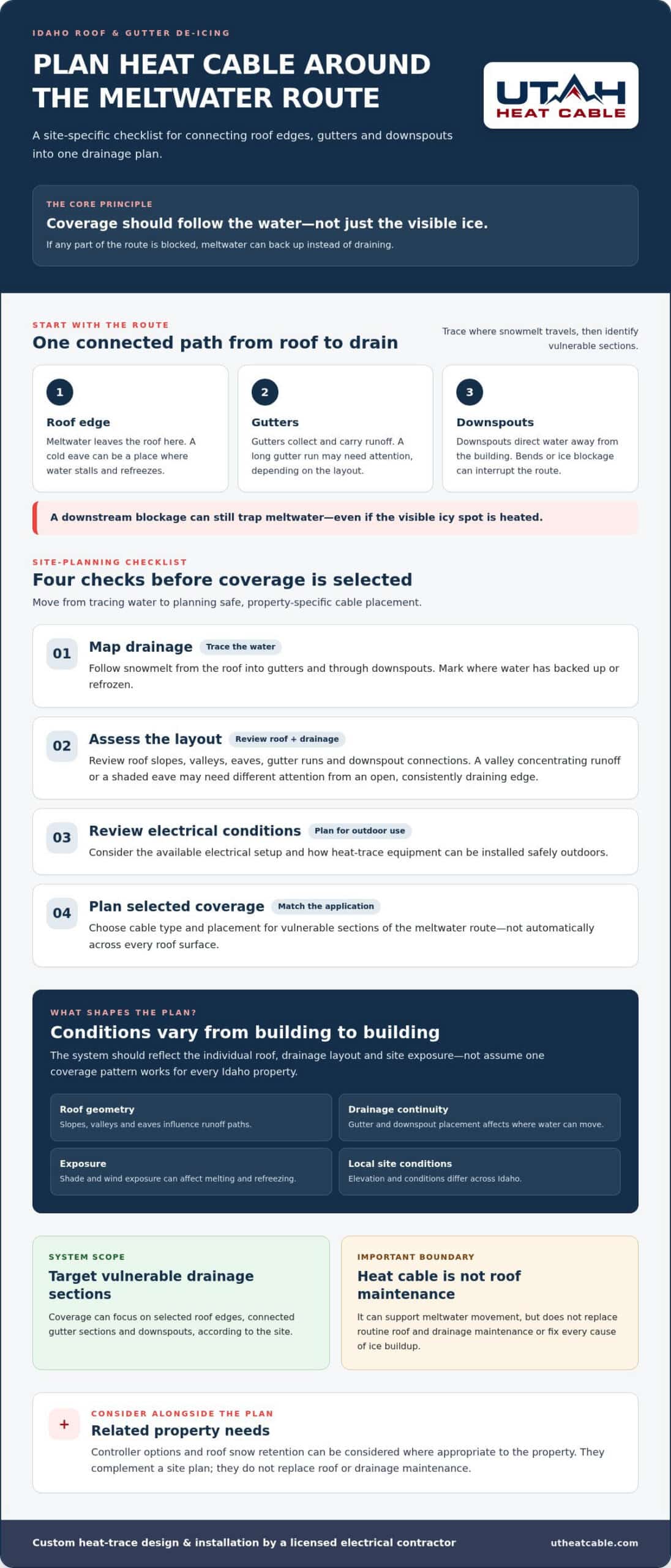
A roof and gutter de-icing system uses heat-trace cable along selected drainage paths to help keep water moving through vulnerable sections. Roof edges, gutters, and downspouts work as one drainage route, so de-icing coverage should be planned as a connected system. Heating only the visible ice may leave a downstream blockage that still traps meltwater.
Which parts of the roof-to-drainage path can need de-icing?
The roof edge is where meltwater leaves the roof; gutters collect and carry it, while downspouts direct it away from the building. If any section becomes blocked by ice, water may back up rather than drain. A roof valley that channels runoff toward one eave, a long gutter run, or a downspout with bends may call for attention, depending on the property’s drainage layout.
There isn’t one coverage pattern for every Idaho building. Roof geometry, gutter and downspout placement, shade, wind exposure, and elevation can all affect where snow melts and refreezes. Conditions differ across the state, so the design should reflect the property rather than assume every Idaho site faces the same winter pattern. Utah Heat Cable’s roof and gutter de-icing services are designed around those site-specific drainage paths. Heat-trace coverage can support meltwater movement, but it doesn’t replace routine roof and drainage maintenance.
How to Plan Roof and Gutter De-Icing Systems for Idaho Conditions
A useful design starts with the building’s actual drainage, not a standard cable pattern. For roof and gutter de-icing systems Idaho properties need, planning should move from tracing water’s route to selecting coverage that fits the roof, drainage, and electrical conditions.
- Map drainage. Trace where snowmelt leaves the roof, enters gutters, and travels through downspouts. Note where water has backed up or refrozen.
- Assess the layout. Review roof slopes, valleys, eaves, gutter runs, and downspout connections. A valley that concentrates runoff or a shaded eave may need different attention from an open, consistently draining edge.
- Review electrical conditions. Consider the available electrical setup and how heat-trace equipment can be installed safely for outdoor use.
- Plan coverage. Select cable type and placement for the application and the vulnerable sections of the meltwater route, rather than heating every roof surface.
What does a site-specific Idaho system assessment consider?
The assessment connects roof geometry with gutter and downspout continuity, locations prone to refreezing, and site exposure. Idaho properties vary in elevation and local conditions, so a design should respond to the individual building instead of assuming one statewide pattern. Heat cable can support selected drainage paths, but it doesn’t correct underlying roof or drainage maintenance issues.
Utah Heat Cable’s licensed electrical contractor team designs and installs custom heat-trace systems with attention to electrical safety and applicable requirements. That professional role matters because coverage and installation must work together, not just place cable near visible ice. For more background on how heat-trace fits into ice-dam prevention, explore this professional heat-cable guide. A property-specific plan can help clarify which drainage sections need attention; explore professional heat-trace solutions for Idaho properties.
Professional Roof and Gutter De-Icing Installation Across Idaho
A reliable installation begins with the property, not a preset cable layout. Utah Heat Cable designs and installs custom heat-trace systems for residential, commercial, industrial, and HOA properties across Idaho. The goal is to match coverage to the building’s roof and drainage needs, with professional installation by a licensed electrical contractor.
What to expect from a tailored de-icing solution
The process starts with an assessment of the roof and drainage layout, including the sections where meltwater needs a clear route. From there, the system is designed to suit the property and installed as planned. For an Idaho home, that might mean focusing on selected roof edges, connected gutter sections, and downspouts rather than applying heat cable across the entire roof. The precise scope depends on the site.
Roof and gutter coverage can be considered alongside controller options and roof snow retention when those needs relate to the property. These are complementary parts of a site plan, not a reason to treat heat cable as a replacement for roof or drainage maintenance. Utah Heat Cable provides roof and gutter de-icing services as part of its broader heat-trace work, tailoring system design to the building and its intended drainage paths.
For roof and gutter de-icing systems Idaho property owners can plan around their specific site, a professional assessment helps connect design decisions with installation. To discuss a tailored approach, discuss a roof and gutter de-icing system with Utah Heat Cable.
Prepare Your Property for the Next Winter
Before cold weather returns, turn winter observations into a practical plan. Note where ice has lingered, where drainage has backed up, and whether changes to the roof or gutters have altered how water moves. These details can help focus a site assessment on the areas that matter most, while regular roof and drainage maintenance remains part of caring for the property.
A thoughtful plan for roof and gutter de-icing systems Idaho properties can use starts with the building’s needs, not a generic layout. Utah Heat Cable can help translate those site conditions into a tailored heat-trace approach. Plan a roof and gutter de-icing system for your Idaho property, and take a steady, informed step toward winter readiness.
Frequently Asked Questions
How do roof and gutter de-icing systems work?
They use heat cable in selected roof and drainage areas to help keep meltwater moving during freezing conditions. For example, if snowmelt reaches a cold gutter before it can drain, heat-trace coverage can be planned along that vulnerable section and toward the outlet. A controller may also be considered as part of the system design. The layout should suit the property.
Can heat cable be installed in both gutters and downspouts?
Yes, heat cable can be installed in both gutters and downspouts when the site-specific design calls for coverage along those parts of the drainage route. For instance, heating a gutter but leaving a problem section of downspout unaddressed may not support the intended flow. A professional assessment helps determine suitable coverage for a building in Idaho, Utah, or Wyoming.
Do roof de-icing systems prevent every ice dam?
No. A de-icing system can help manage ice-prone drainage areas, but it can’t prevent every ice dam or correct every underlying cause. Heat loss into the roof, existing drainage issues, or neglected maintenance can still contribute to ice buildup. Treat heat cable as one part of winter property care, alongside maintaining the roof and keeping drainage components in serviceable condition.
When should Idaho property owners plan a roof and gutter de-icing installation?
Plan before freezing weather makes roof access and installation more difficult. Starting early gives time to review the property, identify past trouble spots, and develop a design before the system is needed. If ice has formed repeatedly at a particular eave or outlet, note the location and conditions; those observations can help shape a useful assessment for the next winter season.