
What if a heated driveway needs more attention than switching it on when snow starts falling? Radiant heat driveway maintenance doesn’t have to involve complicated seasonal work, but routine observation can help you spot surface damage, blocked drainage, or uneven melting before concerns grow. A system that seems slow during a storm may need time to respond, or its performance may warrant a closer look.
Dependable performance starts with knowing what you can safely check and what should be left to a qualified professional. This guide covers what to inspect before, during, and after snow season, how to use the system responsibly, and which snow-clearing habits can help protect the driveway. Winter conditions vary across Utah, Idaho, and Wyoming, so observing how your system responds to local weather is more useful than expecting identical results in every storm.
Key Takeaways
- Radiant heat driveway maintenance starts with checking the surface, drainage, controls, and snow-melting pattern.
- Inspect before winter, observe system behavior during snowfall, and review the driveway again after the season.
- Uneven melting or unusual controller behavior can call for a qualified assessment, not DIY electrical troubleshooting.
- Visual checks help you identify changes, but they don’t diagnose technical problems.
Radiant Heat Driveway Maintenance: What Needs Attention and Why
Radiant heat driveway maintenance is less about taking equipment apart and more about noticing changes, following the system’s operating instructions, and responding when something seems unusual. A driveway may look clear while new surface cracks, blocked drainage, or unexpected controller behavior go unnoticed. Recording these changes can help you decide whether routine upkeep is enough or a professional assessment is appropriate.
Snow-melt systems use electric heating elements or hydronic tubing to warm the driveway surface, as outlined in this overview of the Snowmelt system. System design and controls affect how a driveway responds to winter conditions, so don’t assume that a clear surface means there’s nothing to monitor. Snowfall, temperature, and moisture vary across Utah, Idaho, and Wyoming. Pay attention to how your system performs in the conditions at your property.
Does a radiant heated driveway need routine maintenance?
Yes. Routine checks mean visually inspecting the driveway and controls, not attempting electrical repairs or system diagnostics. Look for new cracks, confirm that drainage paths are clear, and note unusual controller displays or uneven melting. These observations can flag a concern, but they won’t identify its technical cause. Don’t open electrical components or attempt wiring repairs yourself.
Driveway snow-melt maintenance means observing the surface and controls, following operating instructions, and noting changes in performance. Use the installed system and controller manufacturers’ guidance for operation and recommended service. If a visible change persists or system behavior seems abnormal, have a qualified professional assess it safely.
A Seasonal Radiant Driveway Maintenance Checklist for Winter
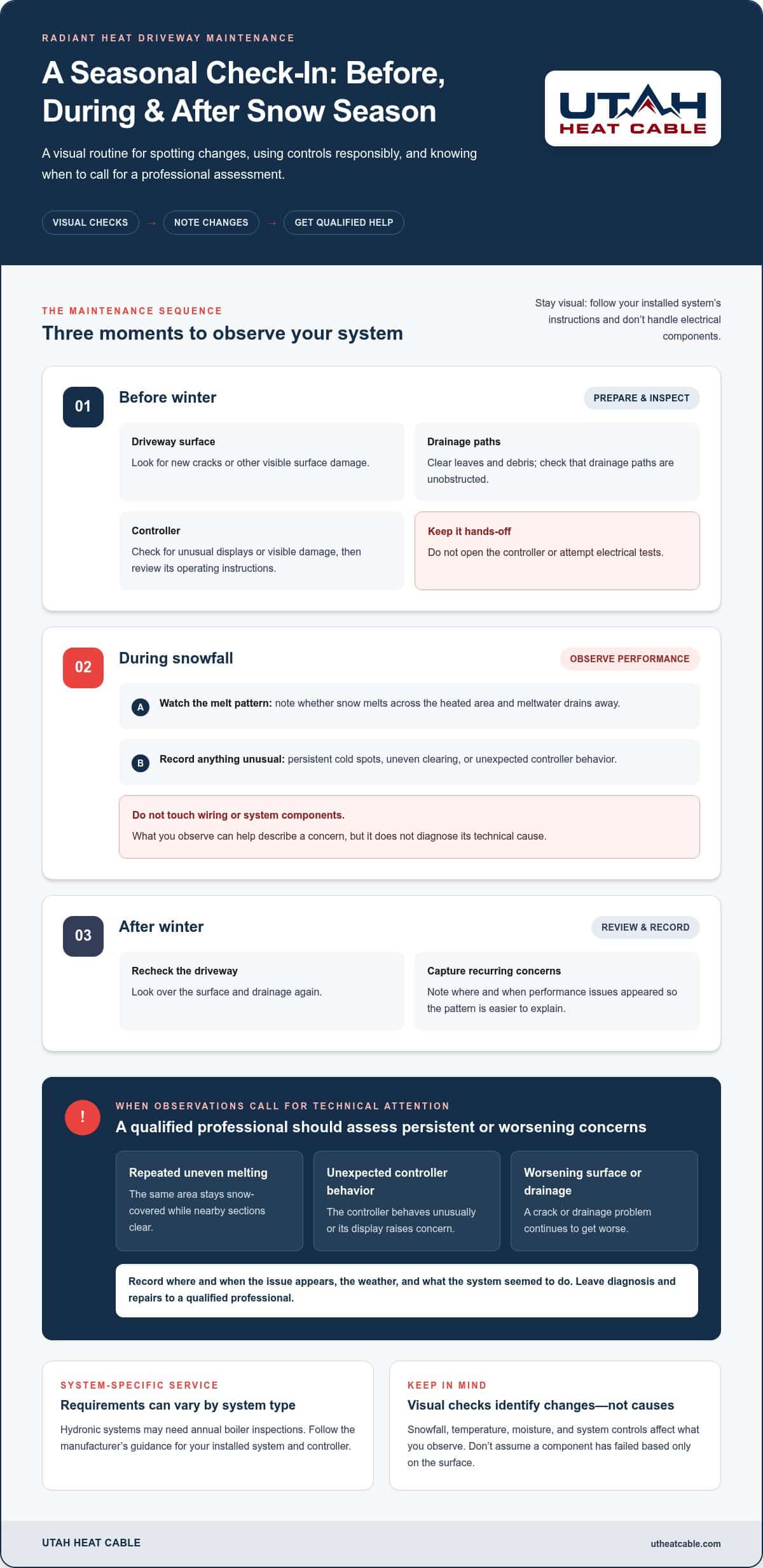
A simple seasonal routine helps you spot changes without handling electrical components. Keep checks visual, follow the instructions for your installed system and controller, and make a note of recurring concerns. Details such as where an issue appears and whether it happens during particular weather can help explain the pattern during a professional assessment.
What should you check before, during, and after snow season?
- Before winter: Look for new cracks or other visible surface damage. Clear leaves and debris, and make sure drainage paths are unobstructed. Check the controller for unusual displays or visible damage, then review its operating instructions. Don’t open the controller or attempt electrical tests.
- During snowfall: Observe whether snow melts across the heated area and whether meltwater drains away. Note persistent cold spots, uneven clearing, or unexpected controller behavior. Don’t touch wiring or system components. These observations can help describe a problem, but they don’t diagnose its cause.
- After winter: Check the surface and drainage again. Record any recurring performance issues, including where and when they appeared, so the pattern is easier to explain if a professional assessment is needed.
Maintenance needs depend partly on system type. For example, Heated Driveway Maintenance discusses differences between electric and hydronic systems, including the need for annual boiler inspections on hydronic systems. Follow your installed system’s manufacturer guidance for service requirements.
If you’re considering a system or want context on how design relates to seasonal operation, explore this heated driveway installation guide.
When Radiant Driveway Maintenance Calls for Professional Service
Persistent uneven melting, unusual controller behavior, or worsening cracks and drainage problems deserve attention, especially if they continue after you’ve followed the system’s operating instructions. These signs don’t identify the cause on their own. Snowfall, temperature, and system controls can all affect what you observe, so don’t assume a heating cable or another component has failed based only on the surface.
Which driveway snow-melt problems should a professional assess?
Arrange a professional assessment if the same area repeatedly stays snow-covered while nearby sections clear, the controller behaves unexpectedly, or a surface concern keeps worsening. Note where and when the issue appears, the weather, and what the system seemed to do. This record helps describe the problem without requiring you to inspect wiring, open electrical components, or attempt repairs. Leave technical diagnosis to a qualified professional.
Radiant heat driveway maintenance includes knowing when a visual observation calls for technical attention. Utah Heat Cable is a licensed electrical contractor that designs custom driveway snow-melt systems for residential, commercial, industrial, and HOA properties across Utah, Idaho, and Wyoming. Its team installs self-regulating and constant-wattage heat cables, as well as snow-melt systems for driveways and sidewalks.
Explore Utah Heat Cable’s driveway snow-melt services to learn about professional system design and installation.
Prepare Your Driveway for More Dependable Winter Operation
Consistent radiant heat driveway maintenance starts with visual checks, responsible use of the system’s controls, and attention to changes in how snow melts. Before winter, inspect the driveway and drainage. During storms, observe performance without handling wiring or electrical components. After the season, record recurring concerns so they’re easier to describe if the system needs professional attention.
Uneven melting or unusual controller behavior doesn’t reveal the cause, but it can be a reason to seek a professional review. Utah Heat Cable designs custom driveway snow-melt systems for properties across Utah, Idaho, and Wyoming, with solutions tailored to the property and its winter conditions.
For help planning a driveway snow-melt system, explore Utah Heat Cable’s services and get practical guidance. Careful observation and qualified support can help you prepare for the snow season with greater confidence.
Frequently Asked Questions
Does a radiant heat driveway need regular maintenance?
Yes. Radiant heat driveway maintenance includes routine visual checks, correct operation, and attention to unusual changes. Look for visible surface damage, blocked drainage, or unexpected controller behavior, but leave electrical testing and repairs to a qualified professional. System needs vary, so follow the installed system and controller manufacturers’ instructions for operation and recommended service.
How do I prepare a heated driveway for winter?
Before winter, inspect the driveway for cracks, clear leaves and debris, and make sure drainage paths are open. Review the controller’s instructions and look for unusual displays or visible damage without opening its housing. Winter conditions vary across Utah, Idaho, and Wyoming, so observe how the system responds to local snowfall rather than expecting identical performance in every storm.
Can I use a snow shovel or snowblower on a radiant heated driveway?
Use snow-clearing equipment only in line with the driveway surface’s care instructions and the snow-melt system manufacturer’s guidance. Avoid forceful scraping or striking the surface, and don’t dig into the driveway, since heating elements may be concealed below it. If you’re unsure which clearing method is suitable for your installation, consult its documentation or have a qualified professional advise you.
What should I do if my heated driveway is not melting snow evenly?
Observe and document where and when uneven melting occurs, including the weather and any unusual controller behavior. A recurring cold area may have several possible explanations, so don’t assume a component has failed or attempt to test wiring yourself. Arrange a qualified assessment. Utah Heat Cable is a licensed electrical contractor that designs custom snow-melt systems across Utah, Idaho, and Wyoming.