
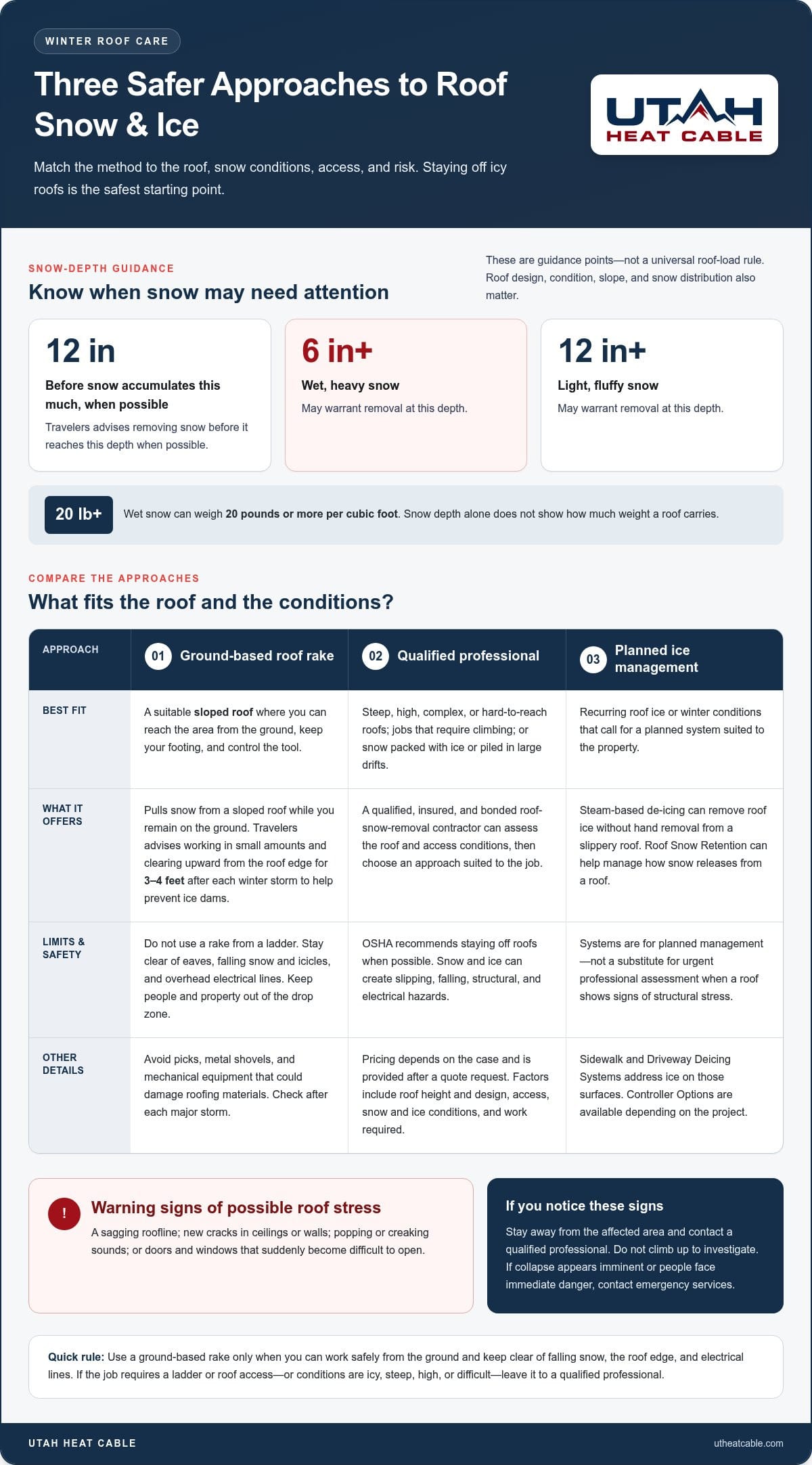
Climbing onto an icy roof is often the riskiest way to clear it. A safe roof snow removal alternative is to use a roof rake from the ground on a suitable sloped roof, or hire a qualified professional when the roof is steep, high, or difficult to access. Travelers advises removing snow before it accumulates to 12 inches when possible. Remove wet, heavy snow at 6 inches or more and light, fluffy snow at 12 inches or more.
It’s understandable to want to clear snow before it strains your roof or contributes to ice dams, but ladders and slippery surfaces can make the job dangerous. This guide explains when snow may need clearing, why icy roofs and falling snow are hazards, and which safer options can help. You’ll also learn when a ground-based rake may be suitable and when it’s safer to leave the work to a qualified professional.
Key Takeaways
- For a suitable sloped roof, a rake used from the ground can help clear snow without climbing onto the roof. Work in small amounts, stay clear of overhead electrical lines, and keep out of the path of falling snow and ice.
- Travelers advises removing snow before it accumulates to 12 inches when possible; wet, heavy snow at 6 inches or more may also need attention.
- OSHA recommends staying off roofs when possible because snow and ice can create slipping, falling, structural, and electrical hazards. Steep, high, complex, or icy roofs are better handled by a qualified professional.
- For ongoing ice and snow management, Utah Heat Cable offers De-Icing Services and Roof Snow Retention as options to consider for your property.
1. Ground-based roof rakes for sloped roofs
A roof rake can pull snow from a sloped roof while you stay on the ground. Choose one that can reach the area, and work only if you can keep your footing and control the tool. A rake is not suitable for every roof shape or snow condition; steep, high, or hard-to-reach sections may need professional attention.
Work gradually rather than dragging down a heavy load. Travelers advises removing snow in small amounts and clearing upward from the roof edge for three to four feet after each winter storm to help prevent ice dams. Travelers also advises removing snow before it accumulates to 12 inches when possible, since additional layers can make removal more dangerous.
Keep the rake and all equipment away from overhead electrical lines. Stay well clear of the eaves, where sliding snow or icicles could fall. Keep people and property out of the drop zone, and avoid picks, metal shovels, or mechanical equipment that could damage roofing materials.
Snow depth alone doesn’t show how much weight a roof carries. Wet snow can weigh up to 20 pounds or more per cubic foot; the roof’s design, condition, slope, and snow distribution also matter. Heavy, wet snow at 6 inches or more and light, fluffy snow at 12 inches or more may warrant removal. Check after each major storm, and use this roof snow and ice preparation guide to plan ahead.
2. Risks of icy roofs and ladders
Shovels can damage roofing materials, while pressure washers can add water to a freezing roof. A rake avoids climbing only when you can use it safely from the ground. Using one from a ladder risks a fall, while falling snow or icicles can strike with considerable force.
The Occupational Safety and Health Administration recommends staying off roofs when possible. Snow and ice can create slipping, falling, structural, and electrical hazards. Even a roof that looks stable from below may have slippery patches or hidden ice. Don’t climb onto a roof that’s icy or slick.
Ladders add another hazard: snow or ice can affect your footing as you climb or work near the eaves. Keep people and property clear of the area below, since snow can slide unexpectedly. Overhead electrical lines also make long-handled tools and equipment hazardous if they get too close.
Watch for possible signs of roof stress, including a sagging roofline, cracks in ceilings or walls, popping or creaking sounds, or doors and windows that suddenly become difficult to open. If you notice these signs, stay away from the affected area and contact a qualified professional. Don’t climb up to investigate.
Choose a ground-based approach only when you can stay clear of the roof edge, falling snow, and electrical lines. If clearing requires a ladder or roof access, or snow is packed with ice, leave the work to a qualified professional. For practical preparation steps, consult this roof snow and ice guide.
3. Safe alternatives to removing snow from a roof yourself
A ground-based rake may work on a suitable sloped roof, but steep, high, or difficult roofs call for another approach. Travelers advises hiring a qualified, insured, and bonded roof-snow-removal contractor. Consider a roofing professional if the job requires climbing or the snow is packed, mixed with ice, or piled in large drifts. A safe roof snow removal alternative keeps you off hazardous surfaces.
Multi-level or intricate roof designs may require specialized tools and techniques. Don’t try to reach difficult sections from an unstable ladder or icy roof. A qualified professional can assess the conditions and choose an approach suited to the roof’s design and access.
Local building codes and emergency guidance can vary by place and situation. Don’t assume one snow-depth rule applies to every roof: its design, condition, slope, and snow distribution affect the load. A safe roof snow removal alternative starts with recognizing when the specific risks make DIY work unsuitable.
Professional removal pricing depends on the case and is provided after a quote request. Factors include the roof’s height and design, access, snow and ice conditions, and the work required.
Call a qualified professional if you see a sagging roofline, new cracks in ceilings or walls, popping or creaking sounds, or doors and windows that suddenly stick. Stay away from the affected area. If collapse appears imminent or people face immediate danger, contact emergency services.
For another approach to managing roof ice, explore roof and ice prevention options.
Utah Heat Cable: De-Icing Services
Utah Heat Cable provides De-Icing Services for property owners planning how to manage roof ice and winter conditions. If recurring ice buildup is a concern, steam-based de-icing offers a way to remove roof ice without climbing onto a slippery roof to remove it by hand.
Roof Snow Retention can help manage how snow releases from a roof. Where ice affects walking or driving surfaces, Sidewalk and Driveway Deicing Systems address those areas. Controller Options are also available as part of a de-icing system, depending on the project.
These systems are not a substitute for urgent professional assessment when a roof shows signs of structural stress. For planned snow and ice management in Utah, contact Utah Heat Cable to discuss your property’s needs, or visit utheatcable.com.
Plan Ahead for Safer Winter Roof Care
Before the next storm, consider which parts of your property repeatedly collect ice and make winter maintenance difficult. Choosing a safe roof snow removal alternative starts with a plan suited to your roof that avoids risky climbs when snow or ice returns. A clear plan can also help distinguish routine prevention from signs that need urgent professional attention.
For planned ice management, Utah Heat Cable offers Self Regulating Heat Cable, Constant Wattage Heat Cable, and De-Icing Services. These options offer another way to prepare for recurring roof ice instead of relying only on manual removal after it forms.
Explore the options and take the next step toward a more prepared winter by visiting Utah Heat Cable. A thoughtful plan now can help you approach the season with greater confidence.
Frequently Asked Questions
When Should You Remove Snow and Ice from Your Roof?
Consider clearing snow based on its weight and distribution, not depth alone. Travelers advises removal before accumulation reaches 12 inches when possible; its guidance also recommends removing wet, heavy snow at 6 inches or more and light, fluffy snow at 12 inches or more. In Utah, check the roof after major storms, and treat signs of structural stress as urgent.
What are safe alternatives to climbing onto a snowy roof to remove snow?
Use a roof rake from the ground if the roof’s slope and reach make that practical, or arrange professional removal for difficult conditions. Roof Snow Retention can help control how snow releases and reduce the risk of sudden slides, but it does not remove accumulated snow. Keep people clear of the area beneath the roof while snow or ice could fall.
How can I prevent ice dams without removing snow from the roof?
Reduce heat loss into the attic with proper insulation and ventilation to help limit snowmelt and refreezing at the eaves. Before winter in Utah, clear gutters and downspouts so meltwater can drain. Roof heat-cable and de-icing systems are another option for recurring ice buildup; the design should suit the roof and the areas where ice forms.