
Protecting gutters from ice damage in Idaho starts with keeping gutters and downspouts clear before winter. Remove leaves and debris, then check for sagging sections, loose fasteners, leaks, and blocked outlets. These steps help water drain instead of freezing into a heavy blockage.
Visible ice is only part of the problem. Buildup along the roof edge can pull gutters loose and force melting snow beneath shingles. This guide explains how freeze-thaw cycles affect gutters and roofs, how to reduce the risk, and when professional help can make sense.
Learn which warning signs to watch for, how to approach winter buildup safely, and how roof snow retention and de-icing systems can help manage ice near vulnerable roof edges.
Key Takeaways
- Recognize when ice buildup calls for professional attention, and avoid forceful removal methods that can damage roofing or gutters.
- Understand how heavy ice can loosen gutters, while roof-edge dams can push melting water beneath shingles.
- Watch for repeated freeze-thaw cycles, which can turn a minor blockage into a larger problem for gutters and downspouts.
- Explore de-icing services or roof snow retention when recurring winter buildup puts roof edges and drainage at risk.
1. Hiring professionals to address frozen gutters
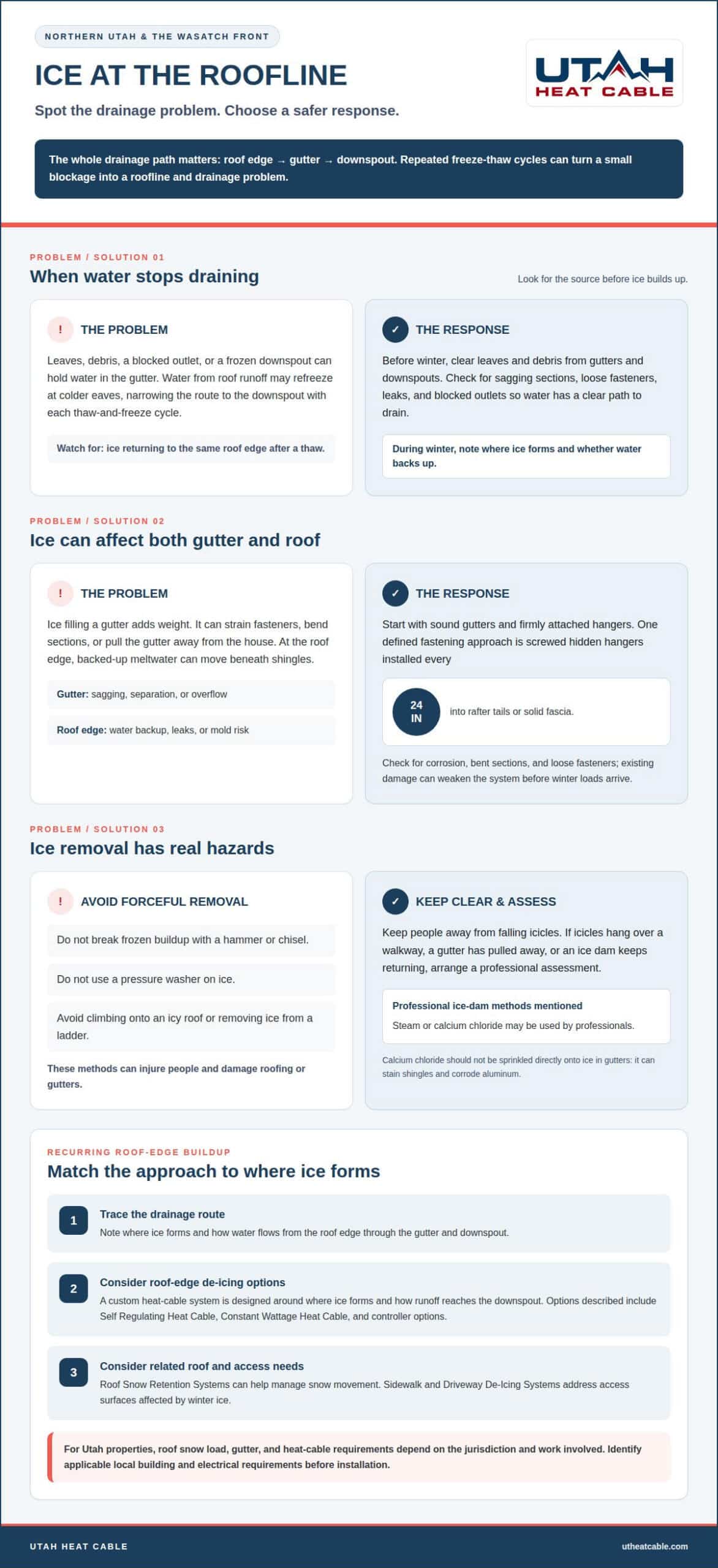
If a gutter is packed with ice or an ice dam keeps returning, professional assessment can help identify the cause. A specialist can examine drainage, roof edges, and visible gutter movement before choosing a removal method. Professionals may use steam or calcium chloride to address ice dams. Calcium chloride should not be sprinkled directly onto ice in gutters because it can stain shingles and corrode aluminum.
Don’t break frozen buildup with a hammer, chisel, or pressure washer. These methods can injure people and damage roofing or gutters. Removing ice from a ladder or roof also creates a fall risk. If icicles hang over a walkway or a gutter has pulled away, keep clear and arrange an assessment instead of attempting forceful removal.
For properties in Utah, requirements for roof snow loads, gutters, and heat cables depend on the jurisdiction and the work involved. Identify the applicable local building and electrical requirements before installation.
Before winter weather arrives in Northern Utah, clear leaves and debris from gutters and downspouts so water can drain. Inspect for sagging sections, loose fasteners, leaks, and blocked outlets. For example, leaves trapped at a downspout can hold water that freezes during cold weather. Address visible issues before snow accumulates.
During winter, monitor drainage and note whether ice keeps forming at the same roof edge. A roof rake may help remove snow, and persistent ice dams or uncertainty about maintenance may warrant professional advice. Note where ice forms and whether water backs up. This information can help focus an assessment on the roof edge, gutter, and downspout.
2. How snow and ice can damage gutters and roofs
Ice dams form when roof snow melts and refreezes at colder eaves. As ice thickens, melting water can back up beneath shingles, increasing the risk of leaks and mold. Ice filling a gutter adds weight, too, which can pull it away from the house and damage roof edges or siding.
For a more secure installation, focus on sound gutters and firmly attached hangers, not material alone. Screwed hidden hangers installed every 24 inches into rafter tails or solid fascia provide a defined fastening approach. Check for corrosion, bent sections, and loose fasteners; existing damage can weaken the system before winter loads arrive.
For safe removal, avoid hammers, chisels, and pressure washers. They can injure people and damage roofing or gutters. Keep clear of falling icicles and avoid climbing onto an icy roof; professionals can remove ice dams with steam or calcium chloride.
Leaving ice dams or frozen gutters in place can lead to lifted shingles, deteriorating roof decking, leaks, and mold. A detached gutter can damage siding, while blocked drainage may send water toward the foundation. Icicles above a walkway also pose a falling hazard.
For homes in Northern Utah and along the Wasatch Front, homeowners insurance coverage depends on the policy wording and the cause of damage. Review provisions for ice dams, water intrusion, and maintenance, document affected areas, and contact your insurer about the claim process.
3. How does ice damage gutters and downspouts in Idaho winters?
In Idaho, several days of thawing and freezing can turn roof runoff into a gutter blockage. Escaping attic heat melts snow higher on the roof, while colder eaves refreeze the water. Each cycle can add ice at the roof edge and narrow the path to the downspout. To protect gutters from ice damage in Idaho, note where water freezes and which spots repeatedly cause trouble.
Ice buildup adds weight along the gutter. As it grows, it can strain fasteners, bend sections, or pull the gutter away from the fascia. A downspout outlet can freeze shut, too. Water may then collect behind the ice plug and overflow over the gutter’s front edge instead of draining away.
Overflow can wet siding and pool near the foundation. Water reaching the roof edge may also back up beneath shingles, leak into the home, and encourage mold growth. Icicles indicate that water is freezing near the eaves, and falling ice can injure people or damage property below. Protecting gutters from ice damage in Idaho also means noticing whether overflow follows a thaw or occurs during continued freezing.
Watch for a gutter that sags, separates from the house, or spills water despite clear skies. Check whether the downspout outlet is open and whether ice returns to the same roof edge after a thaw. These clues can help distinguish a local blockage from a recurring roof-edge drainage problem. Keep people away from falling icicles, and don’t strike frozen gutters, since force can worsen the damage.
Utah Heat Cable: De-Icing Services
Utah Heat Cable provides De-Icing Services for properties where recurring ice threatens roof-edge drainage. A custom heat-cable system can help melt snow and ice along roof edges and in gutters, maintaining a path for runoff. The design depends on where ice forms and how water flows from the roof into the downspout.
For persistent roof-edge buildup, Utah Heat Cable installs Self Regulating Heat Cable and Constant Wattage Heat Cable. Roof Snow Retention Systems can help manage snow movement, while Controller Options support heat-cable systems. If winter ice also affects access areas, Sidewalk and Driveway De-Icing Systems address those surfaces.
Explore heat cable and de-icing services to see which approach fits your property, or contact Utah Heat Cable to discuss your drainage concerns.
Prepare your roofline before the next freeze
Recurring ice is a reason to plan beyond the current thaw. Note where buildup starts and how runoff moves across your roofline, then use those observations to guide a longer-term approach. For Idaho homeowners, protecting gutters from ice damage means considering the full drainage path, from roof edge to downspout, rather than treating one frozen spot in isolation.
Timing matters, too. Planning before winter weather settles in gives you space to consider which areas need attention and how a de-icing approach fits your property. If you’re weighing options for managing roof-edge ice, connect with Utah Heat Cable to discuss your next step. A considered plan can help you face the season with greater confidence.
Frequently Asked Questions
How do you keep gutters on the house through snow and ice?
Keep gutters firmly attached and manage snow movement above the roof edge. Where snow slides toward the eaves, a roof snow retention system can help control its movement and reduce impact on the gutter line. To protect gutters from ice damage in Idaho, inspect attachment points after storms and address visible sagging before it worsens.
When does sliding snow tear gutters off?
Sliding snow can pull gutters loose when a heavy sheet releases and hits the gutter or its fasteners. Roof pitch, surface, snow accumulation, and gutter position all affect the impact. If snow repeatedly slides from a metal roof onto the same section, a roof snow retention system can help manage that movement and protect the drainage edge.
What are the best ways to prevent ice dams and ice buildup in Idaho gutters?
Combine roof-temperature management with a clear route for meltwater to drain. Attic insulation and ventilation can help regulate roof temperature, while properly designed heat cable can help maintain a drainage channel at vulnerable edges. Protecting gutters from ice damage in Idaho starts with addressing recurring ice locations, not just the visible blockage.
How much does professional gutter ice-dam prevention cost in Idaho?
Project scope depends on the property, including its roofline, drainage layout, cable type, controller options, and installation access. A system for one problem area may need a different design from one covering several roof edges. Request a quote for a solution tailored to the property and its recurring ice buildup.
Are heated gutter cables effective and safe for Idaho homes?
Heated cables can help keep meltwater moving through roof-edge and gutter areas when designed for the property’s drainage layout. Utah Heat Cable installs Self Regulating Heat Cable and Constant Wattage Heat Cable. The company is a licensed electrical contractor, and its systems are installed according to code. Cable selection and placement should match the roof material and recurring ice locations.