
A cable’s length and voltage matter as much as its placement. For homes in Northern Utah and along the Wasatch Front, a professional assesses the pipe route, cold-air exposure, and electrical supply before selecting a suitable system. Existing heat tape should also be checked before cold weather.
It makes sense to want a clear answer before protecting pipes beneath a home. The right setup depends on the plumbing layout and conditions, not simply on choosing the longest cable.
This guide explains how professionals install and check heat trace for under-house pipes, compares self-regulating and constant-wattage systems, and outlines what determines suitable cable length and voltage.
Key Takeaways
- Learn what a professional evaluates during installation and routine heat-cable checks beneath a house.
- Understand how self-regulating and constant-wattage cable systems differ, and what can guide the choice.
- See which project details shape cable length and voltage selection for under-house pipes.
- Recognize when professional pipe heat-cable installation can help protect plumbing from freezing conditions.
Professional installation and checking of heat trace for pipes under a house
Before cold weather, professionals serving Northern Utah and the Wasatch Front inspect existing heat tape for damage, placement, and function. They also assess drafts and pipe insulation, since insulation is especially useful around plumbing in cold, exposed spaces.
In-Pipe and On-Pipe Installation
On-pipe cable follows the pipe exterior; an in-pipe system places a compatible heating element inside the water line. The professional considers pipe access, material, route, and the cable’s installation instructions before selecting an approach. In a drafty crawl space, pipe insulation can complement heat trace by reducing heat loss. Its type and placement must suit the cable system.
Applicable Building Codes
Applicable electrical and building requirements can depend on the property’s Utah jurisdiction and installation details. The professional identifies the relevant local requirements and follows the selected cable’s instructions. Circuit capacity, GFCI protection, and thermostat arrangements depend on the system and electrical design; there isn’t one configuration to assume for every home. These cold-weather pipe protection considerations help frame the installation plan.
Fire, Shock, and Overheating Risks
Damaged cable, unsuitable routing, or incompatible controls can create electrical and overheating risks. A professional checks cable condition, connections, placement, and control operation against the product instructions. Cable should not be folded or installed where heat can build up. An inspection before cold weather can catch visible problems; compatible insulation can then be considered without covering or restricting the cable contrary to its instructions.
Pipe freeze protection heating cable systems
Heat cable adds targeted protection where plumbing beneath a home is exposed to cold air. The suitable system depends on the pipe route, exposure, insulation, and electrical supply.
Residential and Commercial Freeze Protection
Residential systems often protect accessible water lines in crawl spaces, while commercial projects may involve longer or more complex pipe routes. In either setting, the professional considers which sections face cold drafts and how the cable will be powered and controlled. For example, a home with exposed plumbing near an exterior opening needs a different layout from a commercial run with several branches. Those details guide system selection and placement.
Protection During Severe Cold
Heating cable helps limit freezing risk by adding heat along vulnerable plumbing. Its role is targeted: it protects the treated pipe rather than warming the entire crawl space. During severe cold, exposed sections and draft paths deserve particular attention. Insulation can complement cable by reducing heat loss, especially around pipes in cold, drafty locations. A professional considers both the cable route and surrounding conditions to plan consistent coverage.
Suitable Cable for Under-House Water Pipes
For under-house water pipes, choose cable designed for pipe freeze protection and compatible with the installation. Self-regulating and constant-wattage systems are both available; the pipe layout, exposure, and electrical setup determine which fits the project. A listed 6-foot heat tape is described as certified to CSA and UL standards and suitable for crawl-space heating. For a tailored system, request a pipe heat-trace assessment.
Across Northern Utah and the Wasatch Front, insulate pipes in cold, drafty places, and drain and turn off outdoor water lines before cold weather.
Heating cable lengths and voltage options
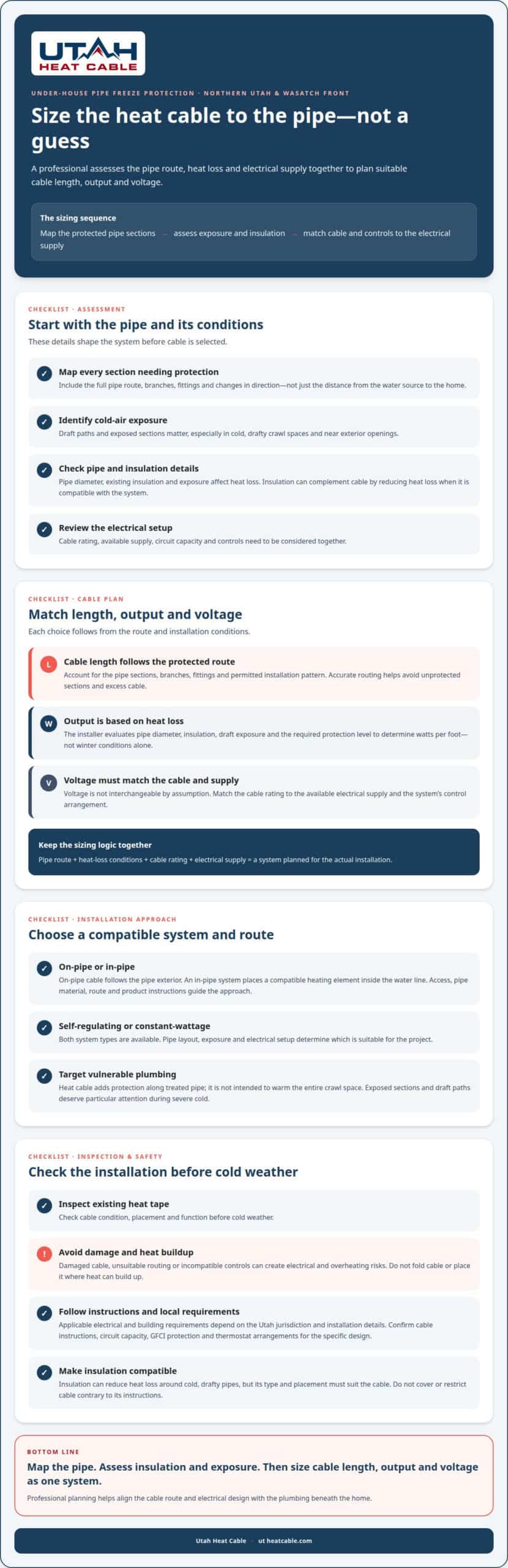
For homes in Northern Utah and along the Wasatch Front, cable length and voltage should match the actual pipe route and selected system. A professional maps each section needing protection, including branches and fittings, then matches the cable to the electrical supply and installation instructions.
To determine watts per foot, the installer evaluates heat loss rather than choosing a figure based on winter conditions alone. Pipe diameter, insulation, draft exposure, and the required protection level affect the calculation. For example, an insulated pipe in a sheltered section loses heat differently from a bare run exposed to crawl-space air. Cable output and controls must suit that assessment.
Length follows the pipe sections being protected, not simply the distance between the water source and the home. The professional accounts for the full route, changes in direction, and fittings while following the cable’s permitted installation pattern. A pipe with several branches may need a different layout from a straight run. Accurate routing helps avoid both unprotected sections and excess cable.
Voltage must match the cable rating and available electrical supply; it isn’t interchangeable by assumption. The electrician considers the cable, circuit capacity, and control arrangement together. The takeaway: map the pipe, assess insulation and exposure, then size cable and voltage as one system. Heat cable installation can be tailored to those project details.
For a frozen pipe in Northern Utah or along the Wasatch Front, apply heat with a hair dryer, electric heating pad, or portable space heater. Never leave space heaters unattended or use open flames to thaw pipes.
Utah Heat Cable
Utah Heat Cable can help with broader winter-protection planning when you’re considering more than under-house plumbing. Its work includes De-Icing Services, Roof Snow Retention, Controller Options, and Sidewalk and Driveway Deicing Systems. These address other areas of a property, so they’re separate from sizing heat-trace cable for under-house pipes.
If your winter plan also includes roofs, walkways, or driveways, Utah Heat Cable can discuss which systems fit those needs. Contact Utah Heat Cable to talk through your property’s winter-protection priorities.
Plan your next step before winter
For heat trace for pipes under a house in Northern Utah, the next step is turning the pipe layout and cold-exposure concerns into a professional system plan. The route, insulation, and electrical supply need to be considered together so cable selection suits the property rather than an assumed setup.
For projects in Northern Utah and the Wasatch Front, Utah Heat Cable offers Self Regulating Heat Cable and Constant Wattage Heat Cable. It also offers De-Icing Services for other winter-related property needs. If you’re planning freeze protection for a home in Northern Utah, sharing where vulnerable plumbing runs can help shape the installation discussion. Starting the process before cold weather gives you time to consider the right approach for your property.
A thoughtful plan is a practical step toward a more winter-ready home.
Frequently Asked Questions
What are the professional installation steps for heat-trace cable on under-house water pipes in Northern Utah?
A professional first identifies exposed plumbing and the sections most vulnerable to cold drafts. They then select cable suited to the pipe and intended installation, arrange its route, and complete the installation according to the cable’s instructions. Before cold weather, the professional checks that the cable is in good condition and functioning. Pipe layout and crawl-space exposure help guide the plan.
How do professionals inspect, test, and maintain heat-trace cable?
Professionals check cable condition and operation before cold weather, then monitor its condition during severe cold. The inspection looks for visible damage and whether the system is functioning as intended; damaged or displaced sections need attention. Insulation and nearby drafts also affect pipe protection. In Northern Utah and the Wasatch Front, checking heat tape during severe cold makes the condition of an existing system worth monitoring.
What alternatives to heat trace can prevent under-house pipes from freezing?
Pipe insulation, reduced drafts, and indoor heat can support freeze protection without relying solely on heating cable. Insulate pipes in cold, drafty areas and seal openings where cold air enters. Before cold weather, drain and turn off outdoor water lines. During severe cold, cold-weather guidance advises keeping the thermostat above 55 °F; letting indoor faucets trickle and opening sink cabinets can also help.
What pipe insulation should be used with heat trace in a crawl space?
Use insulation compatible with the cable system, with its type and placement following the cable’s instructions. It can reduce heat loss around pipes in cold, drafty spaces.
How many watts per foot of heat trace are needed for pipes in Northern Utah winter temperatures?
There is no fixed watts-per-foot figure based on winter temperatures alone. The installer assesses heat loss using pipe diameter, insulation, draft exposure, and the required protection level.