
A roof heating upgrade starts with the roof, not the cable. When upgrading an old roof heating system, a professional first assesses the roof’s condition, layout, and existing equipment, then determines what replacement system suits the property. In Northern Utah and along the Wasatch Front, careful planning helps address the demands of snow and ice without treating every roof as the same.
Replacing an old roof heating system is a chance to match the equipment to your roof and the areas where ice forms, rather than simply swapping components. This guide explains how a professional assesses roof conditions, plans cable coverage, and installs a system suited to the drainage paths. You’ll also learn what details about your roof and existing setup help shape the assessment, and why installation quality matters through Utah winters.
Key Takeaways
- Have the roof condition, layout, and existing equipment assessed before selecting a replacement; these details guide system sizing.
- Understand how installation quality, including how the system fits the roof, affects reliable operation through winter weather.
- Compare roof heating options by where heat is needed and how the system is intended to help manage ice buildup.
- For icy sidewalks and driveways, Utah Heat Cable’s deicing systems offer a separate way to address slippery surfaces around the property.
1. Heating-system replacement and right-sizing
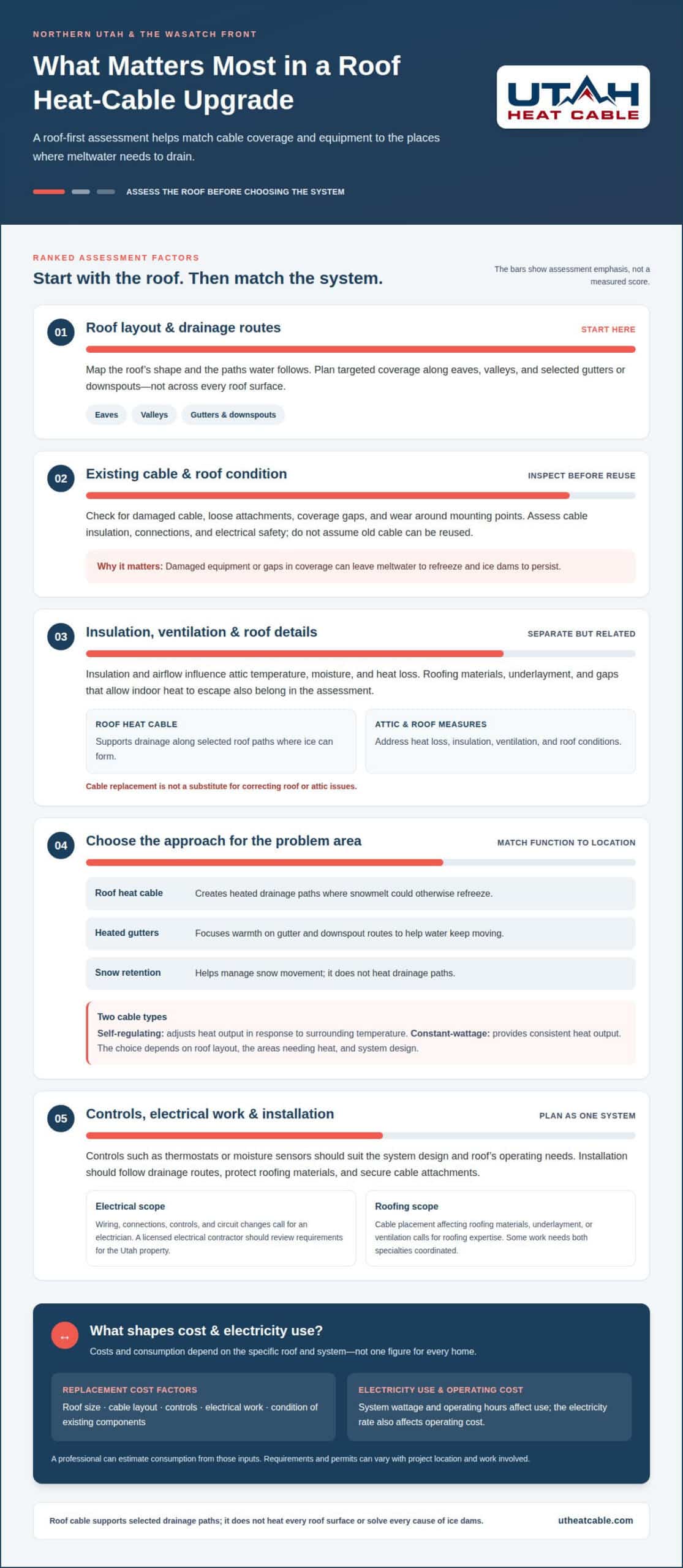
For a roof along Utah’s Wasatch Front, an assessment starts with the cable route, roof edges, valleys, gutters, and existing controls. Damaged cable, loose attachments, or gaps in coverage can leave meltwater to refreeze, so the roof’s condition matters when planning a replacement. Roof design, insulation, and ventilation also affect winter performance: insulation and airflow influence attic temperature and moisture, while heat cable addresses drainage paths where ice can form.
Roof heat cables warm targeted paths where snowmelt needs to drain; heated gutters focus on keeping water moving through gutter and downspout routes. Self-regulating cable adjusts its heat output in response to surrounding temperature, while constant-wattage cable provides consistent output. The right choice depends on the roof’s layout and the areas needing protection, not simply the system’s age.
Replacement cost in the United States depends on roof size, cable layout, controls, electrical work, and the condition of existing components; pricing is provided after a quote request. Electricity use depends on the system’s wattage and operating hours, while operating cost also depends on the electricity rate. A professional can estimate consumption from those inputs rather than applying one figure to every home.
Do not assume old cable can be reused. Its condition and electrical safety need to be assessed, including insulation, connections, and the roof around attachment points. Damaged or aging equipment may fail to clear meltwater, leaving ice dams to persist. Controls such as thermostats or moisture sensors should suit the system design and the roof’s operating needs.
When upgrading an old roof heating system, consider insulation, ventilation, and the roof’s seasonal demands alongside the cable itself. Better insulation and ventilation address heat loss and attic conditions; targeted roof heating helps keep meltwater moving through selected drainage paths. These measures serve different purposes, so a cable replacement should not be treated as a substitute for addressing roof or attic issues.
2. Roof installation quality
A quality installation starts with matching the cable route to the roof’s drainage paths. Installers plan coverage around eaves, valleys, and gutters so meltwater has a clear route off the roof. They also examine roofing materials and attachment points; poorly placed or loose cable can leave sections exposed to recurring ice buildup. During roof replacement, installers can inspect ventilation and seal gaps that allow warm indoor air to escape.
Roof materials and ventilation affect moisture management and heat transfer, but they are separate from the choice of roof heat cable. When replacing a roof, evaluate underlayment, airflow, and gaps that may let indoor heat escape. A heat-cable system is designed to support drainage at targeted roof areas, not to correct insulation or ventilation problems.
Electrical requirements and permits can vary with the project location and work involved. A licensed electrical contractor should review the applicable requirements for the property in Utah before installation, rather than assuming one city’s process applies statewide.
Bring in an electrician when the upgrade involves wiring, electrical connections, controls, or a circuit change. A roofing contractor is important when cable placement affects roofing materials, underlayment, or ventilation. For example, replacing damaged roof sections while routing new cable calls for coordination between both specialties. If you’re planning installation work, request a professional installation assessment before weather complicates roof access.
A roof replacement can provide an opportunity to address gaps that allow indoor heat to escape and to assess ventilation. Roof heat cable has a different role: it creates heated drainage paths to help limit ice buildup at selected roof edges and drainage areas.
Aging or damaged roofs may let warm air escape, while worn or cracked materials can reduce heat reflection away from home.
3. What types of roof heating systems are used to prevent ice dams?
Roof heat cable creates heated drainage paths where meltwater could otherwise refreeze. A professional plans cable along eaves, valleys, and selected gutters or downspouts, following the roof’s shape and water routes. The goal is to support drainage, not to heat every roof surface. A well-planned route helps move meltwater away from colder roof edges.
Two common cable types are self-regulating and constant-wattage. Self-regulating cable changes its heat output in response to surrounding temperatures. Constant-wattage cable provides consistent heat output. The choice depends on the roof layout, the areas requiring heat, and the system design. A professional also considers controls, cable routing, electrical connections, and how the installation will interact with the roofing materials.
Heated gutters focus warmth on drainage channels, helping water pass through gutters and downspouts instead of freezing there. They may complement roof cables where both roof edges and drainage components need attention. Roof snow retention serves a different purpose: it helps manage snow movement from the roof, rather than heating drainage paths. These approaches address separate risks, so the roof’s layout and recurring ice locations guide system selection.
Heat cable does not correct every cause of ice dams. Heat loss, insulation, and ventilation can affect roof temperatures, so an assessment should consider these conditions alongside cable placement. Utah roofs face changing snow and freeze-thaw conditions, making it important to plan coverage around the property’s actual drainage pattern.
Utah Heat Cable: Sidewalk and Driveway Deicing Systems
Utah Heat Cable installs Sidewalk and Driveway De-Icing Systems for walkways and driveways across Utah. These electric radiant heat systems address snow and ice at ground level, complementing roof heating rather than replacing it. For roof-related winter concerns, Utah Heat Cable also provides roof de-icing and roof snow retention services.
Controller Options help manage a de-icing system according to the property’s needs. Options include a basic lighted switch, smart controls, a Wi-Fi switch, a thermostat control, and a temperature and moisture sensor. The right choice depends on the system design and how the property is used.
Contact Utah Heat Cable to discuss deicing needs for your property.
Plan Ahead for the Next Winter
Before winter weather returns, decide what protection your property needs. Upgrading an old roof heating system is an opportunity to match the equipment to the roof’s current condition and the places where ice forms. Utah Heat Cable installs Self Regulating Heat Cable and Constant Wattage Heat Cable, and provides de-icing services for different property needs across Utah.
Share details about your roof, existing setup, and recurring winter trouble spots when requesting an assessment. That context helps shape a practical plan for your property in Northern Utah or along the Wasatch Front, without assuming every roof needs the same approach. Preparing before snow and ice arrive gives you time to consider the work and plan around the season.
With a clear plan, you can prepare your property for the coming Utah winter.
Frequently Asked Questions
How can a professional determine whether an old roof heating system needs replacement or repair?
A professional assesses the cable’s condition, attachment points, connections, and controls, then considers whether the problem is isolated or affects the wider system. Expected lifespan can inform that judgment: Constant Wattage Heat Cable typically lasts 5-10 years, while Self Regulating Heat Cable typically lasts 20-30 years. These ranges provide context, but observed wear and system performance also matter for Utah roofs.
What steps does a professional take to replace old roof heat cables?
A professional begins by documenting the roof layout, existing cable route, drainage areas, and electrical setup. The replacement must suit the roofing material: Constant Wattage Heat Cable is designed for shingle roofs, while Self Regulating Heat Cable is compatible with metal, shingle, wood-shake, and listed membrane roofs. The installer then removes outdated cable, fits the replacement along the planned route, connects the controls, and checks system operation.