
Choosing industrial heat trace systems Wyoming facilities can rely on starts with the site, not just the cable. Wind exposure, snowfall, roof drainage, and the way people and vehicles move around the property all affect where heat cable or snow melt may help manage ice. Cable, controls, coverage, and installation requirements need to work together to address those conditions.
This guide explains how to compare self-regulating and constant-wattage heat cable, consider controller options, and define system scope. It also covers what to plan before installation and how to account for future access. Utah Heat Cable designs custom heat-trace and snow melt systems for industrial properties in Wyoming, Utah, and Idaho, with electrical work completed by a licensed electrical contractor.
Key Takeaways
- Map areas exposed to freezing, snow, and ice, including roof drainage, access routes, and regularly used paved areas.
- Compare industrial heat trace systems Wyoming facilities can use by matching cable type to the application, site conditions, and control approach.
- Plan system coverage, cable layout, controller options, and maintenance access together.
- Move from identifying risk areas to defining system scope, reviewing applicable code requirements, and arranging licensed electrical installation.
Industrial Heat Trace Systems in Wyoming: Start with the Facility’s Winter Risks
Wyoming winter conditions can affect roof edges, gutters, drains, walkways, and driveways. Wind-driven snow, roof design, drainage paths, and how people use the site help determine where electric heat may address freezing or snow-and-ice risks. Trace heating is electric heating applied along or around a surface to address a temperature concern. Roof and gutter cables and snow melt systems focus on ice and snow management. Other heat-trace applications, such as maintaining temperatures in process equipment, have different design goals and should be treated as distinct projects.
Which facility risks can a heat trace plan address?
Start with places where ice or snow creates a recurring problem. Roof edges, gutters, and drains may need attention where melting snow can refreeze. Walkways and driveways may need de-icing where staff or vehicles regularly pass. Record where ice forms, where water flows, and which routes need to stay accessible during winter.
Use and exposure help define the system’s scope. A roof with complicated drainage has different priorities from a main entrance or loading route. Walk the site and note roof sections, gutters, downspouts, paved areas, and the places where snowmelt could refreeze. Also consider how winter operations affect access and use. These observations help determine where cable or snow melt coverage is useful, how it should be laid out, and which control approach suits the area. A single layout may not fit every surface.
For roof-focused planning, see our roof ice prevention guidance. It can help you identify roof risks before comparing system options. A tailored assessment of industrial heat trace systems Wyoming facilities need begins with the site conditions and the specific outcome each heated area must support.
How to Compare Industrial Heat Trace Systems for Wyoming Sites
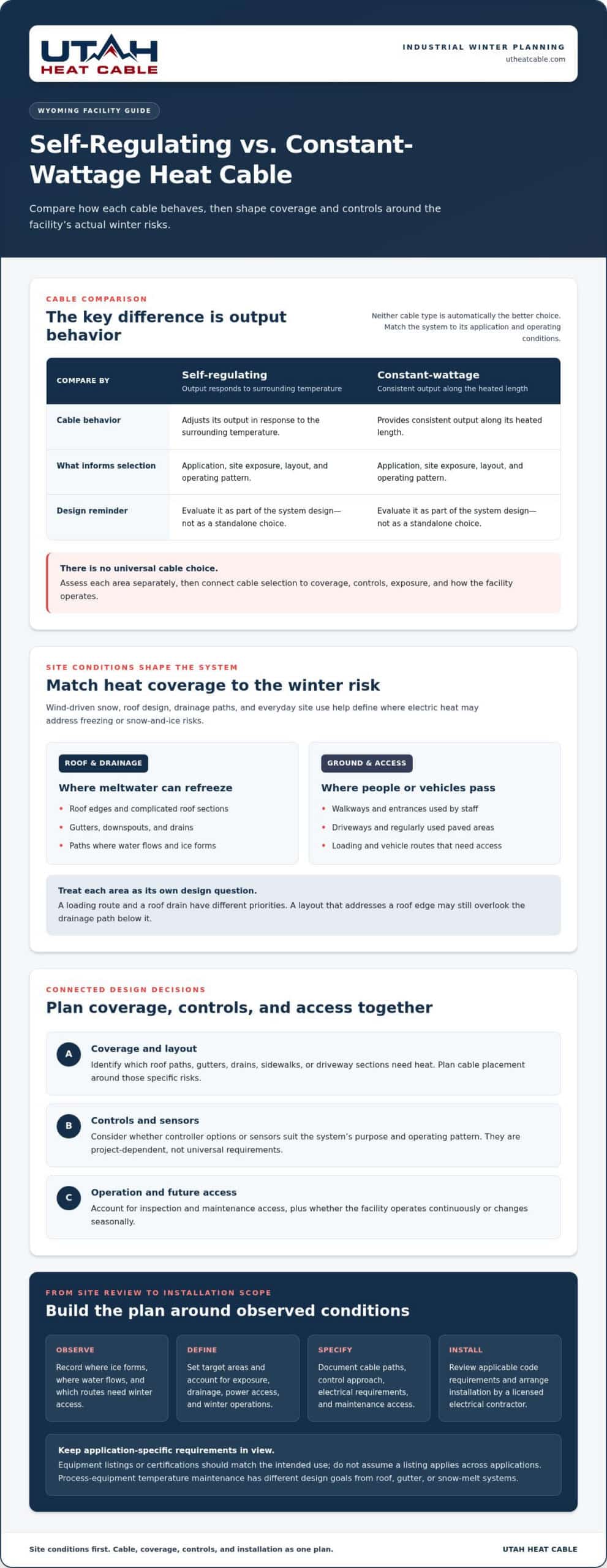
Once priority areas are clear, compare cable, coverage, and controls as connected design decisions. Self-regulating heat cable adjusts its output in response to surrounding temperature. Constant-wattage cable provides consistent output along its heated length. Neither is automatically the better choice: the application, exposure, layout, and operating pattern all matter.
| Comparison point | What to consider |
|---|---|
| Cable type | Match self-regulating or constant-wattage cable to the area being heated and the project’s operating conditions. |
| Coverage and layout | Identify which roof paths, gutters, drains, sidewalks, or driveway areas need heat, then plan cable placement around those specific risks. |
| Controls and sensors | Consider whether controller options or sensors suit the system’s purpose and operating pattern. They’re project-dependent, not universal requirements. |
| Access and operation | Account for inspection and maintenance access, along with whether the facility operates continuously or changes seasonally. |
What should Wyoming facility managers compare before choosing?
Conditions can vary across a single property, so assess each area separately. A frequently used loading route has different priorities from a roof drain where meltwater can refreeze. Compare the coverage and control approach for each location, then evaluate self-regulating and constant-wattage cable against the system design. This makes it easier to spot gaps, such as treating a roof edge but overlooking the drainage path below it.
For major industrial facility development or expansion, heat trace planning may sit alongside broader siting considerations. The Wyoming Department of Environmental Quality’s Industrial Siting Division outlines that separate state process. For heat trace planning, keep cable selection, controls, and site coverage connected from the outset.
Plan Industrial Heat Trace Design and Installation for Wyoming Operations
A practical project moves from observed risks to a defined installation scope. Identify the areas affected by freezing or ice, then review exposure, roof and drainage conditions, power access, and how the facility operates in winter. Use those findings to define heated areas and plan cable routing and controls for the application.
What should a facility project plan cover?
Document the target areas, proposed cable paths, control approach, electrical requirements, and access needed for future inspection and maintenance. For roof protection, focus on the roof edges, gutters, and drains where ice forms. For sidewalks and driveways, identify the sections that need de-icing and how they connect to entrances or vehicle routes. If roofs are the main concern, use this industrial roof ice prevention guide to help frame that part of the plan.
Specifications should reflect the facility rather than rely on a generic layout. A licensed electrical contractor can plan the installation with applicable code requirements in view. Equipment documentation matters, too: UL Solutions discusses trace-heating equipment listed (certified) for this purpose for fire sprinkler pipe applications. Any listing or certification cited should match the intended use, rather than being assumed to apply across applications.
For industrial heat trace systems Wyoming operations need, connect the site review, system scope, and electrical installation before work begins. Utah Heat Cable designs and installs custom heat-trace and de-icing systems for industrial properties. Explore our heat-trace and de-icing services to see how system planning can address your facility’s needs.
Prepare Your Facility for the Next Wyoming Winter
A useful heat trace plan starts with the facility’s actual winter risks, then matches cable, coverage, and controls to site conditions and operating needs. Comparing self-regulating and constant-wattage cable is one part of the decision. Installation planning and access for future maintenance matter as well.
For industrial heat trace systems Wyoming facilities rely on, a tailored design can align protection with your operation rather than applying a one-size-fits-all layout. Utah Heat Cable designs custom heat-trace and snow melt solutions for industrial properties in Wyoming, Utah, and Idaho, and completes electrical work as a licensed electrical contractor.
Start by identifying the areas where snow and ice affect your facility. Explore industrial heat trace and de-icing services from Utah Heat Cable to plan a system around your site and winter priorities.
Frequently Asked Questions
What is an industrial heat trace system?
An industrial heat trace system uses electric heating cable to manage freezing risks in a targeted area. Depending on the application, heat cable can also support roof and surface de-icing. These goals call for different system designs. Utah Heat Cable designs roof and gutter heat cable systems and snow melt systems for sidewalks and driveways at industrial properties in Wyoming and the surrounding region.
How do I choose an industrial heat trace system for a Wyoming facility?
Start with site exposure, the areas that need protection, and how the facility operates in winter. Compare cable type, coverage, cable routing, controls, and maintenance access as connected decisions. For industrial heat trace systems Wyoming facilities need, a custom design can account for local conditions and operational priorities. The same planning approach applies to projects in Utah and Idaho.
What is the difference between self-regulating and constant-wattage heat cable?
Self-regulating heat cable adjusts its output in response to surrounding temperature, while constant-wattage cable provides consistent output along its heated length. Neither type is right for every application. The choice depends on the area being heated, site conditions, system layout, and control approach. A project-specific comparison helps match cable selection to facility needs.
Do industrial heat trace systems need professional installation?
Professional electrical installation is important because cable routing, controls, and electrical requirements must work together safely. A licensed electrical contractor can plan the installation and review applicable project and local code requirements. Utah Heat Cable is a licensed electrical contractor serving industrial properties in Wyoming, Utah, and Idaho, with custom heat-trace system design and installation tailored to facility conditions.