
A heat cable system is only as dependable as its installation. Incorrect wiring, circuit protection, or roof attachment can create electrical and property risks instead of helping manage ice. Who should install heat cable? The importance of using a qualified electrical contractor becomes clear when the work calls for both sound electrical planning and roof-specific system design.
It’s reasonable to wonder whether an electrician, roofer, or general contractor is the right fit. This guide explains which qualifications to check, why heat cable installation calls for electrical expertise, and what a responsible installation plan should cover. You’ll also learn how to assess relevant experience, check local licensing and permit requirements, and compare contractors for a property in Utah, Idaho, or Wyoming.
Key Takeaways
- Who should install heat cable? Look for an appropriately qualified electrical contractor with experience designing heat-trace systems.
- Before hiring, verify the contractor’s current license and scope, ask about heat-trace experience, and check which permits apply to your property.
- Ask how roof and gutter layout, cable type, electrical capacity, and controls will shape the proposed system design.
- Request a written scope that clarifies design, installation responsibilities, testing, and applicable permits for your property and de-icing needs.
Who should install heat cable and why does electrical expertise matter?
Choose an appropriately qualified electrical contractor with experience in heat-trace systems. The answer to “Who should install heat cable? The importance of using a qualified electrical contractor to install heat cable” starts with recognizing that the work combines electrical planning with roof-specific design. Roof edges, gutters, and downspouts affect where cable is needed and how it should be routed. Those choices also influence circuit design and whether the system can operate as intended.
Licensing and permit requirements depend on the jurisdiction and project. Before hiring, verify the contractor’s current license and applicable classification, then confirm permit requirements with the relevant local authority. Rules can differ across Utah, Idaho, and Wyoming, so don’t assume requirements in one state apply in another.
What makes heat cable installation different from ordinary roof work?
Roof work focuses on roofing materials and their condition. Heat cable installation also involves electrical connections, circuit capacity, and controls, so general maintenance experience alone may not cover the full scope. Learn more about electric heat tracing and how heat-trace systems are used to manage ice and snow.
Design matters. If cable misses a problem area, doesn’t account for the roof and drainage layout, or is paired with unsuitable system components, melting and drainage may not happen where needed. Ask the contractor to explain how the proposed cable route, electrical design, and controls suit your roof, gutters, and downspouts. For more background, read the professional guide to self-regulating heat cable.
How to check a heat cable contractor’s qualifications before hiring
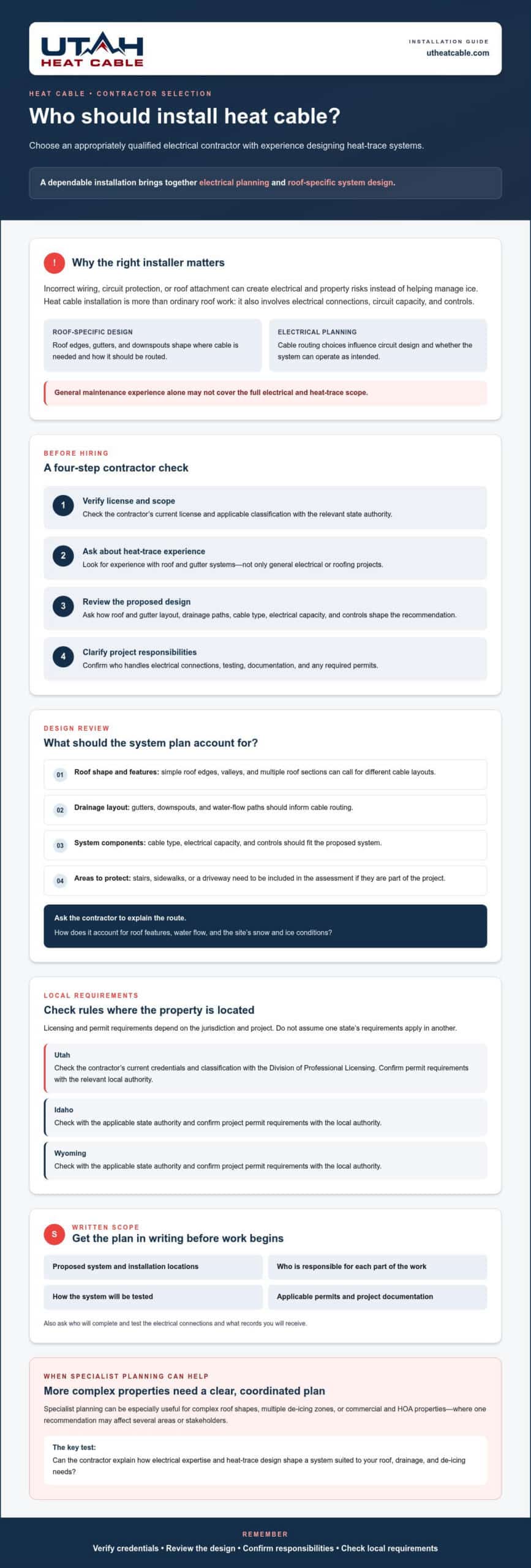
Who should install heat cable? The importance of using a qualified electrical contractor comes down to verified credentials, relevant experience, and a design suited to your property. Use this sequence to compare candidates:
- Verify license and scope. Check the contractor’s current license and classification with the relevant state authority. In Utah, use the Division of Professional Licensing. For Idaho or Wyoming, check the applicable state authority. Ask whether permits are needed and confirm requirements with the local authority.
- Ask about heat-trace work. Look for experience with roof and gutter systems, not just general electrical or roofing projects.
- Review the design. Ask how roof and gutter layout, drainage paths, cable type, electrical capacity, and controls shape the recommendation.
- Confirm project responsibilities. Clarify who handles electrical connections, testing, documentation, and any required permits.
Which questions reveal relevant electrical and heat-trace experience?
Ask the contractor to walk you through the proposed cable route. Find out how it accounts for roof features, water flow, and the site’s snow and ice conditions. Also ask who will complete and test the electrical connections and what records you’ll receive. The dangers of improper installation are underscored by a fire investigation discussed by the International Institute of Marine Surveying. This reinforces the need for careful installation and adherence to applicable instructions and codes.
Use the heat cable installation guide to prepare questions about system choices. For a practical comparison of roof heat cable and de-icing system options, review available heat cable and de-icing systems.
Choosing a local heat cable contractor for your property
A suitable design depends on what the system needs to protect. A home with a simple roof edge may need a different cable layout than a building with valleys, multiple roof sections, long gutters, or downspouts. If you also want to address stairs, sidewalks, or a driveway, make sure those areas are included in the contractor’s assessment rather than assuming they’re covered by the roof design.
Before work begins, request a written scope that describes the proposed system, where it will be installed, who is responsible for each part of the work, how the system will be tested, and which permits may apply. For Utah properties, use the state’s license verification resource to check a contractor’s current credentials and classification. For projects in Idaho or Wyoming, verify requirements with the relevant state and local authorities.
When is a specialist heat-trace contractor a sensible choice?
Specialist planning can be especially useful for complex roof shapes, multiple de-icing zones, or commercial and HOA properties, where one recommendation may affect several areas or stakeholders. For a property with varied roof and drainage conditions, look for a contractor who can explain how electrical expertise and heat-trace design inform the system plan.
Utah Heat Cable designs and installs heat cable and snow-melt systems for residential, commercial, industrial, and HOA properties in Utah, Idaho, and Wyoming. The company identifies as a licensed electrical contractor. As with any candidate, verify its current license status and classification. Review its heat cable and de-icing services, then discuss your property’s layout and intended coverage to assess fit.
Choose a qualified partner before winter
Heat cable performance depends on more than placing cable along a roof edge. A qualified electrical contractor with heat-trace experience can account for roof geometry, drainage, circuit design, and controls, then clarify testing and permit responsibilities in writing. Before choosing a contractor, verify the current license and applicable classification, and ask how the proposed design fits your property.
Who should install heat cable? The importance of using a qualified electrical contractor comes down to verified credentials, relevant experience, and a plan tailored to the site. Utah Heat Cable provides custom heat-trace design and installation for properties in Utah, Idaho, and Wyoming. Verify current license details and local requirements for your project before proceeding.
If you’re planning a roof, gutter, sidewalk, or driveway de-icing project, discuss your heat cable project with Utah Heat Cable.
Frequently Asked Questions
Who is qualified to install heat cable?
An appropriately licensed electrical contractor with relevant heat-trace experience is a good fit for electrical planning and installation. Who should install heat cable? The importance of using a qualified electrical contractor is that credentials and experience should match the system’s electrical scope. Licensing classifications and permit requirements depend on the work and jurisdiction. Verify current credentials and local rules. Don’t assume a roofer, handyman, or general contractor can perform electrical work.
Can a roofer or handyman install heat cable?
A roofer may bring useful knowledge of roof surfaces and attachment methods, but that doesn’t automatically qualify them to handle electrical connections. Heat cable installation can involve both roof work and electrical tasks, and the required qualifications depend on the project and jurisdiction. Ask who is responsible for each part, including wiring, controls, and testing, then check that person’s credentials and scope of work.
How do I verify a heat cable contractor’s electrical license?
Check the relevant state licensing authority’s records and confirm the license is active and appropriate for the proposed work. Then ask the contractor about heat-trace projects similar to yours. For a property in Utah, Idaho, or Wyoming, verify requirements with the applicable state authority and confirm permit requirements with local officials. Don’t rely on a license number alone. Check its classification and status.
Does heat cable need to be installed according to electrical code?
Heat cable should be installed according to applicable current codes and the manufacturer’s instructions. Requirements can depend on the property, system design, and jurisdiction, so don’t assume a rule from another location applies. Before work begins, ask the contractor which standards and instructions guide the installation, and verify permit or inspection requirements with the local authority.