
Could the snow sitting on your roof become a hazard before it melts? Understanding falling ice and snow and the dangers it can cause matters because a sudden slide or falling ice can injure someone, damage a vehicle, or strike nearby property. Areas below roof edges, valleys, and entrances may be especially exposed, so it helps to know where snow could release.
In Utah, Idaho, and Wyoming, changing winter conditions can make roof hazards difficult to predict. This article explains how falling snow and ice create risks, what precautions to take during and after snowfall, and when professional guidance may help. It also explains the difference between roof snow retention, which helps manage snow movement, and heat cable, which targets selected ice buildup and drainage paths. Neither system addresses every roof hazard, so identifying the problem is an important first step.
Key Takeaways
- Roof snow can slide in sheets, while icicles and ice chunks may break away separately. Each can create a hazard below the roof edge.
- Check entrances, walkways, parking spots, and areas beneath eaves for potential exposure. Keep people and vehicles clear of those zones when snow or ice could fall.
- Don’t climb onto a snowy or icy roof. Leave assessment and removal decisions to qualified professionals.
- If snow slides or ice buildup keep recurring, ask about roof snow retention, drainage, and whether targeted de-icing may suit the hazard.
Why Falling Roof Snow and Ice Can Become a Safety Hazard
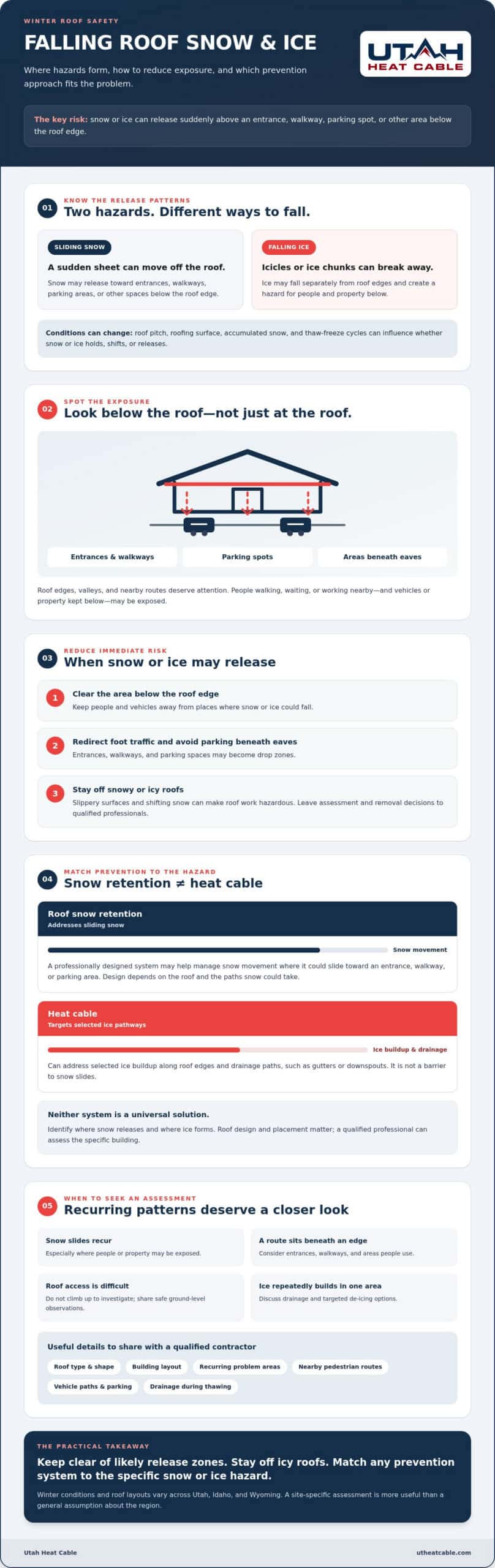
Roof snow and ice can release in different ways. Accumulated snow may slide suddenly as a sheet, while icicles or chunks of ice can break away from an edge and fall separately. Either can catch people off guard near an entrance, walkway, parking spot, or other area beneath the eaves.
Roof edges deserve attention because a sudden release can turn an ordinary route or parking space into a drop zone. Winter storms can bring heavy snow and ice, as described in this overview of winter storm hazards. The risk depends on the building and current conditions, not just the forecast.
Which People and Property Are Most Exposed?
People walking, waiting, or working close to a roof edge may be exposed, as may vehicles and property kept below it. Roof pitch can affect how readily snow moves. Roofing surface, accumulated snow, and thaw-freeze cycles can also influence whether snow or ice holds, shifts, or releases. Conditions change, so a roof that seemed stable may still present a hazard as temperatures fluctuate.
Falling snow and ice can cause impact injuries and damage vehicles, outdoor equipment, or building features. The likely exposure depends on the roof layout, nearby paths and parking, and local weather. Properties in Utah, Idaho, and Wyoming can face different site conditions, so generalizations about a state or region can’t replace an assessment of the specific building. If snow repeatedly releases where people or property are exposed, roof snow retention may help manage its movement. The right design depends on the roof and the paths snow could take.
How to Reduce the Risk When Snow or Ice Is on a Roof
If snow or ice appears ready to release, keep people and vehicles away from the area below the roof edge. Redirect foot traffic from entrances and walkways, and avoid parking beneath eaves where snow or ice could fall. Don’t climb onto a snowy or icy roof to inspect or remove buildup. Slippery surfaces and shifting snow can make roof work hazardous, so leave assessment and removal decisions to qualified professionals.
Choose prevention based on the roof hazard. Snow retention helps manage sliding snow, while heat cable targets selected ice pathways. Neither should be treated as a universal solution for every roof.
Choose Prevention That Matches the Roof Hazard
Where snow could slide toward an entrance, walkway, or parking area, professionally designed roof snow retention may help manage its movement. Heat cable serves a different purpose: it can address targeted ice buildup along selected roof edges and drainage paths, such as gutters or downspouts. It does not act as a barrier to snow slides. Roof design matters, so a suitable system and its placement should be assessed for the specific building.
For metal-roof considerations, see “Snow Retention for Metal Roofs: Safety & Performance.” If you’re unsure which hazard needs attention, a professional assessment can help identify the roof’s release paths and suitable prevention options. Explore roof snow retention and de-icing solutions to learn about the available approaches.
When to Get a Professional Assessment for Falling Snow and Ice
Consider a professional assessment if snow slides recur, an entrance or walkway sits beneath a roof edge, roof access is difficult, or ice repeatedly builds up in the same area. These patterns can point to different hazards. Identifying where snow releases and where ice forms is a useful first step toward choosing an appropriate response.
The risks depend on the roof and the areas around it. Before an assessment, note where problems recur and where pedestrians or vehicles pass nearby. Don’t climb onto the roof to investigate. Share what you can observe safely from the ground.
What to Discuss Before Choosing a Snow or Ice Control System
Tell the qualified contractor about the roof type, building layout, problem areas, and the routes people and vehicles regularly use. Ask how the roof’s shape affects snow-release paths, whether a retention design could help manage sliding snow, and how drainage behaves during thawing. If ice buildup recurs, discuss targeted de-icing options and see “Self-Regulating Heat Cable: The Professional Guide to Ice Dam Prevention” for related information.
A contractor should assess the property before recommending a system. This helps ensure the proposed approach addresses the actual hazard, rather than treating heat cable as a solution for sliding snow or roof retention as a fix for ice in drainage paths.
For an overview of available options, explore roof snow retention and de-icing services.
Falling Ice and Snow and the Dangers It Can Cause
Falling ice and snow deserve attention before someone is hurt or property is damaged. Keep clear of areas where roof material may release, avoid climbing onto snowy or icy roofs, and seek qualified guidance when hazards recur or the right solution isn’t clear.
Prevention works best when it matches the problem. Roof snow retention can help manage snow movement, while heat cable targets selected ice buildup and drainage paths. An assessment of the property can help identify which approach fits the roof and nearby routes.
Utah Heat Cable designs custom roof heat-trace and snow-melt solutions for residential, commercial, industrial, and HOA properties in Utah, Idaho, and Wyoming. As a licensed electrical contractor, the company installs systems safely and according to code. Confirm availability for your location, then explore professional roof snow retention and de-icing options.
Frequently Asked Questions
Is falling snow from a roof dangerous?
Yes. A roof-snow slide can strike someone below, while falling ice may injure people or damage vehicles and nearby property. The risk depends on factors such as the roof, accumulated snow, and thaw-freeze conditions. In Utah, Idaho, and Wyoming, conditions vary by property, so pay attention to areas beneath roof edges.
Can snow guards prevent snow from sliding off a roof?
Snow guards or other professionally designed roof snow retention systems can help manage snow movement and reduce the chance of a sudden slide. They don’t guarantee that no snow will release, and the appropriate design depends on the roof and where snow could travel. Ask a qualified professional to assess the roof layout and exposed areas before choosing a system.
What should I do if ice or snow is hanging over my entrance?
Keep people away from the entrance and redirect foot traffic to a safer route. Don’t stand beneath the overhang, climb onto the roof, or try to knock down ice or snow yourself. If the hazard persists or the roof is difficult to access, contact a qualified professional to assess safe next steps for your property.
Does roof heat cable stop snow from sliding off?
No. Roof heat cable targets selected ice buildup and drainage paths, such as areas near roof edges or gutters. It isn’t a barrier that holds back sliding snow. If snow release threatens an entrance, walkway, or parking area, ask about roof snow retention. If ice buildup recurs, discuss whether targeted de-icing may suit the roof.