

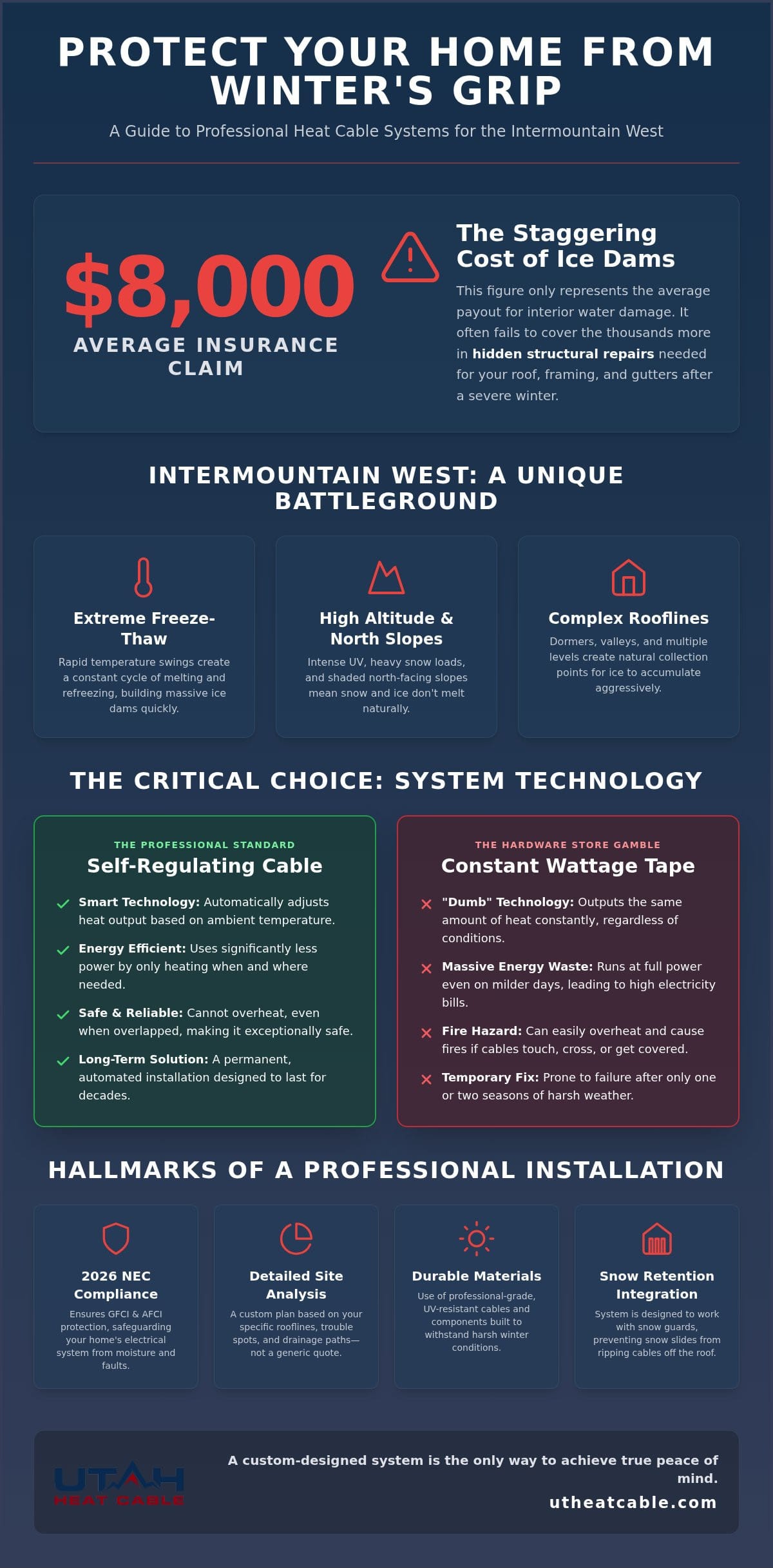
Did you know the average insurance settlement for an ice dam claim has reached $8,000, yet usually only covers interior damage while leaving structural issues untouched? You’ve probably spent winters watching heavy snow pile up and worrying about leaks, or perhaps you’re tired of wasting money on hardware store heat tape that fails when you need it most. When you’re searching for roof and gutter heating cable installers near me, it’s essential to look for a specialist who understands the specific climate challenges of the Intermountain West. Professional design is the difference between a system that works and one that simply wastes electricity.
This article will help you identify qualified heat cable experts in Utah, Idaho, and Wyoming who can protect your property from structural damage with a permanent, automated solution. We’ll preview the latest 2026 National Electrical Code requirements, the benefits of self-regulating technology, and explain why a custom-designed system is the only way to achieve true peace of mind during the coldest months of the year.
Key Takeaways
- Learn why the extreme freeze-thaw cycles of the Intermountain West require a specialized approach that general electricians often overlook.
- Identify the best roof and gutter heating cable installers near me by prioritizing those who offer custom designs for complex rooflines and north-facing slopes.
- Understand the long-term savings and safety benefits of self-regulating cables compared to temporary, hardware-store heat tape solutions.
- Discover how professional installation ensures compliance with 2026 electrical codes, including critical GFCI protection for your property’s safety.
Why Local Expertise Matters for Roof and Gutter Heat Cables
Living in the Intermountain West means dealing with extreme environmental pressures that standard home systems aren’t built to handle. In areas like Park City, Bear Lake, or Jackson Hole, the combination of high altitude and rapid freeze-thaw cycles creates a unique recipe for structural damage. If your roof has north-facing slopes that stay in the shadow all day, snow won’t melt naturally. This leads to massive ice dams that can crush gutters or force water under shingles. Finding roof and gutter heating cable installers near me who understand these regional dynamics is critical; a generic solution will likely fail during a heavy winter.
General electricians are skilled at wiring interiors, but they often lack the specialized knowledge required for effective trace heating technology on a complex roofline. A specialist looks at the entire drainage path. They ensure that melted snow has a clear, heated route all the way to the ground. Without this level of detail, you might end up with a “one-size-fits-all” system that creates new ice blocks further down the gutter. Professional installers design these systems for structural protection, not just for melting snow. It’s about precision and long-term reliability.
Identifying the Signs of a Qualified Local Installer
When you evaluate roof and gutter heating cable installers near me, verify they are licensed electrical contractors who treat heat-trace as a core service. You should ask specific questions about their history with winterizing roof with heat cable in your particular county. Local building codes in Wyoming or Idaho often differ from those in Utah, particularly regarding dedicated outdoor circuits. A qualified expert will always prioritize safety, ensuring your system meets every local standard while providing elite-level protection for your property. They don’t just install cable; they engineer a solution for your specific roofline.
What to Look for in Professional Heat Trace Installation
Every roof presents a unique set of challenges. When you’re evaluating roof and gutter heating cable installers near me, ensure they perform a detailed site analysis rather than offering a generic quote. A professional won’t just run cable in a basic zig-zag pattern; they map out specific trouble spots like valleys, dormers, and chimney base flashings where ice accumulates most aggressively. This custom approach ensures that the most vulnerable parts of your structure remain protected throughout the winter.
Safety is paramount when working with high-voltage outdoor systems. Improperly installed heat tape has raised significant safety concerns regarding fire hazards. Professional installers ensure compliance with the 2026 National Electrical Code, specifically Section 424.48, which now requires both GFCI and AFCI protection for many installations. These safeguards prevent system failures and protect your home’s electrical integrity from the risks of moisture and freezing temperatures.
Your system must be durable enough to survive intense UV exposure and the physical weight of heavy snow. Modern installations often integrate automated snow melt system controllers that use moisture and temperature sensors. This automation ensures the system only runs when necessary, significantly reducing energy costs while maintaining a clear path for drainage. It’s a “set it and forget it” solution that offers elite-level protection.
The Role of Snow Retention Systems
In mountain climates, heat cables are often only half the battle. On slick surfaces, a snow retention system for metal roofs is often necessary to prevent massive “snow slides.” These slides can rip heating cables clean off the roof or crush expensive gutter systems in seconds. By pairing heat trace with retention bars, you create a comprehensive safety shield for your property. If you’re unsure which setup your home requires, consulting with a specialist can help you design a custom protection plan that addresses both ice dams and snow movement.
Self-Regulating vs. Cheap Heat Tape: The Installer’s Choice
When you begin searching for roof and gutter heating cable installers near me, the most critical question to ask is what specific hardware they intend to use. Many budget-focused contractors rely on constant wattage cables because they’re less expensive upfront. However, these cables provide a fixed heat output regardless of the outside temperature, which often leads to wasted energy and a higher risk of overheating. In contrast, professional-grade systems prioritize safety and long-term efficiency through advanced material science.
A self-regulating heat cable acts as its own thermostat. As the roof gets colder, the cable’s internal core becomes more conductive, generating more heat precisely where it’s needed. When the sun comes out or the temperature rises, the core contracts and reduces its energy consumption. This technology is the industry standard for 2026 because it allows for safe overlapping and prevents the cable from burning itself out. It’s a smarter, more durable way to manage ice.
Many homeowners fall into the “hardware store trap” by purchasing thin, DIY heat tape. While these kits are accessible, they rarely survive more than two seasons in the harsh, high-altitude climates of Utah or Idaho. Professional-grade cables are manufactured with heavy-duty, UV-resistant jackets and can last over a decade when installed by a specialist. Investing in quality hardware now prevents the frustration of a system failure in the middle of a January blizzard.
Comparing Cable Technologies for Longevity
Self-regulating cable utilizes a smart conductive polymer core that automatically adjusts its electrical resistance to prevent thermal burnout. Manual constant wattage systems require you to remember to flip a switch, which often leads to massive utility bills if left on during a sunny day. By combining self-regulating technology with modern moisture sensors, you ensure your property is protected only when the risk of ice is actually present. If you want a system built for the long haul, request a professional quote to see the difference quality hardware makes.
Securing Your Property with Utah Heat Cable’s Custom Solutions
Finding the right roof and gutter heating cable installers near me involves more than just picking a name from a list. You need a partner who understands the specific atmospheric pressures of the Intermountain West. At Utah Heat Cable, we aren’t generalists; we’re specialists who focus exclusively on snow and ice management. This dedication allows us to master the underlying mechanics of heat-trace systems. Our local reliability is built on years of service in your community, where we’ve seen firsthand what happens when systems aren’t designed for our specific elevations. As a licensed electrical contractor, we provide the authoritative expertise needed to protect your home or business from the structural threats posed by heavy mountain snow.
Our team brings deep local knowledge of the weather patterns in Utah, Idaho, and Wyoming. This experience is vital when designing industrial roof ice prevention systems or managing large-scale HOA projects. These complex properties often have unique drainage requirements that a standard electrician might overlook. We treat every project as a custom engineering challenge, ensuring that your system is both energy-efficient and capable of handling the most severe freeze-thaw cycles. We take pride in delivering precision work that meets local codes and stands up to the harshest winter conditions.
From Residential Roofs to Commercial Snow Melt
Our capabilities reach from the peaks of your roof down to the ground. We specialize in heated driveway installation in Utah, providing a seamless way to keep your walkways safe and accessible all winter. Beyond installation, we emphasize the importance of professional maintenance and seasonal testing. By verifying your sensors and controllers before the snow flies, we ensure your property stays protected without interruption. We’re here to help you manage the challenges of mountain living with precision and care. It’s about providing a comprehensive, long-term solution that gives you total peace of mind when the clouds roll in.
Preparing Your Property for the Next Mountain Winter
Choosing the right roof and gutter heating cable installers near me is about more than just melting snow; it’s about engineering a long-term defense for your property. By prioritizing self-regulating technology and professional design, you avoid the recurring cycle of ice dam damage and failed DIY fixes. As a licensed electrical contractor, we specialize in the unique demands of high-altitude mountain climates, ensuring every installation meets the latest 2026 safety standards. Whether you’re managing a residential home or a complex commercial facility, a custom approach is the only way to guarantee structural integrity when the heavy storms arrive. Don’t wait for the first freeze to realize your system is inadequate. Taking proactive steps now ensures your gutters remain clear and your walkways stay safe throughout the harshest months of the year.
Protect your home today. Request a custom heat cable quote from Utah Heat Cable
We’re here to help you navigate these regional challenges with confidence, providing the elite-level protection your property deserves.
Frequently Asked Questions
How do I find a qualified heat cable installer in my area?
Start by identifying licensed electrical contractors who specialize specifically in heat-trace systems rather than general residential wiring. When you’re searching for roof and gutter heating cable installers near me, prioritize companies that serve the Intermountain West and understand high-altitude snow loads. Verify they use professional-grade self-regulating cables and offer custom designs. A qualified specialist will always address specific drainage paths and north-facing roof trouble spots to ensure total protection.
Is it cheaper to install heat cables myself or hire a professional?
While DIY kits appear cheaper upfront, professional installation often saves money by preventing structural damage and system failures. Store-bought heat tape typically lacks the durability to survive more than two seasons in harsh mountain climates. A licensed contractor ensures the system meets 2026 National Electrical Code requirements, including critical GFCI protection. Professional systems also utilize advanced controllers that reduce waste, making the long-term operational costs significantly lower than unmanaged DIY setups.
Do heat cables use a lot of electricity during a Utah winter?
Electricity usage depends heavily on the type of cable and the control system used. Constant wattage cables run at full power whenever they’re on, which can lead to high utility bills. However, self-regulating heat cables automatically adjust their output based on ambient temperatures. When paired with automated controllers and moisture sensors, the system only activates when freezing conditions exist. This smart-material technology ensures you only pay for the energy needed to prevent ice dams.
Can heat cables be installed on metal roofs or just shingles?
Heat cables are highly effective on both metal and shingle roofs, though metal surfaces require specific installation techniques. For metal roofs, installers often use specialized adhesive clips or mounting brackets to avoid piercing the panels. It’s also vital to pair these systems with roof snow retention products. This prevents heavy snow slides from ripping the cables off the eaves. A specialist will design a layout that protects the unique drainage profile of your specific roof material.
How long does a professional roof de-icing system typically last?
A professionally installed system using high-quality self-regulating cables can last 10 years or more with proper maintenance. This longevity far exceeds the one-to-two-year lifespan of standard hardware store heat tape. Durability depends on the cable’s UV-resistant outer jacket and the precision of the initial installation. Regular seasonal testing of the sensors and controllers ensures the system remains operational for a decade, providing consistent protection against ice dams and structural water damage.