

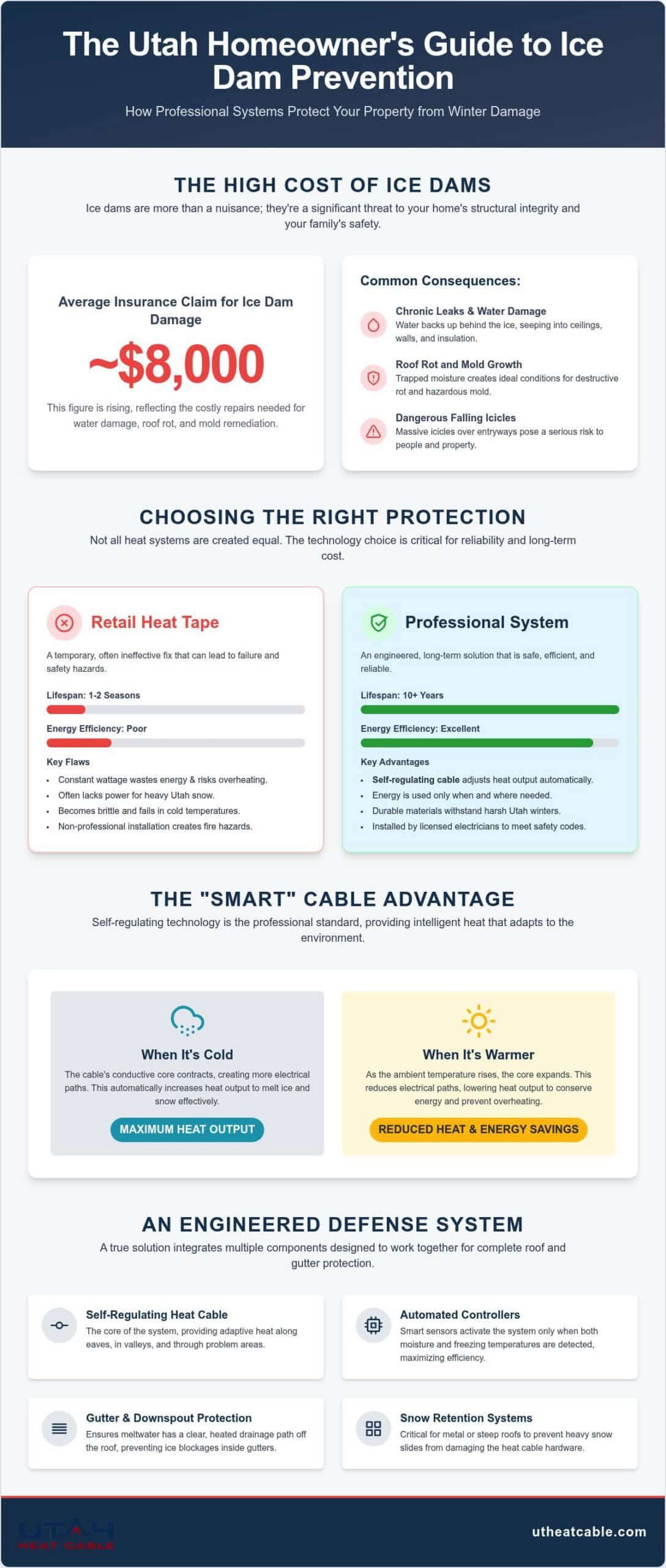
Did you know the average insurance claim for ice dam damage has climbed to approximately $8,000 per household? If you’ve spent a Utah January watching water drip through a ceiling or dodging massive icicles over your front door, you know that winter isn’t just about scenery; it’s about survival for your property. This guide explores the most reliable ice dam prevention systems Utah homeowners can use to stop chronic leaks and secure those dangerous north-facing slopes. We’ll explain how professional-grade, self-regulating heat cable and strategic snow retention create a “set it and forget it” solution that protects your home and lowers long-term maintenance costs.
You’ll discover why retail-grade heat tape often fails when the temperature drops and how a custom-designed system from a licensed electrical contractor ensures your roof stays dry through the heaviest El Niño winters. We’ll cover everything from automated controllers that slash energy bills to the specialized hardware needed for metal roofs. By the end, you’ll have a clear roadmap for seasonal peace of mind, knowing your roof is guarded by expert-level engineering and local reliability.
Key Takeaways
- Effective ice dam prevention systems Utah homeowners rely on are engineered solutions that address specific drainage paths and the local freeze-thaw cycle rather than just a single wire.
- Self-regulating heat cable is the professional standard for energy efficiency because it automatically adjusts its heat output based on ambient temperatures to lower operating costs.
- Properties with metal roofs or steep north-facing sections require integrated snow retention to prevent heavy snow slides from physically damaging your de-icing hardware.
- Consulting with a licensed electrical contractor is essential to ensure your system meets Utah electrical codes and features correctly calculated circuit loads for long-term safety.
Understanding Ice Dam Prevention Systems in Utah
Effective ice dam prevention systems Utah properties require are far more than just a wire tossed on a roof. These are custom-engineered solutions designed to manage the specific physics of our high-desert and mountain climates. In areas like Park City or Brian Head, the “Freeze-Thaw” cycle is relentless. Warm air escapes from the attic, melting the bottom layer of snow on your shingles. As this runoff reaches the cold eaves, it refreezes, creating a solid barrier. To truly understand What is an Ice Dam? is to recognize it as a structural threat that leads to roof rot, internal mold, and dangerous icicle formation over entryways.
Why Retail Heat Tape Fails Utah Homeowners
If you’ve ever bought a box of heat tape from a big-box store, you likely found it brittle and non-functional within two seasons. Retail tape operates at a constant temperature, often lacking the wattage density to penetrate heavy Utah snow loads. These products are prone to overheating or burning out when they aren’t fully submerged in ice. As a licensed electrical contractor, we frequently see how non-professional installations bypass essential electrical codes. This creates significant fire hazards and leaves your home vulnerable during the coldest months of the year.
The Components of a Professional System
A professional-grade system integrates several critical parts to ensure long-term reliability and lower energy costs:
- High-durability self regulating heat cable that acts as the brains of the system.
- Automated smart controllers that activate only when moisture and freezing temperatures are both present.
- Clear drainage path protection for gutters and downspouts to prevent internal ice blockages.
This “Total System” approach ensures that meltwater has a clear, heated path off your roof before it can ever refreeze. By combining these elements, you move away from temporary fixes and toward a permanent defense for your property.
Self-Regulating vs. Constant Wattage: Choosing Your Cable
Selecting the right hardware is the most critical decision when planning ice dam prevention systems Utah homeowners can trust. Many people use the terms “heat tape” and “heat cable” interchangeably, but they are fundamentally different technologies. Retail heat tape is a fixed-resistance product that stays at one temperature until it burns out, usually within one or two seasons. In contrast, professional-grade self-regulating cables offer a lifespan of 10 years or more, providing a durable shield against the heavy snow loads common in our region.
The Self-Regulating Advantage
Self-regulating technology utilizes a specialized conductive core between two bus wires. As the ambient temperature drops, the core microscopically contracts, creating more electrical paths and generating more heat precisely where it’s needed. When the sun comes out and warms the roof, the core expands and reduces its output. This intelligence is why we recommend it for winterizing your roof with heat cable effectively. It ensures you aren’t paying for maximum heat on a clear 40-degree afternoon, significantly lowering your long-term energy costs.
When to Use Constant Wattage
Constant wattage cables deliver a steady, unchanging amount of heat regardless of the outside environment. While these are less efficient for standard residential eaves, they serve a purpose in heavy industrial snow melt or specific temperature maintenance scenarios. Because they don’t have the ability to “turn down” their output, they require specialized controllers and heavy-duty sensors to manage the load. Without these professional controls, constant wattage systems can quickly lead to astronomical utility bills and hardware failure. For the majority of Utah properties, the “set it and forget it” nature of self-regulating cable remains the gold standard. If you want to ensure your property is protected by the right technology, you can request a professional system design to find the most efficient fit.
Custom System Design for Utah Micro-Climates
Utah weather varies significantly from the valley floors to the high mountain passes. Because of this, ice dam prevention systems Utah homeowners install must be tailored to the specific micro-climate of the property. North-facing roof sections are particularly problematic. These areas receive almost no direct sunlight during the winter, meaning they stay frozen much longer than south-facing slopes. We design these sections with higher wattage density and specialized cable patterns to ensure ice doesn’t have the chance to anchor to the shingles.
Managing Snow Slides with Retention Systems
Metal roofs present a unique challenge because their smooth surfaces invite massive snow slides. When a heavy slab of snow releases all at once, it can easily shear off your heat cable and damage your gutters. Integrating snow retention systems for metal roofs is the only way to protect your investment. These guards hold the snow pack in place, allowing the heat cable to melt the bottom layer safely and incrementally without the risk of mechanical failure.
Smart Controllers and Sensors
The most efficient ice dam prevention systems Utah properties utilize rely on automated moisture and temperature sensors that act as the brain of the operation. These smart controllers detect when the roof is both cold and wet, activating only when necessary. This prevents “phantom” energy use on dry, cold days, which is a common complaint with unmanaged retail systems. As a licensed electrical contractor, we ensure these controllers are programmed to the specific thermal needs of your roof. If you’re ready to secure your property with a professionally engineered layout, contact us for a custom design consultation.
Professional Installation and Code Compliance
Installing the robust ice dam prevention systems Utah homes require involves a methodical, technical process. It begins with a professional roof assessment to identify thermal bypasses. These are areas where interior heat leaks into the attic, causing the initial snowmelt. By mapping these hot spots and identifying natural drainage paths, we ensure the heating elements are placed for maximum impact. We also prioritize secure fastening using roof-safe clips. These specialized brackets hold the cable in place without penetrating the shingles or voiding your manufacturer warranty.
The Licensed Electrical Contractor Difference
Hiring a licensed electrical contractor is non-negotiable for fire safety. While some general laborers offer basic heat tape services, they often lack the technical expertise to calculate amp loads correctly. If a system isn’t designed for the specific power draw of self-regulating heat cable, it can frequently trip breakers or even cause electrical fires. We perform every installation strictly according to code. This precision is vital for insurance purposes, as many providers require proof of professional installation to cover winter-related water damage claims.
Long-Term System Maintenance
A professional system is a long-term investment that benefits from annual pre-winter checks. You should test the controller and inspect all exposed cables for debris or wind damage before the first November snowfall. If you notice the cable jacket is brittle or the system no longer clears paths during a light freeze, it may be reaching the end of its functional life. Keeping your drainage paths clear ensures the meltwater reaches the ground safely. Ready to protect your home? Get a custom ice dam prevention quote from Utah Heat Cable today.
Secure Your Utah Home Before the Next Big Snow
Navigating the harsh winters of the Wasatch Front requires more than just reactive measures. By investing in professional-grade ice dam prevention systems Utah homeowners can move from constant winter worry to long-term property security. A professional system relies on self-regulating heat cable to provide a durable, energy-efficient shield, especially when integrated with smart controllers and snow retention for metal roofs. These engineered solutions don’t just melt ice; they protect your roof’s structural integrity and your family’s safety.
As a licensed electrical contractor and self-regulating cable specialist, Utah Heat Cable provides the custom engineering necessary for our unique mountain micro-climates. Whether you’re managing a north-facing slope in Park City or a commercial facility in Salt Lake City, the right system ensures meltwater reaches the ground without causing internal damage. Don’t wait for the next heavy snowfall to discover a leak. Take the proactive step today to Request a Professional Ice Dam Prevention Quote and enjoy the peace of mind that comes with expert-level protection. Your roof is your home’s first line of defense; let’s make sure it’s ready for whatever the season brings.
Frequently Asked Questions
How much does an ice dam prevention system cost to run in Utah?
Operating costs depend on the linear footage and the type of controller used. Because professional ice dam prevention systems Utah residents use feature self-regulating heat cable, the system only draws full power when temperatures drop significantly. Systems equipped with automated moisture and temperature sensors further reduce utility bills by ensuring the cables only heat when actual snow or ice is present on the roof.
Can I install heat cable on my own roof or do I need a professional?
You should always hire a licensed electrical contractor for installation to ensure safety and code compliance. While DIY kits exist, they often lack the wattage density required for Utah snow loads and can create fire hazards if not correctly grounded. Professional installers handle complex circuit design and amp load calculations, ensuring your system doesn’t trip breakers or violate local electrical regulations during a heavy winter storm.
Will heat cable damage my shingles or void my roof warranty?
A professionally installed system won’t damage your shingles or void your warranty if installed using roof-safe clips. These specialized fasteners secure the self-regulating heat cable without penetrating the roofing material. In fact, preventing ice dams protects your roof from the structural rot and shingle lifting caused by ice expansion, which is a much greater threat to your home’s long-term health than the hardware itself.
How long do professional roof heat cable systems typically last?
Professional-grade self-regulating heat cable systems typically last ten years or more with proper maintenance. This is a significant improvement over retail heat tape, which often fails after just one or two seasons. The durability comes from high-quality outer jackets and industrial cores designed to withstand constant UV exposure and the extreme temperature fluctuations common in mountain regions like Park City and Bear Lake.
Do I need heat cable on the entire roof or just the edges?
Most properties only require cable on the eaves, valleys, and gutters where ice dams naturally form. However, a custom design is necessary to identify specific problem areas like north-facing slopes or complex drainage paths. By targeting these high-risk zones, you can create effective ice dam prevention systems Utah weather demands without the unnecessary expense of heating sections that receive enough sunlight to clear themselves naturally.