
Have you ever considered that a single cubic foot of ice can weigh nearly sixty pounds, all of which might be hanging precariously over your front door? Most Utah homeowners see those sparkling icicles and think they’re just a part of the mountain scenery, but they’re often a warning sign of a much deeper thermal issue. It’s stressful to watch ice build up while wondering if your shingles or gutters can handle the strain.
Understanding the importance of keeping ice dams from forming is about more than just aesthetics; it’s a critical investment in your home’s structural health and your family’s safety. This guide explains why these frozen barriers occur, the hidden risks they pose to your indoor air quality, and the professional-grade solutions like self-regulating heat cables that provide a permanent shield for your property. By identifying the root causes now, you can protect your roof and ensure your home remains a secure, dry sanctuary all winter long.
Key Takeaways
- Understand how trapped meltwater bypasses shingles to rot roof decking and compromise your home’s internal framing.
- Learn why Utah’s unique freeze-thaw cycles and internal thermal bridging create the perfect conditions for heavy ice ridges to persist.
- Discover why professional self-regulating heat cables are the superior choice for automated, energy-efficient protection against winter damage.
- Recognize the importance of keeping ice dams from forming to protect your property’s long-term value and prevent indoor mold growth.
The Hidden Risks: Why Preventing Ice Dams is Critical for Your Home
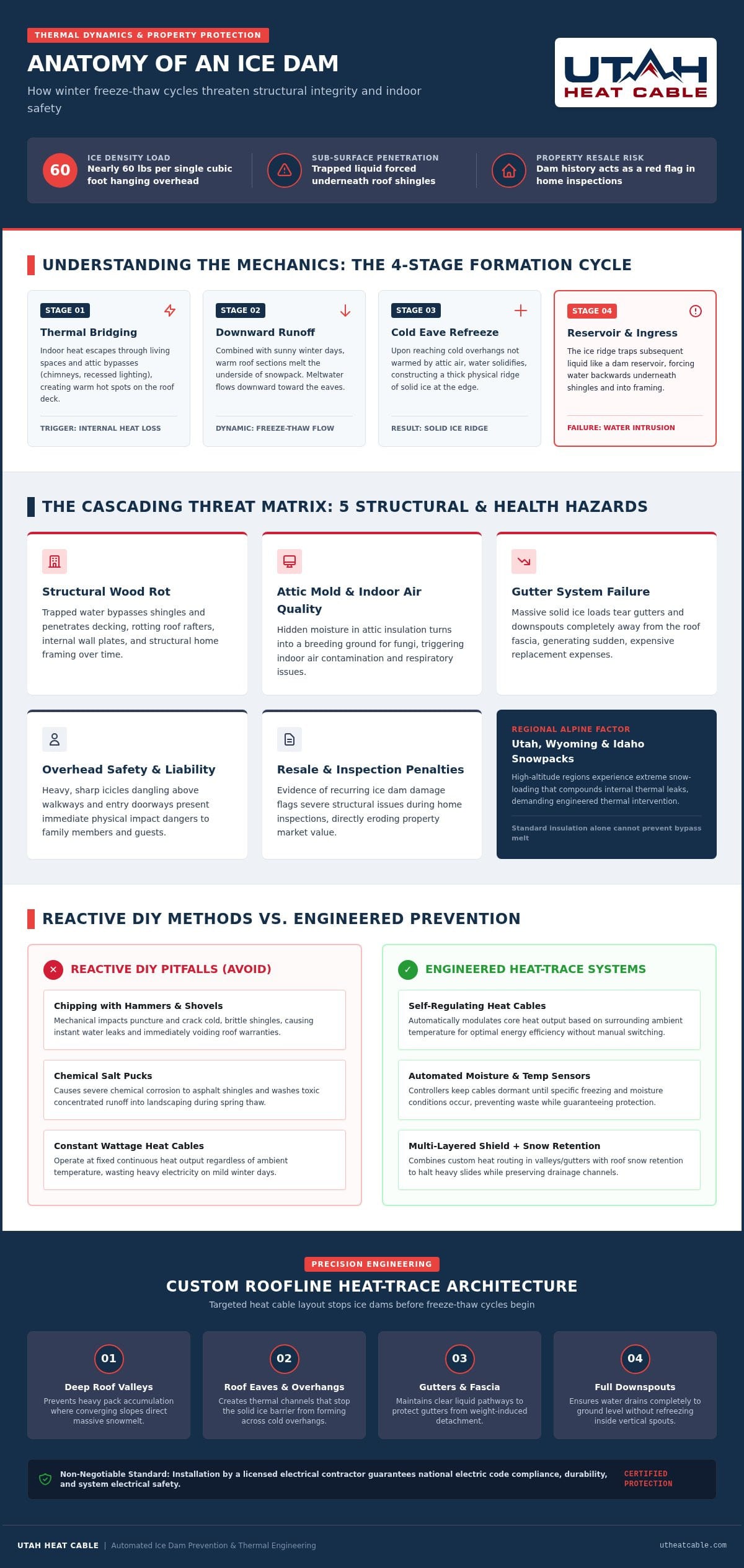
An ice dam is much more than a collection of icicles; it’s a physical ridge of ice at the roof’s edge that acts like a reservoir. This barrier traps meltwater behind it, eventually forcing liquid under your shingles where it doesn’t belong. When you evaluate ice dams, think of them as a failure in your roof’s drainage system. This trapped water leads to structural degradation by rotting roof decking, rafters, and interior wall plates over time.
Beyond the wood, hidden moisture in attic insulation creates a mold factor that many homeowners overlook. This damp environment becomes a breeding ground for fungi that can impact indoor air quality and cause respiratory issues. This is why understanding the importance of keeping ice dams from forming is vital for maintaining a healthy living space. If you plan to sell your home, a history of ice damming will likely appear as a major red flag during a 2026 home inspection, potentially lowering your property’s resale value.
Safety Hazards and Liability Beyond the Roof
The risks aren’t confined to the attic. Heavy icicles pose a significant threat to residents and guests using walkways below. Additionally, the sheer weight of solid ice often leads to gutter failure, where the entire system is ripped away from the fascia. This creates an immediate financial burden for replacement. You can learn more about our de-icing services to see how professional protection prevents these cascading costs.
Understanding the Mechanics: How Ice Dams Form and Why They Persist
Utah’s winter climate creates a relentless freeze-thaw cycle that’s the primary driver of roof ice. During sunny winter days, the sun warms the snow on your roof, causing it to melt and flow downward. Once that water reaches the cold eaves, which aren’t warmed by the attic space, it refreezes into a solid ridge. This physical process highlights the importance of keeping ice dams from forming before the cycle creates a massive barrier that traps subsequent meltwater and forces it upward under your shingles.
Thermal bridging is another critical factor in this equation. When heat escapes from your living space, it creates “hot spots” on the roof deck that melt snow even when outside temperatures are well below freezing. Even homes with thick insulation can fail if they have “attic bypasses” like gaps around chimneys or recessed lights. These small leaks act as chimneys for warm air, melting snow from the underside. In high-altitude areas across Wyoming and Idaho, these thermal issues are compounded by extreme snow-loading, making professional intervention necessary to manage the sheer weight of the pack.
Why Shoveling and Salt Are Not Long-Term Solutions
Many homeowners turn to reactive DIY methods, but these often lead to expensive mistakes. Chipping at ice with hammers or shovels can easily puncture shingles and void your roof warranty instantly. Chemical solutions like salt pucks are equally problematic; they cause chemical corrosion on shingles and can damage your landscaping once the spring thaw arrives. Instead of temporary fixes, comparing Self-Regulating vs Constant Wattage Heat Cable provides a path toward a permanent, automated solution. If you’re unsure where your roof is losing heat, reviewing professional de-icing standards is the best first step toward protecting your home.
Professional Solutions: How to Stop Ice Dams Before the First Snowfall
Professional intervention provides the only reliable way to manage complex rooflines and heavy Utah snow loads. Self-regulating heat cables have become the industry standard because they’re energy-efficient and automated. Unlike basic constant wattage alternatives, these cables adjust their heat output based on the surrounding temperature. This efficiency underscores the importance of keeping ice dams from forming without wasting electricity during milder winter days.
Every home requires a custom heat-trace design to be truly effective. A generic installation often misses critical areas like deep valleys, long gutters, and downspouts where meltwater typically refreezes. By using automated controllers equipped with moisture and temperature sensors, the system stays dormant until it’s actually needed. This precision is why hiring a licensed electrical contractor is non-negotiable. It ensures the installation is code-compliant, durable, and safe for your home’s electrical system.
Building a Multi-Layered Defense for Your Roof
For many properties, heat cables are just one part of a comprehensive protective shield. Combining roof snow retention systems with heat cables prevents dangerous snow slides while maintaining clear drainage paths. This dual approach addresses both the weight of the snowpack and the risk of ice ridges. You can find essential ‘Need to Know’ facts about roof de-icing to help plan your next steps. For a deeper dive into preparation, read our guide on Winterizing Your Roof with Heat Cable to ensure your home is ready before the first storm hits.
Securing Your Home Against the Next Winter Storm
Ice dams aren’t just a seasonal eyesore; they’re a serious structural threat that rots roof decking and invites hidden mold growth. We’ve explored how Utah’s unique freeze-thaw cycles demand more than temporary DIY fixes like salt or shovels. Recognizing the importance of keeping ice dams from forming is the first step toward ensuring your property’s long-term health and resale value. As a licensed electrical contractor, Utah Heat Cable provides custom-designed systems for homes across Utah, Idaho, and Wyoming. Our expertise in self-regulating cable technology ensures your roof remains a protective shield throughout the harshest conditions. Protect your home today with a custom heat cable solution from Utah Heat Cable. Don’t wait for the ice to build up. Take control of your home’s safety now so you can enjoy the mountain winter with total peace of mind.
Frequently Asked Questions
What do ice dams look like and how can I spot them early?
Ice dams typically appear as thick, heavy ridges of solid ice along the eaves or within roof valleys. You can spot them early by looking for unusually large icicles hanging from your gutters or seeing ice build up behind the gutter line. If you notice water stains on your interior ceilings or soffits, it’s a sign that the dam has already forced meltwater under your shingles.
Can ice dams cause my roof to collapse?
Yes, ice dams can lead to structural failure if they’re left unmanaged. A cubic foot of ice weighs nearly 60 pounds, and when hundreds of pounds of ice accumulate along the eaves, it puts immense stress on your rafters and decking. This weight, combined with the rot caused by trapped water, significantly increases the risk of a partial or total collapse during heavy Utah winters.
Is it worth installing heat cables if I already have good insulation?
Even well-insulated homes often require professional intervention because of thermal bridging and attic bypasses. Heat escapes through recessed lights or chimney gaps, creating the temperature differentials that cause ice. This highlights the importance of keeping ice dams from forming with self-regulating heat cables. These systems provide a targeted drainage path that insulation alone can’t create, protecting your gutters and shingles from structural damage.
How much does it cost to fix damage caused by an ice dam?
Repair costs for ice dam damage are often significant because they involve multiple trades. You may need to pay for professional mold remediation, drywall replacement, and new attic insulation. Additionally, rotted roof decking or rafters require structural repairs that far exceed the cost of prevention. Investing in a professional heat-trace system avoids these cascading financial burdens and protects your property’s long-term market value.