

Imagine waking up to ten inches of heavy, wet snow along the Wasatch Front, but instead of reaching for the shovel, you watch the flakes vanish the moment they touch your pavement. For many homeowners, the physical strain of clearing a steep, icy drive is more than an inconvenience; it’s a safety hazard that carries real liability. Understanding the heated driveway cost Utah residents face is the first step toward reclaiming your winter mornings and protecting your home’s accessibility.
We understand that the choice between electric and hydronic systems feels complex when you’re trying to balance long-term performance with an upfront budget. This guide provides a professional look at the 2026 landscape for snow melt technology, from material choices to the specific electrical upgrades required by current local codes. You’ll learn how to determine a realistic price range for your specific driveway size and discover why intelligent sensors are the key to managing monthly utility bills. By the end, you’ll have the confidence to choose a system built to withstand the harshest Wasatch winters while adding lasting value to your property.
Key Takeaways
- Learn how your choice of surface material and coverage options, such as tire-track heating, can significantly influence your initial project budget.
- Compare the lower upfront installation costs of electric systems against the long-term energy efficiency of hydronic setups for larger Utah properties.
- Get a clear breakdown of the heated driveway cost Utah homeowners can expect on their utility bills, including how automatic sensors can reduce energy waste by up to 70%.
- Understand the importance of professional installation for ensuring National Electrical Code compliance and long-term reliability during harsh Wasatch winters.
Primary Cost Drivers for Utah Snow Melt Systems
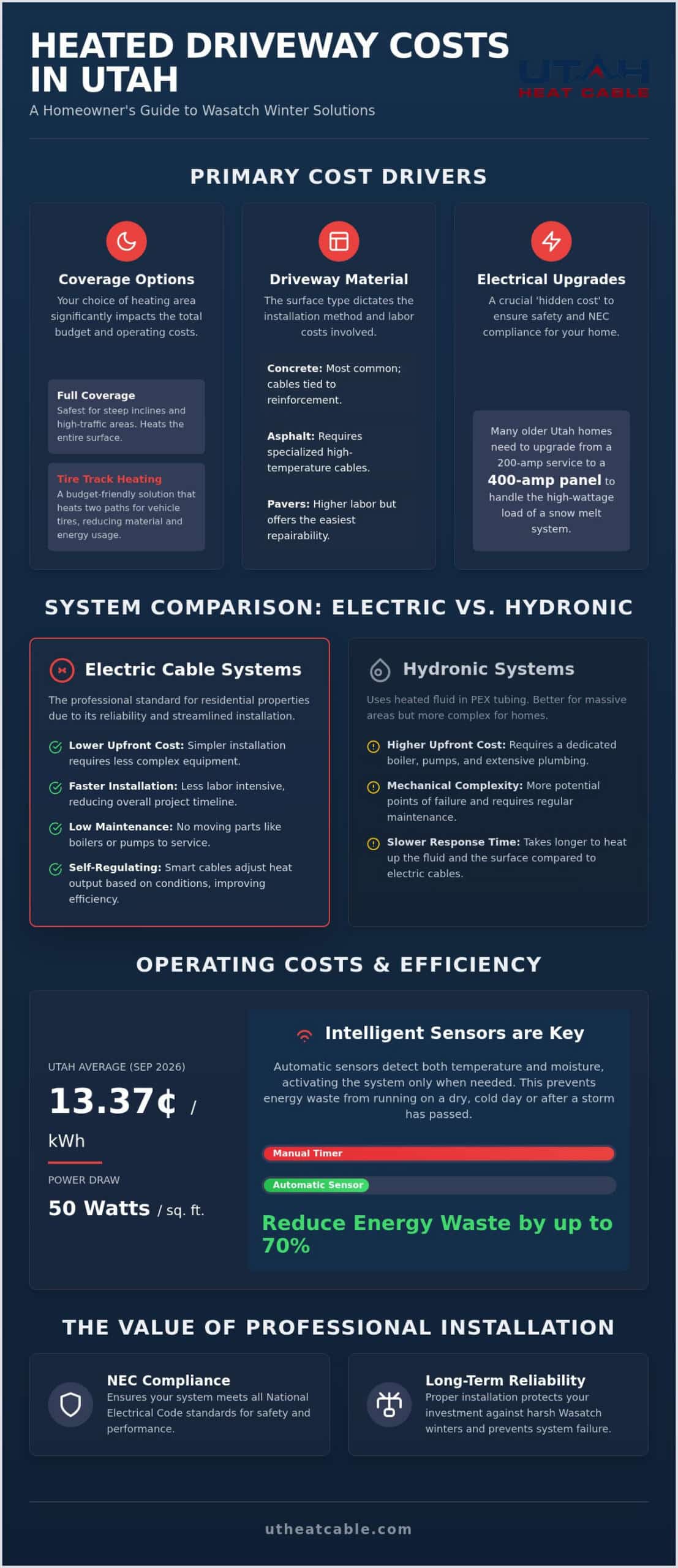
Estimating the total heated driveway cost Utah homeowners will pay involves more than just measuring square footage. While the surface area is the most obvious factor, the underlying infrastructure and the material of your driveway play equally critical roles. Whether you are pouring new concrete or laying down pavers, the labor involved in preparing the sub-base and securing the Snowmelt system components varies significantly. Additionally, the sophistication of your controller, moving from manual timers to moisture-sensing automatic triggers, dictates both the installation price and your future utility savings.
Full Coverage vs. Tire Track Heating
If you have a long driveway in Park City or the benches of Salt Lake, heating every square inch might be unnecessary. Tire track heating installs two heated paths for your vehicle, which reduces both the initial material cost and the ongoing energy usage. It’s a budget-friendly solution for sprawling properties. However, for steep inclines or high-traffic walkways, full coverage remains the safer choice to prevent slip-and-fall accidents. Choosing the right coverage ensures you aren’t paying to melt snow where nobody walks or drives.
The ‘Hidden’ Cost: Electrical Service Upgrades
Many older Utah homes have 200-amp services that lack the capacity for high-wattage snow melt. A 500-square-foot driveway can pull as much power as three electric vehicle chargers running at once. Upgrading this infrastructure is a key part of the heated driveway cost Utah residents face. You might need a licensed electrical contractor to install dedicated circuits or a 400-amp panel. This ensures you meet National Electrical Code (NEC) standards while preventing system failure during heavy Wasatch snowfalls. Taking this step protects your investment and your home’s electrical integrity.
Electric vs. Hydronic: Comparing Installation Costs
Choosing between electric and hydronic technology is a pivotal decision that impacts your initial investment and long-term maintenance. Hydronic systems rely on a network of PEX tubing and a dedicated boiler to circulate heated fluid. While these offer lower energy costs for massive commercial spaces, the mechanical complexity often leads to higher upkeep. When evaluating the heated driveway cost Utah residents should look beyond the sticker price to consider the longevity of the components. For residential properties, electric systems remain the standard due to their streamlined installation and lack of moving parts. It’s particularly effective for retrofitting existing driveways where a boiler room or extensive plumbing is not feasible.
Electric Cable Systems: The Professional Choice
Electric systems offer a faster installation timeline, which helps control the overall heated driveway cost Utah homeowners encounter. Using professional-grade self-regulating heat cable allows the system to respond dynamically to local weather patterns. These cables increase heat output as temperatures drop and throttle back as it warms up. According to Forbes, comparing these professional systems against manual labor highlights the significant convenience and safety they provide.
Driveway Material and Installation Labor
The total price is heavily influenced by your choice of surface material. Concrete is the most frequent application in Utah, where cables are secured to reinforcement before the pour. Asphalt requires specialized cables designed to withstand the intense paving heat. While pavers involve higher labor for precision bedding, they offer the best repairability. Individual stones can be removed and replaced without damaging the entire driveway. Reviewing professional deicing options can help you find the most durable fit for your property.
Operating Costs: What to Expect on Your Utah Utility Bill
Utah’s electricity rates remain competitive, but the duration of a winter storm dictates your final monthly bill. In the Salt Lake Valley, a typical storm might pass in six hours, whereas Park City properties often face accumulation for days. As of September 2026, the average residential electricity rate in Utah is 13.37¢ per kWh. When calculating the total heated driveway cost Utah homeowners should expect, it’s vital to account for these regional climate differences. Systems typically operate at 50 watts per square foot, meaning a 500-square-foot driveway draws significant power. Without proper management, a long mountain storm can lead to unexpected utility spikes.
The Role of Intelligent Controllers
Efficiency relies almost entirely on how your system is triggered. Manual timers are the primary cause of “energy sticker shock” because they often run long after the pavement is dry. High-quality automatic sensors solve this by detecting both moisture and freezing temperatures simultaneously. This “70% savings rule” ensures the cable only draws power when snow is actually falling or ice is forming. Experts at Bob Vila emphasize that while the hardware is a specialized investment, the safety and convenience of an automated system are the real long-term benefits.
Maintenance Costs and System Life
Electric systems offer a distinct advantage over hydronic alternatives because they require virtually zero annual maintenance. There are no boilers to service, no pumps to replace, and no fluid levels to monitor. A professional-grade electric system is designed to last 30 to 50 years, often outliving the driveway surface itself. This durability provides a predictable return on investment, eventually offsetting the initial heated driveway cost Utah residents pay during the installation phase. If you’re planning a project for the upcoming season, you can view our driveway deicing systems to see which controller options best fit your budget and local snow load.
The Value of Professional Installation in Utah
While DIY solutions like retail “heat tape” are common for small pipes, they are never a viable substitute for a fully engineered snow melt system. Utah’s heavy snow loads and freeze-thaw cycles require industrial-grade materials that can withstand being buried under tons of concrete or asphalt. Attempting a self-installation often leads to cable failure within a few seasons. This effectively doubles the long-term heated driveway cost Utah homeowners pay when the entire surface must be ripped up for repairs. Professional installation ensures your system is designed with specific property drainage in mind, preventing meltwater from pooling and refreezing at the base of your drive.
Why Licensing Matters for Snow Melt
Safety is the primary reason to hire a specialist. Improper grounding in wet, snowy conditions creates a significant shock hazard that retail-grade products don’t always address. As a licensed electrical contractor, we ensure every installation meets the 2020 National Electrical Code (NEC) standards. This protects your home’s insurance eligibility and resale value. Most cable manufacturers also require proof of professional installation to honor their long-term warranties. For a deeper look at the technology involved, explore our Professional Self Regulating Heat Cable Installation guide.
Getting an Accurate Quote in Utah
Obtaining a precise estimate for the heated driveway cost Utah residents face starts with a comprehensive site visit. We look for slope challenges and existing electrical panel capacity that simple photos cannot capture. To prepare for your consultation, have your approximate square footage and a clear photo of your main electrical panel ready. This transparency helps us design a custom system that won’t fail when the first Wasatch blizzard hits. You can learn more about our specific process by reading about Heated Driveway Installation Utah.
Secure Your Property Before the First Snowfall
Investing in a snow melt system is more than just a convenience; it’s a long-term commitment to safety and property protection. By prioritizing intelligent sensors and professional-grade self-regulating cables, you ensure your system operates with maximum efficiency. This strategic approach manages the heated driveway cost Utah homeowners encounter while providing a permanent shield against the elements. A properly engineered system means you’ll never have to worry about ice on steep inclines or the physical strain of clearing heavy snow again.
As a licensed Utah electrical contractor, we provide expert installation and custom-designed systems built for the specific snow loads of the Wasatch region. We focus on precision and code compliance so your investment remains durable for decades. If you’re ready to reclaim your winter mornings and enhance your property’s safety, our team is prepared to guide you through the process. Get a Custom Snow Melt Quote for Your Utah Property and start preparing for a safer, easier winter today.
Frequently Asked Questions
How much does a heated driveway add to my monthly Utah electric bill?
The impact depends on your system size and storm duration. For a standard 500-square-foot driveway drawing 50 watts per square foot, you can expect to pay about $3.34 per hour of operation based on current Utah rates. Using an automatic controller with moisture and temperature sensors prevents unnecessary run time. This ensures you only pay for melting during active storms rather than heating dry pavement when the sun is out.
Can I install a heated driveway system under my existing concrete?
You cannot simply slide heating cables under existing concrete. Effective installation requires the cables to be embedded directly within the material or placed in a new pour to ensure proper heat transfer. If you want to avoid a full tear-out, we can saw-cut grooves into your current driveway to bury the cables, though this method is labor-intensive. Most homeowners find that installing a system during a planned driveway replacement is the most cost-effective approach.
How long does a professional snow melt system last in Utah’s climate?
A professionally installed electric snow melt system is designed to last between 30 and 50 years. Because these systems have no moving parts or corrosive fluids, they often outlive the actual concrete or asphalt surface above them. This longevity is a key factor in the total heated driveway cost Utah residents evaluate when considering property ROI. Professional-grade self-regulating cables provide the durability needed to survive the extreme temperature shifts common in the Wasatch region.
Is an electric heated driveway better than a hydronic one for a home in Salt Lake?
Electric systems are generally superior for Utah residential properties due to their lower maintenance requirements and simpler installation. Hydronic systems require complex boilers and pumps that can fail or require expensive annual servicing. Electric self-regulating cables are more responsive to sudden temperature drops and don’t risk leaking fluid into your driveway base. While hydronic might save energy on massive commercial lots, the reliability of electric systems makes them the professional choice for local homes.
Do I need to upgrade my electrical panel for a heated driveway?
Most modern snow melt systems require a dedicated high-amperage circuit that may exceed the capacity of a standard 200-amp residential panel. A 500-square-foot driveway can pull as much power as several electric vehicle chargers running simultaneously. As a licensed electrical contractor, we assess your current infrastructure to ensure code compliance. If your panel is at capacity, an upgrade to a 400-amp service is often necessary to safely support the system without tripping breakers.