
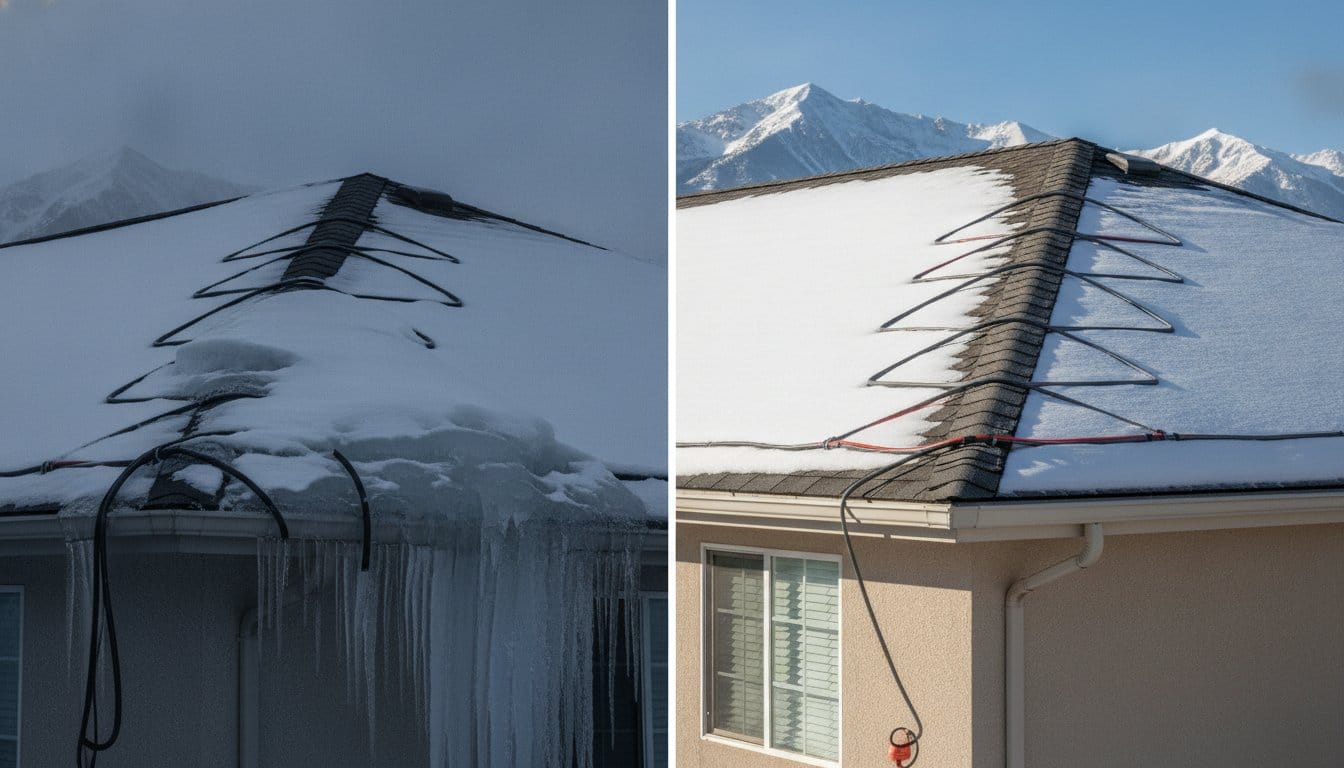
The perceived savings of a DIY heat tape kit often vanish the moment the first circuit trips or a heavy ice dam forms right on top of the cable. When weighing the options of professional vs DIY heat tape, it’s natural to look for a quick, affordable solution as icicles begin to hang over your front door. You want to protect your roof and your family from winter hazards, and a retail kit feels like a proactive step. However, there’s a significant gap between a temporary fix and a permanent de-icing strategy.
This guide will clarify how professional-grade systems provide peace of mind through superior fire safety and longevity. You’ll learn why hardware-store cables often fail and how to identify the specific technical features that prevent roof damage. We’ll break down the mechanics of self-regulating cables, the importance of professional installation for code compliance, and how to choose a system that actually lasts for years rather than just one season.
Key Takeaways
- Learn why “heat tape” is often a misnomer and why high-quality self-regulating cables are the industry standard for lasting ice dam prevention.
- Understand the critical safety differences of professional vs DIY heat tape, including how professional installations meet National Electrical Code standards to prevent fire hazards.
- Discover how self-regulating technology acts as a built-in brain for your roof, automatically adjusting heat output to maximize energy efficiency and safety.
- See why custom-designed layouts outperform one-size-fits-all kits by ensuring meltwater has a clear, heated path from the roof all the way to the ground.
- Identify the durable, UV-resistant materials required to survive the harsh winter extremes of the Intermountain West for more than just a single season.
The Heat Tape Myth: Why DIY Isn’t Always a Simple Fix
If you’ve ever stood on your driveway in January, staring up at massive icicles and wondering if your gutters are about to pull away from the house, you aren’t alone. The instinct to head to the local hardware store for a pre-packaged DIY kit is strong. It feels like a quick, cost-effective way to protect your property before the next storm hits. However, this is where the terminology trap begins. Most homeowners ask for “heat tape,” but what they actually need for a permanent solution is a professional-grade heat cable. To understand the gap between these options, it’s helpful to look at What is Heat Trace Technology and how it’s engineered for different environments.
When comparing professional vs DIY heat tape, the primary difference lies in the intended application. Retail kits are frequently designed for temporary pipe freeze protection or light-duty use. They aren’t built to withstand the heavy snow loads and sustained freezing temperatures found on a typical roofline in the Intermountain West. While a $50 box from a big-box store offers immediate psychological relief, it rarely provides the long-term security your home requires. Our goal as specialists is to validate your desire for safety and protection while ensuring the solution you choose actually stops the leak.
Defining the Goal: Ice Dam Prevention
An ice dam doesn’t just happen by accident; it’s a result of complex temperature fluctuations on your roof. In Utah, north-facing rooflines or areas with complicated valleys are particularly susceptible. Snow melts during the day and refreezes at the cold eaves, creating a block that forces water under your shingles. A standard DIY cable might melt a small “tunnel” through the ice, but it rarely clears the gutter or provides a clear path for drainage. This “plug-and-play” mindset often leads to system failure in mid-winter when you need protection most. A professional approach ensures the entire drainage path, from the roof edge through the downspout, remains open and functional.
The Reality of Retail Heat Tape
Retail products are often built using constant wattage technology, which is fundamentally different from the systems used by licensed contractors. A constant wattage heat cable is a fixed-output heating element that lacks intelligence. It stays at one temperature regardless of whether it’s 30 degrees or 10 degrees outside. This lack of regulation causes these cables to burn out quickly in extreme cold or waste significant amounts of energy during milder days. In the harsh environment of the Rockies, the thin, retail-grade jackets on these products often crack or degrade after just one or two seasons. This leaves your home vulnerable to the very leaks and fire risks you tried to prevent in the first place.
Retail vs. Professional Grade: Decoding the Hardware Difference
The physical profile of a heating element tells you exactly how much work it can do. When you hold a piece of hardware-store heat tape next to a professional-grade self-regulating cable, the difference is immediately apparent. Retail products are often thin, flat, and flexible; they’re designed for easy packaging rather than heavy-duty performance. In contrast, industrial-grade cables have a much larger physical footprint. This thicker construction allows for more surface area contact with ice and snow, which enables the system to move significantly more melt-water away from your eaves before it can refreeze.
Choosing between professional vs DIY heat tape often comes down to how much you value the underlying technology. While retail options rely on a simple wire that gets hot, professional systems use a sophisticated conductive polymer core. This core acts as a distributed thermostat along the entire length of the cable. As the temperature drops, the core contracts, creating more electrical paths and increasing heat output. When the sun hits the roof and the temperature rises, the core expands, “throttling” the electricity and lowering your energy bill. This intelligent adjustment is something a standard $50 kit simply cannot do.
The Self-Regulating Advantage
One of the most critical safety benefits of professional systems is their ability to cross over themselves without the risk of overheating. If a DIY constant-wattage tape is installed so that it touches itself, it can create a localized “hot spot” that melts the cable jacket or, in worst-case scenarios, ignites debris on the roof. Because professional cables are self-regulating, they simply reduce their output at the point of contact. This makes them inherently safer for complex roof valleys and tight gutter corners. You can see this technology in action during a , where precision and safety are prioritized over a quick-fix approach.
Durability in the High Desert and Mountains
The climate in Utah and the surrounding mountain states is notoriously hard on building materials. The intense UV radiation at high altitudes quickly degrades the thin plastic jackets found on retail heat tape, causing them to crack and expose the internal wiring after just one or two summers. Professional-grade cables feature high-quality fluoropolymer or polyolefin outer jackets specifically engineered for UV resistance and mechanical strength. While a hardware store kit might offer a 1-year limited warranty, professional systems often come with multi-year guarantees that reflect their industrial build quality. Professional heat trace is an investment in the property’s infrastructure, not a seasonal accessory. If you are ready to move beyond temporary fixes, our team can provide a custom de-icing design that stands up to the harshest mountain winters.
Safety Standards and Electrical Code: The Hidden Risks of DIY
Electrical safety isn’t a suggestion; it’s a requirement codified in law to protect your home and family. When homeowners debate professional vs DIY heat tape, they often focus on the price of the cable while overlooking the legal and safety standards required for installation. National Electrical Code (NEC) regulations exist because heating cables are high-draw appliances that operate in the most punishing environments imaginable: under heavy snow and submerged in melt-water. In fact, improper electrical work contributes to approximately 1,000 deaths annually in the U.S., a sobering reminder of why these standards matter.
A common DIY mistake is simply plugging a heat cable into a standard outdoor outlet. This is often a code violation. The NEC requires specific protection for de-icing systems, particularly Ground Fault Equipment Protection (GFEP). Unlike a standard GFCI outlet in your bathroom that protects people from shocks, GFEP is designed to protect the equipment and prevent fires by detecting low-level leakage current. New regulations in the 2026 NEC, specifically section 424.48, further tighten requirements for heating cables, emphasizing the need for proper grounding and protection. As licensed electrical contractors, we ensure every system we install meets these evolving standards, something a “plug-and-play” retail kit cannot guarantee.
Fire Hazards of Improper Installation
The most dangerous risk of a DIY installation is a roof fire. This often happens when constant-wattage retail tape is overlapped or “dead-ended” improperly. Because these cables don’t have the “brain” of a self-regulating system, overlapping them creates an intense hot spot that can ignite shingles or dry leaves trapped in the gutter. We also see many homeowners use staples or nails to fasten their cables, which can easily pierce the insulation and create a hidden electrical short. Local fire departments frequently report spikes in roof fires during the coldest months, often traced back to these preventable installation errors.
The Professional Installation Checklist
A safe de-icing system requires more than just a cable; it requires a dedicated circuit. Large heat trace systems pull significant power, and sharing a circuit with your garage lights or Christmas decorations can lead to frequent breaker trips and system failure when you need it most. Our professional checklist includes:
- Installation of weather-sealed, code-compliant junction boxes.
- Dedicated electrical circuits sized for the specific load of your roof.
- Integration of automated controllers and moisture sensors.
These sensors ensure the system only runs when both freezing temperatures and moisture are present, providing safety and energy efficiency that manual switches lack.
Performance in the Rockies: Why Professional Systems Outlast DIY Tape
Living in the Intermountain West requires a specific type of resilience, both for homeowners and the systems that protect their properties. The heavy, wet snow common in Utah and Idaho creates a volume of melt-water that standard retail kits simply aren’t equipped to handle. When evaluating professional vs DIY heat tape, the most significant performance gap appears in the layout design. A hardware store kit comes in fixed lengths, often leaving “cold spots” where ice can re-establish itself. A professional system is custom-fitted to the unique architecture of your roof, ensuring that every valley and eave is protected without gaps.
Effective de-icing follows a simple logic: water must have a heated path all the way to the ground. Many DIY installations focus only on the roof edge, forgetting that gutters and downspouts are the primary drainage veins of the house. If the roof snow melts but the downspout remains a solid column of ice, that water has nowhere to go but back under your shingles. Professional systems include dedicated runs through the entire drainage path. Additionally, industrial-grade controllers use moisture and temperature sensors to manage the system. These sensors ensure the cables only draw power when necessary, preventing the heating elements from burning out during dry cold spells.
Solving the North-Facing Roof Puzzle
North-facing slopes in the Rockies present a unique challenge because they rarely see direct sunlight during the winter months. These areas stay significantly colder and are subject to higher wind-chill factors, which can cause melt-water to refreeze almost instantly. A “one-size-fits-all” DIY kit doesn’t account for these micro-climates on your roof. Our custom designs use specialized heat trace patterns that provide extra coverage for these stubborn areas. We analyze shadows and wind patterns to ensure the system provides enough thermal energy to keep water moving, even in the dead of a January freeze. For a deeper look at the building science behind shaded slopes and why they demand a different strategy, see our complete guide on how to stop ice dams on north facing roof sections.
The Cost of Failure
The true ROI of a professional installation is measured in decades, not seasons. While the initial cost of a retail kit is lower, these products frequently fail after just two years of exposure to mountain extremes. When you factor in the cost of repeated replacements, high electricity bills from inefficient constant-wattage cables, and the risk of mold remediation from a single ice dam leak, the DIY route becomes the more expensive option. A professional snow melt system increases property value and reduces long-term maintenance liabilities. If you want a system designed to survive the next decade of mountain winters, contact us today for a professional de-icing consultation.
Choosing Professional Protection with Utah Heat Cable
Deciding on professional vs DIY heat tape isn’t just about choosing a product; it’s about choosing a long-term partner for your home’s protection. At Utah Heat Cable, we don’t believe in one-size-fits-all kits that fail after a single season. Our approach centers on custom de-icing design that accounts for the specific pitch, orientation, and drainage needs of your property. We understand that a home in the shadows of the Wasatch Range faces different challenges than one in the high desert of Wyoming. Our designs are engineered specifically for these regional extremes, ensuring your gutters, downspouts, and roof valleys remain clear through the heaviest cycles of freeze and thaw.
As a licensed electrical contractor, we take full responsibility for the safety and performance of your system. We don’t just lay cable; we design an integrated electrical solution. This includes selecting the right controller options and ensuring every connection is weather-sealed and code-compliant. From residential rooflines to complex industrial sidewalk and driveway deicing systems, our solutions are built to be a permanent part of your property’s infrastructure. We provide the expertise needed to navigate the nuances of the National Electrical Code, giving you a system that is as safe as it is effective.
The Master Craftsman Experience
A consultation with David Tanner’s team is an educational walkthrough of your home’s winter vulnerabilities. We live and work in the same climate as our clients, so we know exactly where ice dams like to hide. By using only industrial-grade self-regulating heat cable, we provide a level of reliability that retail products simply cannot match. You receive the peace of mind that comes from knowing your system was designed and installed by specialists who understand the underlying mechanics of ice formation and electrical safety. It is an elite level of skill delivered with a down-to-earth, helpful attitude.
Get Ready for Winter
The best time to install a de-icing system is while the sun is still shining. Fall provides the critical window for our team to safely access your roof and complete a precision installation before the first major storm arrives. Waiting until icicles are already forming often means dealing with emergency leaks and limited installation windows. Timing is everything. Reach out today to schedule a custom design consultation for your roof or driveway. Protect your home with a professional heat cable system from Utah Heat Cable and ensure your family stays safe and dry all winter long.
Secure Your Home Before the First Frost
Choosing a de-icing solution is a decision that impacts your property’s safety and your family’s peace of mind for years to come. While retail kits offer a tempting price point, the real-world comparison of professional vs DIY heat tape reveals that industrial-grade systems are the only way to ensure lasting protection in the Intermountain West. By prioritizing self-regulating cable technology and code-compliant installation, you avoid the recurring risks of electrical failure and structural water damage.
As a licensed electrical contractor specializing in the extreme winters of Utah, Idaho, and Wyoming, we focus on precision and reliability. We understand the underlying mechanics of ice dams and provide solutions that stand up to the most punishing mountain environments. Don’t wait for the ice to build up. Request a Professional Heat Trace Design Consultation to get a system engineered specifically for your roof. You can face the coming winter with confidence, knowing your home is shielded by professional-grade protection.
Frequently Asked Questions
Is professional heat cable more energy-efficient than DIY heat tape?
Yes, professional systems are significantly more energy-efficient because they use self-regulating technology. Unlike DIY constant wattage tape that consumes the same amount of power regardless of the outside temperature, professional cables “throttle” their output as the air warms. This prevents wasted electricity during milder winter days. In a comparison of professional vs DIY heat tape, the ability to adjust output automatically leads to a measurable reduction in monthly operating costs.
Can I install self-regulating heat cable myself if I buy the professional grade?
While professional-grade cable is available for purchase, installing it yourself is not recommended due to complex National Electrical Code requirements. A licensed electrical contractor ensures that the system has proper Ground Fault Equipment Protection and is connected to a dedicated circuit. DIY installation of industrial-grade components often lacks the weather-sealed junction boxes and precise layout design needed for a safe, permanent de-icing solution.
How long does a professional roof de-icing system typically last in Utah?
A professionally installed system using high-quality self-regulating cable typically lasts between 10 and 20 years in the Intermountain West. This longevity is due to the durable, UV-resistant outer jackets and the intelligent core that prevents overheating. In contrast, retail-grade products often fail after just one or two Utah winters because their thin plastic insulation cracks under extreme temperature fluctuations and intense high-altitude sunlight.
Does insurance cover damage if my DIY heat tape causes a fire?
Insurance coverage for fire damage caused by DIY heat tape varies by policy, but many providers may deny claims if the installation was not performed to local electrical codes. If an investigation finds that a fire started because of uncertified electrical work or a non-UL listed product, the homeowner could be held liable for the damages. Professional installation by a licensed contractor provides a documented record of safety and code compliance that protects your liability.
Why does my heat cable keep tripping the breaker every time it snows?
Breaker tripping usually occurs because the heating cable is drawing too much “inrush current” on a shared circuit or there is a ground fault. Self-regulating cables pull more power the moment they are turned on, which can easily overwhelm a circuit that also powers garage lights or tools. If your system trips frequently, it likely needs a dedicated circuit or a specialized Ground Fault Equipment Protection (GFEP) breaker designed for de-icing loads.
Can professional heat cable be installed on a metal roof?
Yes, professional heat cable is perfectly suitable for metal roofs, provided it is installed with specialized standing-seam clips or adhesive mounting systems. Metal roofs have different thermal properties and expansion rates than shingles, so the layout must account for snow sliding and potential cable abrasion. Using the right mounting hardware ensures the system remains secure without piercing the metal panels or compromising the roof’s water-tight integrity.
What is the difference between a manual switch and an automated snow sensor?
A manual switch requires you to remember to turn the system on and off, whereas an automated sensor detects both freezing temperatures and moisture. Automated sensors are far superior because they prevent the system from running on dry, cold days when no melting is required. This level of control is a key factor when weighing professional vs DIY heat tape, as it maximizes energy savings and prevents the heating element from unnecessary wear.