
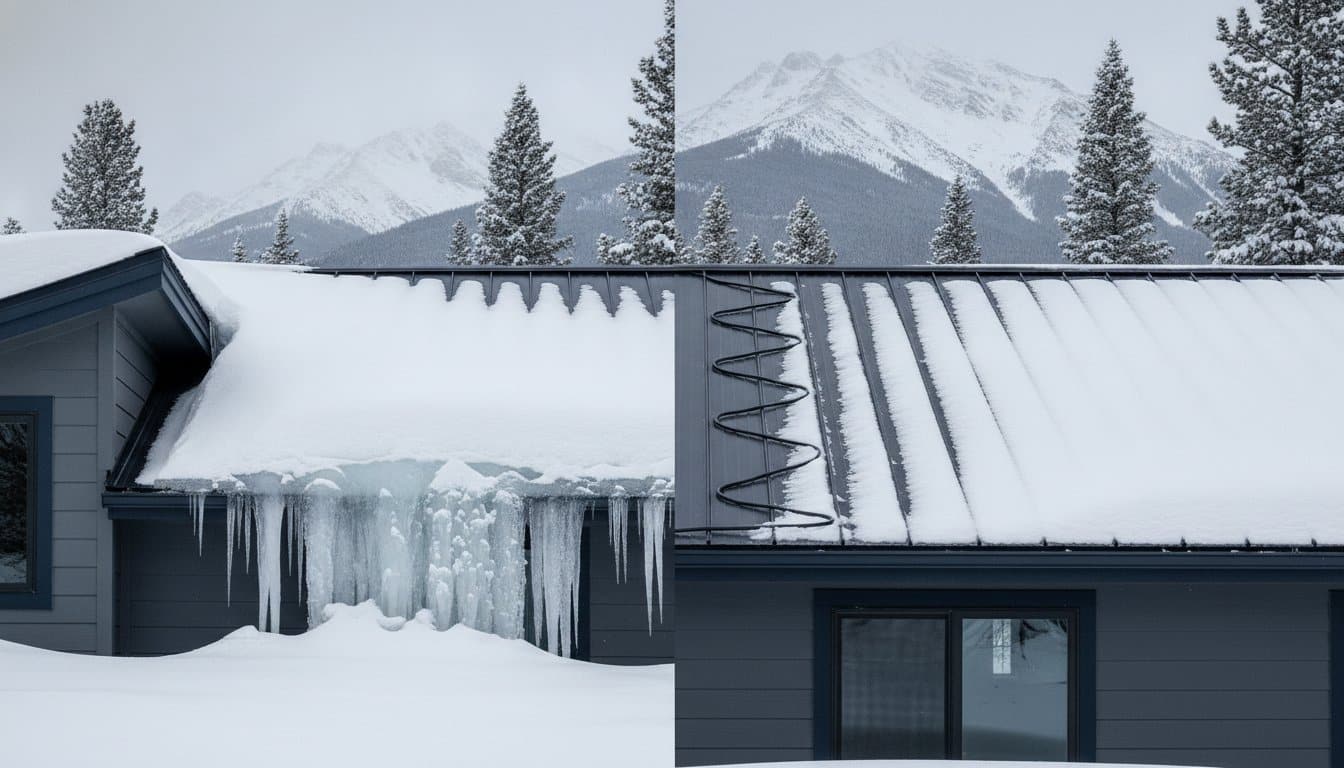
Most homeowners think they’ve solved their ice dam problem with a quick trip to the hardware store, only to find themselves climbing a ladder again the following November. It’s a frustrating, expensive cycle that happens when you mistake temporary “heat tape” for professional grade, long lasting roof heat cables. You shouldn’t have to wonder if your de-icing system will actually activate when the first blizzard hits, nor should you be stuck with sky-high utility bills from inefficient, constant-wattage wires that run at full blast regardless of the temperature.
This guide explains the technical specifications and installation secrets that separate one-season fixes from professional systems designed to last for decades. We’ll explore the critical 2026 National Electrical Code updates, including the new 1.5 inch clearance requirements and expanded GFCI protection standards that prioritize your home’s safety. By understanding the shift toward self-regulating technology and smart automation, you can finally invest in a reliable, “set it and forget it” solution that protects your home’s structure without the annual maintenance headache.
Key Takeaways
- Understand the “One-Winter Trap” and why standard retail heat tape often fails after a single season of heavy snow.
- Learn how self-regulating technology uses a conductive polymer core to adjust heat output automatically, preventing burnouts and reducing energy waste.
- Discover the specific material standards required for long lasting roof heat cables to ensure your system remains functional for up to 20 years.
- Identify the five essential components for a 2026-compliant system, including UV-stabilized polyolefin jackets and high-wattage density for mountain climates.
- See how professional, code-compliant installation by a licensed contractor protects your insurance coverage and ensures cables are placed in the optimal melt path.
The “One-Winter” Trap: Why Standard Roof Heat Cables Fail
Many homeowners fall into what we call the “One-Winter Trap.” This happens when you purchase a retail-grade heating kit from a big-box store, install it in the fall, and find it completely dead by the following spring. These systems are typically designed as temporary fixes rather than long lasting roof heat cables. While the low upfront price is tempting, these retail products often lack the robust construction needed to survive a single heavy snow cycle. They rely on thin, constant-wattage filaments that are prone to internal wire fatigue, leading to a system that fails exactly when you need it most.
Beyond the internal wiring, the physical connection points are often the weakest link. Industry data suggests that moisture ingress at these terminations causes roughly 90% of all system failures. When water seeps into a low-quality seal, it leads to short circuits or corrosion that renders the entire run useless. This is where the hidden costs of “cheap” cables become apparent. If you have to pay for professional labor to replace your cables every two years, you aren’t saving money; you’re essentially paying a subscription fee for a broken roof. Understanding the fundamentals of Trace heating technology helps explain why professional-grade materials are necessary for a permanent solution.
The Science of Thermal Fatigue
Constant-wattage “heat tape” operates at a fixed temperature, regardless of the outdoor conditions. This creates a cycle of extreme expansion and contraction within the heating element. In the harsh winters of the Mountain West, these temperature swings are frequent and severe. Low-grade elements eventually become brittle and snap under this stress. Without a self-regulating core to manage heat output, these cables can also develop dangerous “hot spots” if they happen to touch or overlap during a heavy snow slide.
Environmental Stressors in the Mountain West
Our local climate presents unique challenges that standard cables simply aren’t rated to handle. High-altitude UV radiation in states like Wyoming and Utah quickly degrades non-stabilized plastics, causing the outer jacket of retail cables to crack and peel. Once the protective layer is compromised, ice pressure in the gutters can easily crush the internal components. To achieve long lasting roof heat cables, the system must be built with UV-resistant materials and heavy-duty fasteners that can withstand the weight of several feet of snow without pulling away from the roof deck.
Anatomy of a Durable System: Self-Regulating Technology
To understand why some systems survive decades while others fail in months, you have to look at the material science inside the wire. True long lasting roof heat cables aren’t just heating elements; they’re smart processors. Unlike old-fashioned “heat tape” that runs at a single, dangerous temperature, professional systems use a specialized conductive core that responds to the environment. This technology ensures that the cable only produces heat where it’s needed, which prevents the system from burning itself out during a mild spell or wasting energy when the sun is out.
The internal architecture is just as important as the core itself. Professional-grade cables utilize 16 AWG nickel-plated copper bus wires to carry the electrical load. While cheaper retail versions might use thinner or non-plated wires, nickel plating prevents the oxidation that eventually chokes off power in lower-quality systems. Adhering to established safety guidelines for heat cables is vital, as these high-standard components significantly reduce the risk of electrical shorts and fire hazards often associated with DIY-grade products. If you’re unsure which material fits your specific roof type, consulting with a specialist in Self Regulating Heat Cable design can prevent a costly mismatch.
The Conductive Polymer Core
At the heart of the cable is a carbon-matrix core that creates millions of microscopic electrical paths between the bus wires. As the temperature drops, the core microscopically contracts, opening more electrical paths to generate more heat. When the temperature rises, the core expands and “throttles” the heat output, effectively turning itself down to a trickle. This self-managing behavior is the primary reason these systems can last 20 years or more; they never run harder than they absolutely have to.
Outer Jacket Materials: Polyolefin vs. Fluoropolymer
The outer jacket is your system’s first line of defense against the elements. In the high-altitude environments of Utah and Wyoming, standard plastics don’t stand a chance against intense UV radiation. Industrial-grade cables use UV-stabilized polyolefin or fluoropolymer jackets that won’t become brittle or crack under the sun’s glare. Beneath this jacket, a tinned copper braid provides essential grounding and mechanical protection against physical damage. You can usually identify these high-end systems by looking for specific “industrial grade” markings printed directly on the cable jacket, which indicate they’ve passed rigorous durability testing.
Commercial Grade vs. Retail Heat Tape: The Durability Gap
Walking down the aisle of a home improvement store, you might see boxes labeled “heat tape” that promise a quick fix for ice dams. There is a massive durability gap between these consumer-grade kits and the industrial-grade systems used by professionals. While a retail kit might last two or three winters, long lasting roof heat cables are engineered to provide reliable service for 15 to 20 years. This difference in lifespan stems from how the cables are manufactured and how they handle the electrical load required to melt heavy ice.
Wattage density is another critical factor. Professional systems offer various power levels, typically 6W, 8W, or even 12W per foot, to meet the specific demands of high-altitude climates. For our neighbors in the mountain regions of Utah and Wyoming, a standard low-wattage retail cable often lacks the thermal output to keep a drainage path open during a sub-zero blizzard. Furthermore, professional systems are hardwired into your home’s electrical panel by a licensed contractor. This eliminates the vulnerability of outdoor plug-in connections, which are often the first point of failure in cheaper setups.
Warranties also tell a different story when you compare grades. A “10-year warranty” on a retail box often only covers the material cost of the wire, leaving you to pay for the expensive labor of removal and re-installation. In contrast, industrial-grade manufacturers stand behind their product’s performance in extreme environments because the materials are rated for commercial use. When you invest in professional grade equipment, you’re buying a system designed for permanent structural protection rather than a temporary seasonal patch.
Why Retail “Kits” Fail at the Connection
Retail kits use factory-molded plugs that are made of standard plastics. These plugs become brittle in sub-zero temperatures and can crack, allowing moisture to seep into the electrical connection. Professional installations avoid this by using heat-shrink termination kits that create a hermetic seal against water wicking. Additionally, because professional cable is cut to length on-site, you don’t have to deal with excess loops of cable. Coiling up extra cable from a “one-size-fits-all” kit creates a significant fire hazard and reduces the overall efficiency of the system.
The ROI of Industrial-Grade Heat Trace
If you calculate the cost per year of service, professional systems are almost always the more economical choice. Replacing a retail system three or four times over a decade costs more in total labor and materials than a single professional installation. More importantly, a failed retail cable during a mid-winter thaw can lead to thousands of dollars in interior water damage. By choosing Utah Heat Cable’s custom design services, you ensure your system is specifically calibrated for your roof’s architecture, providing a level of protection that retail “heat tape” simply cannot match.
The 2026 Checklist: 5 Essentials for Long-Lasting Roof Heat Cables
Selecting a system that survives the brutal freeze-thaw cycles of the Mountain West requires looking beyond the marketing claims on the box. As we move into 2026, the standards for long lasting roof heat cables have evolved to prioritize material resilience and electrical safety. If you’re evaluating a quote or comparing products, ensure the system meets these five non-negotiable requirements:
- Self-Regulating Core: The cable must feature a conductive polymer core with a minimum 10-year manufacturer rating. This ensures the chemical matrix won’t degrade after just a few seasons of thermal cycling.
- UV-Stabilized Jacket: High-altitude sunlight is a cable killer. Demand a UV-stabilized polyolefin or fluoropolymer outer jacket to prevent the cracking and peeling that leads to moisture failure.
- Tinned Copper Ground Braid: Avoid cables that only use a thin “drain wire.” A full tinned copper braid provides superior grounding and acts as physical armor against ice and debris.
- Automated Controllers: A durable system shouldn’t run 24/7. Modern controllers use sensors to activate the system only when moisture and freezing temperatures are both present. For a deeper look at how automation reduces waste and utility costs, our guide on energy efficient roof de-icing explains how smart controllers pair with self-regulating cables to deliver protection without unnecessary power draw.
- Professional Grade Fasteners: Long-term reliability depends on how the cable is held. Use heavy-duty metal clips designed for your specific roof type, avoiding cheap plastic clips that snap in sub-zero weather.
Getting these specifications right during the planning phase is the difference between a permanent solution and a recurring expense. If you want to see how these components work together in a real-world setting, you can explore our professional de-icing controller options to understand the level of precision required for a “set it and forget it” system.
Evaluating the Manufacturer Specs
When you review a technical data sheet, look for the “Maintain Temperature” versus “Maximum Exposure Temperature.” A high-quality cable can maintain a steady temperature to keep melt-paths open while also surviving the high heat of a summer roof deck without melting its internal core. Additionally, ensure the cable is rated for “Low-Temperature Startup.” In places like Idaho or Wyoming, your cable needs the electrical “muscle” to turn on and heat up even when it’s already buried under ten inches of frozen snow.
The Role of Smart Controllers
Smart controllers are the brain of any reliable de-icing system. By using ambient-sensing and moisture-sensing probes, these units prevent “dry firing,” which is when a cable runs on a cold but dry day. Dry firing doesn’t just waste electricity; it creates unnecessary heat stress that can shorten the chemical life of the polymer core. For commercial facility managers, WiFi-enabled monitoring allows you to check system status from a smartphone, ensuring your property is protected even when you aren’t on-site. This level of automation is what truly separates a professional installation from a DIY project.
Beyond the Cable: How Professional Installation Ensures Longevity
Even the highest quality long lasting roof heat cables will underperform if the layout doesn’t account for the unique physics of your roof. While DIY kits often suggest a generic zigzag pattern, a professional installation focuses on creating a continuous “melt path” from the roof deck into the gutters and through the downspouts. If the melted water has nowhere to go once it leaves the cable, it simply refreezes at the gutter line. This creates a secondary ice dam that can be just as damaging as the first, often leading to gutter failure or structural rot.
Our team at Utah Heat Cable specializes in addressing the specific regional challenges of the Mountain West, such as north-facing roof sections that never see the sun during the winter months. These areas require high-density cable layouts because they lack natural solar assistance for melting. By ensuring proper gutter and downspout “drops,” we guarantee that water exits the system entirely before it has a chance to turn back into ice. This level of precision is only possible through a custom design that considers roof pitch, orientation, and local snow load variations.
Electrical Code and Safety
A significant portion of de-icing system failures isn’t caused by the cable but by the power supply. Per the National Electrical Code, these systems require Ground Fault Equipment Protection (GFEP) breakers. These aren’t the standard GFCI outlets found in your bathroom; they’re specialized breakers designed to handle the “leakage” current inherent in long runs of self-regulating cable. DIY installations often overlook this requirement, leading to nuisance tripping or dangerous fire hazards. A licensed electrical contractor ensures the system is properly grounded, providing a layer of surge protection that safeguards your investment against lightning or electrical spikes.
Custom Design for Utah, Idaho, and Wyoming
The snow load in Park City is vastly different from the conditions in the Salt Lake Valley. A system designed for a valley home will likely fail under the heavy, wet snow of the mountains. We tailor every layout to the specific climate of the town, ensuring that the wattage density and clip spacing can handle the physical weight of the ice. For more information on how we adapt these systems for local conditions, you can review our Ice Dam Prevention Services for specific town applications. Taking the time to get the engineering right today means you won’t be climbing a ladder in a blizzard tomorrow. If you’re ready for a system that actually works, Contact Utah Heat Cable for a professional de-icing design before the first snow falls.
Securing Your Home for the Long Term
Choosing a de-icing system is a decision that impacts your property’s structural integrity for decades. The difference between a failing retail kit and long lasting roof heat cables lies in the synergy of self-regulating polymer cores, UV-stabilized materials, and precise electrical engineering. By prioritizing industrial-grade specifications and automated controllers, you move away from the cycle of annual repairs and toward a state of permanent protection. When your layout accounts for the specific drainage paths and local snow loads of the Mountain West, your system remains a silent, reliable shield against the elements.
Utah Heat Cable operates as a licensed electrical contractor dedicated to providing custom, industrial-grade solutions across Utah, Idaho, and Wyoming. We understand that every property has unique vulnerabilities, from north-facing eaves to complex gutter runs. Our team focuses on high-standard workmanship that ensures your investment pays for itself through avoided damage and lower maintenance costs. Don’t wait for the first heavy freeze to discover the weaknesses in a temporary setup. You can Get a Professional Heat-Trace Design from Utah Heat Cable today to ensure your home is ready for whatever the winter brings.
Common Questions About Durable De-Icing Systems
How long do professional roof heat cables actually last?
Professional grade systems are designed to last between 15 and 20 years when properly maintained. This longevity is due to the industrial grade materials like UV-stabilized jackets and nickel-plated copper bus wires that resist environmental degradation. In contrast, retail kits often fail within two or three seasons because they use lower quality plastics and thinner internal components that can’t withstand the constant expansion and contraction of mountain winters.
Can I leave my roof heat cables plugged in all year round?
You shouldn’t leave your cables powered on during the summer months, as this causes unnecessary wear on the conductive core. While self-regulating technology reduces output as temperatures rise, the system still draws a small amount of power and generates heat. Using an automated controller ensures the system remains dormant when it’s not needed, which extends the overall chemical life of the polymer matrix.
What is the difference between heat tape and heat cable?
The main difference lies in the internal technology and durability. “Heat tape” is a common term for thin, constant-wattage retail products that run at a fixed temperature and are prone to overheating. Professional “heat cable” refers to self-regulating systems that adjust their heat output based on the ambient temperature. These long lasting roof heat cables are much thicker, more resilient, and safer to use since they won’t burn out if they overlap.
Do long-lasting heat cables use more electricity?
Industrial grade self-regulating cables are significantly more energy-efficient than constant-wattage alternatives. Because they only pull the power required for the specific temperature of the roof, they don’t waste energy on mild days. When paired with moisture-sensing controllers, these long lasting roof heat cables only activate when ice formation is imminent, ensuring you aren’t paying to heat a dry roof during a cold but sunny afternoon. Homeowners looking to maximize savings should explore the full range of energy efficient roof de-icing strategies that combine smart automation with self-regulating technology to minimize utility costs without sacrificing protection.
Why did my hardware store heat cable burn out after only two years?
Most retail cables fail due to internal wire fatigue or moisture entering the factory-molded plug. These kits aren’t built to handle the intense UV radiation or the extreme temperature swings found in Utah and Idaho. Once the outer jacket cracks or the internal filament snaps from repeated thermal expansion, the system becomes a fire hazard and stops functioning, requiring a full replacement.
Is it worth the extra cost to have a licensed electrician install heat cables?
Hiring a licensed electrical contractor is essential for ensuring your system meets the 2026 National Electrical Code requirements. Professionals install specialized GFEP breakers that prevent nuisance tripping and fire hazards, which standard outlets can’t handle. Beyond safety, a professional installation protects your home insurance coverage, as many providers may deny claims for water damage if the de-icing system wasn’t installed by a certified expert.
What maintenance is required for a long-lasting heat-trace system?
You should perform a visual inspection every autumn before the first snowfall. Ensure that gutters and downspouts are clear of leaves and debris, as trapped organic matter can insulate the cable and reduce its effectiveness. A professional technician can also test the “megger” readings of the system to verify that the internal insulation is still intact and that the controller is responding correctly to temperature changes.
Can self-regulating heat cables be repaired if they are damaged by a shovel?
Yes, self-regulating cables can often be repaired using specialized industrial splice kits. Unlike constant-wattage tape, which usually requires full replacement if cut, a professional can remove the damaged section and join the cable back together with a hermetic, heat-shrink seal. However, these repairs must be performed by a specialist to ensure the waterproof integrity of the outer jacket isn’t compromised, which would lead to a short circuit.