
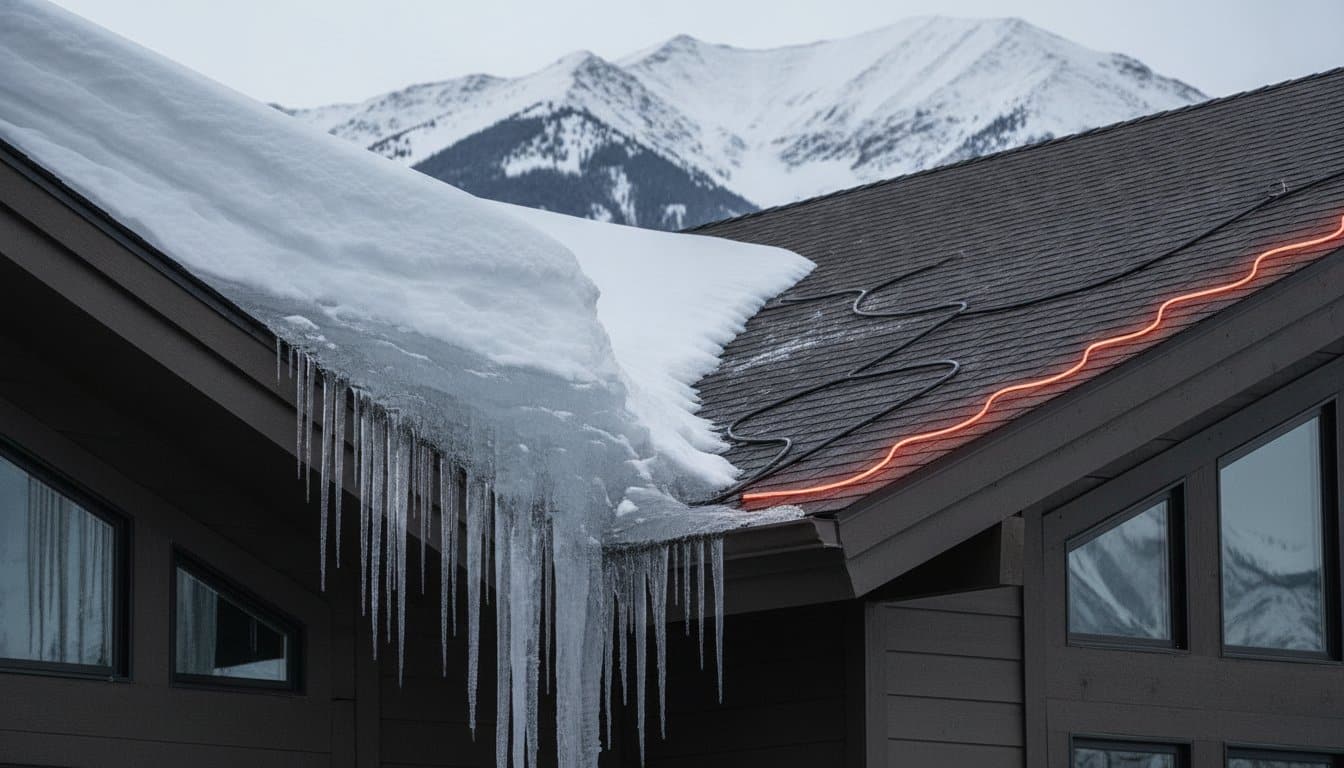
Imagine waking up to the sound of your gutters buckling under the weight of a massive ice shelf, or worse, finding a fresh water stain spreading across your living room ceiling. For many homeowners along the Wasatch Front, these aren’t just winter worries; they’re annual threats that compromise property safety. Finding the right solution for roof de-icing Centerville UT is the only way to stop this cycle. You shouldn’t have to spend your December knocking down dangerous icicles or worrying about the next big thaw. You deserve a system that works silently in the background, allowing you to enjoy the snow without the stress of recurring leaks.
This article provides the clarity you need to choose a reliable, code-compliant solution engineered for our unique climate. We’ll examine why professional-grade, self-regulating heat cables are the most effective way to prevent ice dams. You’ll also learn how a system engineered to meet the latest 2026 Utah building codes can lower your insurance risk and provide a permanent, set-and-forget winter protection strategy for your home.
Key Takeaways
- Understand how Centerville’s specific lake effect snow patterns demand a custom-engineered approach to prevent ice damming and gutter damage.
- Learn why professional-grade self-regulating heat cables offer superior longevity and safety compared to standard retail heat tape.
- Discover how smart controllers and ambient sensors for roof de-icing Centerville UT can automate your winter protection while minimizing energy costs.
- Recognize the necessity of hiring a licensed electrical contractor to ensure your system meets strict National Electrical Code standards.
- Gain insight into the master-craftsman approach used by local specialists who set the industry standard for heat-trace installations in Utah.
Understanding Roof De-Icing in Centerville’s Unique Climate
Centerville sits in a unique meteorological pocket. The proximity to the Great Salt Lake combined with the steep rise of the Wasatch Range creates “lake effect” snow patterns that hit our neighborhoods harder than other parts of the valley. When this heavy snow accumulates, it doesn’t just sit there. It begins a destructive cycle of melting and refreezing that threatens the structural integrity of your home. Effective roof de-icing Centerville UT isn’t just a luxury; it’s a technical necessity for property preservation in this specific environment.
A professional roof de-icing system is a proactive, engineered solution that uses specialized heat-trace cables to maintain clear drainage paths. By keeping the eaves and valleys at a temperature just above freezing, the system ensures that meltwater reaches the ground instead of pooling behind a wall of ice. North-facing roofs are particularly vulnerable because they rarely receive direct sunlight during the short winter days. Without solar heat to assist the melting process, ice builds up rapidly, often leading to catastrophic gutter failure. Choosing a “wait and see” approach often leads to gutters being ripped clean off the fascia under the weight of several hundred pounds of ice. One winter of neglect can result in thousands of dollars in repairs to both the exterior and interior of your property.
The Anatomy of a Centerville Ice Dam
Understanding what an ice dam is starts with the temperature difference between your heated living space and the cold air outside. Heat escaping through the attic melts the bottom layer of snow on your roof. This water flows down to the eave, which is overhanging the house and stays much colder. Once it hits that cold edge, it refreezes. This creates a physical barrier that traps water, forcing it upward under your shingles and eventually into your home’s walls.
- Refreezing: Water turns back to ice at the gutter line, creating a solid, growing dam.
- Backing Up: New meltwater pools behind this barrier and finds the path of least resistance through your roof deck.
- Visual Signs: Look for large icicles over entryways, “ice socks” covering your gutters, and water dripping from the soffits even when it’s well below freezing.
De-Icing vs. Snow Removal
While many homeowners rely on roof raking or manual snow removal, these are temporary and often dangerous fixes. Dragging a metal rake across cold, brittle shingles can strip away protective granules or cause cracks. Emergency steaming services are expensive and only address the symptom, not the cause. A permanent roof de-icing Centerville UT system provides a much higher long-term ROI by preventing the damage before it happens. It eliminates the recurring costs of emergency repairs and the physical risk of climbing ladders in freezing conditions. By investing in a permanent system, you’re choosing a master-crafted shield that protects your home’s value for decades.
Professional Grade vs. DIY: Why Heat Tape Often Fails
Many homeowners think they’re saving money by picking up a box of “heat tape” from a local hardware store. It’s an understandable choice when you’re facing a sudden winter storm, but it often leads to a frustrating cycle of annual replacement. Retail-grade products are typically thin, fragile, and not designed for the heavy snow loads we see in the Wasatch area. Professional-grade heat-trace cable is a vastly different tool. While store-bought versions might burn out after a single season, a professional roof de-icing Centerville UT installation uses materials engineered to last between 20 and 30 years.
Safety is the most critical distinction between these two options. Cheap DIY cables are often constant-wattage, which means they produce the same amount of heat regardless of the outside temperature. If these cables cross over themselves or get buried under trapped debris, they can overheat, creating a genuine fire risk for your roof deck. Additionally, because retail systems don’t adjust their output, they consume a massive amount of electricity. This leads to “invisible” costs on your monthly utility bill that quickly erase any initial savings from the DIY route. If you’re tired of climbing ladders every November to replace failed equipment, it’s time to consider a professional-grade heat-trace system that provides lasting security.
The Science of Self-Regulating Cable
Self-regulating technology is the gold standard for roof de-icing Centerville UT because it acts like a smart thermostat for your roof. The cable actually senses the ambient temperature and adjusts its heat output accordingly. When it’s freezing and snowy, the cable works harder; when the sun comes out and the roof warms up, the cable throttles back its power consumption. The conductive core of a self-regulating cable consists of a specialized polymer that expands or contracts to manage electrical flow, effectively preventing the system from ever reaching dangerous temperatures. This intelligence makes it both the safest and most energy-efficient choice for our variable Utah winters.
Constant Wattage: When (and When Not) to Use It
While self-regulating cable is superior for most applications, constant wattage heat cable still has a place in specific, budget-conscious scenarios. It’s generally appropriate for shingle roofs in areas that receive less consistent snowfall. however, it requires a very precise installation. Because it doesn’t adjust its temperature, it must be installed with specific clips to ensure it never touches itself or flammable materials. You should also be aware of the warranty gap. Most constant wattage products only carry a 2-year manufacturer’s warranty, which is a short window considering the 5 to 10 year coverage typically found on professional self-regulating systems.
Maximizing Efficiency with Smart Controllers and Sensors
Installing professional-grade cable is only half the battle. To truly protect your home without inflating your utility bills, you need a sophisticated way to manage that power. Many homeowners rely on a simple manual “on/off” switch, but this approach is rarely effective. If you forget to flip the switch before a midnight storm, the ice dam begins to form before the system even warms up. Conversely, leaving the system running during a dry, sunny day in January simply wastes electricity. Smart roof de-icing Centerville UT systems utilize automated controllers to eliminate this human error, ensuring your roof is protected only when environmental conditions demand it.
Modern automation ranges from basic ambient thermostats to advanced moisture-sensing units. An ambient thermostatic controller acts as a safety gate, only allowing power to flow when the temperature drops below a specific set point, usually 38 degrees Fahrenheit. For those seeking the highest level of efficiency, moisture sensors are the preferred choice. These sensors detect actual precipitation, ensuring the system doesn’t run during dry cold snaps. This level of precision is particularly valuable in Centerville, where we often experience freezing temperatures without any accompanying snow. Integration with smart home technology has also become a standard for 2026 installations, allowing you to monitor your roof’s status from your phone via Wi-Fi smart switches or platforms like Control4.
Moisture vs. Temperature Sensors
Relying solely on temperature can be inefficient. If it’s ten degrees outside but the sky is clear, your roof doesn’t need heat. A moisture sensor, often mounted directly in the gutter, ensures the cable only activates when it feels water or snow. Dual-sensing systems, which require both low temperatures and moisture to trigger, provide the most robust ice dam prevention while keeping operating costs as low as possible. This targeted activation prevents the system from running needlessly during the long, dry stretches of a Utah winter.
Commercial and HOA Control Systems
For multi-family complexes and HOAs in Centerville, the stakes are higher. Large-scale systems require industrial-grade power distribution and specialized controllers that can handle high-wattage loads. Automating these systems isn’t just about energy savings; it’s about liability. A properly documented, code-compliant roof de-icing Centerville UT system reduces the risk of slip-and-fall accidents from falling icicles and prevents expensive interior water damage claims across multiple units. These systems often include remote monitoring capabilities so property managers can verify performance without stepping foot on a ladder.
The Professional Installation Process in Centerville, UT
Hiring a licensed electrical contractor for your roof de-icing Centerville UT project isn’t just about getting the job done; it’s about ensuring your home remains safe and compliant with the law. Because these systems are high-draw electrical installations, they fall under the jurisdiction of the National Electrical Code (NEC). A master craftsman understands that an outdoor heating system requires its own dedicated circuit to prevent tripping breakers or overloading your home’s existing wiring. We don’t just lay cable. We engineer a safety system designed for the specific electrical load and architectural layout of your property.
The physical layout of the cable, often referred to as a serpentine pattern, must be customized to your roof’s specific geometry. Valleys and eaves are the primary battlegrounds for ice dams, and each home in Centerville has a unique profile that dictates how snow accumulates and melts. By calculating the exact power draw and ensuring proper grounding, a professional installation provides the peace of mind that your system won’t become a fire hazard during a heavy winter storm. Precision is our standard, and we take pride in delivering a system that functions flawlessly when the temperature drops.
Step 1: The Custom Design Phase
Every successful project begins with a detailed site evaluation. We measure the linear footage of your eaves, gutters, and downspouts to ensure the heat-trace cable provides total coverage from the roof edge all the way to the ground drainage point. We pay special attention to “problem valleys” where the Wasatch winds tend to deposit the deepest snow drifts. A one-size-fits-all kit fails on custom Utah roofs because it cannot account for the specific pitch, valley depth, and drainage requirements of our unique local architecture. If you want a solution that is tailored to your home’s specific needs, you can request a custom de-icing design from our team.
Step 2: Code-Compliant Electrical Integration
Utah building codes are strict regarding outdoor electrical work, and for good reason. Professional roof de-icing Centerville UT installations require specialized GFCI (Ground Fault Circuit Interrupter) protection designed specifically for equipment heating. Many “plug-and-play” systems found in big-box stores violate local safety standards because they lack the necessary internal safeguards to prevent electrical arcing in wet conditions. Furthermore, we use professional-grade mounting clips that secure the cable firmly without puncturing your shingles or compromising your roof’s warranty. This methodical approach ensures your system is not only effective but also fully compliant with Centerville’s electrical permit requirements.
Why Centerville Trusts Utah Heat Cable for Winter Protection
Selecting a specialist for roof de-icing Centerville UT requires finding a team that understands the underlying mechanics of heat-trace technology at a foundational level. At Utah Heat Cable, our reputation is built on David Tanner’s core philosophy: “We train the pros.” By setting the industry standard for professional-grade installations across the state, we’ve positioned ourselves as the experts that other contractors look to for guidance. This depth of knowledge ensures that every system we design is not just a temporary fix, but a master-crafted safety installation. With over a million feet of cable successfully installed, our experience provides a level of neighborly reassurance backed by proven technical results.
Our commitment to property protection goes beyond simple cable placement. We offer a comprehensive suite of winter solutions designed to work in harmony with your home’s architecture. This includes specialized roof snow retention systems to prevent dangerous snow slides and industrial-strength sidewalk and driveway deicing systems. As a licensed electrical contractor, we ensure that every component, from the self-regulating heat cable to the advanced controller options, is integrated safely into your home’s electrical grid. We don’t believe in a one-size-fits-all approach; we believe in providing a protective shield that is as unique as your property.
A Local Centerville Business
Our roots in Centerville are a vital part of how we do business. Because we are based locally, we have a deep, personal understanding of how the Wasatch Range climate affects our neighborhoods. This proximity allows us to respond rapidly to requests for quotes and maintenance, ensuring you’re never left waiting when the weather turns. Supporting a local business means you’re investing back into the community while receiving elite-level technical expertise. You have direct access to our team of specialized installers, providing a level of accountability and personal service that national franchises cannot replicate.
Ready for Winter? Get a Custom Quote
While most people think about ice dams when the icicles are already forming, the ideal time for installation is actually during the spring and summer. By planning ahead, you avoid the seasonal rush and ensure your home is fully protected before the first lake-effect snow hits the valley. Our process is designed to be informative and educational, starting with a no-obligation, custom-engineered design that addresses your roof’s specific vulnerabilities. We provide a clear, step-by-step walkthrough of your home’s needs so you can make an informed decision for your property’s long-term care. Secure your home today with a custom roof de-icing quote and enjoy the peace of mind that comes from professional-grade protection.
Protect Your Home Before the Next Wasatch Winter
Winter in the Wasatch Range is relentless, but your property maintenance doesn’t have to be. By choosing a custom-engineered system over generic retail alternatives, you effectively eliminate the destructive cycle of ice damming and gutter failure. We’ve seen how professional-grade self-regulating cables and smart automation provide a set-and-forget solution that lowers insurance risk and protects your home’s structural integrity. This methodical approach to property care is what separates a temporary fix from a permanent safety system.
As Centerville-based local experts and licensed electrical contractors, we take pride in our precision. Having installed over a million feet of cable, we understand the technical nuances required to meet local codes and withstand our unique lake-effect snow patterns. Investing in professional roof de-icing Centerville UT is the most reliable way to ensure your home remains a safe haven all season long. Take a proactive step toward total property care and Request Your Centerville Roof De-Icing Quote today. We’re ready to help you prepare for a worry-free winter.
Frequently Asked Questions
How much does it cost to run roof heat cables in Centerville?
Operating costs vary based on the total linear footage of your system and current electrical rates. Professional roof de-icing Centerville UT systems use self-regulating technology to minimize these expenses. Because the cable throttles its power draw based on the ambient temperature, it only uses the energy necessary to keep the drainage path clear. This is significantly more efficient than manual systems that run at full power regardless of the weather.
Can I install heat cables myself or do I need an electrician?
You should hire a licensed electrical contractor to install a professional system safely. These systems require dedicated circuits and specialized GFCI protection to meet local building codes. Attempting a DIY installation with high-wattage cables can lead to fire hazards or electrical failures. A professional ensures the system is grounded correctly and integrated into your home’s panel without overloading existing circuits or compromising safety standards.
Will roof de-icing cables damage my asphalt shingles or metal roof?
Professional heat-trace cables won’t damage your roofing materials when they are installed correctly. These cables are engineered to stay within a specific temperature range that is safe for asphalt shingles, wood shakes, and various metal roof profiles. We use specialized, non-penetrating mounting clips that secure the cable firmly without piercing your shingles. This preserves the integrity of your roof’s water barrier while providing essential winter protection.
When is the best time of year to install a heat-trace system in Utah?
The ideal time to install a roof de-icing Centerville UT system is during the late spring or summer. Installing when the roof is dry and the weather is clear allows for the most secure bond for mounting clips and easier electrical integration. If you wait until the first snowstorm hits, you’ll likely face longer lead times due to the high seasonal demand for emergency ice dam prevention services.
Do I need to run my heat cables all winter long?
You don’t need to run your system continuously throughout the winter months. The cables are only necessary when there is active snow accumulation or when melting snow is likely to refreeze at the eaves. Using an automated controller with moisture and temperature sensors is the best way to manage this. The system will activate itself during a storm and shut off once the roof is clear, preventing wasted energy.
What is the lifespan of a professional self-regulating heat cable?
A high-quality self-regulating heat cable typically has a lifespan of 20 to 30 years. This longevity is a major advantage over retail-grade heat tape, which often fails after just a few seasons. Because these cables are built with durable, UV-resistant outer jackets and a smart conductive core, they can withstand the harsh freeze-thaw cycles common in the Utah mountains for decades without needing frequent replacement.
Does Utah Heat Cable offer services for HOAs and commercial properties in Centerville?
Yes, we provide specialized de-icing services for HOAs and commercial properties throughout the Centerville area. These larger projects often require industrial-grade power distribution and advanced control systems to manage multiple roof sections or large parking structures. We work closely with property managers to design systems that reduce liability from falling icicles and prevent expensive water damage claims across multi-unit residential buildings.
What happens if a heat cable fails during a heavy snowstorm?
If a cable fails during a storm, the drainage paths will likely freeze over, allowing an ice dam to form. This is why choosing a local Centerville-based contractor is so important for your property’s safety. Because we’re nearby, we can provide faster maintenance and troubleshooting to get your system back online. Regular pre-season inspections are also recommended to ensure the system is drawing the correct amperage before the heavy snow arrives.