
The best roof de-icing system isn’t necessarily the one that heats the most roof. Gutter heating systems for cold climates warm selected paths along roof edges, through gutters, and into downspouts, helping meltwater drain instead of refreezing into ice dams.
If you’re dealing with winter ice around your home, it’s reasonable to wonder whether existing gutters can be fitted with heat cable and what that could mean for energy use. In many cases, cables can be added to existing gutters, but system design matters: cable type, placement, and controls all affect how it performs.
This guide explains how heated gutters work, what affects system efficiency, and how roof-edge cables fit into a broader de-icing plan. It also covers factors used to design a system for Utah’s varied winter conditions, so you can compare options before deciding what your property needs.
Key Takeaways
- Understand how self-regulating and constant-wattage cables differ, so you can weigh how each suits your roof and gutter layout.
- See how cable placement, system controls, and operating patterns affect energy use and winter performance.
- Learn what a professional considers when selecting a roof de-icing approach for Northern Utah conditions.
- Explore how de-icing services, roof snow retention, and heated outdoor surfaces can address different winter property concerns.
Can a professional install heat cables on existing gutters?
A professional can often install heat cable on existing gutters after assessing their condition and the roof edge. Heat cables, roof de-icing systems, and heated gutters are related approaches that warm selected roof, gutter, and downspout paths to help meltwater drain.
Cable Types and Control Options
Self-regulating cable adjusts its heat output as temperatures change, while constant-wattage cable produces steady heat and may use more power. Active self-regulating cable typically draws 5-12 watts per linear foot. Thermostat-controlled systems can manage constant-wattage cable, while controllers may also combine temperature and moisture sensing. The cable type and controller affect how the heated system operates in changing winter conditions.
Cable Placement and Sizing
Professional placement routes cable along roof edges, inside gutters, and through downspouts to create a continuous drainage path. Roof-edge cables are typically installed 12-24 inches above the gutter line; wider overhangs or problem areas may call for extension up to 36 inches. To determine wattage and cable length, the installer considers roof and gutter dimensions, downspout routes, recurring ice locations, cable type, and available electrical capacity.
Risks of Gutter Heat Cables
Damaged, poorly positioned, or incorrectly connected cables can create fire and roof-damage risks, and may fail to address persistent ice dams. A professional assesses the roof materials and cable routes, then installs and connects the system to its specifications. Coverage matters: gaps between the heated roof edge, gutter, and downspout can allow meltwater to refreeze and build up ice. Electrical checks can also identify damaged cables and connection problems before the system operates.
Are gutter heating systems energy efficient?
Efficiency depends on cable type, controls, weather, and how well the system follows the roof’s drainage paths. Heating cables address ice at the roof edge, while insulation, ventilation, and clear drainage help address conditions that contribute to ice buildup.
System Performance and Energy Use
A well-designed system heats targeted roof and gutter areas, limiting unnecessary cable runtime. Smart controllers that combine temperature and moisture sensing can reduce runtime by 20-40% compared with manual switches. A professional considers cable coverage, controls, electrical requirements, and local weather when planning installation. Installation cost depends on the case and is provided after a quote request; cable length, roof layout, controller selection, and electrical work all affect the project.
Performance in Severe Winter Conditions
In areas with heavy snow, freezing rain, and frequent freeze-thaw cycles, the right system depends on where meltwater collects and refreezes. A professional designs cable coverage for roof edges, gutters, and downspouts, then selects controls suited to changing weather. Heat cables complement, rather than replace, sound insulation, ventilation, and drainage. Those measures address causes of ice buildup; cables help keep selected drainage paths open.
Professional heat cable installation includes operating checks and inspection of cable condition, clips, controllers, and GFCI operation. A fall inspection can identify damage or control problems before winter use; troubleshooting then focuses on the affected cable path, controller, or electrical connection. For a project-specific review of system needs and installation factors, request an estimate.
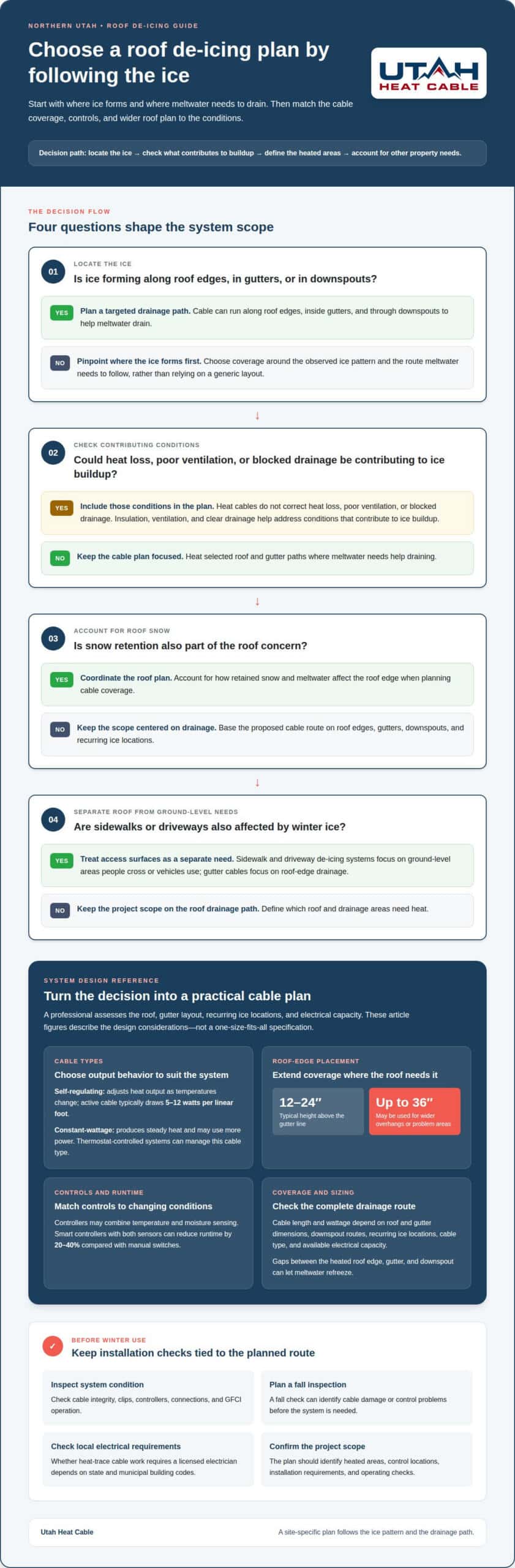
Choosing a roof de-icing system
Choose a system based on where ice forms and where meltwater needs to drain. A home in Park City may need a different cable layout from a Salt Lake property because roof shapes, gutter routes, and recurring ice areas vary. A professional evaluates these conditions to plan coverage, cable type, and controls.
Start by defining the problem the system should address. Roof-edge and gutter cables heat selected drainage paths; they don’t correct heat loss, poor ventilation, or blocked drainage. A thorough assessment considers those factors alongside roof materials, overhangs, gutters, and downspouts. If snow retention is also needed, the plan should account for how retained snow and meltwater affect the roof edge.
Installation planning should match the proposed cable route to the property’s electrical setup. A clear project scope identifies which roof and drainage areas will be heated, where controls will be placed, and what installation and operating checks are included. This makes it easier to see how the system addresses the observed ice pattern instead of relying on a generic layout.
Electrical work requires careful planning. In the United States, whether heat-trace cable work requires a licensed electrician depends on state and municipal building codes. The installer should account for applicable requirements, then check cable condition, connections, controller operation, and GFCI function before winter use.
Ask for a system plan that ties the site assessment to the selected equipment, installation scope, and maintenance approach. A fall inspection should cover cable integrity, clips, controllers, and GFCI operation. This can identify damage or control issues before the system is needed, while keeping the intended roof-to-gutter drainage path at the center of the design.
Utah Heat Cable: Sidewalk and Driveway Deicing Systems
Utah Heat Cable installs Sidewalk and Driveway Deicing Systems for icy outdoor surfaces around homes and properties. Gutter cables address roof-edge drainage, while these systems focus on ground-level areas people need to cross or vehicles need to use.
If winter ice affects both roof drainage and access paths, consider the needs of each area. Utah Heat Cable’s De-Icing Services address ice-related concerns, while Roof Snow Retention Systems help manage snow movement on the roof. Controller Options are another part of system planning. The suitable combination depends on your property’s layout and where ice creates a practical problem.
For a professional discussion about de-icing needs around your Northern Utah property, contact Utah Heat Cable.
Plan Ahead for the Next Freeze
Before winter, consider how roof drainage, access paths, and changing weather affect your property as a whole. A tailored plan for gutter heating systems for cold climates can prioritize the areas you rely on, from roof edges to walkways and driveways.
Utah Heat Cable installs Self Regulating Heat Cable and Constant Wattage Heat Cable, and provides De-Icing Services. These options are a starting point for discussing what fits your property and where targeted winter protection may help. Sharing where ice repeatedly forms can help shape a suitable plan.
Plan ahead of cold weather, before winter conditions make ice harder to manage.
A considered plan can help you approach the season with greater confidence.
Frequently Asked Questions
How do heated gutters work?
Electric heating cables warm a path through gutters and downspouts, helping meltwater continue toward its outlet. The design should connect roof runoff to the drainage route rather than leave an untreated gap where water can refreeze. For a Northern Utah or Wasatch Front home with a long eave, the drainage layout helps determine where cable coverage is useful.
Can heating cables prevent ice dams?
Heating cables can help prevent ice dams by keeping meltwater moving through vulnerable roof-edge and drainage areas. They don’t correct the source of roof heat loss, so ice may still form beyond the heated coverage. The system works best as part of a plan based on the roof’s ice pattern and its insulation, ventilation, and drainage conditions.
How roof ice and snow melting system works?
A roof-melting system uses installed heat cable to warm selected roof-edge and drainage routes, supporting water flow as snow melts. This is a preventive approach, unlike steam-based de-icing, which removes existing roof ice. The difference matters when deciding whether a property needs seasonal protection or help with ice that has already accumulated.
What are the typical benefits of usage such systems?
Heated drainage paths can help limit refreezing in gutters and downspouts, reducing ice blockages and some icicle buildup. Keeping a downspout outlet clear, for example, supports drainage away from the roof edge. A separate heated sidewalk or driveway system addresses icy walking and vehicle-access areas, so a property may need more than roof coverage alone.
How do gutter heating systems work in cold climates?
A suitable approach to gutter heating systems for cold climates accounts for how local weather, roof materials, and drainage interact. Utah Heat Cable serves properties throughout Northern Utah and the Wasatch Front, including Salt Lake, Park City, Logan, and surrounding communities, where roof and winter conditions vary. Self-regulating cable is available for several roof materials, while constant-wattage cable is designed for shingle roofs. The cable route should follow the path meltwater needs to take.