
Heavy snowfall adds weight to a roof, while melting and refreezing can create ice where water needs to drain. A roof heating system for heavy snow areas uses heat cables in vulnerable roof zones to help melt snow and ice and reduce the risk of ice dams.
If you live along Utah’s Wasatch Front, you know winter conditions can put roof valleys, edges, and drainage areas under pressure. The right system depends on where snow and ice collect, how the roof is laid out, and how the equipment is installed. This guide explains how roof deicing works, what affects installation value, and what to consider when planning protection for a heavy-snow property.
Key Takeaways
- Identify roof edges, eaves, valleys, gutters, and downspouts where snow and ice can obstruct drainage.
- Learn how cable and low-voltage radiant panel options differ and what a professional considers when planning installation.
- Assess how roof layout, roofing material, and local winter conditions affect system performance and value.
- Consider Utah Heat Cable’s roof snow retention and de-icing services when planning winter protection for your property.
What is a roof deicing system?
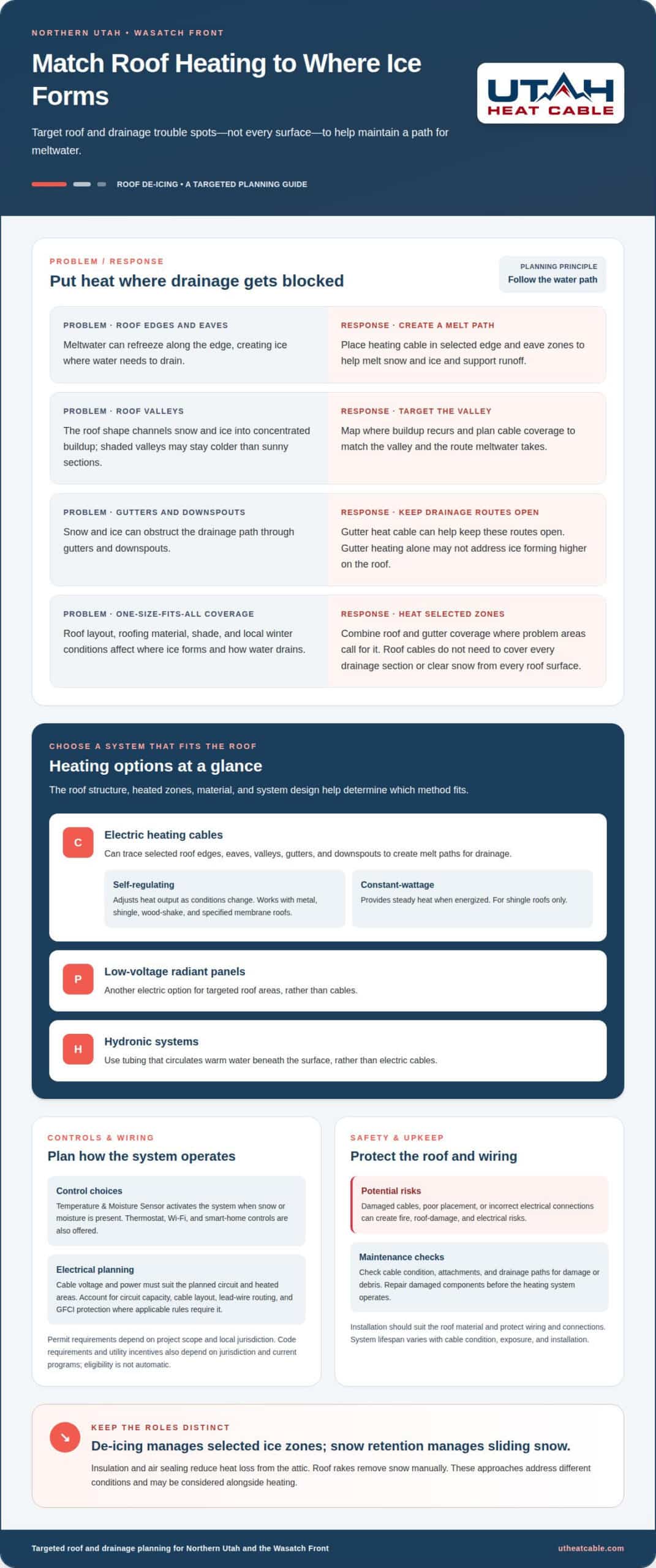
A roof de-icing system heats selected roof and drainage areas to help melt snow and ice. Its layout focuses on places where buildup can obstruct water flow or contribute to ice dams.
Protected Roof and Drainage Areas
Heating can protect roof edges and eaves, where meltwater may refreeze, and valleys, where the roof shape channels snow and ice. Cables can also run through gutters and downspouts to keep drainage paths open. Local code requirements and utility rebates or incentives depend on jurisdiction and current programs; eligibility isn’t automatic. Shaded valleys may remain colder than sunny roof sections.
Roof and Gutter Heating Cable Types
Electric heating cables are installed in selected roof and gutter areas to create melt paths for water. Self-regulating cables adjust their heat output as conditions change, while constant-wattage cables provide steady heat when energized. A professional installation plan considers roof material, layout, and the locations that need protection. Low-voltage radiant panels are another system option, rather than cables.
Roof Deicing and Gutter Trace
Roof de-icing targets areas where snow and ice build up, such as eaves and valleys. Gutter heat cable helps keep gutters and downspouts open for drainage. Heating a gutter alone may not address ice forming higher on the roof, and roof cables do not need to cover every drainage section. A system can combine roof and gutter coverage where the problem areas call for it.
Safety, Maintenance, and Lifespan
Damaged cables, poor placement, or incorrect electrical connections can create fire, roof-damage, and electrical risks. Professional installation must suit the roof material and protect wiring and connections. Maintenance includes checking cable condition, attachments, and drainage paths for damage or debris. System lifespan depends on cable condition, exposure, and installation; there is no single lifespan that fits every roof. A roof with damaged components needs repair before heating operates.
Installation Insights: Is Roof Heating Worth It?
Roof heating is most useful when recurring ice buildup affects specific roof zones. Its value depends on matching the system to the roof layout and the areas where ice forms.
System Options and Heating Methods
Electric heating cables can trace roof edges, eaves, and valleys, creating paths for ice melt and drainage. Low-voltage radiant panels offer another electric option for targeted roof areas. Hydronic systems use tubing that circulates warm water beneath the surface, rather than electric cables. The roof’s structure, heating zones, and system design help determine which method fits a residential property.
Insulation and air sealing reduce heat loss from the attic, while roof de-icing manages snow and ice in selected areas. Snow retention systems help control sliding snow, and roof rakes remove snow manually. These approaches address different conditions and may be considered alongside heating.
Cable Power and Wiring Choices
Electric heating cables come in self-regulating and constant-wattage types. Professionals may recommend self-regulating cables where temperatures vary along a run, because their output adjusts to surrounding conditions. Cable voltage and power must suit the planned circuit and heated areas. Roof edges, valleys, and gutters shape cable lengths, while the distance to the power connection affects lead-wire routing.
Installation planning accounts for circuit capacity, cable layout, and GFCI protection where applicable electrical rules require it. Permit requirements depend on project scope and local jurisdiction, so the installation plan should address them before work begins.
Roof heating in heavy-snow regions
In Northern Utah, winter conditions can leave roof areas buried in snow or repeatedly refrozen. A roof heating system for heavy snow areas works best when its heated zones match the roof’s drainage pattern, rather than treating every surface alike.
Roof valleys can channel snow and ice into concentrated buildup, and shade may keep them colder than sunny sections. An installer maps these locations alongside eaves and drainage routes, then plans where melting can maintain a path for runoff. This targeted approach helps reduce ice-dam risk without assuming the entire roof needs heating.
Product selection should account for roofing material, roof layout, and local weather conditions. Self-Regulating Heat Cable works with metal, shingle, wood-shake, and specified membrane roofs; Constant Wattage Heat Cable is for shingle roofs only. The system layout should direct meltwater toward drainage routes. A metal roof with shaded valleys calls for different planning than a shingle roof with exposed eaves.
Controls also matter during a Wasatch Front winter. Utah Heat Cable offers a Temperature & Moisture Sensor that activates the system when snow or moisture is present, as well as thermostat, Wi-Fi, and smart-home controls. Choosing a control that suits how the property is used can help align operation with conditions instead of heating continuously. First assess where snow collects, how meltwater drains, and which areas repeatedly refreeze. Targeted coverage helps protect roof drainage, though heating does not clear snow from every roof surface.
Utah Heat Cable: Roof Snow Retention
Utah Heat Cable installs Roof Snow Retention Systems for properties where managing snow movement off the roof is part of winter planning. Snow retention complements roof de-icing: heating addresses ice buildup in selected areas, while retention helps control sliding snow.
For homes along the Wasatch Front, the right approach depends on the roof’s trouble spots and nearby areas that need protection. Utah Heat Cable also offers De-Icing Services, Sidewalk and Driveway De-Icing Systems, and Controller Options. These services and systems can be considered together when roof drainage, icy access routes, or system controls are part of the same seasonal concern.
If you’re planning roof snow protection for winter, contact Utah Heat Cable to discuss your property’s needs.
Plan Ahead for the Coming Winter
A roof heating system for heavy snow areas should reflect the conditions your property repeatedly faces, not a one-size-fits-all layout. Turn your roof concerns, roof configuration, and drainage needs into a clear installation scope for your home in Northern Utah or along the Wasatch Front.
Utah Heat Cable installs Self-Regulating Heat Cable and Constant Wattage Heat Cable, and provides De-Icing Services. Discuss the roof areas you want addressed and how the proposed system fits your roof and winter priorities. Request a free consultation and quote to plan the next step.
Thoughtful planning can help you approach the next snowy season with a clearer plan for protecting your roof.
Frequently Asked Questions
Are gutter heating systems energy efficient?
Heating only problem areas can use energy more efficiently than heating the entire roof. Consumption depends on the heated cable length, cable type, operating schedule, and winter conditions. A short run along a shaded eave has different demands from a system covering several roof edges and drainage routes.
Can heating cables prevent ice dams?
Heating cables can help prevent ice dams by maintaining open meltwater paths from the roof edge toward drainage outlets. Coverage should follow the drainage route: a heated section that stops before a gutter or downspout may leave water able to refreeze farther along. Cables reduce ice-dam risk but do not remove every cause of roof ice buildup.
How do heated gutters work?
Heated gutters use electric cables installed along the drainage channel to warm areas where snowmelt could freeze. The heat helps keep water moving through the gutter and, when the layout continues along the route, toward the downspout outlet. A cable layout that ends before a cold, shaded downspout may leave a blockage point untreated.
What are the Best Roof De-icing Options?
The best option depends on the roof, the locations where ice forms, and how water drains. Electric self-regulating or constant-wattage cables suit targeted roof and gutter zones; low-voltage radiant panels and hydronic tubing are other system types. A professional matches the method and coverage to the roof material and the property’s recurring ice problems.
What are the typical benefits of usage such systems?
Roof and gutter de-icing systems help maintain drainage paths and reduce the risk of ice dams, icicles, and related water buildup. This can help protect roof areas and insulation from ice-related damage. For icy walkways, a separate sidewalk or driveway de-icing system treats those surfaces rather than extending roof heating to the ground.