
Salt may seem like the obvious fix for a slick driveway, but it isn’t the only option. The best way to melt ice on a driveway without salt depends on the surface and conditions: clear loose snow, then use an appropriate deicer or a professionally installed electric driveway de-icing system for recurring ice.
It’s reasonable to want safer footing without spreading salt around your property. This guide explains how sand, gravel, and cinders add traction, where surface-appropriate deicers fit, and why coffee grounds or clean clay- or sand-based kitty litter may help underfoot without melting the ice. You’ll also learn what a professional salt-free approach can involve, so you can understand the options before choosing a solution for your driveway.
Key Takeaways
- Sand, gravel, and cinders can improve footing on ice, but they provide traction rather than melting it.
- Deicer selection depends on the driveway surface and the conditions it needs to handle.
- Coffee grounds and clean clay- or sand-based kitty litter are possible traction materials, not ice-melting solutions.
- For a lasting approach to recurring driveway ice, consider how a professionally installed deicing system could fit your property.
1. Sand, gravel, and cinders for traction
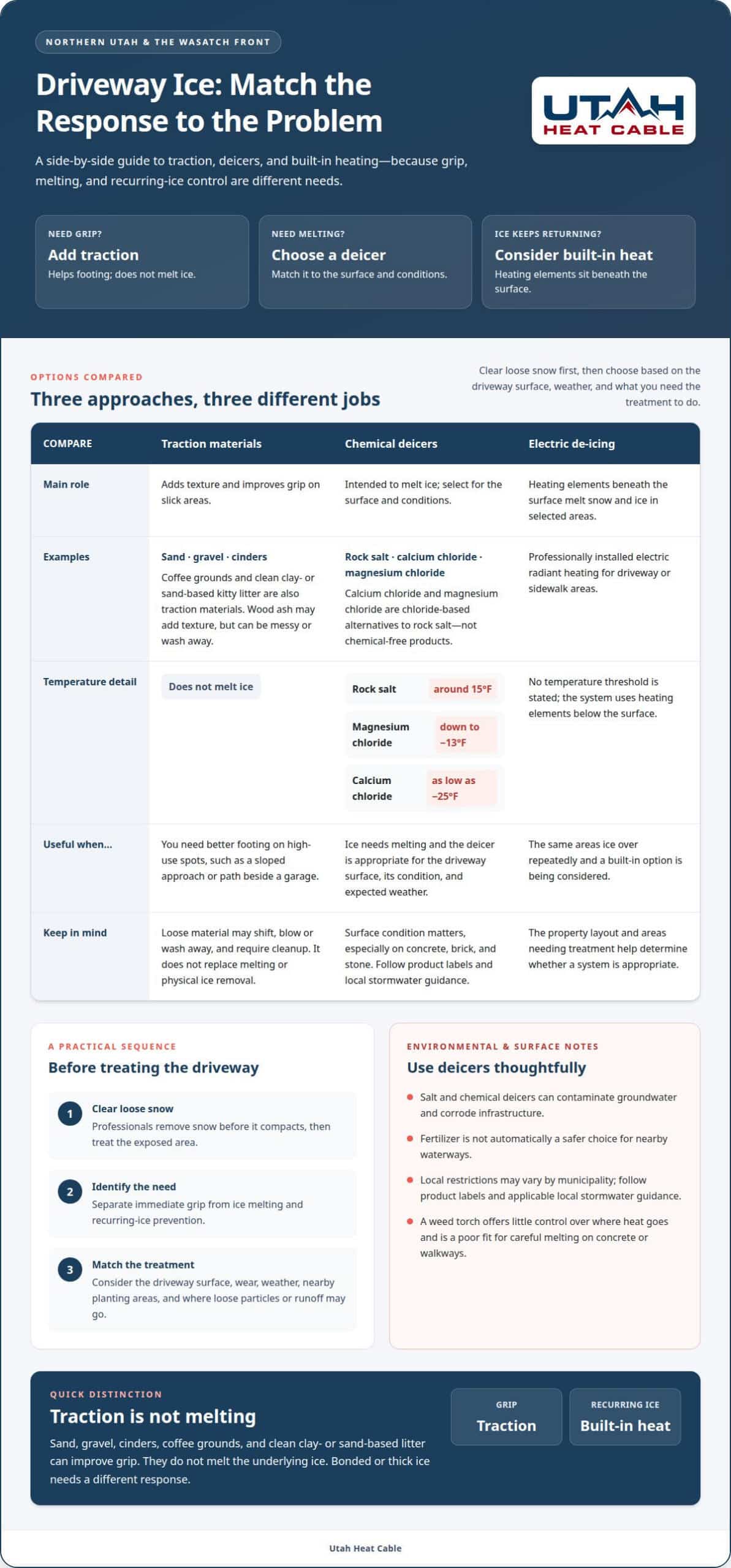
Sand, gravel, and cinders improve grip on an icy driveway, but they don’t melt ice. Very coarsely graded sand offers a practical traction option and is described as 100% organic. Professionals consider the driveway surface, nearby planting areas, and winter weather before selecting a material. They use traction materials where tires or foot traffic need a better hold.
Coarse sand adds rough particles between footwear or tires and a slick surface. It can be spread on high-use areas, such as a sloped approach or the path beside a garage. Gravel and cinders can also add texture, but loose material may shift under traffic. These materials help reduce slipping; they don’t replace melting or physical ice removal.
Wood ash is sometimes used for traction, but it shouldn’t be treated as a dependable ice melter. A light layer may add texture, while fine particles can become messy or wash away. That limited role is different from a deicer such as calcium chloride, which is intended to melt ice. Rubbing alcohol is another proposed melting method, not a traction material.
For recurring ice, consider whether loose traction materials are enough or whether a lasting solution makes more sense. Sand, gravel, and cinders are surface treatments; an electric driveway de-icing system uses heating elements beneath the surface. The best way to melt ice on a driveway without salt depends on whether you need immediate grip, melting, or a built-in response to repeated winter icing.
2. Deicer choice for asphalt, concrete, and pavers
Professionals match a deicer to the surface, existing wear, and expected weather. Rock salt works only until around 15°F, while calcium chloride can melt ice at temperatures as low as -25°F. Magnesium chloride works down to -13°F. These are chloride-based alternatives to rock salt, not chemical-free products. On concrete, brick, and stone, surface condition matters because deicers can affect surrounding infrastructure.
For Utah driveways, local restrictions may vary by municipality. Follow product labels and applicable local stormwater guidance. Salt and chemical deicers can contaminate groundwater and corrode infrastructure, and fertilizer is not automatically a safer choice for nearby waterways. A weed torch offers little control over where heat goes, making direct-flame treatment a poor fit for careful snow melting on concrete or walkways.
Professionals clear loose snow first, then apply a surface-appropriate deicer according to its label and the conditions. Rubbing alcohol may help with thin ice, but it isn’t suited to thick sheets; vinegar’s performance on driveway ice shouldn’t be assumed. Salt-free service costs depend on the treatment, driveway area, and work involved, while rock salt is a material rather than a comparable professional service. A service price is provided after a quote request.
To reduce refreezing, professionals remove snow before it compacts and address recurring icy areas with appropriate treatment. For ongoing prevention, professionally installed snow-melting mats or driveway heating systems may be considered. A weed torch isn’t a substitute for these controlled methods. For a surface-specific driveway deicing assessment, request professional de-icing service.
3. Coffee grounds and clean clay- or sand-based kitty litter
Coffee grounds and clean clay- or sand-based kitty litter can improve traction, but they are not chemical ice melters. They don’t remove the underlying ice, so first decide whether the immediate need is safer footing or actual melting. A slick section beside an outdoor garage door may need traction, while bonded ice requires a different response.
Clean litter’s grit can add texture beneath shoes and tires. Before using loose material, consider the driveway surface, slope, traffic, and where runoff or tracked-in particles could go. Used coffee grounds contain nitrogen, but that doesn’t make them a deicer or a substitute for snow removal. Their usefulness also depends on whether they stay on the slick surface rather than washing or blowing away.
In freezing temperatures, both materials remain surface treatments. A shovel can clear loose snow first, helping expose where traction is needed; neither litter nor coffee grounds melts a thick sheet. Professionals also consider cleanup, since loose particles may be carried indoors or collect along the driveway edge. Compared with an expensive permanent solution, these materials are temporary, though a low-cost material alone doesn’t address recurring ice.
If the same areas ice over repeatedly, compare the effort of spreading grit each time with a permanent system. Electric radiant snow melting uses heating elements beneath the driveway surface, unlike traction materials applied on top. The property layout and areas needing treatment help determine whether a system is appropriate. Coffee grounds and clean litter are limited to traction, not dependable melting.
Utah Heat Cable: Sidewalk and Driveway Deicing Systems
Utah Heat Cable installs Sidewalk and Driveway Deicing Systems for properties where recurring ice makes temporary traction materials an ongoing concern. These electric radiant heat systems melt snow and ice on selected driveway or sidewalk areas, providing a built-in option instead of relying only on repeated surface treatments.
For Northern Utah properties, the right setup depends on the areas that need deicing and the project itself. Utah Heat Cable also provides De-Icing Services, which can address ice-management needs without making coffee grounds or kitty litter the primary solution. If seasonal ice repeatedly affects access around your home, a system may be worth considering as a longer-term option.
Contact Utah Heat Cable to discuss your driveway or sidewalk deicing needs.
Plan a More Reliable Winter Approach
The best way to melt ice on a driveway without salt starts with choosing between a temporary response and a built-in system for recurring conditions. Identify the areas that repeatedly become difficult to use, then consider whether traction, an appropriate deicer, or permanent installation better suits the problem. This gives you a practical next step without relying on one surface treatment for every winter storm.
Utah Heat Cable installs Sidewalk and Driveway Deicing Systems and offers Self Regulating Heat Cable and Constant Wattage Heat Cable for different heat-trace applications. The right option depends on the property and the areas that need treatment. Request a free consultation and quote to discuss a solution for recurring driveway ice in Utah.
A clear plan for your driveway can help you prepare for changing winter conditions.
Frequently Asked Questions
What’s Wrong with Using Salt in Your Yard?
Salt and chemical deicers can contaminate groundwater and corrode infrastructure. Runoff may carry residue from a driveway toward soil, planting beds, or storm drains, so consider where meltwater flows before choosing a treatment. Salt can also affect nearby plants and hardscape, particularly where the driveway drains toward landscaped areas.
What is the most effective professional salt-free way to melt ice on a driveway?
For recurring driveway ice, an electric radiant de-icing system is a lasting salt-free approach. Its heating elements sit beneath the surface and warm selected areas, unlike temporary materials spread on top. The design depends on the driveway and which areas need treatment. A one-time icy patch may call for a different, surface-appropriate response.
Does calcium magnesium acetate melt driveway ice, and at what temperatures?
Calcium magnesium acetate can serve as a deicer, but its effective temperature range depends on the product formulation and conditions. No single temperature figure applies to every product. Follow the product directions and consider the pavement and ice conditions; don’t assume a salt-free product will perform in severe cold.
How well do sand, kitty litter, and gravel improve traction on icy driveways?
They can improve grip by adding rough particles underfoot or beneath tires, but they don’t melt the ice. On a short, flat path, traction material may help people cross a slick spot; on a steep driveway, it won’t remove the underlying slip hazard. Professionals also consider whether loose material could scatter into a garage or be carried indoors.
How do professionals use hot water to remove driveway ice without making it refreeze?
Hot water is a poor choice when temperatures remain below freezing because runoff can freeze again on the driveway. Consider ambient conditions and drainage before using water for ice removal. It is most suitable when temperatures are above freezing and aren’t expected to drop below freezing again. Otherwise, a suitable deicer or mechanical removal avoids adding water that may refreeze.