
What turns ordinary roof snow into an ice dam? Snow melts on roof areas above 32 degrees F, then the water refreezes on colder sections, often near the eaves. That cycle can trap water and put roofing materials at risk, so extending the life of a roof de-icing system starts with understanding where ice forms and how the system manages meltwater.
It makes sense to want reliable protection without putting unnecessary strain on your roof. De-icing cables warm vulnerable areas such as eaves, valleys, gutters, and downspouts, helping keep drainage paths open. This guide explains how melting and refreezing can damage a roof, how de-icing systems work, and what maintenance can help extend the life of a roof de-icing system through Utah winters.
Key Takeaways
- Recognize how trapped meltwater can affect roofing materials and lead to moisture problems inside the home.
- Learn why heating eaves, valleys, gutters, and downspouts can help maintain drainage paths during winter.
- Understand how roof de-icing systems differ, and why matching system design to vulnerable roof areas matters.
- See when professional de-icing services and controller options can support dependable winter protection in Northern Utah and the Wasatch Front.
Roof damage from melting and refreezing snow
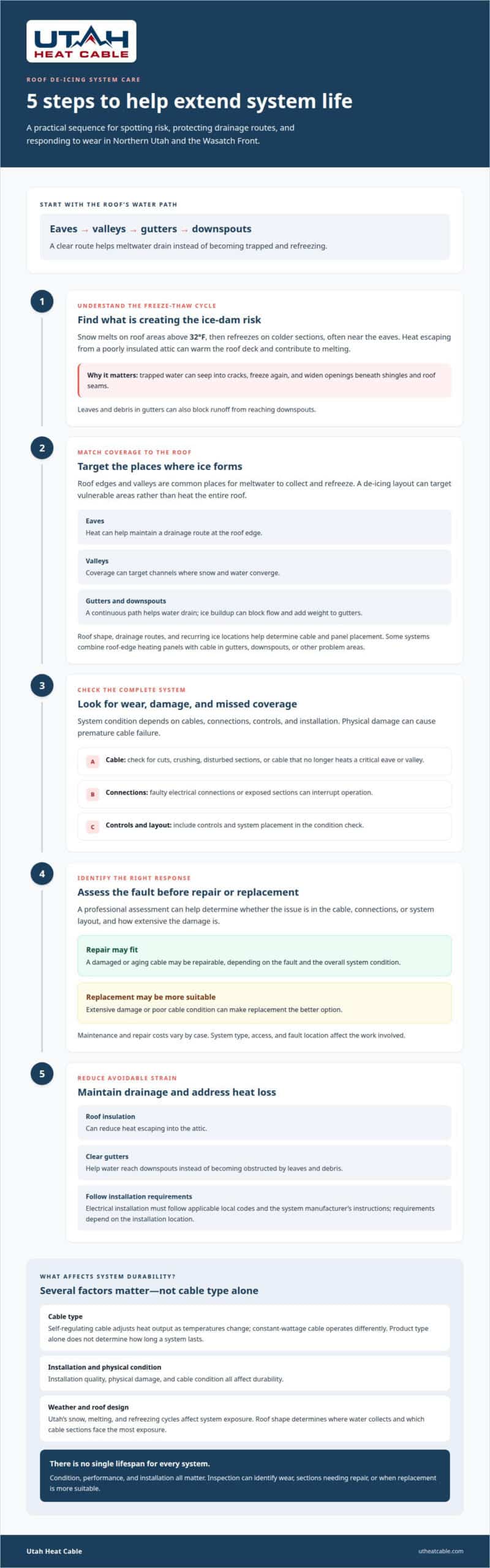
Ice dams form when snow melts on roof areas above 32 degrees F, then freezes on colder sections. Heat escaping through a poorly insulated attic can warm the roof deck and melt snow underneath. Meltwater then refreezes at colder eaves, creating a dam that blocks drainage during winter.
Water trapped behind an ice dam can seep into cracks and freeze again. As it expands beneath shingles and roof seams, it can widen openings and damage roofing materials. Leaves and debris in gutters can also block runoff from reaching downspouts, creating another obstacle to drainage.
A damaged or aging roof heat cable may be repairable, but extensive damage or poor cable condition can make replacement the better option. A professional assessment looks at where and how badly the cable is damaged, as well as the condition of the overall system.
Self-regulating cable adjusts its heat output as temperatures change, while constant-wattage cable operates differently. Product type alone does not determine how long a system will last. Installation quality, physical damage, and the cable’s condition all affect durability.
Physical damage can cause premature cable failure. A cable may be cut, crushed, or disturbed during roof work. Faulty electrical connections or exposed sections can also interrupt operation. A professional inspection can help identify whether the issue is in the cable, connections, or system layout.
To help prevent ice dams, roof insulation can reduce heat escaping into the attic, while clear gutters help water reach downspouts. In Northern Utah and the Wasatch Front, addressing both heat loss and blocked drainage can reduce conditions that contribute to roof damage and protect de-icing equipment from avoidable strain.
Heating roof eaves, valleys, gutters, and downspouts
Roof edges and valleys are common places for meltwater to collect and refreeze. A de-icing layout can target these vulnerable areas rather than heat the entire roof. At the eaves, heat helps maintain a drainage route; in valleys, it targets channels where snow and water converge. Coverage should reflect the roof’s shape and where ice tends to form.
Gutters and downspouts need a continuous path for meltwater. Self-regulating heat cable can be installed in these areas to help limit ice buildup that blocks drainage. Ice inside a gutter can add weight and cause sections to pull away. Keeping a clear route from the roof edge through the downspout helps water drain instead of becoming trapped.
Some systems combine heating panels at roof edges with heat cable in gutters, downspouts, or other problem areas. Aluminum panels can spread heat from self-regulating cable across a wider roof-edge area. This targets heat where it can help limit ice formation without assuming that every roof needs whole-roof heating.
Placement also affects heat transfer and appearance. Cables, panels, and heat tape installed on or in place of roofing can change how a roof looks. A professional assessment considers roof geometry, drainage routes, and the locations of recurring ice buildup before choosing coverage. For a tailored review of vulnerable roof sections, request a roof de-icing system assessment.
Roof deicing systems and ice-dam prevention
Roof de-icing systems heat vulnerable roof areas to help keep meltwater draining instead of freezing into dams. Electrical installation must follow applicable local codes and the system manufacturer’s instructions; requirements depend on the installation location.
Maintenance and Repair Costs
Maintenance and repair costs are the expenses involved in inspecting a system and correcting faults. In the United States, the price depends on the case and is given after a quote request; system type, access, and the fault’s location affect the work involved. A damaged cable may need a different repair approach than a failed connection or controller. Professional assessment helps identify the problem before repair work begins.
Regular inspection can reveal wear before winter puts the system under demand. For example, a cable that no longer heats a roof valley may leave a key drainage route unprotected.
Typical System Lifespan
A roof de-icing system’s lifespan depends on the condition of its cables, connections, controls, and installation. There is no single lifespan that applies to every system. A professional inspection can assess wear, identify sections that need repair, and determine whether replacement is the more suitable solution.
Performance matters alongside age. If a cable no longer heats a critical eave or valley, ice may form where drainage is needed. Addressing faults promptly can help reduce further exposure to ice buildup.
Climate, Roof Type, and Lifespan
Utah’s local weather and each roof’s design affect how much exposure a de-icing system faces. Repeated cycles of snow, melting, and refreezing can increase demand, while the roof’s shape determines where water collects and which cable sections face the most exposure.
On roofs with valleys and complex edges, cable placement needs to follow drainage routes. Roofing material and cable attachment also affect exposure to movement or physical damage. A system designed for the specific roof and Utah’s winter conditions can target the areas where ice forms.
Utah Heat Cable: De-Icing Services
Utah Heat Cable provides De-Icing Services for property owners managing recurring winter ice concerns across Northern Utah and the Wasatch Front. If ice repeatedly forms along roof edges or drainage routes, professional service can help address the vulnerable areas and system needs. Controller Options can also be considered as part of a de-icing setup.
For broader winter protection, Roof Snow Retention helps address snow movement, while Sidewalk and Driveway De-Icing Systems target icy ground-level surfaces. These options serve different parts of a property, so choose based on where snow or ice creates a concern.
If you’re considering roof de-icing service for your property, contact Utah Heat Cable to discuss your needs.
Prepare Your System for the Next Winter
A useful maintenance plan starts with the roof’s actual needs, not a one-size-fits-all assumption. Extending the life of a roof de-icing system means considering how it is used, its condition, and whether its coverage still suits the property. Planning ahead leaves time to address problems before winter returns.
Utah Heat Cable installs Self Regulating Heat Cable and Constant Wattage Heat Cable, and provides roof de-icing services in Utah. Discussing your roof and recurring ice concerns is a practical next step for maintenance planning or de-icing support.
Take the next step toward a plan suited to your roof and winter conditions.
With a clear plan in place, you can approach the next cold season with greater confidence.
Frequently Asked Questions
What professional maintenance helps extend the life of roof heat cables and de-icing systems?
Professional maintenance can identify wear, loose connections, damaged cable jackets, or controller issues before the system is needed. For homeowners, extending the life of a roof de-icing system means addressing small faults early and assessing whether the equipment still suits the roof. A technician can also review vulnerable coverage areas and test system operation, helping identify problems before winter demand.
How often should roof de-icing cables be inspected and tested?
Have the roof and gutter system inspected at least twice a year, in spring and fall, and include the de-icing cables in those professional visits. Extending the life of a roof de-icing system also involves checking its operation before cold weather arrives. A professional can test the cables and review controller function, while the spring visit can reveal wear after winter use.
What are signs a roof de-icing system needs repair or replacement?
Visible cable damage, loose mounting, exposed conductors, or sections that remain cold during operation warrant professional assessment. Repeated breaker trips or controller problems can also signal a fault. Product lifespan differs by cable type: Constant Wattage Heat Cable typically lasts 5-10 years, while Self Regulating Heat Cable typically lasts 20-30 years. Condition still matters.
How do professionals safely clean and store seasonal roof de-icing cables?
Professionals follow the cable manufacturer’s handling instructions and isolate power before working on equipment. They clear debris without scraping or sharply bending the cable, then inspect its jacket and connections. Not every roof cable is designed for seasonal removal, so storage applies only when the system allows it. Removable cables should be coiled and stored according to product instructions.