
For homes in Northern Utah and along the Wasatch Front, a roof heat cable can be working even when snow remains between its runs. Troubleshooting roof heat cable problems starts with checking whether meltwater has a continuous route to an open drain, then tracing any failure to the power supply, GFCI, connection, or cable. Because the system is designed to keep key drainage channels open, patches of snow alone don’t prove it has failed.
If water isn’t moving as it should, a tripped GFCI, damaged cable, or blocked drainage may be the cause. This guide explains how a professional checks the power supply and GFCI, traces the fault, and determines whether damaged self-regulating cable can be repaired or needs replacement. It also covers signs of drainage or roof-heat issues, so you can understand the diagnosis and know what details will help with a service visit.
Key Takeaways
- Across Northern Utah and the Wasatch Front, judge roof cable performance by whether meltwater has a continuous path through the gutter and downspout, not by whether every patch of snow disappears.
- A professional traces power from the outlet through the breaker and GFCI to identify supply or circuit problems.
- Visible damage, water intrusion, or recurring electrical trips can affect whether cable repair is appropriate or replacement is needed.
- When diagnosing recurring ice, consider drainage blockages and roof heat loss as well as the cable itself.
Understanding the intended drainage-channel function of roof heat cable
In Northern Utah and along the Wasatch Front, roof heat cable keeps selected drainage channels open; it isn’t designed to clear every patch of snow and ice. Stop using the system if the cable is damaged or electrical trips keep recurring, and arrange a professional assessment. When persistent ice points to drainage or roof conditions, those also need attention.
-
Trace Meltwater Along the Drainage Route
Have a professional in Northern Utah or the Wasatch Front trace the intended water path from the roof edge through the gutter and downspout to its outlet. Check that each section connects to the next, especially where a roof valley or dormer directs runoff into an eave. If water reaches a frozen downspout, blocked gutter, or cold section beyond the cable, it can back up and refreeze even when the cable works.
-
Inspect the Cable and Drainage Path
Before winter, have a professional inspect cable positioning and visible condition, then clear leaves, roofing granules, and other debris from the drainage route. A loose gutter can hold standing water, while ice at the gutter-to-downspout opening can restrict flow. Below 20 ºF, heat-cable melt pathways may be narrower, so remaining snow doesn’t by itself show failure if water still has a connected route to an open outlet.
-
Assess Whether the Route Is Working
Ask a professional serving Northern Utah or the Wasatch Front to confirm that cable coverage follows the water’s route from the roof edge through the gutter and downspout. If the cable ends before an open drainage point, meltwater may refreeze along the way. If ice persists despite a clear route, further assessment can distinguish a cable issue from roof heat loss or another drainage problem.
How a professional checks power, outlets, breakers, and GFCI protection in Northern Utah
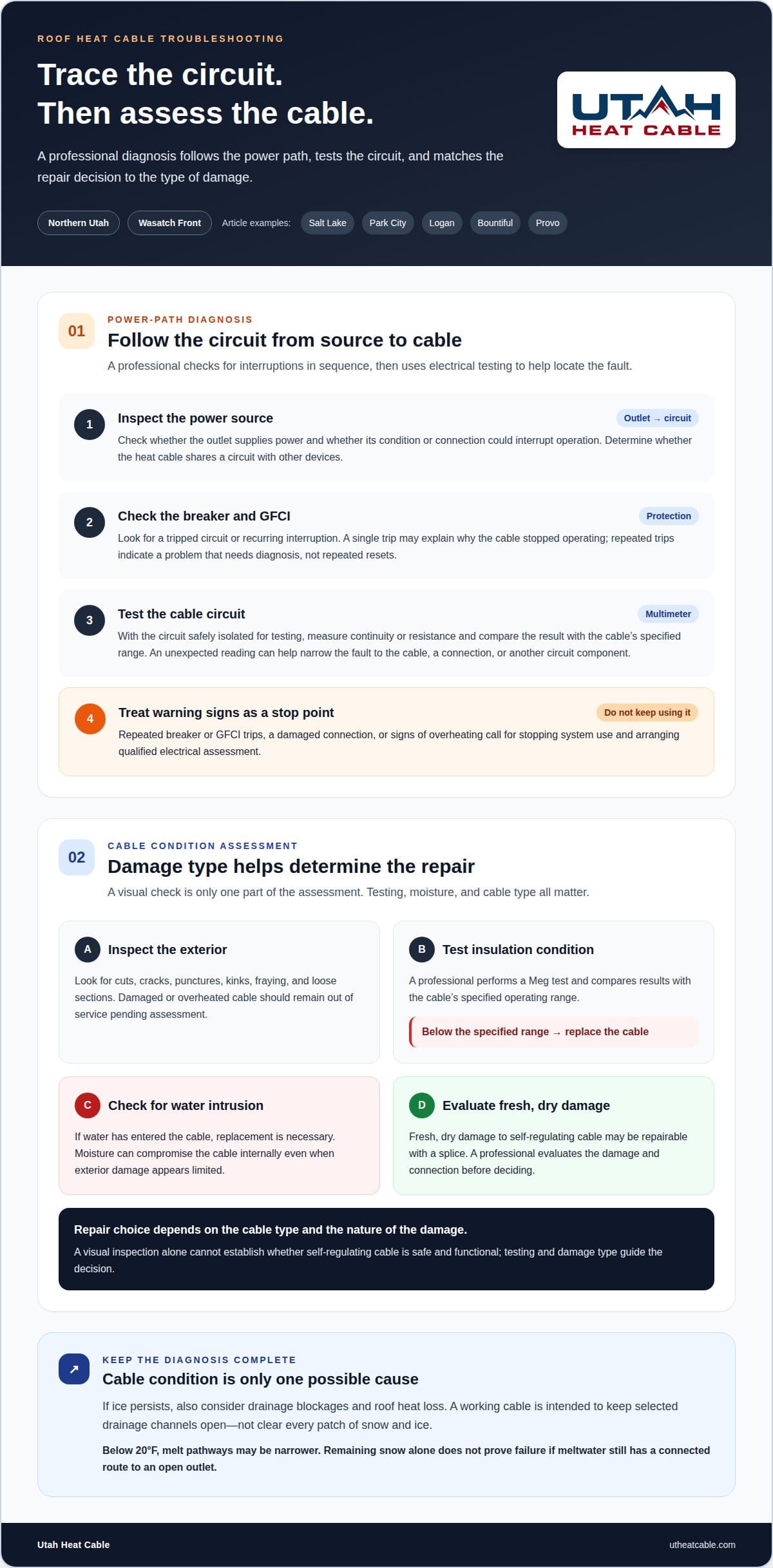
For homes in Northern Utah and along the Wasatch Front, a professional traces the circuit from the power source to the installed cable, checking for interruptions and unsafe conditions. Using a multimeter, they measure circuit voltage and cable continuity or resistance, then compare the readings with the cable specifications to help locate a fault.
- Inspect the power source. The professional checks whether the outlet supplies power and whether its condition or connection could interrupt operation. They also determine whether the heat cable shares a circuit with other devices, since that arrangement can interfere with reliable operation.
- Check the breaker and GFCI. The professional examines the breaker and GFCI protection for a tripped circuit or recurring interruption. A single trip can explain why the cable stopped operating, but repeated trips point to a problem that needs diagnosis, not repeated resets.
- Test the cable circuit. With the circuit safely isolated for testing, the professional uses a multimeter to assess continuity or resistance and compare the result with the cable’s specified range. An unexpected reading can help narrow the fault to damaged cable, a connection, or another circuit component.
- Respond to warning signs. Repeated breaker or GFCI trips, a damaged connection, or signs of overheating call for stopping system use and arranging qualified electrical assessment. A professional can trace the fault without relying on a visual check alone. Request a professional cable assessment when these warning signs appear.
Professional assessment and repair of damaged self-regulating cable in Northern Utah
In Northern Utah and along the Wasatch Front, a professional checks the cable jacket, connections, and test readings for signs of damage or failure. Cracks, penetrations, kinks, or loose-hanging cable can signal a problem; electrical testing helps determine whether the cable operates within its specified range.
- Inspect the cable exterior. The professional looks for cuts, cracks, punctures, kinks, fraying, and loose sections. A frayed or cracked cord could cause shock or fire, according to the U.S. Consumer Product Safety Commission (CPSC). A damaged or overheated cable should remain out of service pending assessment.
- Test each circuit. The professional performs a Meg test to assess insulation condition and locate problem areas. Results are compared with the cable’s specified optimal operating range. A reading below that range indicates the cable should be replaced, rather than returned to service.
- Check for moisture intrusion. If water has entered the cable, replacement is necessary. Moisture can compromise the cable internally, even when the exterior damage appears limited. The professional assesses the affected section and determines the appropriate replacement scope.
- Determine whether a splice is suitable. Fresh, dry damage to self-regulating cable may be repairable with a splice. The professional evaluates the damage and connection condition before deciding whether a repair can restore the circuit properly. This is different from water intrusion, which calls for replacement.
- Match the repair to cable type. Repair options depend on the cable type and the nature of the damage. The key takeaway is that a visual inspection alone cannot establish whether self-regulating cable is safe and functional; testing and the damage type guide the decision.
Utah Heat Cable: Pipe heat cables
Utah Heat Cable installs pipe heat cables to protect vulnerable piping from freezing in Northern Utah and Wasatch Front areas, including Salt Lake, Park City, Logan, Bountiful, Provo, and nearby communities. Once a professional has assessed the roof cable’s power, connections, and condition, focus the next step on the specific heating need rather than adding cable without a clear diagnosis.
For roof drainage concerns, Utah Heat Cable installs Self Regulating Heat Cable and Constant Wattage Heat Cable, and provides De-Icing Services. The right solution depends on the application and the route that needs protection. Pipe heat cables address vulnerable pipes, not roof drainage; separating these needs keeps the solution focused.
Set Up the Next Step Before Winter
Keep a clear record of what you observe: when the system stopped performing, which roof area is affected, and whether the issue returns in similar conditions. These details help a professional connect symptoms to the right part of the system instead of treating each icy patch as an isolated problem.
For troubleshooting roof heat cable problems, a professional assessment can turn your observations into a focused plan for your property in Northern Utah or along the Wasatch Front. If you’re preparing for winter or dealing with recurring issues, arrange an assessment before conditions make access and diagnosis more difficult.
A clear plan can make winter maintenance more manageable.
Frequently Asked Questions
What Should I Do If My Heat Tape Isn’t Working?
Stop using the system if you see a frayed cord, damaged connection, overheating, or repeated breaker trips, and arrange a professional assessment. If there’s no visible damage, note which roof area is affected and whether the issue follows a storm or thaw. In Northern Utah and along the Wasatch Front, this context helps distinguish a system fault from a problem related to changing weather or drainage.
How does a professional check whether the final outlet is open?
A professional traces the drainage route to where the downspout releases water, then checks whether ice, debris, or accumulated snow blocks the outlet. They also inspect the gutter-to-downspout transition, where a narrow opening can restrict flow. The assessment follows the full discharge route, since an open downspout can still release water onto a surface where it refreezes.
What can a professional do if ice remains between the cable runs?
A professional determines whether remaining ice lies outside the intended heated drainage channel or points to a gap in the route. If meltwater can still reach an open outlet, ice between cable runs may not indicate failure. If the path breaks at a valley, dormer, or roof edge, the professional can assess whether cable placement or system design needs attention.
What can a professional do if water refreezes below the downspout?
A professional can trace where discharged water lands and assess whether a cold walkway, driveway, snowbank, or poorly drained area is allowing it to refreeze. The roof cable may be functioning while the ground-level discharge remains hazardous. For persistent ice on walkways or driveways in Northern Utah and along the Wasatch Front, Utah Heat Cable offers De-Icing Services and sidewalk and driveway de-icing systems.
How does a professional troubleshoot roof heat cable problems?
A professional considers the symptoms together rather than treating every ice patch as a cable failure. The assessment may cover operating conditions, circuit test results, visible cable condition, drainage design, and where water refreezes. For example, normal circuit readings paired with water backing up at the downspout point toward drainage, while a low insulation test reading suggests the cable may need replacement.