
A historic roof can look unchanged while hidden ice threatens the rooms below. A roof heating system for historic buildings uses heat cable in vulnerable areas to help limit ice buildup and reduce the risk of water backing up beneath the roofing, without changing the building’s interior heating system. The right layout depends on the roof’s shape, existing materials, and the architectural details worth preserving.
It’s understandable to prioritize a building’s original character alongside protection from Utah’s winter conditions. This guide explains how roof heating can help protect interiors, where systems may be placed, and how retrofit choices affect appearance, energy use, and operating costs. It also covers how to balance preservation priorities with practical roof and snow-management needs across Northern Utah and the Wasatch Front.
Key Takeaways
- Map vulnerable roof areas and preservation priorities to understand where de-icing may help without drawing attention from historic features.
- Plan retrofit choices around existing materials and significant architectural details to limit disturbance to the building’s historic fabric.
- Assess insulation, air leakage, system controls, and operating patterns to understand what can influence energy use over time.
- Consider Utah Heat Cable’s de-icing services, roof snow retention, controller options, and sidewalk and driveway systems when winter ice affects the property.
Preserving a building’s appearance while protecting its interior
A carefully planned roof retrofit can help limit ice buildup and water intrusion while respecting a historic building’s appearance. In Northern Utah, preservation goals should guide system placement before work begins.
Concealed System Installation
A discreet installation minimizes the visibility of roof-heating components from important viewpoints, rather than assuming every part can be concealed. Cable routes can follow eaves, valleys, channels, and rakes, where ice commonly collects. Compare these areas with visible elevations and significant architectural details to balance interior protection with the building’s appearance and avoid unnecessary changes to original features.
Preservation Goals and Approvals
Set preservation priorities before choosing materials or finalizing the installation plan. Identify the original roofing, distinctive rooflines, and other features the project should retain. Local preservation requirements vary by location and landmark status, and some historic projects need approval before work begins. Early planning gives you time to document the project and prepare any requested materials, such as photographs, samples, or a written plan.
Suitable Roof Heating Systems
For targeted roof ice control, heat cable can be arranged along vulnerable roof areas, including eaves, valleys, channels, rakes, and flat sections. This roof heating system for historic buildings can address specific ice-prone areas without requiring changes to the interior heating system. The suitable layout depends on the roof’s shape, existing materials, and preservation priorities. Review the proposed route against environmental concerns, visible elevations, and any local guidance before installation. That approach supports informed choices while keeping the building’s character central.
Retrofitting historic buildings while preserving architectural integrity
A historic retrofit should protect the roof without erasing the building’s character. Start by documenting original materials, distinctive features, and areas where installation could affect historic fabric.
Comparing Heating System Types
Heat cables provide targeted routes for meltwater, while heated roof panels cover broader roof areas. Their visual impact and compatibility with original materials differ, so compare placement before choosing. Review the roof’s architectural style, existing materials, drainage paths, and visible elevations. Slate or clay tiles may sometimes be salvaged and reused; careful planning can preserve appearance while limiting disturbance to historic fabric.
Alternatives and System Limitations
Insulation and ventilation improvements, such as ridge, soffit, or hidden intake vents, may also help address conditions that contribute to ice dams. Changes must suit the building and avoid trapping moisture or damaging historic finishes. Roof heat cable can manage ice in selected areas, but it does not correct every cause of ice dams or replace sound drainage and roof maintenance.
Electrical requirements depend on the local jurisdiction and installation. A roof heat cable system should be designed and installed to meet the applicable requirements for the property.
Maintenance and Inspections
Inspection means reviewing the system, roof surface, drainage paths, and controls for visible damage or changes. This matters because loose components or blocked drainage can interfere with the intended meltwater route. Include the roof and heating equipment in regular maintenance, and have electrical concerns assessed by a qualified professional. If the original roof has rot, outdated framing, or water damage, those conditions also affect retrofit decisions. For a project focused on preserving original details, request heat cable installation planning.
Operating costs and energy efficiency
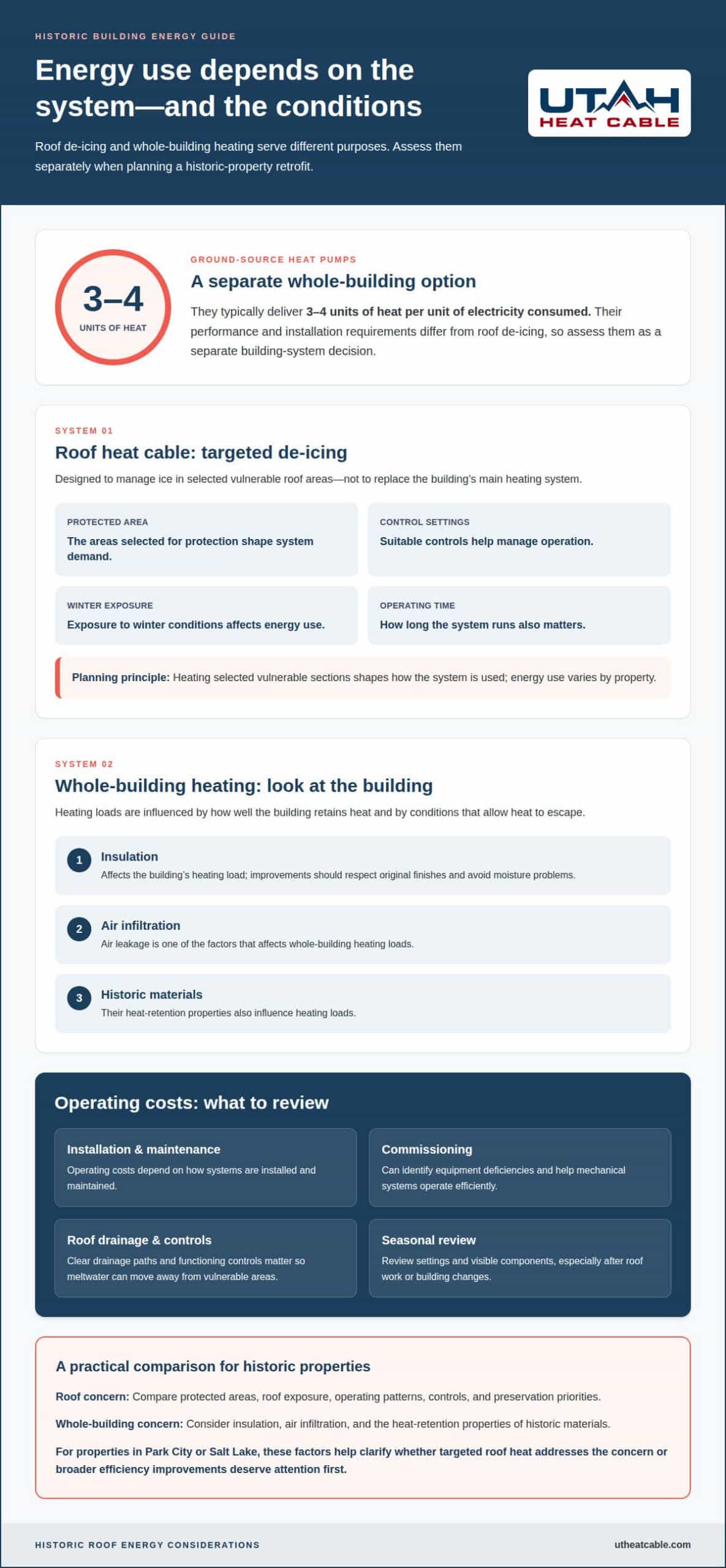
A roof de-icing system and a building’s main heating system serve different purposes, so assess their energy use separately. Roof heat cable demand depends on the areas protected, control settings, exposure to winter conditions, and operating time. Heating selected vulnerable sections rather than the whole roof shapes how the system is used, while suitable controls help manage operation. Energy use will vary by property.
For whole-building heating, insulation, air infiltration, and the heat-retention properties of historic materials affect heating loads. Addressing those factors can improve efficiency while respecting original finishes and avoiding moisture problems. Ground-source heat pumps offer another retrofit option: they typically deliver 3-4 units of heat per unit of electricity consumed. Their performance and installation requirements differ from roof de-icing, so assess them as a separate building-system decision.
Operating costs also depend on how systems are installed and maintained. Commissioning can identify equipment deficiencies and help ensure mechanical systems operate efficiently; testing and adjustment can support more even heating. For roof systems, clear drainage paths and functioning controls matter because meltwater must move away from vulnerable roof areas. Review system settings and visible components as part of seasonal maintenance, especially after roof work or changes to the building.
For a historic property in Park City or Salt Lake, compare operating patterns, energy use, preservation priorities, and the roof’s exposure before selecting a retrofit. Those factors help clarify whether targeted roof heat addresses the concern or whether broader efficiency improvements deserve attention first.
Utah Heat Cable: Sidewalk and Driveway Deicing Systems
Utah Heat Cable installs Sidewalk and Driveway De-Icing Systems for properties where winter ice affects pedestrian routes or vehicle access. These systems address ground-level icing, a separate issue from preserving a historic roof, but one that can affect safe movement around the building.
For broader winter planning, Utah Heat Cable also offers Roof Snow Retention Systems, De-Icing Services, and controller options. The right combination depends on where ice or snow creates problems and which historic features need protection. In Park City, Salt Lake City, and other Utah communities, consider access and roof-snow management alongside preservation priorities.
Contact Utah Heat Cable to discuss your property’s winter de-icing needs.
Plan the Next Step for Your Historic Property
A roof heating system for historic buildings should suit the property’s preservation goals and target the areas most affected by winter conditions. Before deciding, consider how the system will work with the existing roof materials and visible features, as well as the building’s wider winter-maintenance needs. A measured plan keeps the building’s heritage central while addressing practical protection.
Utah Heat Cable installs Self Regulating Heat Cable and Constant Wattage Heat Cable, and provides roof de-icing services. These options offer a starting point for planning a system around your roof and winter conditions. Share your roof concerns and preservation priorities with the team to discuss a suitable approach.
A thoughtful next step can help protect your historic property while respecting its character.
Frequently Asked Questions
How can roof heating be installed without damaging historic roofing materials?
Choose a cable and installation method compatible with the existing roof material. Self Regulating Heat Cable uses roof-adhesive clips without roof penetrations and is compatible with metal, shingle, wood-shake, and listed membrane roofs. Constant Wattage Heat Cable is designed for shingle roofs, with clips attached to shingles without screws or nails. For a roof heating system for a historic building, match the cable and attachment method to the roof before installation.
What are the costs to install and operate a roof heating system?
Project requirements depend on the roof layout, cable selection, controls, and how often the system operates. A targeted installation and a larger roof system involve different material and labor needs, while operating expense varies with system use and control settings. Utah Heat Cable provides a free consultation and quote based on your project.
How much energy do roof heat cables use, and what controls improve efficiency?
Energy use depends on the cable installed and how long it operates, so there is no single consumption figure for every roof. A Thermostat Control responds to temperature, while a Temperature & Moisture Sensor activates only when snow or moisture is present. A Wi-Fi Smart Switch provides smartphone control and scheduling. These options let you choose controls suited to the site and how you want to manage operation.
What permits or historic preservation approvals are required to install roof heating?
Approval requirements vary by local jurisdiction and the building’s landmark status. A historic property may need review by a local preservation authority before installation. Identify the roof areas affected and document the proposed materials and placement early in planning. The review process may call for photographs, samples, or a written plan.