
Protecting gutters from ice damage in Idaho starts with keeping meltwater moving. Snow can melt on warmer roof sections, then refreeze at colder eaves and gutters, forming ice dams that block drainage. Roof heat cable along the eaves and through gutters can help maintain a drainage path, while adequate attic insulation and ventilation help reduce uneven snowmelt.
When water backs up behind an ice dam, it can seep under shingles and damage roofing materials, ceilings, or walls. This guide explains how ice dams form, the warning signs and damage to watch for, and how gutter deicing systems can support drainage through winter. It also covers practical ways to reduce ice buildup before it strains your gutters.
Key Takeaways
- Learn how uneven roof temperatures can melt snow and refreeze water at the eaves, blocking the path to your downspouts.
- Recognize warning signs such as icicles behind gutters and ceiling stains before trapped water causes further damage.
- Keep gutters clear and inspect for loose fasteners or sagging before winter to help reduce blockages and added strain.
- See how gutter deicing systems can support continuous drainage, and when de-icing services may help address persistent ice buildup.
1. How ice dams form and cause roof leaks
Snow on an Idaho roof can melt where heat escapes from the house, then refreeze at colder eaves. As ice builds along the roof edge or inside gutters, it blocks meltwater from draining. Water trapped behind the ice can seep beneath shingles, causing roof leaks and interior water damage. Understanding this freeze-and-thaw cycle is central to protecting gutters from ice damage in Idaho.
Uneven roof temperatures often drive this cycle. Poor insulation or heat from mechanical equipment can contribute to ice dams, according to the United States District Court for the Southern District of Ohio. Adequate attic insulation and ventilation help keep roof temperatures more even; natural outdoor airflow through an attic helps keep it cold and limit uneven snowmelt.
To reduce ice buildup, clear leaves, twigs, and other debris from gutters before winter. The U.S. Environmental Protection Agency recommends cleaning and repairing roof gutters regularly. Before snow arrives, inspect for sagging, loose fasteners, and leaks, which can worsen under accumulated ice and snow. These checks are practical steps for protecting gutters from ice damage in Idaho homes.
Roof heat cable can be installed along roof edges and inside gutters to melt snow and ice and preserve a path for drainage. A properly planned system can extend the heated route toward the outlet, helping reduce the chance of refreezing along the way. Heat cable supports drainage, but it doesn’t correct uneven roof temperatures caused by attic heat loss.
Homeowners insurance coverage for ice-dam damage to gutters depends on the policy’s covered-cause and exclusion wording. Review the sections on ice, water intrusion, roof and gutter damage, and maintenance. Document the damage and its cause when reporting it.
2. Ice-related roof and interior water damage
Ice dams can lift shingles, while backed-up water may seep through openings and damage roof decking.
After a heavy storm, a roof rake can remove excess snow before melting and refreezing add to an ice barrier. Work from the ground, follow the rake’s instructions, and avoid scraping or striking shingles. Removing reachable snow near the eaves can reduce roof load, but careless contact may damage roofing materials.
Get a professional assessment if gutters pull away from the roof, sag under ice, or leak, or if water stains appear indoors. Persistent ice dams, icicles forming behind gutters, and ice pushing upward beneath shingles also warrant attention. An assessment can help identify whether snow or ice buildup is contributing to the damage.
Don’t chip roof ice with a hammer or chisel or blast it with a pressure washer. These methods can injure people and damage roofing. If snow removal is needed, use a roof rake suited to the roof surface and stop if you can’t reach the area safely. An inspection can reveal loose gutter fasteners, damaged shingles, or indoor moisture before problems spread.
Professional snow-removal contractors may use rakes, shovels, de-icing, and anti-icing techniques. For ice dams, professional removal using steam or calcium chloride can avoid hazardous do-it-yourself methods; experts can also address attic insulation or ventilation problems.
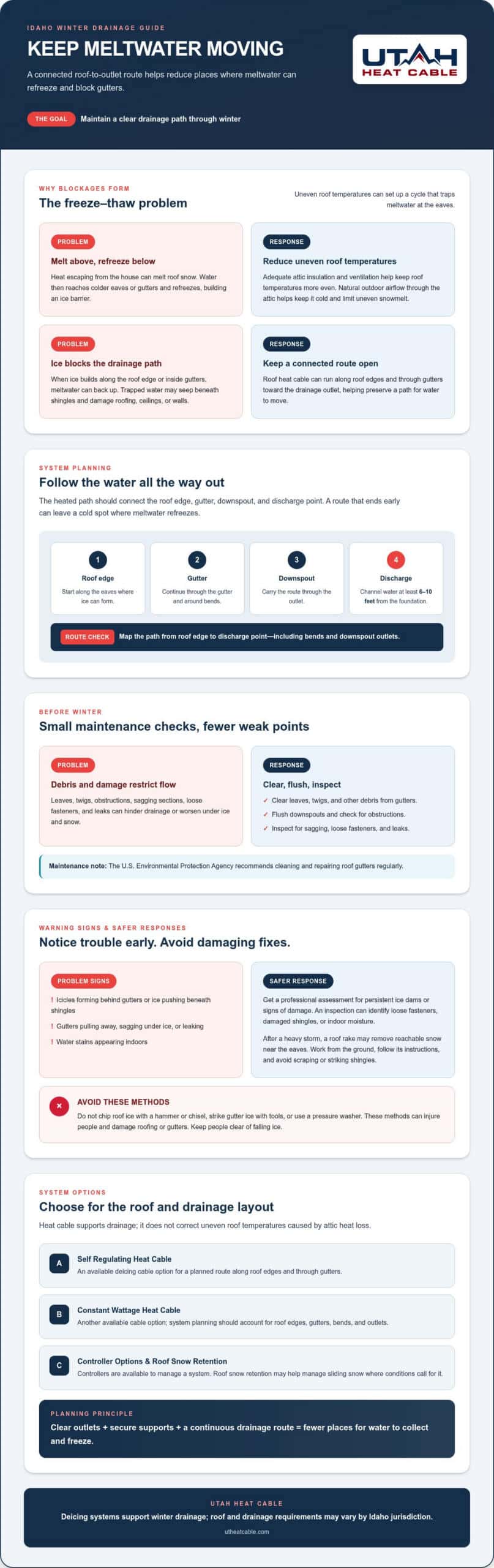
3. Gutter deicing systems and continuous drainage
A deicing cable works best when it creates a connected route for meltwater. Installed along roof edges and through gutters toward the drainage outlet, it can help keep water moving. If the heated path ends before water drains away, meltwater may refreeze at that cold point. Planning the route is an important part of protecting gutters from ice damage in Idaho.
Map the route from roof edge to discharge point, including bends and downspout outlets. Downspouts should channel water at least 6-10 feet from the foundation to support drainage. Before winter, clear leaves and twigs, flush downspouts, and inspect for sagging sections, loose fasteners, leaks, or obstructions. These maintenance steps help the system carry meltwater away instead of letting it pool.
Roof and gutter design matter too. Clear outlets, secure supports, and a continuous drainage path reduce places where water can collect and freeze. Building and drainage requirements may vary by Idaho jurisdiction, so check the rules that apply before changing where water discharges. A well-planned route supports protecting gutters from ice damage in Idaho, rather than relying on gutter material alone.
Don’t strike gutter ice with tools or use a pressure washer, since either can damage the gutter or roof. Keep people clear of falling ice, and use a properly routed heat cable to help open a drainage channel. Review deicing system options for a connected roof-to-downspout route.
One forum participant suggested extending roof de-icing cable a foot or two out of the bottom of the downspout, carrying the heated route beyond the outlet. A forum participant described heat mats comprising (2) 24″ by 24 ft and (2) 24″ by 5 feet. A forum participant reports that after running their heated mats for 2 hours, they could scoop up the ice with a shovel. These examples describe individual experiences and do not replace checking the installation and drainage route.
Utah Heat Cable: De-Icing Services
Utah Heat Cable provides steam-based De-Icing Services for recurring ice buildup along roof edges and in gutters. If meltwater repeatedly freezes before reaching the drainage outlet, a deicing system can help maintain a clearer path through winter.
System choice depends on the roof and drainage layout. Self Regulating Heat Cable and Constant Wattage Heat Cable are options, with Controller Options available to manage the system. Roof Snow Retention can help manage sliding snow where conditions call for it. These services address ice and snow management, not general roof repairs.
Consider deicing services if ice repeatedly blocks gutters or downspouts, or if winter drainage is a concern before the season begins. A system planned around roof edges, gutters, and drainage outlets can support a continuous path for meltwater. Request a quote from Utah Heat Cable to discuss deicing options for your property.
Plan Ahead for a Clear Winter Drainage Route
A practical plan for protecting gutters from ice damage in Idaho starts with the roof’s full drainage path, not just the gutter. Before winter, note where snowmelt travels, where it tends to freeze, and whether water can drain away from the foundation. Mapping the route helps you decide what to address before cold weather returns.
For a system designed around your property, Utah Heat Cable offers Self Regulating Heat Cable, Constant Wattage Heat Cable, and De-Icing Services. The right approach depends on the roof layout and the drainage trouble spots you’ve observed. Contact Utah Heat Cable to discuss deicing options for your home. A thoughtful plan now can help you face the next Idaho winter with greater confidence.
Frequently Asked Questions
How does ice damage gutters in Idaho winters?
Ice can block outlets, add weight, and force gutters out of alignment. When water freezes inside a gutter or downspout, it can obstruct drainage; backed-up meltwater may then overflow or collect beneath roof edges. A sagging gutter, for example, can hold more water and ice, adding strain to its fasteners. After winter weather, look for separation, leaks, and distorted sections.
Are seamless aluminum, steel, or copper gutters most resistant to ice damage?
No gutter material is automatically the most resistant to ice damage in every installation. Seamless construction reduces long gutter seams, but corners, end caps, and downspout connections still need sound joints. Durability also depends on secure support, suitable sizing, and clear drainage. Material choice alone won’t prevent ice dams, so consider the roof’s drainage layout and winter exposure too.