
What good is a heated roof edge if meltwater has nowhere to go? Professional grade heat tape installation plans for a continuous drainage path, from the roof edge through the gutters and downspouts. A cable layout that stops at the eaves can leave water trapped or refreezing farther along the route. Electrical planning and safe installation matter too.
This guide explains how roof materials, gutter shape, drainage routes, and local winter conditions influence cable placement and control choices. You’ll also learn how self-regulating and constant-wattage cable differ, and why the electrical plan needs to suit the system. Utah Heat Cable designs and installs custom heat-trace systems for residential, commercial, industrial, and HOA properties across Utah, Idaho, and Wyoming. Here’s what to expect, from assessing the roof to testing the finished system.
Key Takeaways
- Professional grade heat tape installation follows the full meltwater route, not just the roof edge.
- Roof features, gutters, downspouts, and shaded areas all affect cable placement.
- A professional installation includes assessing drainage, selecting cable and controls, planning the circuit, and testing the system.
- Utah Heat Cable designs heat-trace systems for property conditions across Utah, Idaho, and Wyoming.
Why Professional-Grade Heat Tape Installation Starts with the Roof
A reliable heat cable layout starts with the roof, not a generic diagram. Professional grade heat tape installation accounts for the roof shape and the intended drainage path, then routes cable to help keep meltwater moving from the roof edge through the gutters and downspouts.
Roof features determine where those heated paths are needed. Valleys concentrate runoff, while eaves and gutters can collect water that refreezes if it has no clear exit. Downspouts need a continuous route for meltwater, and shaded areas may stay cold longer than sun-exposed sections. Assessing these connected areas helps avoid a common mistake: heating one roof edge while leaving the gutter or downspout below it without a clear path.
Can heat tape solve every ice dam problem?
No. Heat cable helps manage meltwater along selected drainage paths. It doesn’t correct conditions that can cause a roof to warm unevenly, such as insulation or ventilation problems, and it can’t repair a failing roof. An assessment may also identify related needs, such as roof snow retention where sliding snow is a concern. For more context, read our ice dam prevention guide.
Across Utah, Idaho, and Wyoming, roof design, exposure, and winter conditions vary by property. Utah Heat Cable’s licensed electrical contractor team designs roof and gutter heat-trace systems around those site-specific factors, so the cable route follows the drainage path the building needs.
What Happens During Professional Heat Tape Installation?
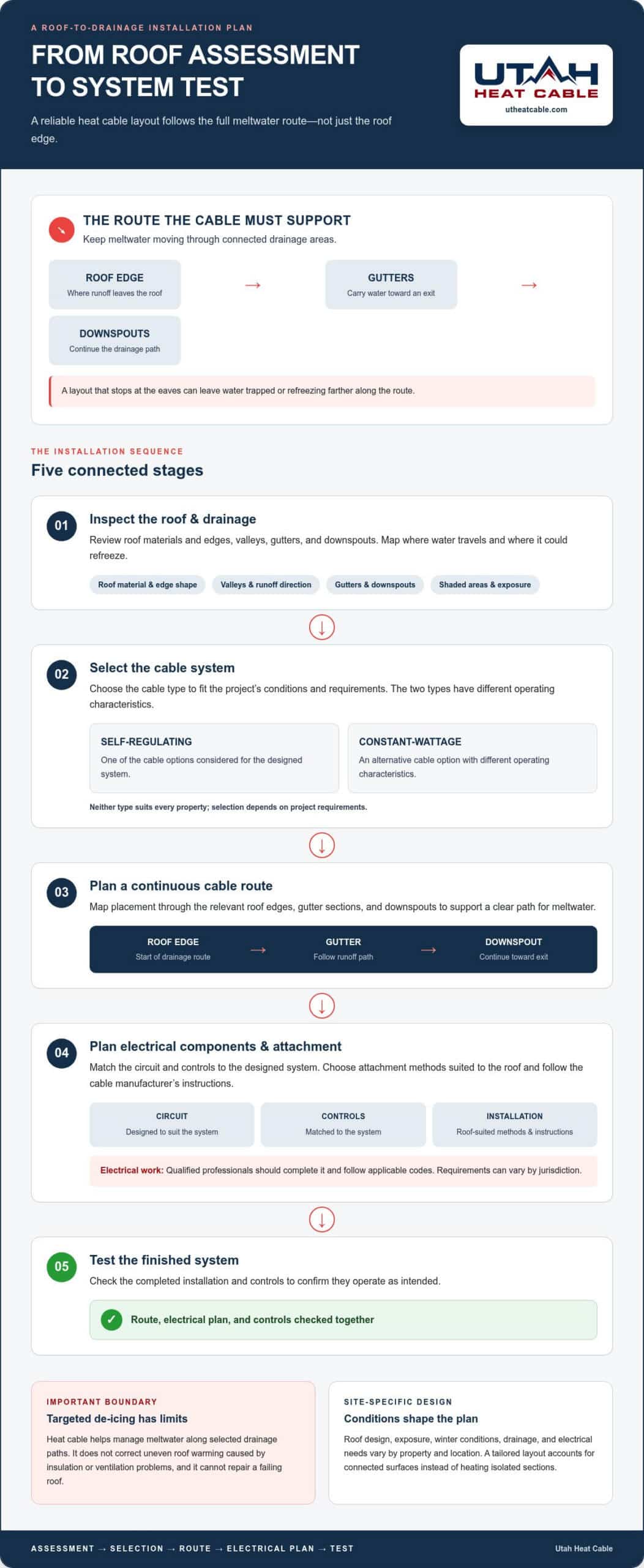
A professional installation moves from assessment to system checks in a deliberate sequence. Cable type, route, electrical components, controls, and attachment methods all need to suit the roof and follow the cable manufacturer’s instructions.
- Inspect the roof and drainage: Review roof materials and edges, valleys, gutters, and downspouts to map where water travels and where it could refreeze.
- Select the system: Choose self-regulating or constant-wattage cable based on the project’s conditions and requirements. The two types have different operating characteristics, so the choice should fit the planned system.
- Plan the route: Map cable placement to create a continuous drainage path through the relevant roof edges, gutter sections, and downspouts.
- Plan the electrical components: Match the circuit and controls to the designed system, with attachment methods suited to the roof and the manufacturer’s instructions.
- Test the installation: Check the completed system and controls to confirm they operate as intended.
How do roof and gutter conditions shape the installation plan?
Roof material and edge configuration affect how cable can be routed and secured. Valleys may direct meltwater toward particular eaves, while gutter shape and downspout placement determine whether water has a clear exit. A tailored layout accounts for these connected surfaces rather than heating isolated sections.
Neither cable type suits every property. The selection depends on project requirements, and the circuit design and controls need to match the system. To learn more about one option, explore self-regulating heat cable systems.
Electrical work should be completed by qualified professionals and follow applicable codes. Requirements can vary by jurisdiction, so the installation plan needs to account for the property’s location as well as its roof conditions. Utah Heat Cable’s licensed electrical contractor team designs and installs roof and gutter heat-trace systems with those factors in view.
Plan a Reliable Heat Tape System with Utah Heat Cable
A reliable system fits the building rather than following a one-size-fits-all diagram. Utah Heat Cable’s licensed electrical contractor team designs roof and gutter heat-trace systems around each property’s roof, drainage route, and electrical needs. The team serves residential, commercial, industrial, and HOA properties across Utah, Idaho, and Wyoming, where site conditions differ from one location to another.
Professional grade heat tape installation provides targeted de-icing along planned meltwater paths. It isn’t a substitute for addressing roof, insulation, or ventilation issues that may contribute to ice dams. A property-specific design aligns the cable system with problem areas while keeping those broader conditions in view.
Similarly, comprehensive cold-weather building protection often extends to interior utility and freeze risks; for property owners addressing overall winter resilience, mechanical service providers like prodigyplumbingcalgary.ca support residential and commercial properties with heating and plumbing solutions suited for harsh conditions.
What should you prepare before discussing an installation?
Make a note of where ice repeatedly builds up, which roof edges are affected, and how gutters and downspouts carry water. Include any known electrical constraints, such as limited access to a suitable circuit. These details help clarify which parts of the drainage route need attention.
Clear roof photos or available plans can also help show the layout. For additional background, read our heat cable information and property guidance.
Share those observations with the Utah Heat Cable team to discuss an approach tailored to your roof and drainage conditions. Explore roof and gutter heat cable services to learn more about system options and related solutions.
Prepare Your Property for a Better Winter Plan
Reliable heat cable starts with a roof-specific plan. Cable placement should support a clear meltwater route through the roof edge, gutters, and downspouts, while the cable type, controls, and electrical setup suit the property. Targeted de-icing can help manage drainage, but it doesn’t fix roof, insulation, or ventilation problems that may contribute to ice dams.
With professional grade heat tape installation, site conditions guide the design from assessment through system testing. Utah Heat Cable’s licensed electrical contractor team creates custom heat-trace solutions for residential, commercial, industrial, and HOA properties across Utah, Idaho, and Wyoming.
Give winter protection a considered start. Discuss a professional heat tape installation tailored to your property, and take a practical step toward keeping meltwater moving through the cold season.
Frequently Asked Questions
What is professional-grade heat tape installation?
Professional-grade heat tape installation is a site-specific system design, not simply attaching cable to a roof. It includes selecting cable and controls for the property, planning the route, completing the electrical work, and checking the system. The goal is to manage meltwater through roof edges, gutters, and downspouts, not to guarantee that every ice dam will be prevented.
Can heat tape prevent ice dams on every roof?
No. Properly designed heat cable can help maintain selected drainage paths, but roof design, insulation, ventilation, and snow conditions can also contribute to ice buildup. A property-specific assessment helps determine whether cable suits the affected edges and gutters. Heat tape isn’t a substitute for addressing roof problems or other underlying causes that may contribute to ice dams.
Is professional heat tape installation safer than a DIY setup?
Professional planning coordinates cable routing, electrical protection, controls, and the manufacturer’s installation instructions. Requirements depend on the cable system and jurisdiction, so one code rule won’t apply universally. Utah Heat Cable is a licensed electrical contractor serving Utah, Idaho, and Wyoming, and its team plans installations with safe, code-conscious electrical work in mind.
When should heat tape be installed before winter?
Plan before seasonal snow and ice make roof and gutter access more difficult. The right timing depends on the property and project conditions, so there isn’t one installation date or duration for every site. Consider recurring ice areas, roof edges, gutters, and downspouts when planning a system for your property in Utah, Idaho, or Wyoming.