
A heat cable can be powered and still leave a vulnerable pipe at risk of freezing. Cable selection, routing, insulation, and controls all affect how well the system protects the pipe. In cold-weather regions like Utah, Idaho, and Wyoming, a missed section or unsuitable layout can matter when temperatures drop.
Reliable pipe heat trace installation starts with the pipe and its surroundings, then follows a planned electrical installation. The design needs to account for which sections lose heat, what cable suits the project, and how the system will be controlled and tested. This guide explains the professional process, from assessing pipe conditions and selecting self-regulating or constant-wattage cable to installing insulation and controls. Utah Heat Cable’s licensed electrical contractor team designs and installs project-specific systems across Utah, Idaho, and Wyoming.
Key Takeaways
- A dependable pipe heat trace installation starts with assessing exposed runs, unheated spaces, pipe material, and local winter conditions.
- Cable selection and route planning should reflect the pipe and site, rather than rely on a one-size-fits-all layout.
- Cable placement, electrical connections, and insulation must follow the selected product’s instructions and project requirements.
- A clear handover explains system operation, control settings, and the documentation that supports ongoing freeze protection.
Pipe Heat Trace Installation: Identify Freeze Risks Before Choosing a Layout
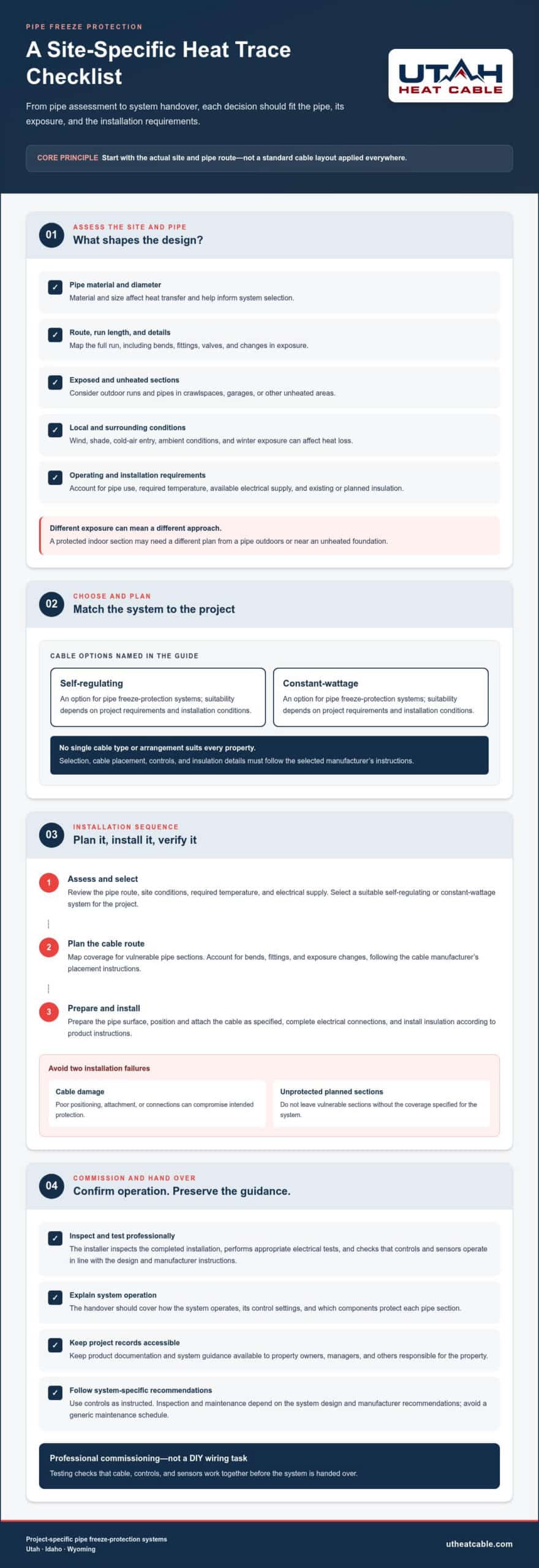
A pipe running outdoors faces different freeze risks from one routed through a crawlspace, garage, or other unheated area. Wind exposure, shade, cold-air entry, and how the pipe is used can all affect heat loss. That’s why pipe heat trace installation should start with the actual site and pipe route, not a standard cable layout applied everywhere.
Across Utah, Idaho, and Wyoming, winter exposure varies with a property’s location and the pipe’s position in or around the building. A section inside a protected area may need a different approach from a line outside or near an unheated foundation. The design goal is to maintain the pipe’s required temperature under expected conditions. No single cable type or arrangement suits every property. Electric heat tracing provides a broader overview of the technology and its applications, including freeze protection.
What information shapes a pipe heat trace design?
During assessment, the design team considers the pipe material and diameter, the route and length of the run, exposed or unheated sections, and the available electrical supply. Material and size affect heat transfer. Bends, fittings, valves, and changes in exposure can also affect where cable is needed. Existing or planned insulation, ambient conditions, and the temperature the pipe must maintain help inform system selection.
Self-regulating and constant-wattage heat cables are options for pipe freeze-protection systems. The suitable choice depends on the project requirements and installation conditions. Cable selection, placement, controls, and insulation details must follow the selected manufacturer’s instructions. A site-specific assessment helps align these elements with the pipe before installation begins.
How Professional Pipe Heat Trace Installation Works, Step by Step
Once the pipe and site requirements are understood, installation follows a planned sequence. Each stage helps ensure the cable, controls, and insulation work together as intended.
- Assess and select: Review the pipe route, site conditions, required temperature, and electrical supply. Then select a suitable self-regulating or constant-wattage system for the project.
- Plan the cable route: Map the cable run to cover the vulnerable pipe sections. Account for bends, fittings, and changes in exposure, and follow the cable manufacturer’s instructions for placement.
- Prepare and install: Prepare the pipe surface, then position and attach the cable as specified for the selected system. Complete the electrical connections and install insulation according to product instructions. Avoid damaging the cable or leaving planned sections without protection.
These details matter: a cable that is poorly positioned, attached, connected, or insulated may not provide the intended protection. The American Red Cross also discusses preventing frozen pipes, including heat cable as a protective measure. Utah Heat Cable’s licensed electrical contractor team designs and installs project-specific pipe freeze-protection systems, with electrical work planned for the project location and applicable requirements. Explore heat trace products and services for an overview of available system options.
How are pipe heat trace systems tested after installation?
Commissioning is professional work, not a DIY wiring task. The installer inspects the completed installation and performs appropriate electrical tests, then checks that the controls and sensors operate in line with the system design and manufacturer instructions. This confirms that the components work together before the system is handed over.
After Installation: Verify Pipe Protection and Plan Professional Service
A successful pipe heat trace installation includes a clear handover, not just a completed cable run. The installer should explain how the system operates, review the control settings, and provide relevant product documentation. This gives property owners and managers a practical reference for normal operation and helps them identify which components protect each pipe section.
Keep the handover information accessible to everyone responsible for the property. Follow the installer’s guidance when using controls, and don’t change settings without understanding their effect on the system. Inspection and maintenance needs depend on the system design and manufacturer recommendations. For broader technical context, this professional resource on electric heat tracing standards covers system design and related considerations.
What should property managers know after a heat trace system is installed?
Property managers should know which controls operate the heat trace, how to use them as instructed, and where to find product information. Inspection practices vary by installation, so follow the recommendations for the installed cable and controls instead of applying a generic maintenance schedule. Clear records preserve project-specific guidance when building responsibilities change. Beyond thermal management, facility teams often pair heat trace upkeep with routine plumbing care; maintenance specialists like Synergy Trades Group emphasize that clearing blocked drains and ensuring proper flow are essential steps to preventing pipe stress and internal damage.
Utah Heat Cable’s licensed electrical contractor team designs and installs custom pipe freeze-protection systems for residential, commercial, industrial, and HOA properties across Utah, Idaho, and Wyoming. Planning and electrical installation are tailored to the site and applicable requirements, with product instructions guiding system details. Explore heat trace installation guidance for additional information, or review pipe heat trace services to see how professional system planning can support dependable protection.
Protect Vulnerable Pipes Before the Next Freeze
Dependable pipe heat trace installation begins with the pipe’s actual exposure and operating needs, not a one-size-fits-all cable layout. Cable routing, controls, electrical connections, and insulation all contribute to the system’s performance. After installation, a clear handover helps property owners understand how the system works and use its controls as intended.
Because conditions differ from one property to another, professional design and installation provide a practical approach to freeze protection. Utah Heat Cable is a licensed electrical contractor serving Utah, Idaho, and Wyoming, with custom heat-trace system design for residential, commercial, industrial, and HOA properties.
Get started with a system designed around your property’s needs. Explore pipe heat trace installation services and take a confident step toward protecting vulnerable pipes through winter.
Frequently Asked Questions
How is pipe heat trace installed?
Pipe heat trace installation starts with assessing the pipe and site, selecting a compatible cable and control approach, and planning the cable route. The pipe surface is prepared, then the cable is positioned and attached according to its manufacturer’s instructions. Electrical connections and insulation are completed as specified. A qualified installer inspects and tests the system, including its controls, before explaining how to operate it.
Can heat trace be installed on any type of pipe?
Heat trace can be designed for different pipe materials, but not every cable or installation method suits every pipe. Material, diameter, route, exposure, and operating conditions affect the design. The selected cable’s instructions determine compatible applications and placement requirements. A project-specific assessment helps identify an appropriate system for pipes in Utah, Idaho, and Wyoming.
Does pipe heat trace need insulation?
Insulation is often an important part of a pipe heat trace system because it helps reduce heat loss and supports the system design. The required insulation type and installation details depend on the pipe, site conditions, cable, and manufacturer instructions. Install insulation without compromising the cable. The installer can explain the requirements for the completed system.
Should a licensed electrician install pipe heat trace?
Yes. Pipe heat trace includes electrical connections and controls, so professional installation helps address safety and applicable local requirements. Utah Heat Cable is a licensed electrical contractor that designs and installs custom heat-trace systems for residential, commercial, industrial, and HOA properties across Utah, Idaho, and Wyoming. The installer can also test system operation and explain the controls at handover.