
After an overnight Idaho snowfall, a shaded walkway or steep shared driveway can become the spot residents worry about most. Choosing among HOA snow melt systems Idaho communities can use starts with identifying which shared areas carry the greatest safety concern, not deciding how much pavement to heat.
HOA boards know snow and ice require attention, but electrical capacity, operating controls, and installation scope can be harder to assess. This guide explains how to prioritize areas based on slope, shade, drainage, foot traffic, and resident needs, then compare system approaches and controller options. It also covers what site details and electrical information to gather before contacting an installer, so your board can approach a professional assessment with clear priorities. Conditions vary across Idaho, just as they do in Utah and Wyoming, so planning should reflect the property itself.
Key Takeaways
- A snow melt system heats selected outdoor areas. It is designed for chosen zones, not to clear every shared surface.
- Assess walkways, entrances, stairs, and driveways based on how residents use them and the conditions of each surface.
- When comparing HOA snow melt systems Idaho communities may consider, weigh self regulating and constant wattage heat cable alongside controller options.
- Before installation, confirm the contractor’s qualifications and project scope, check applicable local code requirements, and verify service availability for your Idaho location.
Why Idaho HOAs consider snow melt systems for shared spaces
An HOA snow melt system provides heating for selected outdoor areas, such as a walkway, entrance, stairway, or section of driveway. It helps manage snow and ice in designated zones, but it is not intended to remove snow from every shared surface. For an overview of system types and components, Snowmelt system explains how electric and hydronic approaches work.
For HOA snow melt systems Idaho communities may consider, site conditions matter as much as surface area. Shade can affect how quickly snow and ice clear, while drainage, surface construction, and recurring problem spots help determine which areas merit assessment. Conditions differ between properties in Idaho, Utah, and Wyoming. Boards should document their own site rather than assume another community’s layout or winter experience applies.
Which shared areas should an Idaho HOA assess first?
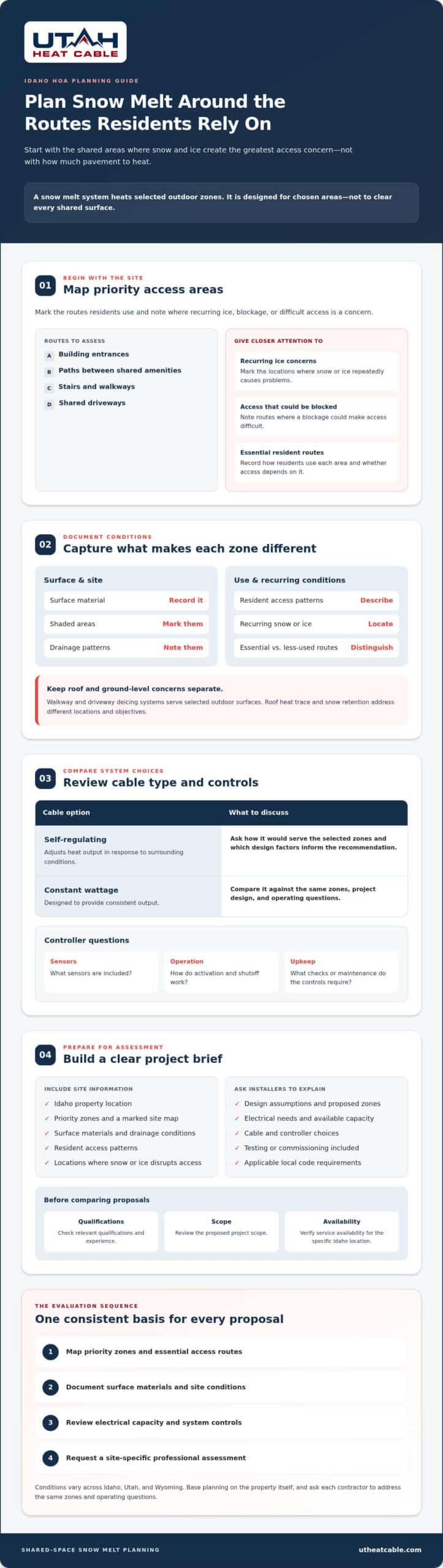
Start with the routes residents rely on. Mark building entrances, paths between shared amenities, stairs, and driveways. Give closer attention to areas with recurring ice concerns and routes where a blockage could make access difficult. A simple site map with these locations marked can help the board explain its priorities during a professional assessment.
Keep ground level and roof concerns distinct. Sidewalk and driveway deicing systems serve selected outdoor surfaces. Roof heat trace and snow retention address different locations and objectives. If the concern is roof ice, consult roof specific HOA ice dam prevention guidance rather than treating it as a walkway or driveway project.
Before discussing a design, note the surface type, shaded areas, drainage patterns, and places where snow or ice repeatedly causes problems. Add how residents use each route and whether access depends on it. These observations give an installer useful context for evaluating suitable zones and system options.
How Idaho HOA boards can evaluate snow melt system options
A clear evaluation sequence helps boards compare proposals on the same terms: map priority zones, document surface materials and conditions, review available electrical capacity, then request a site assessment. When mapping, distinguish essential access routes from areas that are used less often, and record where ice repeatedly forms. These steps give an installer a practical starting point for matching the system to the property. A U.S. Office of Scientific and Technical Information paper on design of pavement snow melting systems also illustrates why pavement, heating requirements, and energy source belong in the design discussion.
Self regulating and constant wattage heat cable are two options to compare. Broadly, self regulating cable adjusts its heat output in response to surrounding conditions, while constant wattage cable is designed to provide consistent output. The right choice depends on the project design. Ask the installer to explain how each option would serve the selected zones and what factors informed the recommendation. A side by side cable comparison can help the board review the options before deciding.
Controller options affect how a system is operated. Ask what sensors are included, how activation and shutoff work, and what routine checks or maintenance the controls require. Have the installer confirm the project’s electrical needs rather than assuming the existing supply can support the proposed zones. If the board is reviewing multiple proposals, ask each contractor to address the same zones and operating questions.
What should an HOA include in a snow melt project brief?
List the property’s Idaho location, priority areas, surface materials, resident access patterns, and known drainage conditions. Include a site map and note where snow or ice regularly disrupts access. Ask prospective installers to explain design assumptions, electrical requirements, controller choices, and what testing or commissioning is included. Verify availability for your specific location and confirm which local code requirements apply. This brief gives the board a consistent basis for reviewing proposed HOA snow melt systems Idaho projects.
Boards can also review Utah Heat Cable’s deicing and controller offerings as they prepare questions for a site assessment. The company designs custom heat trace and snow melt solutions for HOA properties in Utah, Idaho, and Wyoming.
Plan an Idaho HOA snow melt installation with a qualified contractor
A sound proposal connects each selected zone to the surface it serves, available electrical capacity, and the controls that will operate it. A walkway, stairway, and driveway may have different construction and access needs, so a site specific design should explain how those conditions shape the system. For HOA snow melt systems Idaho boards should also confirm current service availability for their property’s specific location.
Before comparing bids, check the contractor’s relevant qualifications and experience, the proposed project scope, and who will review electrical capacity and applicable local requirements. Requirements can differ by Idaho jurisdiction. Confirm which code requirements apply with the local authority having jurisdiction rather than relying on assumptions. Boards in Utah and Wyoming can use the same property specific approach when reviewing projects in those states.
What to ask before approving an HOA snow melt proposal
Request a written scope that identifies the heated areas, design assumptions, proposed controls, and who is responsible for commissioning. Ask how the design accounts for surface construction and power supply, who verifies local requirements, and what the board should expect during handover. Check that the proposal addresses each priority area from the board’s project brief, and ask the contractor to explain any exclusions. Clear answers make it easier to compare proposals and understand what is included.
For additional planning context, review the company’s heat cable guidance. Utah Heat Cable designs custom snow melt solutions for HOA properties and is a licensed electrical contractor. Boards can discuss their property and selected zones with the company, while confirming Idaho availability for their specific location. Its sidewalk and driveway deicing systems may also be relevant to the areas the board is assessing.
Prepare your HOA for a safer winter
A thoughtful snow melt plan begins with the shared areas residents rely on most, then matches selected zones to their surfaces, site conditions, electrical capacity, and control options. Comparing system approaches and requesting a site specific assessment can help your board make a clear, informed decision without assuming every walkway or driveway needs heating.
For HOA snow melt systems Idaho communities are considering, confirm the contractor’s qualifications, project scope, local code review responsibilities, and service availability for your property’s location. Utah Heat Cable designs custom heat trace and snow melt solutions for HOA properties, is a licensed electrical contractor, and lists Idaho among its service areas. Verify current qualifications and availability for your project.
Ready to discuss your community’s priorities? Discuss an Idaho HOA snow melt project with Utah Heat Cable. Share your priority zones and site conditions to start a conversation about a custom plan for your property.
Frequently Asked Questions
Can an HOA install a snow melt system on shared sidewalks in Idaho?
It may be feasible, but suitability depends on the property layout, sidewalk construction, available electrical capacity, and local review. A heated system is intended for selected areas, not necessarily every sidewalk or HOA property. Document priority sections and surface details, then ask a qualified contractor to assess the site and confirm which requirements apply in the property’s Idaho jurisdiction.
How does an HOA choose which areas should have snow melt?
Start by mapping shared routes and entrances, then rank them by resident use, recurring snow or ice problems, access needs, and site conditions. For example, an entrance used daily may warrant review before a lightly used path. An assessment can help determine which zones suit a system, but heating should not be treated as a guarantee that an area will remain ice free.
What should an Idaho HOA ask a snow melt contractor?
Ask the contractor to explain design assumptions, proposed heated zones, electrical requirements, cable and controller choices, installation scope, commissioning responsibilities, and maintenance needs. Verify the contractor’s qualifications and ask who will confirm requirements with the local authority having jurisdiction. A clear proposal should state what work is included and identify assumptions, so the board can compare options on a consistent basis.
How much does an HOA snow melt system cost?
Pricing depends on the areas included, site conditions, surface construction, electrical work, and selected controls. Since each property and project scope differs, a general figure may not reflect your HOA’s needs. Request a site specific proposal that itemizes the work, identifies design assumptions, and explains what is included before the board approves a project.