
A safe heated walkway starts with site-specific design, not simply choosing a heating cable. If you’re searching for heated walkway installers near me, the closest result may not be the right fit unless the team can assess your walkway and explain how the electrical design suits the site. Snow and ice can make paths slippery, while repeated clearing takes time. The right system depends on the walkway’s surface, how people use it, and the controls selected.
This guide explains what to expect from a professional assessment and installation, which questions can help you evaluate an installer’s electrical qualifications and relevant experience, and how to compare proposals by scope instead of cable alone. Utah Heat Cable designs and installs custom sidewalk and walkway de-icing systems as a licensed electrical contractor serving Utah, Idaho, and Wyoming. You’ll also learn what to confirm about local service coverage before arranging a consultation.
Key Takeaways
- A heated walkway is a designed snow-melt system. Walkway dimensions, surface, drainage, exposure, and pedestrian use all inform its design.
- When comparing heated walkway installers near me, confirm local service coverage, electrical qualifications, and the details in each written scope.
- Ask how the proposed controls, power needs, and surface preparation fit your walkway and its recurring winter conditions.
- Before contacting an installer, note the walkway’s location, layout, surface, and drainage concerns so you can discuss the project clearly.
Heated Walkway Installers Near Me: What a Site-Specific System Does
A heated walkway is a designed snow-melt system that helps manage snow and ice along pedestrian routes. Electric heating cables are installed as part of the walkway assembly, with the layout planned for the particular site. For a general overview of system types and how snowmelt works, see Snowmelt system.
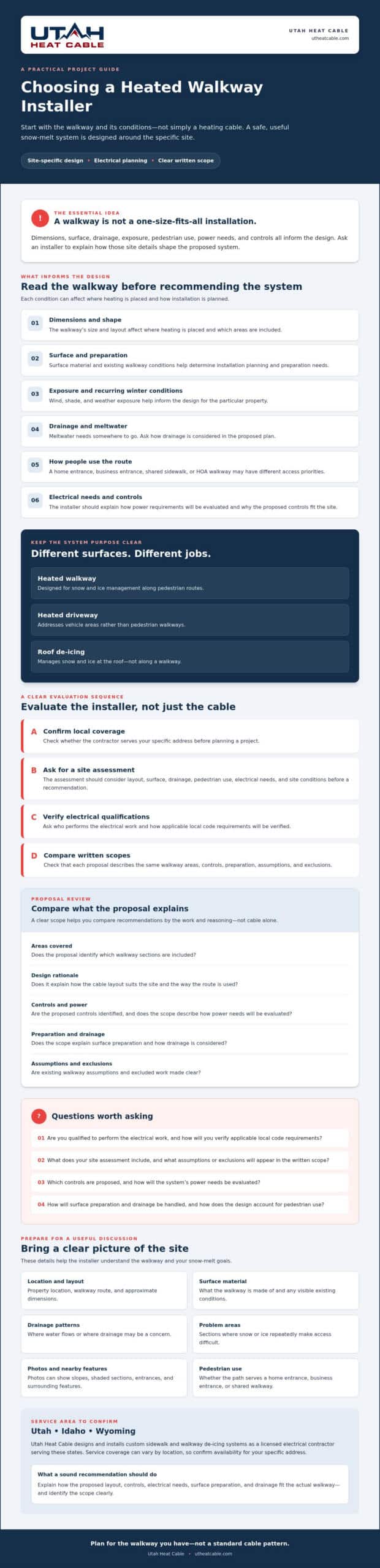
There’s no one-size-fits-all cable pattern. The walkway’s dimensions and shape affect where heating is placed, and the surface influences installation planning. Wind, shade, and weather exposure also help inform the design. Drainage is another key consideration because meltwater needs somewhere to go. The installer should also understand how the route is used, including which sections need attention most. Ask how each factor shapes the proposed layout rather than assuming the system will clear every area in every condition.
A heated walkway is designed for pedestrian routes, driveway heating addresses vehicle areas, and roof de-icing manages snow and ice at the roof. These systems serve different surfaces and purposes. A heated driveway installation guide can help you explore the separate requirements of driveway heating.
Where heated walkways can help across Utah, Idaho, and Wyoming
Walkway snow melting may be considered for a home path, a business entrance, shared sidewalks, or HOA walkways where winter conditions make regular access a concern. The right design depends on the property, local climate, layout, drainage, and how people use the route. Utah Heat Cable designs and installs custom sidewalk and walkway de-icing systems in Utah, Idaho, and Wyoming. Since coverage can vary by location, confirm service availability for your specific address before planning a project. You can review the company’s sidewalk and driveway de-icing systems to understand its relevant services.
How to Evaluate Heated Walkway Installers Near You
Use a clear sequence to narrow your options. First, check whether the contractor serves your specific address. Then discuss the walkway’s layout, surface, drainage, and everyday use. Ask about the contractor’s electrical qualifications and how applicable code requirements will be addressed. Finally, compare written scopes side by side. Check whether they describe the same areas, controls, preparation, and exclusions before weighing the recommendations.
A site assessment should come before a system recommendation because the design depends on the walkway, its electrical needs, and how the route is used. Ask what the assessment covers and how the proposed cable layout and controller fit the site. Clarify how power requirements will be evaluated, what surface preparation may be needed, how drainage is considered, and which assumptions the proposal makes about the existing walkway. For context, the FAA’s advisory circular outlines minimum performance requirements for heated pavement in its aviation context. It isn’t a substitute for confirming requirements that apply to your project locally.
Questions to ask before requesting a heated walkway installation
- Are you qualified to perform the electrical work, and how will you verify the applicable local code requirements?
- What does your site assessment include, and what assumptions or exclusions will appear in the written scope?
- Which controls are proposed, and how will the system’s power needs be evaluated?
- How will surface preparation and drainage be handled, and how does the design account for pedestrian use?
Compare proposals by matching their scope, design rationale, controls, and exclusions. Check that each one identifies the walkway areas covered and explains why the proposed approach suits the site. If an estimate recommends a system without explaining how it fits your property, ask for the reasoning before moving forward. To review relevant offerings, see Utah Heat Cable’s heat cable and snow-melt services. Searching for heated walkway installers near me is a useful first step. A clear, site-based proposal helps you judge whether a team is equipped for the actual work.
Plan Your Heated Walkway Installation with a Local Specialist
A productive first discussion starts with a clear picture of the site. Note the property’s location, the walkway’s layout and approximate dimensions, the surface material, drainage patterns, and the areas where snow or ice repeatedly cause difficulty. Photos can help show slopes, shaded sections, entrances, and nearby features that may affect planning. Include how people use the path, such as whether it serves a home entrance, business entrance, or shared walkway, so the installer can understand your snow-melt goals.
For people searching for heated walkway installers near me, recommendations should reflect the property, not a standard cable layout. Electrical requirements, suitable controls, surface preparation, and installation scope depend on site conditions. Ask the installer to explain the proposed approach and identify details that still need verification. Don’t assume a consultation establishes a project schedule. Timing depends on the design and work involved.
What happens during a project consultation?
The conversation should connect your walkway’s purpose and winter concerns with its physical conditions. The installer can discuss possible system approaches, electrical considerations, controls, and what the written scope covers. If details such as existing electrical capacity, drainage, or local requirements need further review, ask how they will be confirmed before decisions are finalized. For additional background, review the company’s snow-melt system planning information.
Utah Heat Cable designs and installs custom snow-melt systems for sidewalks and walkways and serves Utah, Idaho, and Wyoming. Confirm that your specific address is within its current service area. If you’re ready to discuss a site-specific project, contact Utah Heat Cable about a site-specific walkway project.
Choose a Walkway Plan Built for Your Property
The right heated walkway begins with a site-specific assessment, clear electrical planning, and a written scope that explains the proposed controls and work. As you compare heated walkway installers near me, look beyond proximity. Confirm service coverage and relevant experience, then check how the recommendation accounts for your walkway’s surface, drainage, and use.
Utah Heat Cable identifies itself as a licensed electrical contractor and offers custom heat-trace solutions for residential, commercial, industrial, and HOA properties. Its listed service region includes Utah, Idaho, and Wyoming, though you should confirm coverage for your address. A focused conversation can help clarify what your project may require before you decide on next steps.
Request a conversation about your walkway project. Ask about the site assessment, electrical planning, proposed controls, and written scope to start evaluating a plan for your property.
Frequently Asked Questions
How do I find a heated walkway installer near me in Utah, Idaho, or Wyoming?
Search for heated walkway installers near me, then check whether each contractor serves your specific address and has experience designing sidewalk or walkway snow-melt systems. Utah Heat Cable lists Utah, Idaho, and Wyoming among its service regions and identifies itself as a licensed electrical contractor. Confirm current coverage for your location, then ask how the installer assesses site conditions before recommending a system.
What should I ask a heated walkway contractor before hiring?
Ask whether the contractor is qualified to perform the electrical work and how applicable local code requirements will be addressed. Find out what the site assessment covers, which controls and power requirements the design assumes, and how surface preparation and drainage fit the plan. Request a written scope that identifies included work, exclusions, and site details that still need verification.
Can a heated walkway be installed on an existing sidewalk?
It may be possible to add a snow-melt system to an existing sidewalk, but feasibility depends on the surface and site conditions. Ask the installer to assess the walkway, drainage, electrical requirements, and installation approach before recommending a retrofit. The contractor should explain any surface work involved and whether the existing walkway is suitable for the proposed design.
Is a heated walkway system suitable for an HOA or commercial property?
It can be considered for HOA or commercial pedestrian areas, such as shared sidewalks and business entrances. The design should reflect the walkway’s size, use, surface, drainage, and site conditions rather than assume a standard layout. Utah Heat Cable offers custom heat-trace solutions for HOA and commercial properties. Confirm that your location is within its current service area.