
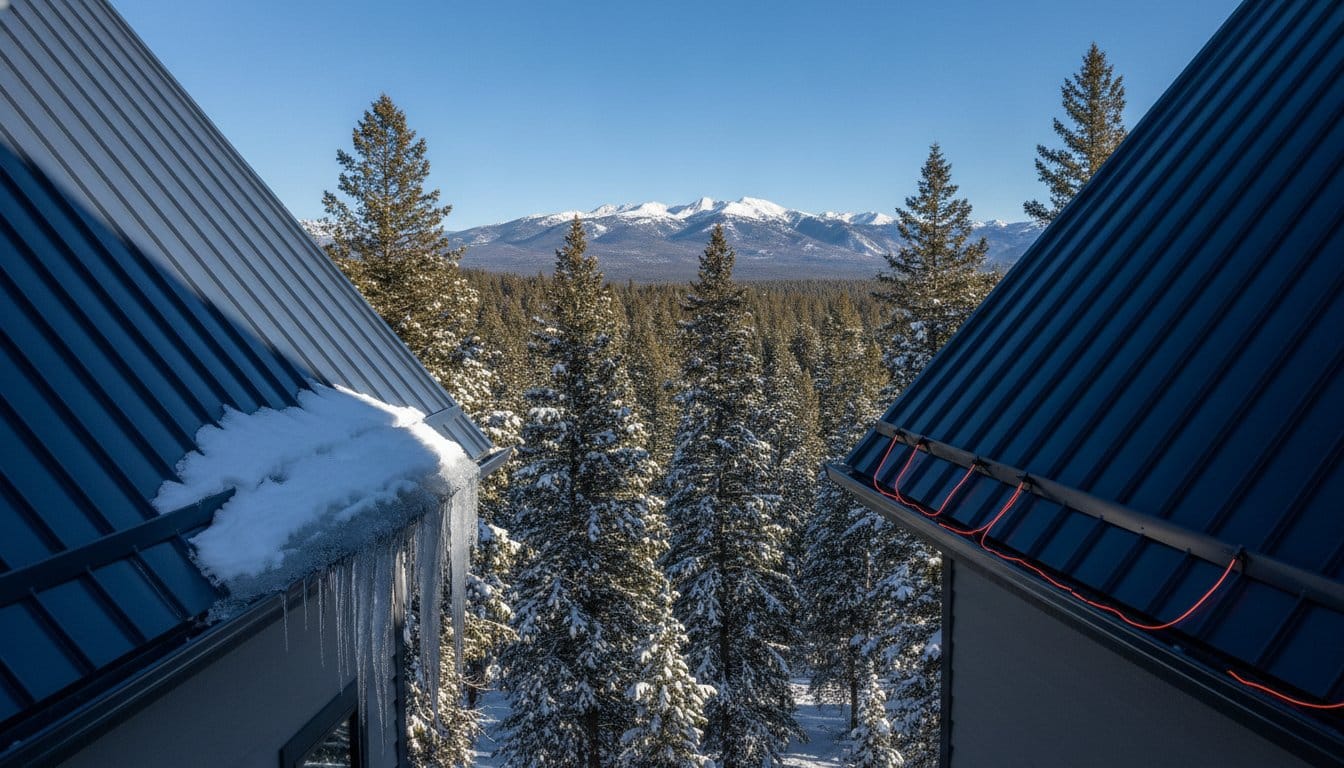
If you think your metal roof is immune to winter damage just because it’s slick, you might be in for an expensive surprise when the first heavy snow slide hits your gutters. You likely chose metal for its durability and premium look, so it’s disheartening to see ice dams causing leaks or massive snow loads threatening your landscaping. It’s a common frustration for homeowners who find that standard, big-box store cables simply can’t handle the unique thermal demands of a steel or aluminum surface. Finding the best roof heat cable for metal roofs requires looking beyond basic heat; you need a system designed to survive thermal expansion and the physical force of sliding ice.
In this 2026 buyer’s guide, you’ll discover why specialized self-regulating cables are the only professional choice for protecting your investment. We’ll break down the technical differences between constant wattage and self-regulating systems, explain how to integrate snow retention for total safety, and show you how a professional installation ensures your property meets strict Utah electrical codes. This guide provides a clear roadmap to a permanent, energy-efficient solution that keeps your home dry and your gutters intact all winter long.
Key Takeaways
- Metal roofs conduct heat more rapidly than other materials, requiring specialized cable layouts that account for rapid temperature changes and sliding snow loads.
- Self-regulating technology is superior for metal surfaces as it prevents overheating and lowers energy costs by adjusting heat output based on the ambient temperature.
- Choosing the best roof heat cable for metal roofs requires high-durability outer jackets and specific wattage levels suited for high-altitude environments.
- Maintaining your roof warranty depends on using non-penetrating mounting clips that secure the system without piercing the metal panels.
- A custom-designed system installed by a licensed specialist ensures your home remains protected while staying fully compliant with local electrical codes.
Why Metal Roofs Require a Specialized Heat Cable Approach
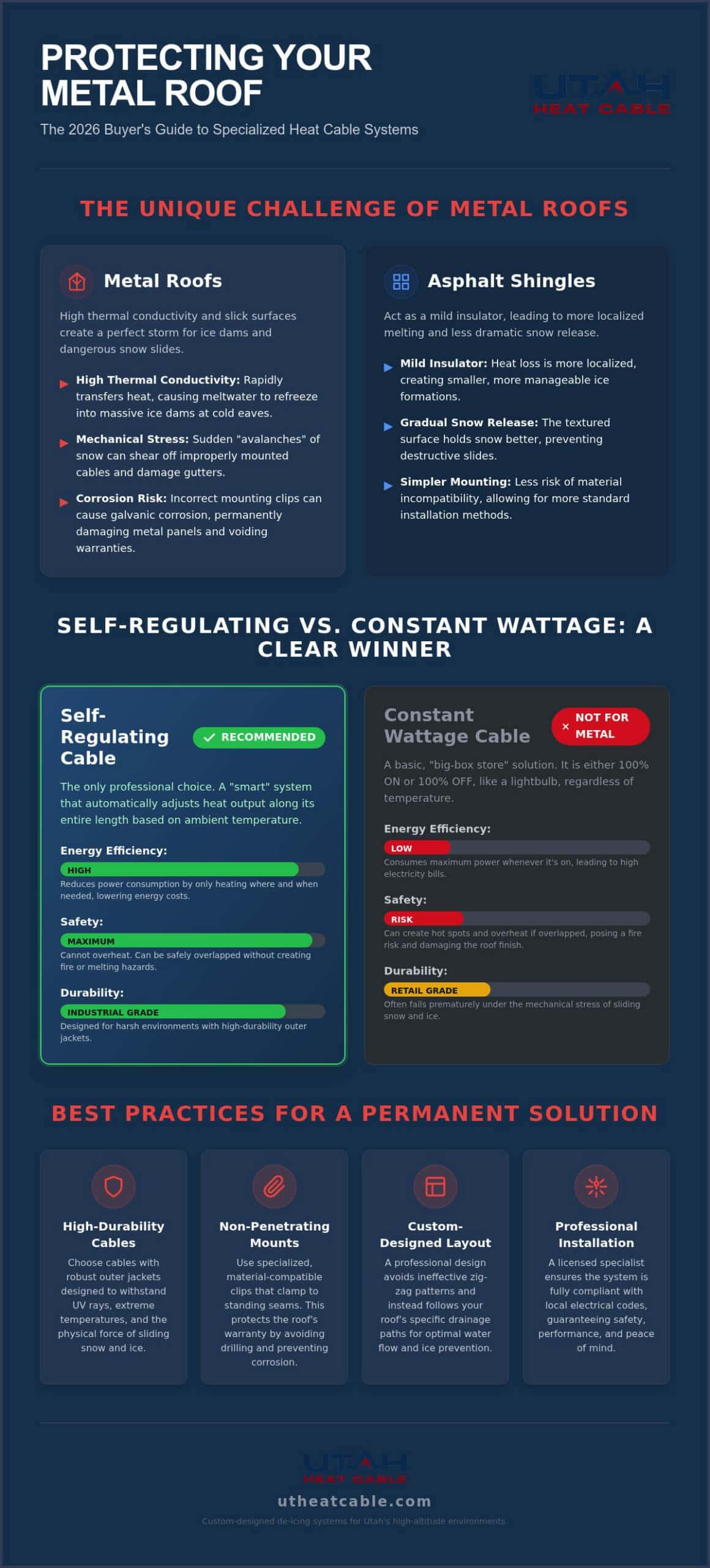
Metal roofs are exceptional for shedding snow, but their high thermal conductivity creates a unique set of challenges that standard roofing materials don’t face. Unlike asphalt shingles, which act as a mild insulator, metal panels transfer heat rapidly across their entire surface. This leads to uneven melting and rapid refreezing at the cold eave. Finding the best roof heat cable for metal roofs isn’t just about melting ice; it’s about managing a surface that reacts to temperature changes almost instantly. If you use a generic system designed for shingles, you’ll likely find it’s either insufficient or dangerously prone to failure.
The Metal Roof vs. Shingle Ice Dam Dynamic
On a shingle roof, heat from the home usually stays localized. Metal roofs are different. The panels conduct heat from the warm attic areas down to the overhangs where the metal is significantly colder. This temperature differential causes meltwater to refreeze into thick, heavy ice blocks. Because metal is non-porous, these ice dams don’t just sit on top; they can create a massive weight load that threatens the structural integrity of your gutters and fascia. In the high-altitude environments of Utah and Idaho, these ice dams can grow to several inches thick in a single night if the thermal cycle isn’t broken by a professional de-icing system.
Snow Slides and Cable Displacement
The slick surface of a metal roof is its best feature and its biggest liability. When a layer of snow begins to melt, a thin film of water forms between the metal and the snow pack. This creates an avalanche effect where hundreds of pounds of snow can slide off at once. If your de-icing system is improperly mounted, this moving mass will shear the cables right off the roof. This is why we prioritize Trace heating technology that is secured with heavy-duty, non-penetrating clamps. At Utah Heat Cable, we often integrate roof snow retention systems with our heat cable designs to prevent these slides from damaging your equipment or your landscaping.
Beyond the physical weight of snow, you must consider the long-term health of your roof’s finish. Standard installation methods often rely on adhesive or generic clips that can fail or, worse, cause galvanic corrosion. This chemical reaction occurs when two dissimilar metals touch in the presence of moisture, leading to rust and permanent damage to your panels. Our approach ensures that every component is material-compatible, protecting your roof’s warranty and its aesthetic appeal. We avoid the standard zig-zag patterns that fail on standing seams, opting instead for a custom layout that follows the natural drainage paths of your specific roof profile.
- Thermal Conductivity: Metal spreads heat quickly, leading to larger ice dams at the eaves.
- Mechanical Stress: Sliding snow can rip cables and clips from the roof surface.
- Material Compatibility: Incorrect clips can lead to corrosion and finish failure.
- Layout Precision: Standing seams require specialized routing to keep drainage channels open.
Self-Regulating vs. Constant Wattage: Which Wins for Metal?
Choosing the best roof heat cable for metal roofs requires understanding the fundamental difference between retail grade “heat tape” and industrial self-regulating systems. Constant wattage cables operate like a simple light bulb; they are either 100% on or 100% off. While these are less expensive initially, they consume a significant amount of electricity regardless of the actual temperature. On a metal roof, which already fluctuates rapidly in temperature, this lack of control is inefficient and potentially damaging to the roofing finish.
The Science of Self-Regulating Cables
Self-regulating technology uses a specialized carbon-polymer core that sits between two parallel bus wires. As the ambient temperature drops, the core microscopically contracts, creating more electrical paths and increasing heat output. When the sun hits your metal panels and the temperature rises, the core expands and reduces its power consumption. A self-regulating heat cable is a smart de-icing solution that utilizes a conductive polymer core to limit its own heat output, typically maintaining a safe maximum temperature below 150 degrees Fahrenheit. Unlike constant wattage versions, these cables can safely overlap without the risk of a localized “hot spot” causing a fire or melting the cable’s jacket.
Metal-Specific Safety Considerations
Metal roofs experience significant thermal expansion and contraction throughout the day. Your de-icing system must be durable enough to flex along with the steel or aluminum panels without cracking. Professional-grade self-regulating cables feature high-quality, UV-stabilized outer jackets, often made of fluoropolymer, which resist the intense sun exposure common in high-altitude regions like Utah and Idaho. These systems are designed to last ten years or more, whereas cheap retail alternatives often fail after just two seasons.
Safety is also a matter of electrical code. The National Electrical Code (NEC) requires specific ground-fault protection for all roof de-icing systems to prevent electrical shocks and fire hazards. Because metal is a conductor, any breach in a low-quality cable’s insulation could energize the entire roof surface. This makes professional installation by a licensed contractor essential. While these systems are highly effective, they work best when paired with Proper insulation and roof ventilation to reduce the initial heat loss that causes snow to melt from underneath. If you’re unsure which technology fits your specific roof profile, our team can help you select the right self-regulating heat cable for your home’s unique needs.
- Energy Savings: Self-regulating cables only draw the power they need based on real-time weather.
- Safety: No risk of overheating when cables cross or touch.
- Longevity: Industrial jackets resist UV damage and the abrasive force of sliding ice.
- Compliance: Built to meet strict electrical safety standards for conductive metal surfaces.
Evaluating the Best Heat Cables for Metal Roof Durability
Durability on a metal roof is a different beast than on a shingle roof. Because metal panels are non-porous and slick, the cables are constantly subjected to the mechanical scrubbing action of sliding ice packs. The best roof heat cable for metal roofs must feature an outer jacket that can handle this friction without wearing thin. If the jacket fails, moisture enters the core, causing the system to trip the breaker or fail entirely just when you need it most. In the high-desert and alpine regions of the Intermountain West, selecting the right materials is the difference between a ten-year solution and a one-winter mistake.
Jacket Material and UV Resistance
There are two primary materials used for heat cable jackets: polyolefin and fluoropolymer. While polyolefin is a standard choice for many residential applications, fluoropolymer is the gold standard for metal roofing. It offers superior resistance to the chemical corrosion that can occur on metal surfaces and provides a much higher level of protection against mechanical damage. In Idaho and Wyoming, where high-altitude UV exposure is intense, a low-quality jacket will become brittle and crack within a few seasons. Fluoropolymer remains flexible and intact, ensuring the conductive core stays protected from the elements for its entire service life.
Wattage Requirements for Heavy Snow
Finding the right wattage per foot is essential for balancing performance with energy costs. For most Utah residential metal roofs, 6 to 8 watts per linear foot is the ideal sweet spot. This provides enough thermal energy to maintain melt paths without overworking your electrical panel. However, in deep-snow valleys or for industrial applications with massive roof spans, moving to 10 or more watts may be necessary to keep up with the sheer volume of snow.
When planning these higher-wattage systems, you must account for the start-up current. When a self-regulating cable is cold, it pulls a significantly higher amount of electricity for the first few seconds of operation. If your circuit breakers aren’t sized correctly by a licensed professional, the system will trip every time it tries to turn on. We carefully calculate these loads to ensure your home’s electrical infrastructure can handle the demand safely.
- Bus Wire Gauge: We utilize thicker 14 or 16-gauge bus wires to allow for longer cable runs without a drop in heating performance.
- Lifespan: While retail cables often last only two years, professional-grade systems are designed to perform for up to a decade.
- Mechanical Strength: High-tensile braiding inside the cable helps it resist the physical pulling force of sliding snow.
- Warranty: Professional-grade cables come with robust manufacturer warranties that specifically cover use on metal surfaces.
Investing in higher-quality components might seem like a larger step initially, but it prevents the recurring labor costs of replacing failed systems. A durable, well-specified cable ensures that your metal roof continues to look and perform exactly as it should, regardless of how many feet of snow the winter brings.
Planning Your Metal Roof De-Icing Layout and Mounting
Even the best roof heat cable for metal roofs won’t solve your ice dam issues if the layout fails to create a clear drainage path. Metal roofs require a custom design approach because every panel profile reacts differently to snow loads. Whether you have a standing seam or a screw-down system, the goal is to move water from the roof, through the gutters, and out the downspouts without it refreezing. If the water has nowhere to go once it melts, you’re simply moving the ice dam from your eaves to your gutters.
Non-Penetrating Mounting Solutions
Drilling into a metal roof is the fastest way to void your warranty and invite permanent leaks. For standing seam roofs, we utilize specialized seam-clamp technology. These clamps grip the vertical ribs of the panels securely without piercing the metal skin. If your roof uses exposed fasteners or metal shingles, we employ industrial adhesive-based mounting systems that maintain the roof’s integrity. We also incorporate thermal expansion loops into every layout. These loops provide the necessary slack for the cable to move as the metal panels expand and contract in the intense high-altitude sun, preventing the cable from snapping or pulling its mounts loose.
Gutter and Downspout Integration
Melting snow on your roof is only half the battle. If that water hits a frozen gutter or downspout, it will back up and form a secondary ice dam that can pull the gutter right off the fascia. We trace the self-regulating cable through the entire gutter and down the downspout, often extending the run to the frost line or the daylight exit. Within the gutter, we use specialized spacers to keep the cable runs separated. This prevents the cables from touching, which can cause localized overheating and premature burnout. This integrated approach ensures the gutter remains clear enough to handle the weight of the equipment and the constant flow of melting ice during a heavy storm.
A truly effective de-icing system functions as a complete chain from the peak of the roof to the ground. If one link is missing, the system fails, and your property remains at risk. Because every home in Utah, Idaho, and Wyoming faces different wind patterns and snow depths, a generic zig-zag pattern is rarely enough. You need a system that accounts for the specific drainage channels of your roof profile. To ensure your home is protected with a custom layout, you can request a design consultation from our team of local specialists.
- Standing Seam: Uses non-penetrating clamps to protect the roof’s weather-tight seal.
- Screw-Down Panels: Requires adhesive mounting to avoid creating new leak points.
- Downspout Tracing: Essential for preventing gutter backups and structural damage.
- Thermal Loops: Necessary to accommodate the significant movement of metal roofing.
The Utah Heat Cable Advantage: Professional Design and Installation
While selecting the best roof heat cable for metal roofs is a critical first step, the hardware is only as effective as the design behind it. At Utah Heat Cable, we don’t just install products; we engineer custom de-icing solutions tailored to the specific micro-climates of Utah, Idaho, and Wyoming. A system that works in the Salt Lake Valley might be completely inadequate for a home in Jackson Hole or Ketchum. Our design-build approach ensures that your system accounts for wind-driven snow, sun exposure, and the unique thermal properties of your specific metal panels.
As a licensed electrical contractor, we ensure every installation meets the National Electrical Code requirements for safety and performance. This is especially vital on metal roofs, where the entire surface is conductive. We often combine our self-regulating heat cable with integrated roof snow retention systems. This dual-layer protection prevents snow from sliding off and damaging the cables while simultaneously preventing ice dams from forming. To maximize energy efficiency, we utilize automated controller options equipped with temperature and moisture sensors. This ensures your system only draws power when weather conditions actually require it, significantly reducing your monthly operating costs.
Why Design Matters More Than the Cable
Professional design goes far beyond laying out a simple pattern. We map out the “hot spots” where heat loss from your home is most prevalent and the “cold spots” where ice is most likely to anchor. For large-scale residential or commercial projects, we calculate precise voltage drops to ensure that the heating performance remains consistent from the power source to the furthest gutter run. Design dictates performance. This level of technical precision provides the peace of mind that your system will actually perform when a record-breaking storm hits.
Ready for Winter? Contact Utah Heat Cable
The ideal time to secure your home against winter is during the summer and fall months. Once the snow begins to fly, scheduling becomes difficult and installation conditions become hazardous. We provide comprehensive quotes that cover everything from the initial design to the final electrical commissioning. If you’re ready to protect your property with a professional-grade solution, you should Schedule your professional heat cable consultation today and ensure your metal roof is ready for whatever the 2026 winter brings.
- Custom Engineering: Layouts designed for the specific snow loads of your region.
- Code Compliance: Licensed electrical work that meets all local and national safety standards.
- Integrated Safety: Combining de-icing with snow retention for total roof protection.
- Smart Controls: Sensors that manage your system’s energy use automatically.
Secure Your Home Before the First Freeze
Protecting a metal roof requires a blend of high-quality materials and technical precision. As we’ve discussed, the best roof heat cable for metal roofs is a self-regulating system that adjusts to real-time weather while protecting your panels from mechanical stress. By choosing industrial-grade fluoropolymer jackets and non-penetrating clamps, you ensure that your investment remains leak-free and code-compliant for years to come. It’s about more than just melting ice; it’s about preserving the integrity of your property.
Our team at Utah Heat Cable operates as a Licensed Electrical Contractor specialized in standing seam solutions. We understand the specific environmental risks faced by homeowners across Utah, Idaho, and Wyoming. We’re here to provide the peace of mind that comes from a master craftsman’s approach to property protection. If you’re ready to move from concern to resolution, we invite you to Get a Professional Metal Roof De-Icing Quote today. Preparation is the key to a stress-free winter, and we look forward to helping you shield your home against the elements.
Frequently Asked Questions
Can heat cables damage the paint or finish on my metal roof?
Self-regulating heat cables won’t damage your roof’s finish because they maintain a low surface temperature that stays well below the threshold for paint blistering. High-quality fluoropolymer jackets are chemically inert and won’t react with the metal coating. If you use cheap constant wattage cables, however, the risk of localized overheating increases. Professional-grade systems protect both your roof’s aesthetic and its structural integrity.
Will snow sliding off my metal roof pull the heat cables down?
Moving snow packs can easily shear cables from a slick metal surface if the system isn’t secured with specialized standing seam clamps. These non-penetrating mounts are designed to withstand the mechanical force of sliding ice. We often integrate snow retention systems to hold the snow in place, allowing the heat cable to create melt paths safely without being physically displaced by an avalanche effect.
How much does it cost to run a heat cable system on a metal roof?
The monthly cost to operate the best roof heat cable for metal roofs typically ranges from $40 to $200 depending on the system’s length and local utility rates. Self-regulating technology helps keep these costs lower by only drawing full power when temperatures drop. Using automated controllers with moisture sensors ensures the system isn’t running on dry, cold days, which prevents unnecessary energy waste.
Do I need to install snow guards if I have heat cables?
Snow guards are a vital partner to de-icing systems because they prevent massive snow loads from sliding off all at once. While heat cables manage the ice dams at the eaves, snow guards hold the snow pack in place so it can melt gradually. This combination protects your gutters, landscaping, and the heat cables themselves from the physical damage caused by sudden snow slides.
What is the difference between self-regulating cable and heat tape?
Self-regulating cables use a conductive polymer core that adjusts heat output based on the ambient temperature, whereas heat tape provides a constant, unchanging level of heat. This makes self-regulating systems significantly safer for metal roofs as they won’t overheat if the cable overlaps. They are also more energy-efficient because they don’t run at 100% capacity when only a small amount of heat is needed.
Can I install metal roof heat cables myself?
Professional installation is strongly recommended because metal is a conductor, making any electrical error a significant safety hazard. DIY attempts often lead to voided roof warranties if you pierce the panels or use incompatible clips. Licensed contractors ensure the system meets National Electrical Code requirements and functions correctly in high-altitude environments like Idaho and Wyoming where weather conditions are extreme.
How long do professional-grade metal roof heat cables last?
Professional-grade heat cables featuring UV-stabilized fluoropolymer jackets typically last between eight and ten years. While retail-grade cables found in big-box stores may fail after only one or two winters, industrial systems are built to withstand the abrasive force of sliding ice. Investing in a high-quality system ensures you don’t have to pay for repeated labor and replacement costs every few seasons.
Are there specific electrical requirements for a roof de-icing system?
Roof de-icing systems must be UL-listed and comply with National Electrical Code Section 426, which requires specific ground-fault protection. Because metal roofs are conductive, the circuit must be correctly sized to handle the initial “start-up” current that self-regulating cables pull when they are cold. A licensed electrician will ensure your panel has the capacity to run the system safely without tripping breakers.