
A snow melt system maintenance checklist should cover paved areas, post-storm cleanup, corrosion control, and controller settings. Check driveways, steps, and walkways for cracks, loose materials, or uneven spots before cold weather, then wash away storm residue and use an adjustable after-run timer to keep heat running after snowfall and help reduce refreezing.
Even a well-designed system needs attention around the heated surface and its controls to keep walkways safer through a Northern Utah winter. This checklist explains what to inspect before the season, what to clean after a storm, and how timer settings can help limit slick spots. You’ll also see when a recurring surface issue may call for a closer look at your sidewalk or driveway de-icing system.
Key Takeaways
- Inspect paved areas before cold weather and note loose materials or uneven sections that could affect safe access.
- After storms, clear residue from heated surfaces and equipment to help limit corrosion and keep connections clean.
- Choose de-icing materials carefully, since some products can be harsher on concrete and system components than others.
- Review controller settings so an adjustable after-run timer can keep the surface warm after snowfall and help reduce refreezing.
Inspecting driveways, steps and walkways for cracks and uneven areas
Homeowners can handle visual checks and surface cleaning, but internal electrical or hydronic testing calls for a qualified technician. Before cold weather, walk each heated driveway, step and walkway; mark cracks, loose pavers, raised edges and areas where water pools. Repairs before freezing weather can be easier to complete and help prevent small defects from complicating winter access.
- Compare the system type. Driveway and walkway checks focus on paved surfaces, drainage and even heat coverage; roof snow-melt systems need attention to roof areas and their controls.
- Inspect hydronic equipment visually. Look for visible leaks around accessible pipes and equipment, then have a technician assess the boiler, pump, circulation and system operation.
- Maintain electric systems carefully. Keep the surface clear of leaves and debris, and have a technician assess electrical connections and controls rather than opening energized components.
- Set a seasonal routine. Inspect before winter and after storms; note recurring cold spots, tripped controls or slow melting so problems can be diagnosed from a clear record.
- Use safe inspection practices. Keep clear of electrical components and avoid damaging embedded heating elements while removing debris or arranging surface repairs.
For commercial winter maintenance, inspect snowplow truck chassis, steering, suspension and powertrain, and record defects in dated work orders. Test exterior lighting before dispatch so operators can see and be seen. Inspect spreaders for wear, clean buildup, and calibrate material flow to the equipment settings. These records help crews track repairs and identify repeat failures before the next storm.
Address driveway and walkway repairs before colder weather makes the work more difficult. Use the pre-season inspection to identify what needs attention and arrange repairs while conditions allow. Consider visible cracking, loose paving, raised edges, and pooling water so maintenance can be completed before temperatures fall.
Post-storm washing and corrosion control
After a storm, remove snow and rinse de-icer residue from walkways and exposed equipment. Snowplow crews should wash equipment within 24 hours after a storm when practical. Aggressive ice-melt products can reach electrical connections and fittings, where residue may interfere with equipment operation. Before winter, prepare a safe washing routine for the heater area and nearby equipment, keeping water away from electrical components.
- Clear surface residue. Rinse treated pavement after the storm, especially where slush collected, so leftover material doesn’t remain through a freeze.
- Clean equipment carefully. Wash spreaders and exposed fittings, then look for residue around electrical connections before putting equipment back into operation.
- Choose de-icer with care. Some de-icers can damage concrete, so choose products carefully. Calcium chloride- or potassium chloride-based products are significantly less corrosive to fully cured concrete.
- Protect newer concrete. Avoid applying de-icer to concrete less than one year old; use snow removal to keep walkways clear instead.
Before the season, clear leaves and debris from visible sensors and controls, then check for damage. Compare displayed temperature and moisture readings with current conditions. Use the controller’s test function or follow its instructions to check operation. Don’t open electrical housings or spray water directly onto sensors.
After heavy snow, note any area that stays icy despite the heater running. Record the temperature, control status and location, then arrange a system inspection if the same issue returns. Keeping those observations with winter maintenance records can help distinguish sensor trouble from uneven snow coverage or residue that refroze.
Grounds crews should give snow and ice equipment particular attention during cleanup: aggressive ice-melt products can reach electrical connections and fittings. The checklist advises against applying de-icer to concrete less than one year old.
After-run timers to reduce refreezing
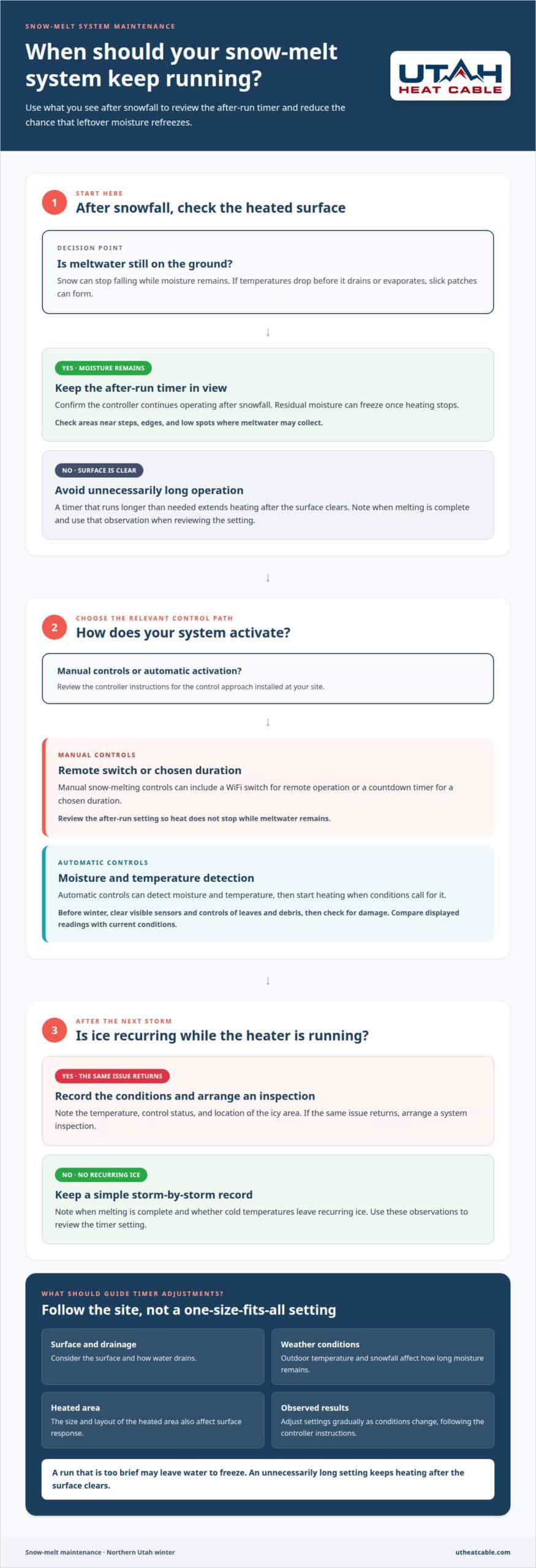
Snow may stop falling while meltwater remains on the ground. If temperatures drop before the moisture drains or evaporates, slick patches can form. Review the controller’s run-time settings as part of your snow melt system maintenance checklist, and follow its instructions for the site’s surface, drainage, and weather conditions.
- Review the after-run setting. Confirm the timer continues operation after snowfall, because residual moisture can freeze once heating stops.
- Match controls to use. Manual snow-melting controls can include a WiFi switch for remote operation or a countdown timer for a chosen duration.
- Check automatic activation. Automatic controls can detect moisture and temperature, then start heating when conditions call for it.
- Watch the surface after storms. Look for meltwater collecting near steps, edges, or low spots, where refreezing can create isolated slick areas.
- Review results after each storm. Note when melting is completed and whether cold temperatures leave recurring ice, then adjust the timer based on those observations.
A snow melt system maintenance checklist should also track how the surface responds to different storms. Drainage, outdoor temperature, snowfall, and the heated area all affect how long moisture remains. A timer that runs too briefly may leave water to freeze; an unnecessarily long setting extends heating after the surface clears. Follow the controller instructions and adjust settings gradually as conditions change.
For a sidewalk or driveway system with controls that need review, explore snow-melt system guidance and compare the control approach with your site’s conditions.
Utah Heat Cable: De-Icing Services
Utah Heat Cable offers De-Icing Services and Sidewalk and Driveway Deicing Systems for properties where recurring ice makes winter access difficult. If a walkway keeps developing slick spots, or a driveway’s heated area needs a more suitable control approach, the system and its operating needs may deserve a closer review. Utah Heat Cable also offers Controller Options, which can help align system operation with the property’s snow-melting needs. For a roof-focused concern, Roof Snow Retention is another relevant offering. These options serve different situations, so consider whether the concern is pavement icing, system control, or snow retention. Northern Utah property owners can visit Utah Heat Cable’s de-icing services page to explore the available options.
Prepare Your Walkways for the Next Winter
Use a snow melt system maintenance checklist as a working record, not just a seasonal reminder. Note recurring icy locations, changes in surface condition, and controller concerns so future maintenance can respond to the property’s actual needs. If ongoing ice makes your driveway or walkway difficult to manage, Utah Heat Cable offers De-Icing Services, Self Regulating Heat Cable, and Constant Wattage Heat Cable. These options can help address different de-icing needs without treating every property as though it has the same layout or operating requirements.
Plan ahead before winter weather returns, especially if a system needs attention beyond routine surface care. Visit Utah Heat Cable to explore de-icing options and take a practical next step toward better-prepared walkways.
Frequently Asked Questions
What routine maintenance does a snow melt system need before winter?
Follow the system manufacturer’s maintenance instructions and arrange a system-specific inspection if controls or heating performance change. Keep the controller model, installation details, and previous service notes together to help identify maintenance needs and recurring faults. Don’t open electrical enclosures or adjust internal components yourself. In Utah, complete preparations before sustained cold weather arrives.