
What should a commercial roof heat trace system include to help protect a building? The answer isn’t simply more cable. Ice can block gutters, valleys, and downspouts, leaving meltwater with nowhere clear to go. Commercial roof heat trace systems work best when planned around the roof’s connected drainage paths, rather than applied as a one-size-fits-all fix.
Property teams managing broad roof areas, multiple drains, and electrical requirements need a plan that accounts for the whole building. This guide explains where heat trace can help, which roof and drainage details shape the design, and why installation by a qualified electrical team matters. Utah Heat Cable designs and installs custom commercial heat-trace solutions with a licensed electrical contractor team serving Utah, Idaho, and Wyoming. You’ll learn how cable types and controller options can fit into a coordinated plan for freeze-thaw conditions.
Key Takeaways
- Learn how melting snow can refreeze in gutters and drains, interrupting runoff and creating risks around the building.
- See how commercial roof heat trace systems can be planned around priority roof zones and connected drainage routes.
- Use a practical checklist to document roof layout, drainage concerns, access, and electrical conditions before planning a project.
- Understand the steps for assessment and installation, including the role of licensed electrical work performed according to applicable code.
How commercial roof heat trace systems protect roof drainage
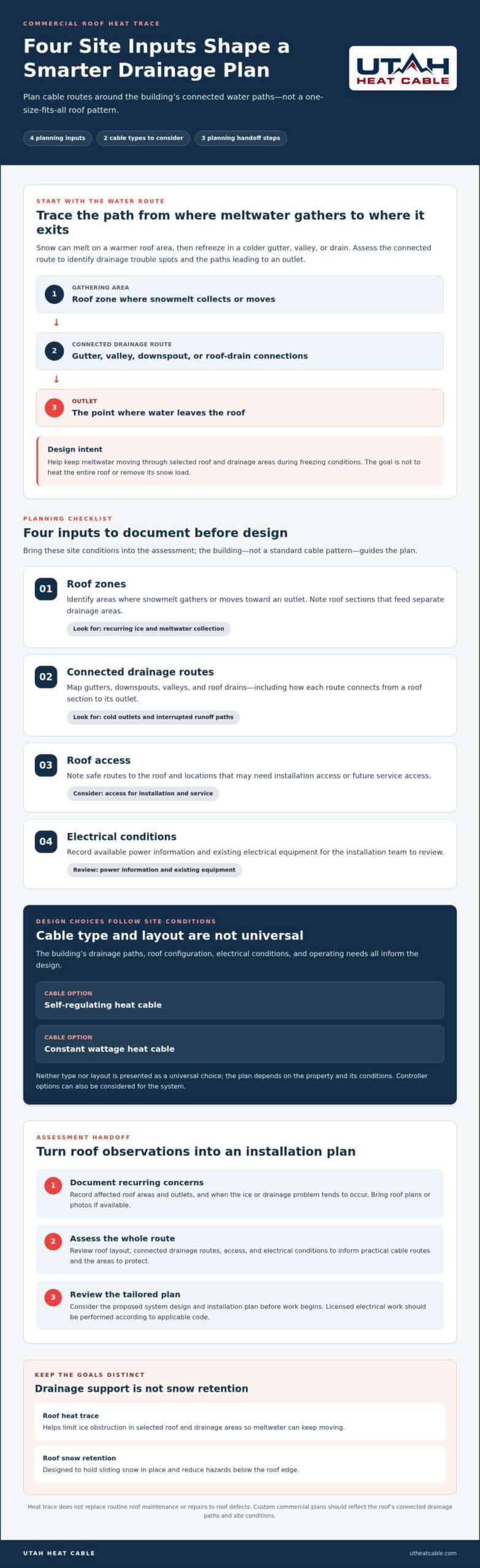
Roof heat trace uses heating cable in selected roof and drainage areas to help keep meltwater moving during freezing conditions. Snow can melt on a warmer part of the roof, then flow into a cold gutter, valley, or drain and refreeze. As ice builds up, it can restrict the route water needs to leave the roof, increasing the risk of pooling and water reaching vulnerable areas of the building.
For commercial properties, the goal isn’t to heat the entire roof or remove its snow load. It’s to coordinate cable placement with the routes water follows off the building. A well-planned system focuses on drainage trouble spots and the connected paths leading to an outlet, rather than treating every roof area as a heating zone. Heat trace also doesn’t replace routine roof maintenance or repairs to roof defects. For a general overview of the technology, heat tracing systems are also used for freeze protection in other applications.
Which commercial roof areas may need heat trace?
Coverage depends on the building’s roof geometry and drainage layout. A large roof may have multiple sections feeding separate gutters, internal drains, downspouts, or valleys. If one section repeatedly sends meltwater toward a cold outlet, assess the route as a connected path, from the area where water gathers to the point where it exits. Mapping those connections helps identify where heat trace may be needed and avoids copying a layout from a simpler roof.
Roof de-icing and snow retention address different hazards. Heat cable supports drainage by helping limit ice obstruction in selected areas. Roof snow retention is designed to hold sliding snow in place and reduce hazards below the roof edge. A commercial plan may consider both concerns separately. Utah Heat Cable provides custom roof and gutter heat-trace solutions alongside roof snow retention.
What to evaluate when planning a commercial roof heat trace system
A useful plan starts with the building, not a standard cable pattern. Commercial roof heat trace systems need to account for how roof sections channel water toward gutters, downspouts, valleys, and drains, as well as the conditions for installing and powering the system. Winter exposure varies across Utah, Idaho, and Wyoming, and properties in the same area can still have different roof layouts and drainage concerns.
Before an assessment, gather roof plans and note where ice or drainage problems have occurred. A concise checklist can help focus the review:
- Roof zones: Identify areas where snowmelt gathers or moves toward an outlet.
- Drainage routes: Map gutters, downspouts, valleys, and roof drains, including how they connect.
- Access: Note safe routes to the roof and locations that may need installation or future service access.
- Electrical conditions: Record available power information and existing electrical equipment for the installation team to review.
Cable type and layout should follow those site conditions. Self-regulating and constant wattage heat cable are options, but neither type nor layout is universal. The building’s drainage paths, roof configuration, electrical conditions, and operating needs all inform the design.
How does a commercial roof heat trace design take shape?
A site assessment connects roof observations to practical cable routes and the drainage areas to protect. The project team can also consider how the property operates and which controller options suit the system. Utah Heat Cable designs and installs custom commercial systems, with licensed electrical contractor work performed according to code. Explore its commercial heat-trace services as you plan the project.
Plan commercial roof heat trace installation with a local specialist
Once drainage concerns are documented, arrange a site assessment. Bring roof plans or photos if available, and note where ice has formed, which drains or gutters were affected, and when the problem tends to occur. These details help the project team understand the building’s needs before developing an installation plan.
A clear handoff keeps planning focused:
- Document recurring ice and drainage concerns, including the affected roof areas and outlets.
- Arrange an assessment so the roof layout, drainage routes, and electrical conditions can inform the proposed system.
- Review the tailored design and installation plan before work begins.
This process matters on commercial properties, where roof sections may drain separately and a missed connection can undermine the plan. Commercial roof heat trace systems require electrical design and installation suited to the project, not simply cable placed wherever ice has appeared. Work performed according to applicable code addresses electrical safety as part of the installation.
What happens during a commercial heat trace project?
Project needs guide the system design, cable routes, and installation plan. Utah Heat Cable’s licensed electrical contractor team designs and installs custom heat-trace solutions for commercial properties according to code. The team serves businesses across Utah, Idaho, and Wyoming, tailoring plans to each building rather than assuming every roof faces the same winter conditions.
With your observations ready, discuss a commercial roof heat trace project with Utah Heat Cable and take the next step toward a site-specific plan.
Set your roof drainage plan in motion
Winter readiness is easier to manage when drainage concerns become part of the building’s long-term planning, rather than a response after ice appears. Bring facility and property teams together, identify who can provide roof history and electrical information, and consider how the project fits alongside other site priorities. A clear starting point turns recurring concerns into a practical plan.
Because commercial roof heat trace systems must suit the building, focus the project discussion on its roof layout, drainage routes, and electrical conditions. Utah Heat Cable develops custom commercial solutions and provides licensed electrical installation according to code for properties in Utah, Idaho, and Wyoming.
Frequently Asked Questions
Can heat trace be installed on an existing commercial roof?
Yes, heat trace can be added to many existing commercial roofs after the site and electrical conditions are assessed. The review should consider the roof assembly, gutters and drains, cable mounting approach, and access for installation. For properties in Utah, Idaho, and Wyoming, the design should reflect the building and its winter exposure rather than assume one standard layout.
Can roof heat trace and snow retention be used together?
Yes, they can serve different purposes on the same building. Roof snow retention helps manage sliding snow, while heat trace supports drainage in selected areas. A coordinated design considers how retention hardware and cable routes relate, so each system addresses its intended concern without obstructing access or drainage paths.
Does a commercial roof heat trace system eliminate the need for roof maintenance?
No. Commercial roof heat trace systems address specific ice and drainage concerns, but they don’t replace routine roof maintenance. Keep drains and gutters clear, and include cable, mounting points, and controller operation in seasonal checks. If you notice loose components, visible damage, or a drainage issue, arrange an appropriate inspection before freezing weather puts the system to work.
Plan a commercial roof heat trace system with Utah Heat Cable for your property in Utah, Idaho, or Wyoming.