
Water freezes at 32°F, but pipes in an unheated garage may begin freezing when temperatures fall below 20°F for a few hours. Parking garage pipe freeze protection matters most when plumbing is exposed to cold air for extended periods, as it can be in an open garage.
Insulation alone may not protect exposed pipes in a parking garage: it slows heat loss but does not stop water from freezing. This guide explains when garage pipes are at risk and how insulation, heat tracing, and planning can help protect plumbing in an unheated, open garage. Utah’s cold weather and wind exposure make it important to consider how an open-air garage differs from an enclosed space.
Key Takeaways
- Water freezes at 32°F, but exposed garage pipes may start freezing when temperatures fall below 20°F for a few hours.
- Insulation slows heat loss, while heat tracing can provide active protection for vulnerable pipes in cold, open areas.
- Choose protection based on pipe exposure, airflow, and whether the plumbing can be drained or isolated during winter.
- Plan and inspect freeze-protection measures before the first frost so vulnerable plumbing is ready for Utah’s cold weather.
1. At what temperature do garage pipes actually freeze?
Water freezes at 32°F (0°C), but a pipe’s exposure affects when its contents freeze. In an unheated garage, water may begin freezing when temperatures fall below 20°F (-6°C) for a few hours. Pipes beneath garage ceilings and in exterior utility corridors face cold air directly, so a brief drop in the outdoor thermostat setting won’t reliably show conditions at the pipe.
Heat tracing can add warmth along vulnerable pipe runs, including horizontal sanitary mains. Water at the edges of a flow can freeze on pipe walls, and solids or toilet paper may freeze inside horizontal sections. Longer runs can require greater electrical service capacity, depending on the building. Plumbing traps that hold standing water may also need heat tracing because water remains in the bend after a fixture drains.
Coordinate trade responsibilities before work begins. A plumber may specify the cable and controls, then subcontract installation. In some projects, electricians install the freeze-protection cable while plumbers or other trades coordinate and apply insulation. In others, plumbers install the tracing and electricians make the line-voltage connections. Agreeing on who handles each step helps prevent gaps between cable installation and electrical connection.
Heat cable must be installed carefully. Secure it to the pipe with the manufacturer-provided fiberglass tape at the intervals specified by the manufacturer. Use the thermostat or controls specified for the system, and do not remove or alter components contrary to the instructions. The Consumer Product Safety Commission warns that improperly installed heat tapes can create a fire hazard. Safe placement and coordinated electrical work matter as much as choosing cable suited to the exposure.
2. What Freeze Protection Is Needed in an Unheated, Open Parking Garage?
Unheated rooms and open garages lose warmth quickly, especially where wind reaches water lines. Closed-cell foam insulation can provide a protective layer around straight, exposed pipes, but it slows heat loss rather than preventing freezing. Where cold exposure persists, such as beside an open garage wall, heat tracing can add active protection. Close garage doors when water supply lines run inside, if the garage has doors.
Choose protection based on whether pipes are exposed, how much cold air moves around them, and whether they can be drained. Heat tracing adds active heat, while insulation reduces heat loss, so using both can address different parts of the risk. Drain and isolate seasonal or inactive piping before winter. For occupied plumbing, a controlled water drip during extreme cold may help keep water moving through vulnerable sections.
A space heater can help warm an unheated room, but keep it away from flammable materials. Use a UL-listed electric heater near vulnerable pipes and place it where it will not obstruct garage use. A heater warms the surrounding space, while heat tracing focuses protection along a pipe. Neither replaces insulation or a plan for seasonal lines.
Building and fire-code requirements depend on the codes adopted for the Utah jurisdiction and the garage’s design; no single code number applies to every parking structure. Frozen pipes can split and release water, damaging vehicles, finishes, and building systems. Reduce that risk with insulation, heat tracing for persistently cold runs, and an annual visual inspection before the first frost. Where controlled heat is appropriate, request guidance on controller options.
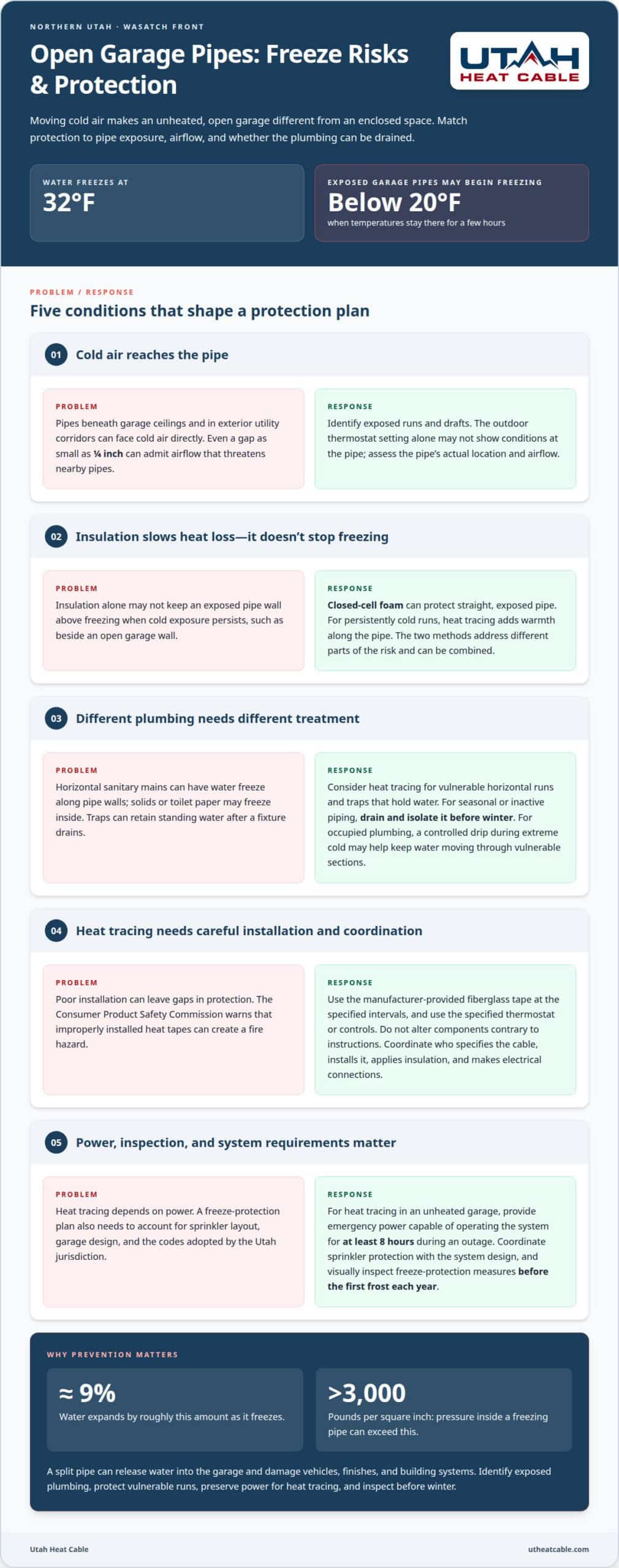
3. Freeze protection for plumbing in unheated open parking garages
An open garage exposes plumbing to moving cold air, not just low outdoor temperatures. A gap as small as 1/4 inch can admit airflow that threatens nearby pipes. Insulation slows heat transfer, but it cannot stop a pipe wall from reaching freezing temperatures. For exposed runs, insulation and heat tracing address different parts of the problem.
Common protection systems combine pipe insulation with heat-trace cable and controls. Seasonal or inactive piping can instead be drained and isolated before winter. For active plumbing, the design should account for pipe location, exposure to drafts, and the building’s ability to power the system during an outage. Heat tracing in an unheated garage should connect to emergency power capable of operating for at least eight hours during an outage.
Sprinkler piping needs protection suited to its layout and operating requirements. Where pipes face freezing conditions, insulation alone may not keep the pipe wall above freezing, so heat tracing may form part of the protection plan. Coordinate the approach with the sprinkler system design, and arrange a visual inspection before the first frost each year.
The consequences can extend beyond a single pipe. Water expands by roughly 9% as it freezes, and pressure inside a freezing pipe can exceed 3,000 pounds per square inch. A split line can release water into the garage and damage nearby property. A practical takeaway: identify exposed plumbing, protect vulnerable runs, preserve power for heat tracing, and inspect the system before winter.
Utah Heat Cable
Utah Heat Cable can help property owners in Northern Utah and along the Wasatch Front consider practical freeze-protection needs for exposed garage plumbing. Once you’ve identified pipes vulnerable to cold air, the next step is matching the protection approach to the plumbing layout and the building’s conditions. Utah Heat Cable offers controller options, which can be part of planning how a heat-protection system is managed. The right setup depends on the pipe locations and the conditions around them, so a garage with open sides may need different planning than an enclosed space. For related winter property protection, Utah Heat Cable also provides de-icing services and sidewalk and driveway deicing systems. If you’re planning pipe freeze protection, contact Utah Heat Cable to discuss your project.
Prepare Your Garage for the Next Cold Season
Turn your garage’s winter risks into a clear project scope. Note which areas need protection and how plumbing access, electrical supply, and garage use may affect installation. A coordinated plan keeps the work focused on your building’s conditions.
Utah Heat Cable installs Self Regulating Heat Cable and Constant Wattage Heat Cable, and provides De-Icing Services. For parking garage pipe freeze protection, the right next step is to discuss your building’s exposed plumbing, electrical needs, and winter operation so the proposed work fits the project.
Effective parking garage pipe freeze protection starts with a plan tailored to the building, its exposed plumbing, and its winter operation. Planning before cold weather arrives can help you prepare the property for the season.
A practical plan is a steady start toward a more winter-ready garage.
Frequently Asked Questions
At what temperature do garage pipes actually freeze?
Water freezes at 32°F (0°C), but garage pipes may freeze under colder conditions before the surrounding air reaches that point. In an unheated garage, water may begin freezing when temperatures stay below 20°F (-6°C) for a few hours. A pipe near an open wall or draft can be more exposed than one in a sheltered area.
How Should You Install Heat Tape in Extreme Climates?
Follow the cable manufacturer’s instructions and use the supplied fiberglass tape to secure heat cable to the pipe every six inches. Don’t overlap or alter the cable unless its instructions allow it. Keep connections and controls suited to the installation, and have electrical work coordinated with the plumbing layout. The Consumer Product Safety Commission warns that improperly installed heat tapes can create a fire hazard.
What Freeze Protection Is Needed in an Unheated, Open Parking Garage?
Match protection to the pipe’s exposure: insulation slows heat loss, while heat tracing adds warmth where plumbing faces persistent cold air. For example, a line beside an open exterior wall may need active heat protection as well as insulation. If a seasonal line will not be used, drain and isolate it before winter to avoid leaving standing water exposed.
What temperatures put parking garage water pipes at risk of freezing?
In an unheated garage, risk rises when temperatures fall below 20°F (-6°C) for a few hours, while water itself freezes at 32°F (0°C). These figures aren’t interchangeable: air exposure, drafts, and how long cold conditions persist affect the pipe. Pay particular attention to plumbing near garage openings and exterior corridors during prolonged cold weather.
How to inspect and maintain parking garage pipe freeze protection systems?
Arrange a visual inspection before the first frost each year. Look for damaged insulation, loose or displaced cable, and visible wear around controls or connections. Check that the heat-trace system has its intended power supply, including emergency power where the design requires it. Drain and isolate inactive seasonal piping before winter.