
An ice dam may be the visible problem, but the roof’s underlying condition determines the right fix. Roof replacement makes sense when recurring ice-dam leaks point to widespread or repeated roof failure; damage limited to one repairable area may not require a full replacement. In Utah, winter freeze-thaw conditions can expose weak spots as water backs up near the eaves.
It’s reasonable to wonder whether a leak calls for a repair or a new roof, especially when the roof’s age and condition aren’t clear. This guide explains how to spot signs of failure, weigh age against the extent of damage, and understand when ice-dam protection can help reduce winter risks. You’ll have a clearer basis for deciding what your roof needs next.
Key Takeaways
- Look for repeated leaks and damage across the roof, not just one visible problem, when weighing a localized fix against a full replacement.
- Compare the roof’s age with its material: asphalt shingles are listed with a typical lifespan of 25-30 years, while other materials can last longer.
- Roof size, material quantities, and the work needed beneath the surface all influence replacement costs.
- If winter ice buildup is a recurring concern, De-Icing Services and Roof Snow Retention can address snow and ice risks without treating them as a substitute for a failing roof.
Signs a roof may need replacement
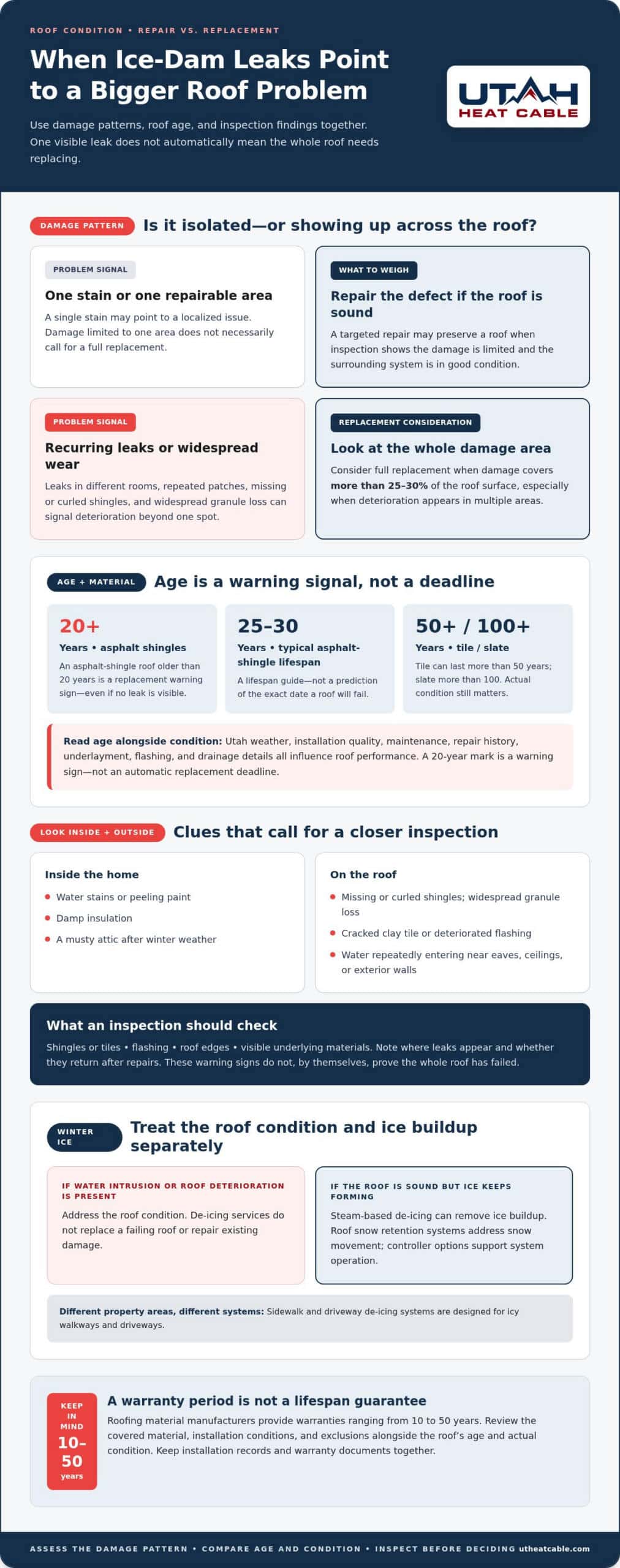
Start with the roof’s age and material. An asphalt-shingle roof older than 20 years is a replacement warning sign, even if no leak is visible. Utah’s winter climate can expose weak points when snow and ice build up. A single stain may point to a localized issue; recurring leaks in different rooms suggest the roofing system needs a closer assessment.
Damage across a large area changes the repair-versus-replacement decision. Consider full replacement when damage covers more than 25-30% of the roof surface. Missing or curled shingles, widespread granule loss, and repeated patches can indicate that deterioration extends beyond one repairable spot. Ice dams deserve attention when water repeatedly enters around eaves, ceilings, or exterior walls.
Look inside as well as outside. Water stains, peeling paint, damp insulation, or a musty attic after winter weather can signal roof leaks. Unrepaired holes can also let heat escape and increase energy costs, according to the U.S. General Accounting Office. These signs don’t prove the whole roof has failed, but they make a timely inspection important.
Have a roofing contractor inspect shingles or tiles, flashing, roof edges, and visible underlying materials. Note where leaks appear and whether they return after repairs. Tile roofing can last for decades, but cracked clay tile or deteriorated flashing still needs attention. Material, installation, and climate all affect how well a roof performs over time.
Use the inspection findings to separate an isolated defect from widespread wear. If damage is limited, a targeted repair may preserve a sound roof. If multiple areas show deterioration or the roof is past its age-related warning point, replacement may be the more practical long-term choice. Compare the damage pattern, age, and repair history together.
Roof age and expected lifespan
Age gives homeowners a useful starting point, but material matters. Roofing materials have different expected lifespans, so the material is one factor to consider when assessing a roof’s age. Tile roofing can last more than 50 years, and slate more than 100 years. These ranges help frame the roof’s condition, not predict an exact failure date.
Utah weather, installation quality, and maintenance all influence how a roof ages. Visible shingles or tiles are only one part of the roofing system. Underlayment, flashing, and drainage details also affect protection. For example, worn flashing around a chimney can cause leaks even when nearby shingles appear sound.
Compare the roof’s age with its repair history and current condition. If an asphalt-shingle roof approaches 20 years, arrange an inspection and document damaged areas, recurring leaks, and prior repairs. That 20-year mark is a warning sign, not an automatic replacement deadline. An inspection can identify whether wear is limited to one area or affects the broader roof.
Warranties also need careful reading. Roofing material manufacturers provide warranties ranging from 10 to 50 years, but a warranty period is not the same as the roof’s expected lifespan. Review the covered material, installation conditions, and exclusions alongside the roof’s age. Keep installation records and warranty documents together.
Use these details to choose the next action: maintain a sound roof, repair localized wear, or plan a full replacement when age and widespread deterioration point to broader failure. A material’s expected lifespan is a guide; the roof’s actual condition determines the practical decision.
What factors affect the cost of replacing a roof?
The price depends on the property and is provided after a quote request. Roof size and shape affect the amount of material and labor required. Roofers measure roofs to calculate material quantities, a factor identified by the U.S. Bureau of Labor Statistics. A broad roof, multiple slopes, or complex sections can require different quantities and installation work than a simple layout.
Material choice also changes the project scope. Asphalt shingles, metal panels, and tile require different materials and installation methods. Existing layers and the roof deck’s condition matter, too. If removal exposes damaged sheathing, it may need replacing before new roofing is installed. The roof’s condition affects the work beyond its visible surface.
Roof design influences labor. A steep pitch, dormers, valleys, skylights, chimneys, and roof edges can require detailed fitting and flashing work. These areas need careful installation because joints and transitions can become leak paths—considerations that quality new home construction contractors and roofing specialists plan for when building and sealing a structure. The amount of old material to remove, roof access, and disposal requirements also shape the labor and materials involved.
To understand an estimate, compare the scope rather than looking only at the total. Check whether it identifies the roofing material, removal work, underlayment, flashing, and any deck repairs. For example, estimates may differ because one includes replacing damaged sheathing while another assumes the deck remains usable. Ask why each task is included, then compare matching work and materials. This makes cost drivers easier to understand and helps distinguish necessary preparation from differences in scope.
Utah Heat Cable: De-Icing Services
Utah Heat Cable provides de-icing services for properties where recurring ice buildup is a winter concern. If the roof is structurally sound but ice dams keep forming, steam-based de-icing can remove the buildup; it doesn’t replace a failing roof or repair existing damage. Roof snow retention systems address snow movement, while controller options support system operation. Sidewalk and driveway de-icing systems are designed for icy walkways and driveways.
These options address different parts of a property, so consider where ice forms and what problem it creates. If water intrusion or widespread roof deterioration is present, resolve the roof condition as well as the seasonal ice issue. For recurring buildup on a sound roof, explore roof de-icing services as a practical next step. Contact Utah Heat Cable to discuss your de-icing needs.
Plan Your Next Step Before Winter
Choose the next step based on what your roof needs: address roof failure separately, and consider ice-management measures when recurring buildup remains a concern. Roof replacement depends on the roofing system’s condition; seasonal protection is a separate part of preparing your property for winter.
Utah Heat Cable offers Self Regulating Heat Cable, Constant Wattage Heat Cable, and de-icing services for Utah properties. These options can help address recurring ice concerns around your roof and property. Explore the available solutions and choose what fits your winter preparation needs.
Explore Utah Heat Cable’s de-icing options and take a practical step toward a more prepared winter.
Frequently Asked Questions
Why Roof Replacement?
Replacing a roof is appropriate when it can no longer protect the home across multiple areas, rather than showing one isolated defect. Repeated leaks in separate rooms, widespread deterioration, or damaged decking beneath several sections point to broader failure. Ice dams alone don’t prove the roof needs replacing. Determine whether the roofing itself is failing or ice is the recurring issue.
What is the average lifespan of a roof?
There isn’t one useful average for every roof because material affects expected lifespan. Asphalt shingles are listed at 25-30 years, while metal roofing is listed at 40-70 years; slate can last more than 100 years. Use the installation date and roof material as starting points, then consider how the roof has weathered and whether its condition has changed.
How can I tell if my roof needs replacement or just repairs?
Localized damage, such as a small area of missing shingles after a storm, may be repairable if surrounding materials remain sound. Leaks in different parts of the home or moisture affecting the roof deck suggest a wider problem. Compare affected areas, note whether trouble returns after repairs, and use an inspection to determine whether the damage is isolated or widespread.
What are the risks of delaying roof replacement or choosing low-cost materials?
Delaying action when leaks recur or deterioration spreads can allow further water intrusion, and unrepaired holes can let heat escape and increase energy costs. The material does not give a basis for comparing the risks of low-cost materials.
What warranties and maintenance are typical for a new roof?
Roofing material manufacturers provide warranties ranging from 10 to 50 years. Review what materials and installation conditions are covered, check exclusions, and keep installation records and warranty documents together.