
A failed roof heat cable needs more than a quick swap. Heat tape replacement in Cache County starts with removing the failed system; if an ice dam has formed, the ice is cleared before new cable is installed. The replacement layout, electrical use, and controls all affect how the system works through winter.
Before cold weather puts your roof and drainage paths under strain, it helps to understand the work involved. This guide covers the replacement process, how cable types and controls affect operation, and how Utah Heat Cable serves properties across Cache County. It also explains what to consider when planning a system and when professional installation is the practical next step.
Key Takeaways
- Learn what a heat tape replacement involves, including what happens if ice has already formed along the roof edge.
- Understand how cable type and controller options affect system operation and electricity use.
- See how to assess service coverage across Cache County and what details help define the work for your property.
- Use the safety guidance, including the U.S. Consumer Product Safety Commission’s report that heat tapes and pipe heating cables are involved in some 3,300 residential fires annually, to make an informed installation decision.
Heat tape maintenance and repairs
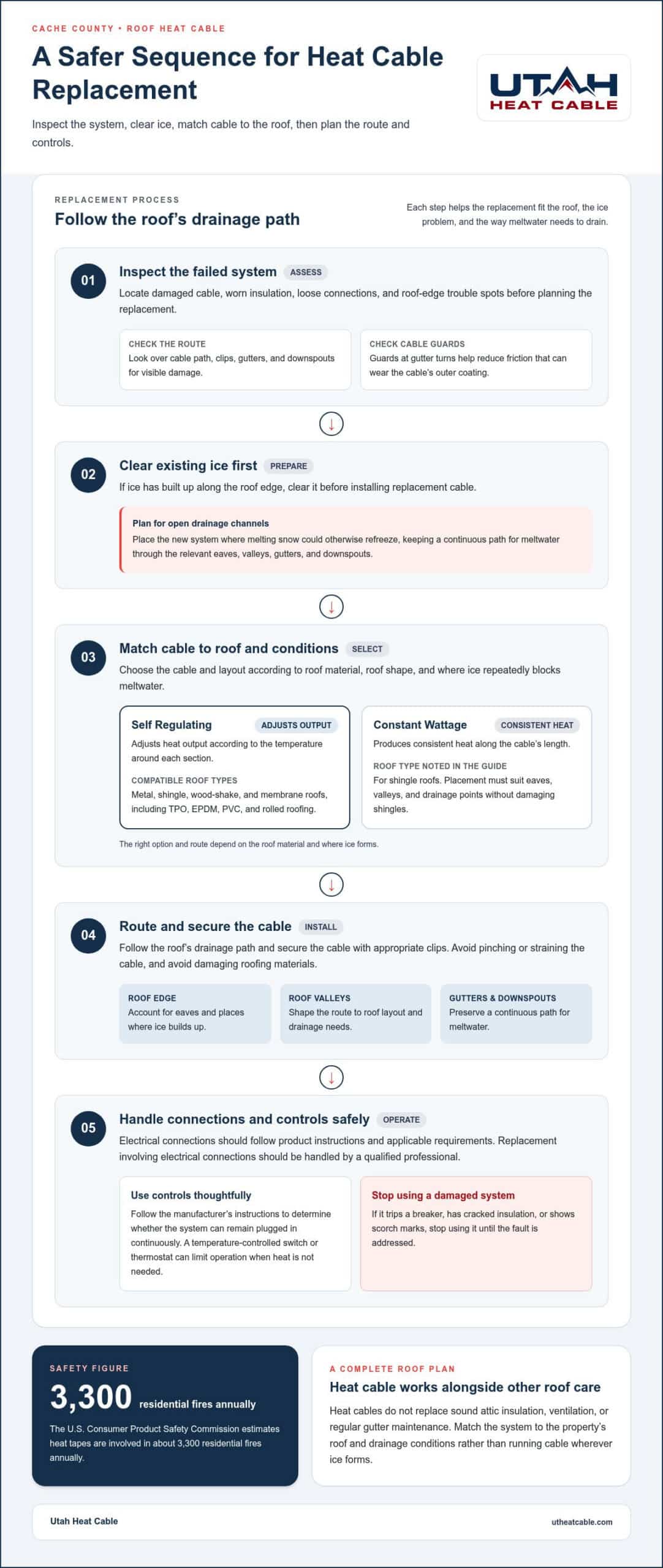
Begin a replacement by identifying damaged cable, worn insulation, loose connections, and trouble spots along the roof edge. Cable guards at gutter turns help reduce friction that can wear through the cable’s outer coating. Check the cable path, clips, gutters, and downspouts for visible damage before planning new heat tape installation. Proper installation matters because a cable must follow the roof’s drainage path without being pinched or strained.
If ice has built up along the roof edge, clear it before installing replacement cable. The new layout should create open drainage channels where melting snow could otherwise refreeze. On shingle roofs, cable placement must suit the eaves, valleys, and drainage points without damaging shingles. Self Regulating Heat Cable adjusts its heat output according to the temperature around each section; Constant Wattage Heat Cable produces consistent heat along its length. The right option and layout depend on the roof material and where ice forms.
Safety deserves attention during maintenance. According to the U.S. Consumer Product Safety Commission, heat tapes and pipe heating cables are involved in some 3,300 residential fires annually. The U.S. Consumer Product Safety Commission estimates heat tapes are involved in about 3,300 residential fires annually. Before operation, follow the cable manufacturer’s instructions to determine whether the system can remain plugged in continuously. A temperature-controlled switch or thermostat can limit operation when heat isn’t needed. For example, regulating operation with a controller can help avoid unnecessary runtime. Heat cables work alongside sound attic insulation, ventilation, and regular gutter maintenance; they don’t replace those measures. Managing indoor airflow and heating efficiency—areas often supported by HVAC contractors like Comfort Boys Air and Heating—is equally important for reducing the heat loss that contributes to ice dams. These maintenance steps apply to properties across Cache County, just as roof conditions must guide heat tape decisions in Salt Lake City.
Heat tape service coverage in Cache County
For heat tape replacement in Cache County, the property address and roof layout help define the work. Cache Valley winters can leave snowmelt freezing at eaves, valleys, gutters, and downspouts. A site assessment identifies these trouble spots and where replacement heat cable can help keep drainage paths open. Logan is a useful local reference, but roof shape and exposure vary across the county.
When planning a replacement, start with the address, roof type, and places where ice buildup or water damage occurs. Photos can help show whether the problem centers on eaves, roof valleys, gutters, or downspouts. A complex roof may need a different cable route from a simple roof with one drainage edge. Utah Heat Cable serves properties throughout Utah, including Cache County.
Rebates and insurance coverage aren’t automatic for heat tape replacement in Cache County. Rebate eligibility depends on program rules, while insurance decisions depend on policy terms and the cause of damage.
A good plan matches the system to the property instead of running cable wherever ice forms. A gutter and downspout route, for example, must preserve a continuous path for meltwater. Suitable controls can help manage when the system operates. That matters during freezing weather, when blocked drainage can contribute to ice dams and water damage. Roof and drainage conditions vary between Salt Lake and Cache Valley, so the design should account for the actual property. Utah Heat Cable offers heat-cable and snow-melt systems designed around these site conditions.
Can homeowners install heat tape themselves, or is a licensed electrician required in Utah?
Utah homeowners should distinguish routing roof cable from connecting a system to an electrical supply. Heat cable requires careful placement and secure attachment, while electrical connections must be installed correctly. Mistakes can leave sections without heat or damage wiring. Roof work also carries fall risks, especially when snow or ice makes shingles slippery.
A replacement involving electrical connections should be handled by a qualified professional who can follow applicable codes and product instructions. The work involved matters: replacing a damaged cable system is different from a visual inspection, and roof work adds its own safety risks. Utah Heat Cable is a licensed electrical contractor and installs roof heat-cable systems.
Before installation, identify the cable’s intended roof path and follow the manufacturer’s instructions. Confirm the cable type suits the roof: Constant Wattage Heat Cable is for shingle roofs, while Self Regulating Heat Cable is compatible with metal, shingle, wood-shake, and membrane roofs, including TPO, EPDM, PVC, and rolled roofing. Use the appropriate clips without damaging roofing materials, and keep gutters and downspouts clear for meltwater. Electrical connections and controls should follow product instructions and applicable requirements.
For a homeowner, a sensible boundary is clear: handle basic visual inspection from a safe location, but leave spool wiring and unfamiliar electrical connections to a licensed electrician. If the system trips a breaker, has cracked insulation, or shows scorch marks, stop using it until the fault is addressed. Review the heat cable installation guidance before planning work, and use a qualified electrician for wiring that requires professional installation.
Utah Heat Cable: Self Regulating Heat Cable
Utah Heat Cable helps Cache County property owners replace failed roof cable with a system designed around the roof’s drainage needs. Self Regulating Heat Cable adjusts its heat output according to the temperature around each section, while Constant Wattage Heat Cable provides consistent heat along its length. The right choice depends on the roof material, layout, and places where ice repeatedly blocks meltwater.
If snow movement also needs managing, Roof Snow Retention can complement a heat-cable system, particularly on metal roofs where sliding snow can damage cables or gutters. Utah Heat Cable designs heat-trace solutions for residential, commercial, industrial, and HOA properties and installs them as a licensed electrical contractor. Request a quote to discuss heat tape replacement for your Cache County roof.
Prepare Your Roof for the Next Winter
Plan ahead for the roof areas where ice repeatedly collects. A replacement plan can account for cable routing, controls, and safe electrical connections before snow and freezing conditions complicate the work. If you’re planning heat tape replacement in Cache County, let the roof’s drainage pattern and recurring ice locations guide the system design.
Utah Heat Cable offers Self Regulating Heat Cable, Constant Wattage Heat Cable, and De-Icing Services for properties that need help managing snowmelt and ice buildup. The right next step is to discuss the roof’s trouble spots and the system requirements with a heat cable specialist.
Contact Utah Heat Cable about heat tape service to begin planning. A thoughtful approach now can help you meet the season with a clearer, more prepared roof.
Frequently Asked Questions
What does the process look like?
A replacement begins by identifying the failed cable and mapping where ice forms. The roof material, drainage pattern, and existing electrical setup help shape the replacement plan. For heat tape replacement in Cache County, note where water backs up or freezes, such as at a valley or downspout. After installation, operate the system according to the cable manufacturer’s instructions.
What types of heat tape are suitable for Cache County, Utah winters?
Self-regulating and constant-wattage heat cables are both options for roof ice control. Self Regulating Heat Cable adjusts its heat output according to nearby temperatures; Constant Wattage Heat Cable produces consistent heat along its length. Roof material matters: constant-wattage cable is for shingle roofs, while self-regulating cable is compatible with metal, shingle, wood-shake, and membrane roofs, including TPO, EPDM, PVC, and rolled roofing.
Which Cache County contractors install or replace heat tape?
Utah Heat Cable installs roof heat cables and snow-melt systems for properties throughout Utah. The team designs heat-trace systems for residential, commercial, industrial, and HOA properties, and the company is a licensed electrical contractor. For a Cache County property, share the roof type and the locations where ice or drainage problems occur when requesting a quote. These details help shape the replacement plan.
How often should heat tape be replaced, and what are signs it has failed?
Replacement timing depends on cable type and condition. Constant Wattage Heat Cable typically lasts 5-10 years; Self-Regulating Heat Cable typically lasts 20-30 years. Look for cracked or worn insulation, loose clips, visible damage, or recurring ice in areas the system should protect. If a breaker trips or cable appears damaged, stop using the system and have it assessed.