
A heated ramp can melt snow, but heat alone doesn’t make it ADA-compliant. ADA compliant heated ramps must still meet the applicable accessible-route requirements: according to the U.S. Department of Justice, a ramp run’s maximum slope is 1:12, and its minimum clear width is 36 inches, measured between handrails when provided. Snow and ice control supports access, but it doesn’t replace compliant design or winter maintenance.
Keeping a ramp clear through a Wasatch Front winter takes more than choosing a heating system. Learn what ADA rules mean for ramp access, how snow-melt systems can help manage snow and ice, and what maintenance matters in cold weather.
We’ll begin with core ramp requirements, then explain how heated systems work on walkways and stairs and how winter conditions affect accessible routes.
Key Takeaways
- Understand how the ADA ramp slope requirement shapes accessible-route design, even when a snow-melt system is added.
- Compare how heated systems can help manage snow on ramps, walkways, and stairs through winter weather.
- Keep winter maintenance in view: snow and ice control should support clear access without creating new surface or traction hazards.
- Explore how Utah Heat Cable’s de-icing services and sidewalk and driveway systems can help address winter access challenges.
Snow-melt systems for walkways and stairs
Heating can help manage snow, but it doesn’t replace accessible design. The ramp’s dimensions, surface, and winter maintenance still matter.
Heated Ramps and Other Snow-Removal Options
Heated systems melt snow at the walking surface; mats, canopies, and manual removal manage exposure differently. Their differences matter when choosing how to keep a route usable through a Utah winter. Under the ADA Standards, a ramp run’s maximum running slope is 1:12, and its minimum clear width is 36 inches, measured between handrails when provided, according to the U.S. Department of Justice. The U.S. Department of Justice also sets a maximum rise of 30 inches per run and requires handrails on both sides when the rise exceeds 6 inches.
Ramp Surfaces and Slip Resistance
Surface choice affects traction and upkeep, so heating should complement rather than compromise the walking surface. The U.S. Department of Justice sets the maximum ramp cross slope at 1:48. Where a ramp changes direction, its landing must provide at least 60 inches of clear width and length, according to the U.S. Department of Justice. On aluminum, shovel use may scratch the surface and affect durability and slip resistance; select snow-removal methods with that risk in mind.
Permits, Electrical Codes, and Inspections
Permits, electrical requirements, and inspections apply to installation work, not the ramp’s accessibility dimensions. Requirements depend on the project scope and the authority reviewing the property. Installing a snow-melt system, for example, may involve electrical work and changes to the ramp surface. Plan the heating layout around the ramp run and landing so equipment does not obstruct clear width or access.
State and Local Building Code Requirements
Local review considers how a heated ramp fits the property and applicable building requirements. For Utah projects, requirements can depend on location and scope, so don’t assume federal access criteria cover every installation detail. Keep the accessible route continuous from ground level through the top and bottom landings, and position heating equipment with the direction of travel in mind. This keeps access needs central during design review.
ADA route maintenance in winter
Heat can help control snow and ice, but it doesn’t replace routine route maintenance. Under the Americans with Disabilities Act, accessible routes must remain in operable working condition.
Winter Maintenance and Safety
Winter maintenance means clearing snow and maintaining traction across the route, including the bottom landing and handrails. Wheelchair users and people with limited mobility still need a usable path after snowfall. On an aluminum ramp, a broom can clear snow while reducing the chance of shovel scratches. A thin layer of sand can improve traction.
Rubber mats are another option: they can add traction and be lifted and shaken to remove snow. Keep the walking surface clear around mats so they don’t obstruct the route or create a slipping hazard. Rock salt, magnesium chloride, and antifreeze are discouraged for ramps; sodium chloride can rust aluminum, and magnesium chloride may have a similar effect. Anti-slip strips can leave marks when removed after winter.
Heated Ramp Failure Risks
A heated ramp’s main winter risk is that the snow-melting system stops working, leaving snow or ice on the route. Heating does not replace an alternative clearing method, especially during a power or control interruption. Include the ramp and its landings in winter inspections, checking for snow, ice, and safe passage.
Keep the accessible path clear from top to bottom, with handrails available for support. If the surface remains icy, treat it as a route-maintenance issue rather than assuming the installed heat has cleared it. A clear route helps reduce slipping risks for people with disabilities and supports access through changing winter conditions.
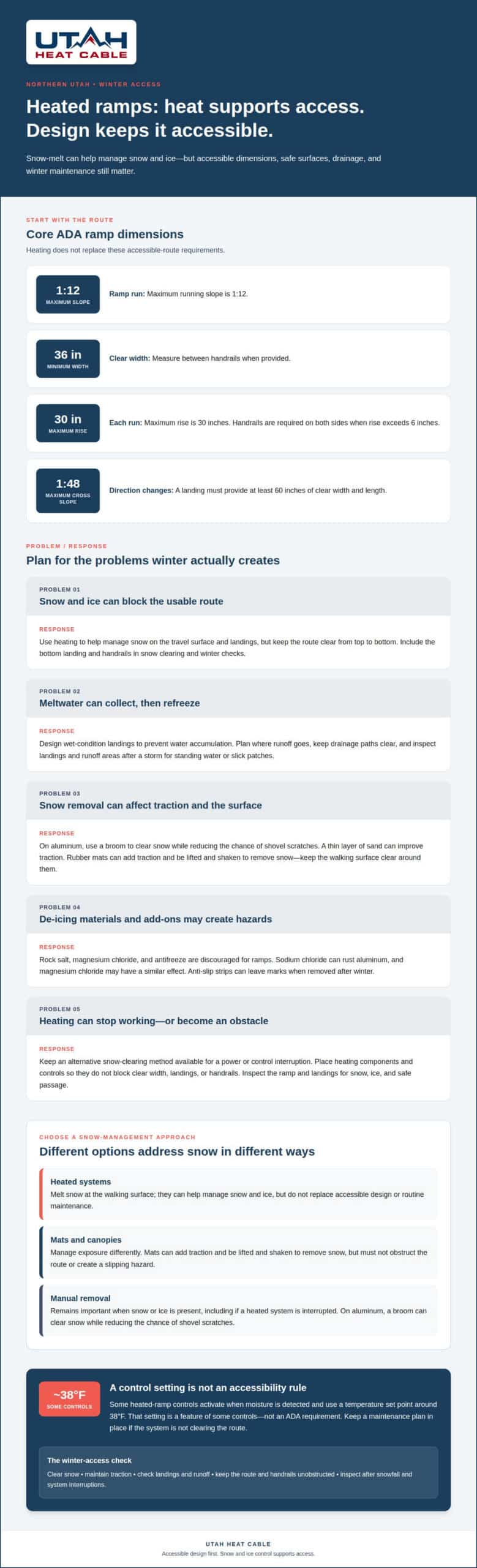
How should heated ramps be designed to prevent ice without creating accessibility hazards?
Design the accessible route first, then integrate heat without narrowing or obstructing its walking surface. ADA compliant heated ramps still need clear travel paths, stable landings, and winter maintenance alongside snow-melt equipment.
Plan heating coverage for the ramp’s travel surface and landings, where snowmelt can collect. Under the ADA Standards, landings exposed to wet conditions must be designed to prevent water accumulation. Meltwater can refreeze when temperatures drop, so consider where runoff will go and keep drainage paths clear of debris and snow.
Keep controls and heating components from creating obstacles along the route. For example, equipment should not block a landing or interfere with handrails. A system’s control approach also affects when heat runs: some heated-ramp controls activate when moisture is detected and use a temperature set point around 38°F. That setting is a feature of some controls, not an accessibility requirement.
Don’t use antifreeze instead of a properly designed snow-melt system. It can make a ramp slippery rather than prevent snow from accumulating. Pair heating with a maintenance plan for snow and ice if the system isn’t clearing the route. After a storm, inspect the ramp, landings, and runoff areas for standing water or slick patches. Accessible design must account for both the heated surface and what happens to melted snow.
Utah Heat Cable: De-Icing Services
Utah Heat Cable provides de-icing services for properties managing winter snow and ice on access routes. If a ramp, walkway, or driveway repeatedly becomes difficult to use in winter, a de-icing system can complement routine snow removal and accessible-route maintenance.
For pedestrian areas, Utah Heat Cable’s sidewalk and driveway deicing systems address snow and ice on walking surfaces. Controller options help manage system operation, and the appropriate setup depends on the area and project needs. Heating can assist with snow management, but it doesn’t replace accessible design or ongoing checks for slick spots and standing meltwater.
For a property in Northern Utah or along the Wasatch Front, consider de-icing services when recurring winter buildup affects a ramp or adjoining route. Explore de-icing services and contact Utah Heat Cable to discuss your property’s winter access needs.
Plan winter access before the next storm
For Northern Utah properties, consider how winter access needs fit the site’s layout and use. ADA compliant heated ramps are one part of the plan; heating should complement accessible design and ongoing route maintenance. Utah Heat Cable provides Self Regulating Heat Cable, Constant Wattage Heat Cable, and De-Icing Services to manage snow and ice. These options offer a practical starting point for property owners addressing recurring winter buildup on access routes and nearby surfaces.
Review your property’s winter access needs and explore a suitable next step with Utah Heat Cable. A considered plan can help you prepare your routes for the season ahead.
Frequently Asked Questions
What are ADA requirements?
The Americans with Disabilities Act is a federal civil rights law that establishes accessibility requirements for covered facilities. At an entrance, those requirements extend beyond the ramp: the accessible route must connect people to the facility and remain usable. In older commercial buildings, access barriers must be removed when doing so is readily achievable. A heated surface does not replace these responsibilities.
What ramp length do I need for a 4-inch rise at my building entrance?
A 4-inch rise requires at least 48 inches of ramp length at a 1:12 slope. That measurement describes the ramp run, so consider the entrance layout and space available when planning the route. The landing and approach also need to fit the site. Snow-melt equipment doesn’t change the length needed for the rise.
What ADA standards apply to heated ramps in the United States?
The U.S. Department of Justice’s 2010 ADA Standards for Accessible Design became effective on March 15, 2012. These standards provide the federal accessibility criteria relevant to ramp and route design, whether a ramp includes snow-melt equipment or not. For a Utah business entrance, assess the accessible route as a whole, including its connection to the building and the areas people need to reach.
What maximum running slope and cross slope are allowed for ADA-compliant ramps?
The maximum running slope is 1:12, and the maximum cross slope is 1:48, according to the U.S. Department of Justice. Running slope follows the direction of travel; cross slope runs across the ramp. Both affect how the route feels to use, so evaluate them separately when reviewing an entrance or planning ramp work.
Are heated ramps required or specifically addressed by the ADA?
The ADA Standards address accessible-route design, not a requirement to heat ramps. A heated system is an optional way to help manage winter snow and ice, while the ramp must still meet applicable accessibility criteria. A business, for example, can use snow-melt equipment alongside manual clearing and route maintenance, rather than treating heat as a substitute for access planning.