

Is that hardware store heat tape truly protecting your home, or is it just a temporary fix waiting to fail? For many Boise homeowners, the sight of massive icicles hanging over the front walkway is a stressful reminder that their roof is under siege. You already know that recurring ice dams on north-facing slopes lead to more than just high utility bills; they cause structural rot and dangerous leaks. Choosing a licensed heat trace installer Boise residents depend on ensures your system meets local standards while moving beyond “plug-and-play” wires to a custom-engineered solution.
This article explains why professional electrical installation is the only way to secure a code-compliant system that actually lasts. We’ll explore how self-regulating cables and smart controllers eliminate ice dams while keeping your energy costs manageable. From navigating City of Boise permits to choosing industrial-grade components, you’ll discover how to safeguard your property for the long term. It’s time to stop worrying about the next big storm and start relying on a system built for Idaho’s unique climate.
Key Takeaways
- Learn why hiring a licensed heat trace installer Boise residents can trust is essential for meeting Idaho electrical codes and preventing the fire hazards associated with uncertified installations.
- Understand the technical difference between professional self-regulating cables that last over a decade and retail heat tapes that often fail after just one or two seasons.
- Discover how custom-engineered designs protect vulnerable north-facing roof slopes and complex gutter systems from the specific winter challenges found in the Treasure Valley.
- Gain peace of mind by moving beyond temporary fixes to a durable, automated system that uses smart controllers to lower energy bills while eliminating dangerous icicles.
Why Hiring a Licensed Heat Trace Installer in Boise is Mandatory
Many homeowners view de-icing systems as simple accessories, but in the eyes of Idaho law, they are permanent electrical installations. Because these systems involve high-voltage components exposed to moisture, state and local regulations require a professional approach. Working with a licensed heat trace installer Boise residents can trust ensures that your system isn’t just “thrown up” on the roof, but engineered to handle the specific electrical loads of your home.
Trace heating, also known as heat tape, requires dedicated circuits and specialized Equipment Protection (EPD) or Ground Fault Circuit Interrupter (GFCI) protection to operate safely in wet conditions. If these components aren’t sized correctly or wired by a professional, you risk constant breaker trips or electrical fires. A licensed electrical contractor manages these risks by calculating the exact amperage needed for your specific roofline.
The Safety Risks of Unlicensed Work
Unlicensed “handyman” fixes often rely on cheap, retail-grade tape that lacks the internal regulation needed for long-term safety. These systems can overheat if they overlap or if debris accumulates in the gutter. A licensed contractor understands how to secure cables without damaging shingles or creating short circuits. This precision prevents electrical hazards and ensures the system won’t damage your roof’s structural integrity over time.
Code Compliance in the Treasure Valley
In Boise, installing a permanent de-icing system requires specific permits to ensure the work meets the National Electrical Code (NEC). This isn’t just red tape; it’s a safety barrier. A licensed heat trace installer Boise professional ensures every connection is weather-sealed and code-compliant, protecting your property value and insurance eligibility. Proper engineering means your system won’t fail when the first heavy Treasure Valley snow hits, providing reliable protection when it matters most.
Professional Self-Regulating Cable vs. Retail Heat Tape
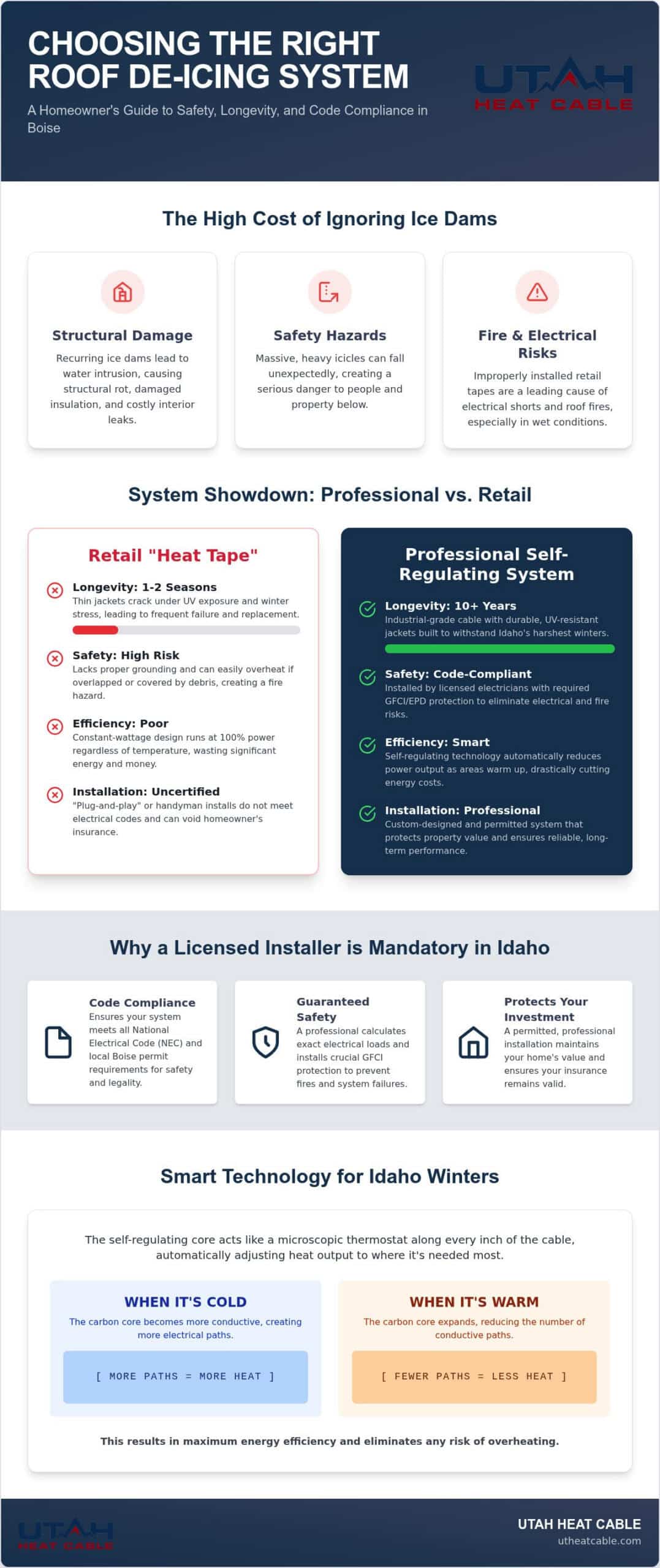
Most homeowners start their journey at a big-box store, picking up a box of “heat tape.” While these products are cheap upfront, they often fail after a single Idaho winter. A licensed heat trace installer Boise expert will instead recommend self regulating heat cable. Unlike retail tape, which runs at full power regardless of the weather, professional-grade cable is a long-term asset designed to last 10 years or more. Retail versions often use thin jackets that crack under UV exposure, whereas industrial cables are built to withstand the harshest Treasure Valley conditions.
How Self-Regulating Technology Works
At the heart of this system is a specialized carbon-polymer core. This material acts like a microscopic thermostat along every inch of the wire. When the temperature drops and ice begins to form, the core becomes more conductive, generating more heat. As the sun comes out and the roof warms up, the core automatically restricts current flow. This responsiveness is vital for Boise’s climate, where temperatures can swing from freezing mornings to sunny afternoons. By using a licensed heat trace installer Boise specialist, you ensure the system is calibrated for these local shifts.
Energy Savings and ROI
Constant Wattage Heat Cable systems are often energy hogs because they don’t know when to turn down. In contrast, self-regulating systems significantly reduce power consumption by only heating the sections of the roof that need it. When paired with advanced controller options, these systems maximize efficiency and ROI. You aren’t just buying a wire; you’re investing in an automated solution that protects your home without spiking your monthly utility bills. If you’re tired of replacing failed hardware store tape every October, exploring professional de-icing solutions is the logical next step for your property.
Custom Heat Trace Design for Boise Architecture
Boise homes often feature deep eaves and complex architectural valleys that trap heavy snow. In the Treasure Valley, the winter sun stays low, leaving north-facing roof slopes in perpetual shadow. This creates a temperature imbalance where snow melts on the south side but refreezes instantly on the north, leading to massive ice dams. A licensed heat trace installer Boise specialist doesn’t just lay cable; they design a drainage path that guides meltwater all the way to the ground. This level of planning is especially critical for ice dam prevention for HOAs, where shared rooflines and internal gutters require a unified engineering approach.
Solving North-Facing Roof Ice Dams
Shadows in Boise are persistent. Even on a clear 40-degree day, a north-facing valley can remain well below freezing. A licensed heat trace installer Boise professional uses specific serpentine patterns along these eaves to ensure water has a clear channel through the ice. Without this custom layout, water simply pools behind the ice dam and forces its way under your shingles, causing interior rot that stays hidden until spring.
Integrating Snow Retention Systems
Metal roofs present a unique challenge in Idaho. Without a proper snow retention system for metal roofs, a single warm afternoon can cause a snow slide. These mini-avalanches are powerful enough to rip gutters and heat cables right off the building. By pairing snow guards with self-regulating cable, we create a system where snow is held in place while the heat trace melts it safely from the bottom up. If you’re ready to protect your home with a system designed for Idaho architecture, contact our team for a custom de-icing design today.
The Utah Heat Cable Advantage in Boise
Utah Heat Cable stands apart by treating de-icing as a specialized electrical discipline rather than a roofing afterthought. As a licensed heat trace installer Boise property owners trust, we apply the David Tanner approach to every project. This means we don’t just hang wire; we engineer a custom solution based on your home’s unique voltage capacity and structural needs. By using industrial-grade self-regulating cables, we provide a level of durability that far exceeds anything found in a local hardware store.
Our expertise extends beyond the roofline to provide total property protection. Whether you need gutter de-icing or a heated driveway installation Utah homeowners use to reclaim their winters, our systems are built for long-term performance. We focus on high-efficiency components and automated controllers that ensure your system only draws power when environmental conditions demand it, keeping your operational costs low while protection remains high.
A Local Specialist Who Teaches the Experts
We’ve built a reputation as the specialist who teaches the experts. Property managers and HOAs throughout the Treasure Valley rely on our designs because they prioritize safety and code compliance. We understand the specific stresses that Boise’s freeze-thaw cycles put on electrical systems, and we build our installations to survive those transitions year after year. This dedication to precision ensures your investment is protected by elite-level skill delivered with a down-to-earth attitude.
Ready for Winter? Schedule Your Design Consultation
The best time to secure your home is before the first Boise freeze. Scheduling a professional site evaluation allows us to identify vulnerabilities before they turn into costly ice dams. During our consultation, we’ll assess your electrical panel, measure your roof valleys, and design a system that offers maximum protection with minimum energy waste. Don’t wait for the icicles to appear; contact a licensed heat trace installer Boise specialist today to ensure your roof is ready for whatever the season brings.
Secure Your Home Before the First Freeze
Protecting your Boise home from winter damage requires more than just hanging a wire. The difference between seasonal failure and long-term security lies in professional engineering and the use of industrial-grade components. By choosing a licensed heat trace installer Boise specialist, you ensure your system is code-compliant, energy-efficient, and capable of handling the unique shadows of Treasure Valley rooflines. You aren’t just preventing ice dams; you’re investing in a durable solution that protects your property’s structural integrity for years to come.
Utah Heat Cable brings the expertise of a Licensed Electrical Contractor to every project. We specialize in ice dam prevention through custom engineered solutions that address your specific architectural challenges. Don’t wait for the next heavy snowfall to discover a leak. Get a Professional Heat Trace Design Consultation today and enjoy the peace of mind that comes from professional-grade protection. Your roof is your home’s first line of defense; make sure it’s ready for whatever the Idaho winter delivers.
Frequently Asked Questions
Do I really need a licensed electrician for heat cable installation in Boise?
Yes, hiring a licensed heat trace installer Boise professional is mandatory for permanent outdoor heating systems under Idaho electrical codes. These systems require specialized Ground Fault Circuit Interrupter (GFCI) protection and dedicated circuits to prevent fire hazards. Unlicensed work often bypasses these safety measures, leaving your home vulnerable to electrical failure or insurance claim denials. A licensed contractor ensures every connection is weather-sealed and properly engineered for your home’s specific electrical capacity.
How long does a professional heat trace system typically last?
A professionally installed system using industrial-grade self-regulating cable typically lasts 10 years or more. This stands in stark contrast to retail heat tape, which usually fails after just one or two seasons. The longevity comes from durable outer jackets that resist UV damage and moisture ingress. Regular pre-season checks and the use of automated controllers further extend this lifespan by ensuring the system only operates when environmental conditions require it.
Will heat cable damage my roof or gutters?
When installed correctly by a specialist, heat cable won’t damage your roof or gutters. It actually protects these structures by preventing the heavy ice buildup that causes shingles to lift and gutters to sag. We use specialized clips and spacers that secure the cable without penetrating the roof’s waterproof membrane. This ensures the heat is distributed safely while maintaining the integrity of your home’s exterior drainage system and preventing structural rot.
Can I leave my heat trace system on all winter?
While self-regulating cables can technically stay powered, it’s more efficient to use an automated controller. These smart systems monitor ambient temperature and moisture, activating the heat only when ice formation is likely. Leaving a manual system on all winter leads to unnecessarily high utility bills. By combining professional-grade cable with a smart controller, you get continuous protection against ice dams without the cost of running the system during dry, sunny Boise afternoons.
What is the difference between heat tape and self-regulating heat cable?
Retail heat tape provides a constant, unchanging amount of heat, which can lead to overheating and high energy consumption. Self-regulating heat cable features a specialized carbon-polymer core that automatically adjusts its heat output based on the surrounding temperature. As the air gets colder, the cable generates more heat. When the sun warms the roof, the cable restricts current flow. This makes self-regulating technology safer, more durable, and significantly more energy-efficient for local homeowners.