
The smartest time to shield your roof from winter ice isn’t during the first crisp freeze of autumn; it’s right now under the warm summer sun. Most Utah homeowners wait until October to think about ice dams, only to face booked-out contractor schedules and hurried installations. You can save money and beat the fall rush on heat cable by installing in the summer, securing dedicated electrical expertise before seasonal backlogs take over.
We know how frustrating it is to scramble for reliable help right before the first snowfall hits. By scheduling early, you ensure mounting adhesives bond securely in warm temperatures while licensed specialists design a layout tailored specifically to Rocky Mountain snow conditions. In this guide, you will discover how off-season planning eliminates autumn contractor stress, protects your eaves, and delivers long-lasting roof defense.
Key Takeaways
- Learn how to save money and beat the fall rush on heat cable by installing in the summer to secure priority contractor scheduling before freezing weather arrives.
- Understand the structural benefits of warm-weather installation, including superior clip adhesive bonding and reduced risk of brittle shingle damage.
- Discover the essential safety measures a licensed electrical contractor uses to evaluate panel loads and ensure National Electrical Code compliance.
- See how custom layout engineering protects high-risk eaves, complex valleys, and gutters against harsh Rocky Mountain winter snow loads.
The Autumn Heat Cable Rush: Avoiding Expensive Delays and Ice Dam Headaches
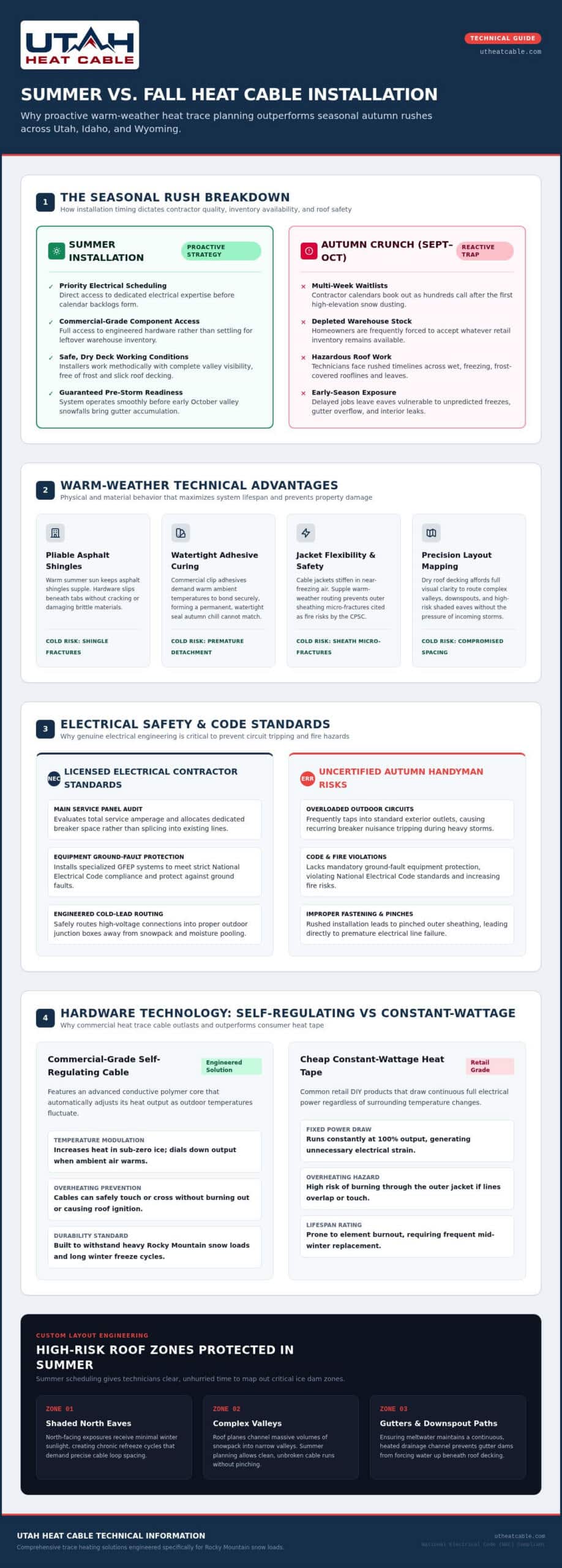
Every September, a familiar pattern unfolds across Utah, Idaho, and Wyoming. The first dusting of snow coats the higher elevations, prompting hundreds of homeowners to call local contractors at the exact same moment. Booking calendars fill up almost instantly. Those who wait often find themselves placed on multi-week waitlists, leaving eaves vulnerable when unexpected October storms sweep through the valleys.
Postponing your installation risks early-season freeze damage, gutter overflow, and interior leaks. When you choose to save money and beat the fall rush on heat cable by installing in the summer, you eliminate seasonal panic entirely. Last-minute fall scheduling often forces property owners to accept whatever inventory is left on warehouse shelves, while pushing physical installation into wet, freezing, and hazardous roof conditions.
Why Proactive Summer Planning Prevents Costly Winter Property Damage
Relying on uncertified handymen during the autumn crunch often leads to code violations and premature electrical failures. Professional electric heat tracing demands strict adherence to National Electrical Code standards, which rushed seasonal labor frequently overlooks. Summer planning guarantees access to licensed electrical contractors who take the time to evaluate circuit loads and route wiring safely.
Proactive scheduling provides distinct advantages:
- Guaranteed readiness: Your heating system operates seamlessly before unpredictable autumn blizzards cause heavy gutter accumulation.
- Access to superior components: Selecting proven hardware through professional products and services ensures you receive commercial-grade materials rather than leftover retail kits.
- Precision workmanship: Installers work carefully in safe, dry conditions rather than rushing across slick, frost-covered roof decking.
You can save money and beat the fall rush on heat cable by installing in the summer, turning what is normally a stressful winter emergency into a calm, completed home upgrade.
Technical Advantages of Installing Roof Heat Cables in Warm Summer Weather
Beyond scheduling ease, summer delivers distinct physical conditions that directly improve installation quality. Asphalt shingles stay pliable under the sun, allowing technicians to place mounting hardware beneath shingle tabs without cracking brittle materials. Commercial roof adhesives also require warm ambient temperatures to cure properly. When clips are bonded on sun-warmed surfaces, the adhesive creates an enduring, watertight seal that autumn chill cannot replicate.
Handling the heating element itself is equally weather-dependent. Self-regulating heat cables stiffen in near-freezing air, complicating cable routing through gutters and downspouts. Warm weather keeps commercial-grade cable jackets supple, allowing clean runs and precise spacing along complex rooflines. Proper handling prevents micro-fractures in outer sheathing, which the U.S. Consumer Product Safety Commission emphasizes when inspecting for fire hazards caused by pinched or improperly fastened heating lines.
Optimizing Shingle Safety and Cable Layout During Dry Summer Months
Dry, clear summer conditions give installers full visibility to inspect valleys, eaves, and drainage paths without slipping on morning frost or wet leaves. Technicians can map out ideal cable spacing without the rush of incoming storms. You can save money and beat the fall rush on heat cable by installing in the summer, ensuring proper clip adhesion and superior equipment performance before freezing temperatures return. To learn more about how system design affects long-term reliability, explore our essential de-icing guide before planning your project.
How a Licensed Electrical Contractor Designs Your Custom Summer Heat-Trace System
A dependable de-icing setup requires genuine electrical engineering, not makeshift handiwork. Licensed electrical contractors evaluate your main service panel to ensure adequate amperage, dedicated breaker space, and proper equipment ground-fault protection. Autumn handyman jobs frequently overload outdoor circuits, causing nuisance tripping during storms. In contrast, summer scheduling allows electricians to design custom layouts targeting shaded north eaves, steep valleys, and downspout drainage paths while verifying strict National Electrical Code compliance.
Selecting Long-Term Self-Regulating Technology Over Cheap Heat Tape
Hardware quality makes a massive difference in roof protection. Unlike cheap constant-wattage tape that burns continuously at full output, commercial-grade self-regulating heat cable adjusts its heat output automatically as ambient temperatures shift. This self-modulating core prevents overheating, boosts energy efficiency, and lasts for decades when paired with expert installation.
Summer installation also allows technicians to calibrate smart controller options and integrate roof snow retention systems without seasonal rush. You can save money and beat the fall rush on heat cable by installing in the summer, giving licensed professionals the required time to test sensors and verify system readiness long before sub-zero temperatures arrive. Explore our proven products and services to see how an engineered heat-trace layout protects your roof through the harshest Rocky Mountain winters.
Secure Your Roof Protection Before the First Freeze
Taking action during the warmer months ensures your home is fortified long before winter storms arrive. You save money and beat the fall rush on heat cable by installing in the summer, giving licensed electrical contractors the ideal conditions to engineer custom layouts and bond mounting hardware properly. Instead of competing for crowded autumn calendar slots or settling for rushed handyman repairs, you get durable, commercial-grade self-regulating heat cable calibrated for harsh Utah, Idaho, and Wyoming snow loads.
Don’t wait until the first blizzard threatens your roofline and gutters. Take control of your home’s winter defense today. Schedule your summer heat cable assessment to guarantee your spot on the calendar and enjoy complete peace of mind all winter long.
Frequently Asked Questions
Why is summer the most cost-effective time to install roof heat cable?
Summer installations prevent expensive emergency water damage repairs and avoid the scheduling bottlenecks common in late autumn. You save money and beat the fall rush on heat cable by installing in the summer because contractors have open availability across Utah, Idaho, and Wyoming. This off-season timing ensures full project focus without paying for emergency call-outs or rush service.
Will hot summer roof temperatures damage newly installed self-regulating cables?
No, high summer temperatures won’t harm commercial-grade heating lines. Self-regulating cables feature durable, UV-stabilized outer jackets engineered to withstand intense solar exposure and extreme heat without degradation. Warm summer weather actually benefits the installation, as sun-warmed roof surfaces allow commercial mounting adhesives to cure fully, creating a watertight bond that holds fast through heavy winter snow.
Does heat cable installation require a licensed electrical contractor?
Yes, professional heat-trace installations require a licensed electrical contractor to ensure strict compliance with the National Electrical Code. De-icing systems involve high electrical loads that demand dedicated circuits, precise breaker sizing, and specialized equipment ground-fault protection. Hiring a licensed specialist guarantees your home is wired safely, preventing dangerous panel overloads, nuisance tripping, or compromised roof warranties.
How do I know if my electrical panel can handle a roof de-icing system?
A licensed electrician determines your panel capacity by calculating existing household electrical loads against your total service amperage. They verify whether your breaker box has sufficient space and power for dedicated de-icing circuits or if an auxiliary subpanel is needed. Scheduling this evaluation during the summer provides ample time to handle any necessary electrical upgrades before freezing weather arrives.