
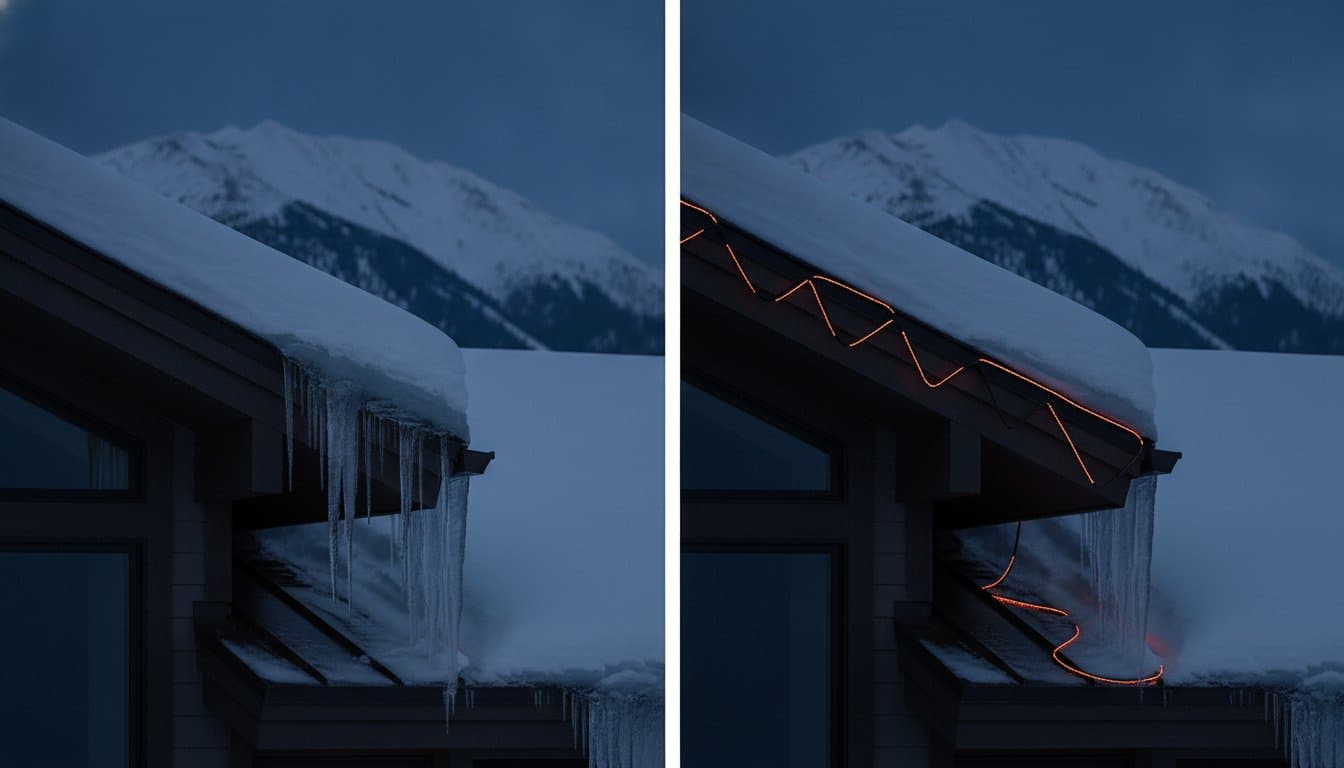
Why would a homeowner pay five times more for one reel of cable than another that looks nearly identical on the hardware store shelf? When you’re searching for how much does roof heat cable cost per foot, the massive price gaps you find online can feel like a moving target. It’s frustrating to see budget options for a few dollars alongside professional systems that require a more serious investment, especially when you’re just trying to stop ice dams from ruining your drywall. You want a solution that actually works when the snow piles up in January, not a temporary fix that burns out by February.
We understand that clarity is just as important as protection. This 2026 price guide breaks down the real-world costs of de-icing systems specifically for the harsh climates of Utah, Idaho, and Wyoming. You’ll learn the technical differences between retail heat tape and the professional-grade, self-regulating cables used by master craftsmen. We’ll also provide a clear framework for calculating your roof’s actual footage needs and explain how labor costs vary across the Mountain West. By the end, you’ll have a reliable estimate for a system that provides total peace of mind and long-term energy efficiency.
Key Takeaways
- Learn the technical distinctions between hardware store heat tape and professional-grade self-regulating cable to avoid common safety risks.
- Get a clear breakdown of 2026 industry pricing to see how much does roof heat cable cost per foot for different material grades.
- Use our eave depth calculation guide to find out why your roof edge length is only a fraction of the total cable footage you actually need.
- Understand the critical electrical requirements, like dedicated 20-amp circuits, that ensure your system operates safely and meets local building codes.
- Compare the upfront cost of a professional system against the high price of emergency steam removal and structural repairs.
Understanding the Spectrum: Retail Heat Tape vs. Professional Heat Cable
When you start researching how much does roof heat cable cost per foot, you’ll immediately notice two very different price points. On one end is the “heat tape” found in big-box stores, often packaged in pre-cut lengths. On the other is professional-grade “heat cable” sold by the reel. While they both claim to prevent what an ice dam is, the technology inside them couldn’t be more different. Understanding this spectrum is the first step in choosing a system that protects your home without becoming a liability.
Why Retail “Heat Tape” Costs Less Upfront
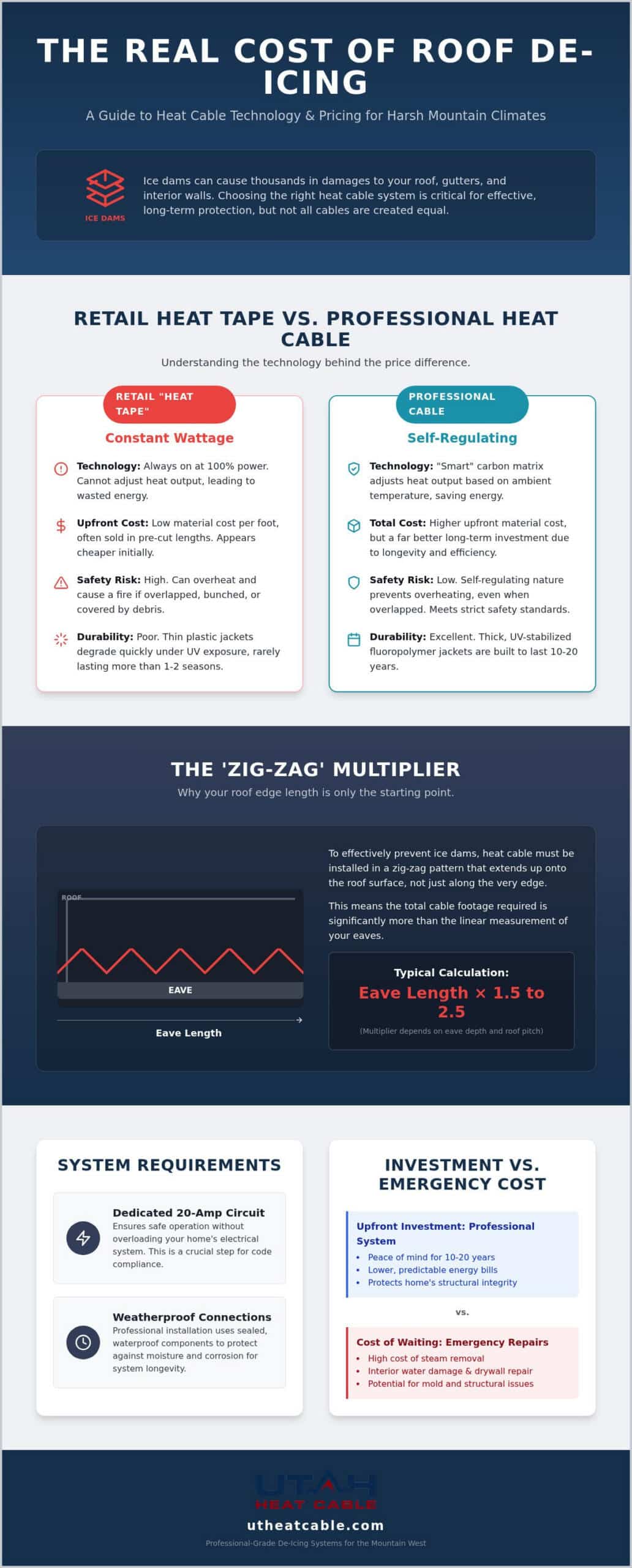
Retail heat tape is typically a constant-wattage product. This means the cable stays “on” at 100% power as long as it’s plugged in, regardless of the outdoor temperature. The materials used are often basic, featuring thin plastic jackets that struggle to withstand the intense UV rays found at higher elevations in the Mountain West. Because these cables don’t adjust their output, they are significantly less energy-efficient than professional alternatives. More importantly, they pose a safety risk; if the cable overlaps itself or gets covered by debris, it can overheat and potentially start a fire. While the initial material cost is low, these products rarely survive more than two Utah winters before they require a full replacement.
The Premium for Professional-Grade Self-Regulating Cable
The reason professional systems have a higher price point is the technology hidden beneath the jacket. Professional-grade cable uses a self-regulating carbon matrix. This specialized core acts like a series of thousands of tiny thermostats. When the air is cold, the matrix contracts and allows more electricity to flow, providing maximum heat to clear ice. As the temperature rises, the matrix expands and naturally restricts the current, which lowers your utility bill. This durability is bolstered by thick, UV-stabilized fluoropolymer jackets designed to last 10 to 20 years. When you calculate how much does roof heat cable cost per foot over the life of the system, the professional option is often the more economical choice because it doesn’t need to be replaced every other season. This is the standard we use at Utah Heat Cable to ensure long-term protection and code compliance.
Cost Per Foot Comparison: Self-Regulating vs. Constant Wattage
When evaluating how much does roof heat cable cost per foot, it’s helpful to look past the initial price tag and consider the total cost of ownership. The material price is driven by the internal technology and the quality of the outer shielding. Professional-grade cables are engineered to meet strict professional safety standards, ensuring they can handle the expansion and contraction caused by the brutal freeze-thaw cycles we see in the Mountain West. While a basic cable might seem like a bargain, the cost of the raw material is only one part of the financial equation.
Self-Regulating Cable: The Gold Standard for Efficiency
Self-regulating systems are the preferred choice for residential properties because they offer a superior price-to-performance ratio. These cables use a specialized core that throttles energy usage based on the ambient temperature. When the sun hits your roof and the air warms up, the cable naturally draws less power, which directly lowers your monthly utility bills. This efficiency makes the higher material cost easier to justify over time. At Utah Heat Cable, we focus on these systems because they provide reliable protection without the constant energy drain of older technologies. They are built to last, often providing a decade or more of service before needing attention.
Constant Wattage Cable: High Heat for Specific Scenarios
Constant wattage cable is often the lower-cost option when looking at the price per foot for materials. However, these systems operate at 100% capacity the entire time they are powered on. This makes them less ideal for standard residential eaves but very effective for specific industrial applications or northern areas where extreme ice melting is required around the clock. Because they don’t have the “brain” of a self-regulating cable, they require manual intervention or sophisticated timed controllers to prevent them from burning out or wasting massive amounts of electricity during a mid-day thaw. If you’re unsure which technology fits your roof’s unique pitch and exposure, our team can provide a customized assessment to pinpoint the right solution.
The total system price is also heavily influenced by the “Controller Factor.” While the cable itself has a set cost, adding automated moisture and temperature sensors can increase the initial investment. These sensors act as a protective shield for your wallet, ensuring the system only activates when snow is actually present. While the initial calculation of how much does roof heat cable cost per foot is a starting point, the inclusion of smart controllers often pays for itself through energy savings within the first three winters.
The ‘Zig-Zag’ Multiplier: Calculating Your Total Footage
One of the most common mistakes homeowners make is assuming that a 100-foot roof edge requires exactly 100 feet of cable. If you plan your budget this way, you’ll find yourself significantly short on materials before the first afternoon of installation is over. To accurately determine how much does roof heat cable cost per foot for your specific home, you have to account for the “zig-zag” pattern. We don’t install these systems in a straight line; we weave them in a serpentine fashion to ensure the entire “danger zone” of your eave stays clear of ice.
Calculating the Pattern: The Zig-Zag Formula
The height and frequency of your cable peaks depend on your roof’s pitch and the depth of your eaves. In the Mountain West, where snow loads are heavy and temperatures fluctuate wildly, we generally follow a 12-inch to 24-inch spacing rule between peaks. This ensures the cable reaches past the warm interior wall line of the house, which is where most ice dams begin to form. A standard 2-foot overhang typically requires 5.5 feet of cable per linear foot of roof. Without this multiplier, the cable won’t cover enough surface area to create the drainage channels necessary to protect your shingles.
Don’t Forget the Gutters and Downspouts
Meltwater needs a clear path all the way to the ground, or it will simply refreeze as soon as it leaves the heated roof surface. This means your footage calculation must include the full length of your gutters plus the vertical run of your downspouts. At Utah Heat Cable, we often use a “loop back” requirement for downspouts, running the cable down to the exit point and back up several feet. This creates a permanent thermal tunnel that prevents the drain from bursting under the pressure of expanding ice. For commercial properties with flat roofs, we also have to factor in extra footage for internal drains to prevent ponding.
Complex architectural features like valleys and dormers act as natural funnels for snow and ice. These areas often require two to three times more cable than a straight run because they are the primary points of failure during a heavy storm. When you’re calculating how much does roof heat cable cost per foot, remember that the geometry of your roof is the biggest variable. A master craftsman understands that skimping on footage in a valley is a recipe for a mid-winter leak. Precision during the design phase ensures you buy exactly what you need to keep your home dry and secure.
Labor and Installation: The Real Cost of Professional Design
While we’ve discussed the materials, the labor and design expertise required for a successful de-icing system represent a significant portion of the project. A professional installation ensures that the system doesn’t just melt snow but manages the resulting water safely. When you’re budgeting how much does roof heat cable cost per foot, you must account for the specialized skill of a licensed electrical contractor. At Utah Heat Cable, our team approaches every roof as a custom engineering project, ensuring that the layout is durable enough to survive high-altitude windstorms and heavy ice loads.
Beyond the roof itself, your home’s electrical panel often requires upgrades to handle the load. Self-regulating cables are efficient once they reach operating temperature, but they require a massive “inrush” of current during the initial start-up phase in cold weather. This necessitates dedicated 20-amp circuits. If you attempt to plug a professional-grade system into a standard outdoor outlet, you’ll likely face constant breaker trips or, even worse, a potential fire hazard.
Why Electrical Code Compliance Matters
National and local electrical codes require specific protection for de-icing systems. Specifically, you need 30mA Ground Fault Equipment Protection (GFEP). This is distinct from the standard GFCI outlets found in kitchens or bathrooms. A standard GFCI will often “nuisance trip” because of the natural leakage current in long runs of heat cable. Using the wrong protection isn’t just a technical error; it’s an insurance risk. Unpermitted or non-compliant electrical work can give insurance companies a reason to deny claims if a fire or water damage event occurs.
The Professional Design Advantage
A master craftsman doesn’t just install cable in a generic pattern. We map out the “path of least resistance” to ensure meltwater actually reaches a drainage point rather than refreezing on a walkway. This strategic placement is vital for protecting high-traffic entrances where falling icicles or black ice create significant safety liabilities. We also integrate custom controllers that automate the system based on both moisture and temperature. This ensures your system only runs when necessary, protecting your budget from high utility bills. If you want a system designed for longevity and safety, contact our team for a professional consultation today.
Finally, the physical environment of your roof affects the labor cost. Three-story homes or roofs with steep pitches require specialized safety harnesses and height access equipment. We also use professional-grade, heavy-duty clips and fasteners that are mechanically fastened to the roof or gutters. Unlike cheap plastic clips that become brittle and snap in the cold, these components ensure your system stays exactly where we put it, even during the most intense winter gales. When you evaluate how much does roof heat cable cost per foot, remember that you’re paying for a permanent safety solution, not just a temporary accessory.
The ROI of Professional Installation in Utah, Idaho, and Wyoming
When homeowners evaluate how much does roof heat cable cost per foot, they are often looking at the immediate invoice. However, a professional de-icing system is a defensive shield for your largest asset. It is helpful to compare this one-time investment against the recurring, high-stakes cost of emergency ice dam steam removal. While steaming addresses the immediate symptom, it does nothing to prevent the problem from returning during the next storm. A professional system provides a permanent solution that protects your property value for years to come.
Beyond the immediate removal of ice, there is the factor of property protection. Water forced under shingles by an ice dam leads to structural rot, saturated insulation, and mold growth. These issues are often hidden until they become catastrophic failures. By maintaining clear drainage paths, our systems extend the overall lifespan of your roofing materials. This is especially critical for homes at 10,000 foot elevations where the freeze-thaw cycle is relentless and unforgiving.
Preventing Catastrophic Roof Failure
The true cost of an ice dam often includes drywall repair, insulation replacement, and significant shingle damage. In our region, north-facing roofs are particularly vulnerable. Because these slopes rarely see direct sunlight during the winter, snow accumulates and refreezes into massive blocks of ice that standard gutters cannot handle. Targeted investment in professional-grade cable for these high-risk areas prevents insurance claims that can easily reach five figures. A well-designed system ensures that meltwater stays in liquid form until it safely exits the downspout.
Choosing Utah Heat Cable for Your Project
Local expertise is the difference between a system that works and one that fails when you need it most. We understand that the heavy, wet snow densities in Salt Lake City require a different design approach than the deep, dry accumulations found in Park City or high-elevation Wyoming. David Tanner and his team are committed to providing systems that offer a “set it and forget it” experience for homeowners. You shouldn’t have to worry about your roof every time the clouds roll in. We focus on precision, durability, and the peace of mind that comes from professional-grade protection.
If you are ready to stop the cycle of winter roof damage, we can help you determine exactly how much does roof heat cable cost per foot for your unique home. Our custom designs ensure you aren’t paying for more cable than you need while providing total coverage for your most vulnerable eaves and valleys. Contact Utah Heat Cable for a Custom Design & Quote to secure your home before the next snow season begins.
Securing Your Home Before the First Snowfall
Investing in a de-icing system is about more than just numbers on a page; it’s about building a protective shield for your property. We’ve explored the critical differences between hardware store tape and professional-grade self-regulating cable, as well as how roof geometry creates the zig-zag multiplier. While your initial research likely focused on how much does roof heat cable cost per foot, the true value lies in a system’s ability to operate efficiently for decades without failure. A professional design ensures your gutters and downspouts remain clear, preventing the structural damage and mold growth that follow a catastrophic ice dam.
As a licensed electrical contractor specialized in Mountain West winters, Utah Heat Cable provides the technical expertise and custom design needed for both residential and commercial properties. We take pride in delivering master-craftsman precision that meets all local codes and provides total peace of mind. Don’t wait until the icicles start to form to address your roof’s vulnerabilities. Get a Professional Heat Cable Quote for Your Home today and ensure your property is ready for whatever the season brings. Your home deserves a long-term solution that you can trust year after year.
Frequently Asked Questions
Is self-regulating heat cable worth the extra cost per foot?
Self-regulating cable is worth the investment because it adjusts its heat output based on the ambient temperature. This technology prevents the cable from drawing full power during warmer winter days, which significantly reduces your monthly utility bills. When you look at how much does roof heat cable cost per foot, the higher initial material price is offset by its 10 to 20-year lifespan. Retail tape often burns out in three years, making professional cable the more economical long-term choice.
How many feet of heat cable do I need for a 50-foot roof edge?
A 50-foot roof edge requires significantly more than 50 feet of material. Depending on your eave depth and roof pitch, you’ll typically need between 4 and 5.5 feet of cable for every linear foot of roof edge to create the necessary zig-zag pattern. This means a 50-foot section could easily require 250 feet of cable once you factor in the runs for gutters and downspouts. Accurate measurements are vital to ensure full protection against ice dams.
Can I install professional-grade heat cable myself to save on labor?
We strongly advise against DIY installation for professional-grade systems. These systems require specialized electrical knowledge to ensure code compliance and safety. Because professional cable is often sold in bulk reels, it must be properly terminated and grounded by a licensed electrical contractor. Improper installation can lead to fire hazards or system failure. Additionally, working on steep, two-story roof edges involves significant physical risk that is best handled by trained professionals with safety harnesses.
Does roof heat cable use a lot of electricity in Utah?
Energy consumption in Utah varies based on your system’s design and control options. If you use a basic manual switch, the system will draw power as long as it’s on. However, pairing self-regulating cable with an automated moisture and temperature sensor ensures the system only activates when snow is present. This targeted operation keeps electricity costs manageable. While homeowners worry about how much does roof heat cable cost per foot to operate, smart controllers often pay for themselves through energy savings.
Do I need a separate electrical circuit for my roof de-icing system?
Yes, a dedicated electrical circuit is almost always a requirement for a reliable de-icing system. Professional cables have a high inrush current when they first start up in freezing temperatures, which can easily trip a shared household circuit. You also need a specialized 30mA Ground Fault Equipment Protection (GFEP) breaker. This is a specific safety requirement that differs from standard bathroom or kitchen GFCIs and ensures the system operates safely without nuisance tripping.
How long does professional heat cable typically last before needing replacement?
Professional-grade heat cable is built for longevity, typically lasting between 10 and 20 years. This durability comes from high-quality fluoropolymer jackets that resist UV damage and the mechanical stresses of shifting ice. In contrast, hardware store heat tape is often rated for only a few seasons. Investing in professional materials means you won’t have to pay for labor and replacement costs every few winters, providing a much higher return on your investment over time.
What happens if I don’t install heat cable in the gutters?
Skipping the gutters is a recipe for drainage failure. If you only heat the roof shingles, the resulting meltwater will simply flow into a cold gutter and refreeze instantly. This creates a secondary ice dam that can cause the gutter to overflow or even pull away from your home under the massive weight of the ice. A complete system must create a continuous heated path from the roof, through the gutter, and down the downspout to the ground.
Is there a difference in cost per foot for metal roofs vs. shingle roofs?
The cost per foot for the cable itself remains the same, but the installation accessories and labor differ. Metal roofs require specialized standing-seam clips or adhesive mounting systems to avoid penetrating the metal panels. Shingle roofs use different mechanical fasteners designed for asphalt. Because metal roofs often shed snow more quickly, the design of the zig-zag pattern might also be adjusted. We customize every installation to match the specific structural requirements of your roofing material.