
A heated driveway does more than melt snow. Dependable operation also depends on seasonal inspection and properly functioning controls. For homeowners across Northern Utah and the Wasatch Front, including Park City, Logan, and Salt Lake, a driveway de-icing system can help reduce snow and ice buildup. Professional inspection can identify cable, sensor, or control issues that affect performance.
It’s reasonable to want a clear picture of what happens after installation, especially before winter weather sets in. This guide explains how snow-melting systems work, what electric and hydronic installations involve, and what an inspection may assess. It also covers heating zones and controls, plus signs that an inspection or repair may be needed.
Key Takeaways
- Electric heating cable is installed beneath concrete or asphalt, so planning the layout before the surface is poured can help shape the installation.
- A site evaluation helps determine which driveway areas need heat and how the system should be designed for the property.
- Routine inspections can assess system controls, sensors, and cable condition to spot issues that may affect snow melting.
- Understanding how the system operates and what an inspection covers can help you plan for winter maintenance with greater confidence.
How Is Radiant Driveway Heating Installed?
Electric radiant heating uses cables beneath concrete or asphalt, with placement planned around the areas that need snow melting. In Northern Utah and along the Wasatch Front, the design also considers the driveway’s surface, slope, and winter exposure.
Heating Cable Placement Beneath Paving
Electric heating cables are installed beneath concrete or asphalt to warm the driving surface. The layout can cover the full driveway or focus on tire tracks, a main walkway, or the garage apron. These zones direct heat to high-use areas rather than unused pavement. Before paving, the installer plans cable spacing and placement to match the intended coverage and property access needs.
Installation and Replacement Process
New construction is the cleanest time to place heating cable: the installer lays it over the prepared base, secures the planned layout, then coordinates paving over it. Cable may be embedded in concrete or asphalt, or installed under pavers. A retrofit is possible, but more disruptive because existing pavement must be addressed. Electrical connection should be completed by a licensed electrician. Permit and code requirements can vary by Utah jurisdiction and project, so local requirements belong in installation and repair planning.
Elevation and Heating Requirements
Elevation and local winter exposure affect heating design because a shaded, steep driveway can hold snow and ice longer than a sunny, level surface. Across Northern Utah and the Wasatch Front, site conditions help determine which areas need heat and how the layout should serve them. Repeated freezing and thawing can stress paving, while de-icing salts can affect concrete, landscaping, and metal thresholds. Heated surfaces can reduce reliance on those chemicals. The design should account for slope, shade, surface material, and access priorities.
What Is the Purpose of Snow Melting and Heated Driveway Systems?
A snow-melt system can help keep selected outdoor surfaces clearer and reduce reliance on salt and chemical de-icers. For a property in Park City, Heber, or Salt Lake, site evaluation begins with how people and vehicles move across the grounds. The design can prioritize high-use access points instead of treating every paved area alike.
Custom planning considers the driveway’s shape, slope, surface, shade, and drainage, as well as places where snow or ice create access concerns. These details help determine the heating zones and system components suited to the property. Weather exposure and the homeowner’s priorities also shape how the system should operate in winter.
Electrical planning is part of the design. The system plan should account for heating-cable and component placement, load calculations, breaker sizes, and the number of breakers. This establishes electrical requirements before work begins. If a surface develops a cold spot or stops melting snow, a technician can test circuits and inspect cable integrity. Sensors and controls can also be assessed to help locate a fault.
Snow-melt systems can serve more than driveways. Utah commercial properties may use them for parking lots, entryways, and loading docks, where clear access supports day-to-day use. The appropriate design depends on the surface and which areas need snow melting. To discuss a property’s system needs, request a snow-melt system assessment.
Heated driveway maintenance and inspections
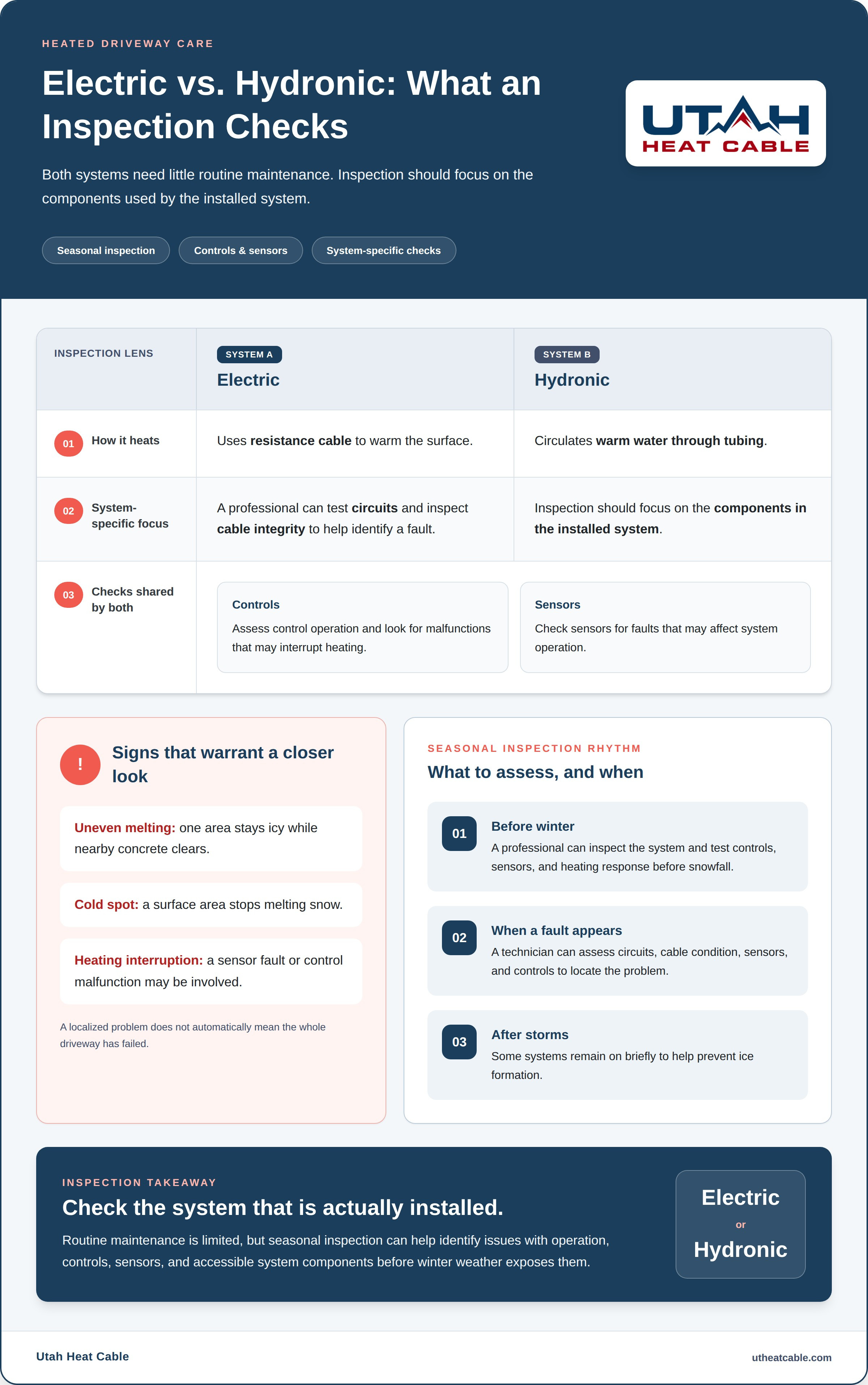
Heated driveways need little routine maintenance, but seasonal inspections can reveal faults before storms expose them. A professional visit can assess system operation, controls, sensors, and accessible components.
Maintenance and Inspection Tasks
An inspection can assess system operation and identify problems that may need repair. If one area stays icy while nearby concrete clears, a technician can test circuits and inspect cable integrity. Sensor faults or control malfunctions can also interrupt heating. These checks help locate a localized issue without assuming the whole driveway has failed. A professional can assess faults that may leave walking or driving surfaces icy.
Hydronic and Electric Maintenance
Hydronic systems circulate warm water through tubing, while electric systems use resistance cable. Both need little routine maintenance, but their components differ, so inspection should focus on the installed system. For electric heating, circuit testing and cable-integrity checks can help identify a fault. A professional can assess controls and sensors in either system and determine whether a localized repair is appropriate.
Winterization and Startup
Before winter, a professional can inspect the system and test its controls, sensors, and heating response. These checks can identify faults before snowfall makes a cold area more hazardous. After storms, some systems remain on briefly to help prevent ice formation. If heating fails, a technician can inspect circuits, cable condition, sensors, and controls to locate the problem.
Utah Heat Cable: Sidewalk and Driveway Deicing Systems
Utah Heat Cable installs Sidewalk and Driveway Deicing Systems for properties that need a planned approach to snow and ice. These electric radiant heat systems can target driveway and sidewalk areas where clear access matters. A site-specific layout helps match coverage to the surfaces and access points that need snow melting.
Utah Heat Cable’s De-Icing Services and Controller Options support different system needs. Roof Snow Retention can also help manage snow movement from the roof, complementing winter planning around the property. If you’re considering a new installation or need a professional assessment of an existing system, contact Utah Heat Cable.
Plan Ahead for the Next Winter
Make maintenance practical by planning around how your driveway is used and what an inspection finds. Keep a record of cold spots, control behavior, and past repairs to help a professional assess the system over time. For heated driveway maintenance in Northern Utah and along the Wasatch Front, addressing concerns before winter weather arrives can focus attention on the areas that matter most.
Utah Heat Cable installs Self Regulating Heat Cable, Constant Wattage Heat Cable, and de-icing systems for sidewalks and driveways. These services can help property owners planning a system or seeking professional support for snow and ice management. The right approach depends on the property and the work required.
A clear maintenance plan can help you prepare for the next winter.
Frequently Asked Questions
What does it cost to run a heated driveway during winter?
Operating cost depends on the heated area, how often the system runs, and insulation beneath the slab. System type matters, too: hydronic systems generally cost less to run than electric mats when heating larger areas. A smaller heated zone, such as tire tracks instead of the full driveway, also changes how much surface the system must heat.
How does the system know when to turn on?
Automatic systems use temperature and moisture sensors to detect conditions associated with snow and freezing, then activate when needed. For example, a sensor can respond as snowfall begins rather than waiting for a thick layer to accumulate. The control setup determines how the system responds to changing weather and when it shuts off as conditions improve.
What happens if part of the driveway stops heating?
A cold patch can point to a localized cable fault, sensor issue, or control malfunction. A technician can test circuits and inspect cable integrity to identify the affected area. If the fault is localized, repair may involve addressing that section instead of removing the entire driveway, focusing work where the system has failed.
How can a professional maintain a heated driveway in Northern Utah and the Wasatch Front?
For heated driveway maintenance in Northern Utah and the Wasatch Front, a professional can assess system operation and investigate uneven melting before winter use. Share useful details such as where snow remains, whether the issue affects the whole surface, and how the controls respond during a storm. These observations help direct inspection toward the relevant circuits, sensors, or controls.
What routine inspections and cleaning does a heated driveway need?
Heated driveways need little routine maintenance, but periodic inspections can assess controls, sensors, and heating response. Routine cleaning mainly concerns the paved surface; avoid work that could damage the embedded system. If a section melts more slowly or remains icy after snowfall, a professional inspection can help determine whether a system fault is involved.