
The obvious choice isn’t always the right one: the best heat cable for ski resort properties depends on more than overnight snowfall. Persistent snow, changing temperatures, roof design, and mountain conditions all influence where heat cable is needed and which system suits the building.
Resort teams already know that fresh snowfall is only part of the winter picture. This guide explains how recent snowfall, snow-base depth, forecasts, and site conditions help inform heat cable decisions, including how self-regulating and constant-wattage systems differ. You’ll also learn what a professional installation considers, which property details shape the system design, and how heat cable fits into a broader approach to managing roof ice and snow.
Key Takeaways
- Match self-regulating or constant-wattage cable to the building’s conditions and the areas that need protection.
- A professional assessment of electrical capacity, voltage, and circuit protection helps shape a suitable roof heat cable system.
- Installation planning should account for applicable building and electrical code requirements at the property.
- For freeze-prone pipes, Utah Heat Cable’s pipe heat cables offer a focused solution alongside roof and de-icing systems.
How does a professional compare self-regulating and constant-wattage heat cables for resort buildings?
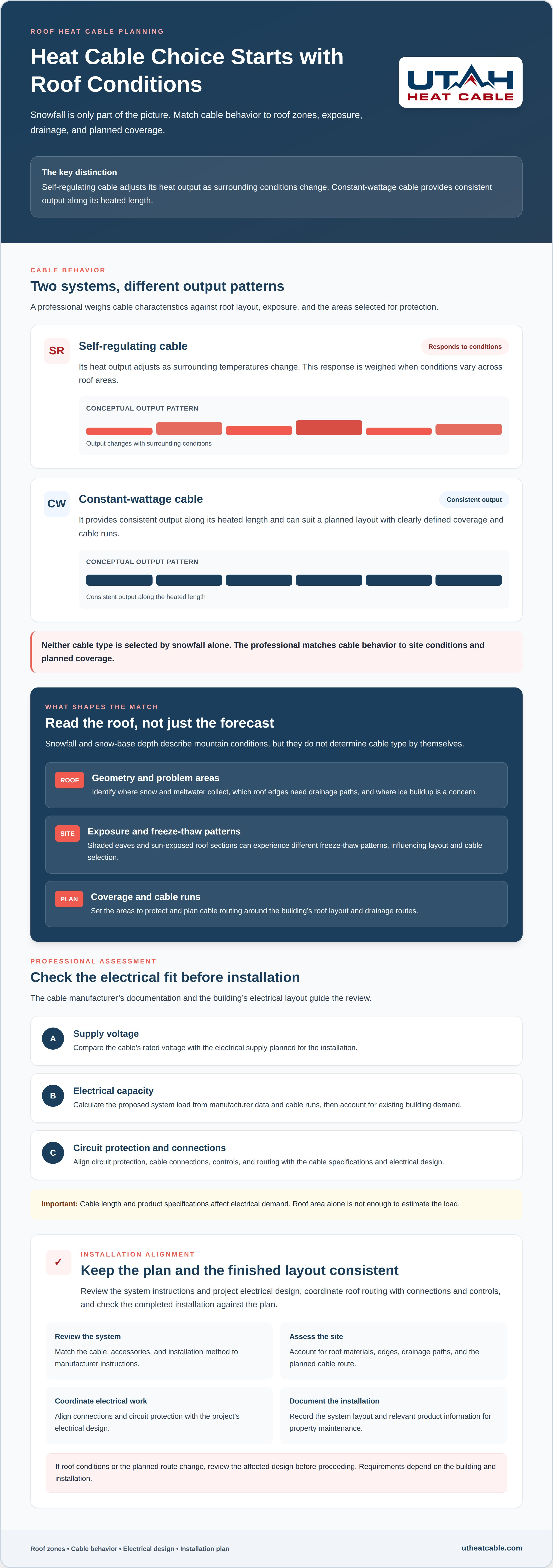
A professional matches each cable’s response to temperature with the roof zones that need protection. Self-regulating cable adjusts its heat output as surrounding conditions change, while constant-wattage cable provides consistent output along its heated length. The best heat cable for ski resort properties depends on roof layout, exposure, and planned coverage, not snowfall alone.
Snowfall and snow-base depth help describe mountain conditions, but they don’t determine the cable type by themselves. A professional assesses where snow and meltwater collect, which roof edges need drainage paths, and how conditions vary across the building. A shaded eave and a sun-exposed roof section, for example, can have different freeze-thaw patterns that influence system layout and cable selection.
- Self-regulating cable: Its output responds to surrounding temperatures, a characteristic weighed when conditions vary across roof areas.
- Constant-wattage cable: Its consistent output can suit a planned layout with clearly defined coverage and cable runs.
- Either type: The professional assesses roof geometry, drainage routes, exposure, and areas where ice buildup is a concern.
For a Heber resort building, assessment starts with the roof and its problem areas, then matches cable characteristics to the design. The best heat cable for ski resort properties suits the site conditions and planned coverage. Installation and electrical connections are also part of the system plan.
How does a professional assess the electrical capacity, voltage, and circuit protection roof heat cables require?
A professional starts with the cable manufacturer’s documentation and the building’s electrical layout. The cable’s rated voltage must match the planned supply, and its specified electrical load helps determine whether the existing service and circuits can support the installation. For a Park City lodge, the assessment also accounts for other equipment using that electrical capacity.
Next, the professional maps the proposed cable runs and totals their documented electrical loads. Cable length and product specifications affect demand, so an estimate based on roof area alone can miss important details. The review establishes the intended circuit, available capacity, and whether the layout fits the building’s electrical infrastructure.
- Supply voltage: Compare the cable’s rated voltage with the electrical supply serving the planned installation.
- Electrical capacity: Calculate the proposed system’s load from manufacturer data, then account for existing building demand.
- Circuit protection: Select protection appropriate to the cable specifications, circuit design, and installation requirements.
For a resort with separate roof sections, each planned run needs evaluation rather than an assumption that one circuit suits every area. The design also coordinates cable connections, controls, and routing. This helps create a practical installation plan that fits the existing electrical infrastructure.
Before work proceeds, the professional resolves any mismatch between the cable rating, supply voltage, calculated load, or available circuit capacity. If the property needs a tailored installation assessment, request a heat cable project review.
How does a professional ensure heat cable installation in ski resort areas meets building and electrical code requirements?
For a Park City property, code-conscious planning begins with the building, roof, and proposed cable system. Before work starts, a professional reviews the cable’s installation instructions and the project’s electrical design. Applicable requirements can vary with the property and installation, so the design must be assessed for the specific site.
The installer coordinates the roof layout with electrical connections and existing building systems. For example, a cable route across an eave needs to be planned alongside its connection point, controls, and circuit protection. Coordinating these details helps prevent the field layout from conflicting with the electrical design.
- Review the system: Match the cable, accessories, and installation method to the manufacturer’s instructions.
- Assess the site: Account for roof materials, edges, drainage paths, and the planned cable route.
- Coordinate electrical work: Align connections and circuit protection with the project’s electrical design.
- Document the installation: Record the system layout and relevant product information for property maintenance.
At a Heber lodge, a roof with several drainage zones may need a separate cable layout for each area. The design, product instructions, and installation details should stay aligned throughout the work. If roof conditions or the planned route change, review the affected design before proceeding.
Final checks compare the installed layout with the project plan and product instructions, giving property managers a clear record of cable placement, connections, and system components. Utah Heat Cable is a licensed electrical contractor and coordinates installation with the requirements for the specific building.
Requirements depend on the building and installation. The cable system, accessories, and installation method should follow the manufacturer’s instructions and project electrical design. Coordinate the roof layout, connections, controls, and circuit protection, then check the completed installation against the approved plan and product instructions.
Utah Heat Cable: Pipe heat cables
Utah Heat Cable installs pipe heat cables for resort properties with exposed or vulnerable piping. Roof systems address ice buildup along roof edges; pipe heat cables help protect pipes from freezing conditions. They can be used in service areas, utility spaces, or other locations where cold exposure threatens plumbing.
The right approach depends on pipe location, surrounding conditions, and system design. Utah Heat Cable also installs self-regulating and constant-wattage heat cable and provides de-icing services. A professional can assess the application that fits the property and how it relates to roof or ground-level snow and ice concerns.
If you’re planning winter protection for pipes or other areas of a Northern Utah property, contact Utah Heat Cable to discuss the project.
Plan Winter Protection Around Your Property
The best heat cable for ski resort properties is selected for the building’s conditions and installation needs. During planning, identify the areas that need attention, how the system will fit the property, and what the installer needs to design the work. This gives your team a practical next step before winter weather adds pressure to roofs, pipes, and access areas.
Utah Heat Cable installs Self Regulating Heat Cable and Constant Wattage Heat Cable, and provides De-Icing Services. If you’re planning protection for a resort property in Northern Utah or along the Wasatch Front, request a free consultation and quote to discuss your site and system needs.
Planning ahead gives your property a clearer approach to winter conditions.
Frequently Asked Questions
How does a professional determine the right type of heat cable for ski resort property roofs and gutters?
A professional matches cable type to roof material, drainage layout, and protection goals. Constant Wattage Heat Cable is designed for shingle roofs; Self-Regulating Heat Cable is compatible with metal, shingle, wood-shake, and membrane roofs, including TPO, EPDM, PVC, and rolled roofing. In Utah’s mountain settings, roof exposure and snowmelt paths also shape the planned coverage.
How can property owners verify that heat cables are rated for extreme cold, snow, and ice conditions?
Review the manufacturer’s documentation for operating conditions, approved roof materials, voltage, and installation requirements. Have the installer match those specifications to the property’s exposure and cable location, such as a shaded gutter or wind-exposed roof edge. Mountain weather varies across Utah, so documented product limits are more useful than a broad “winter-ready” claim.
How should commercial ski resort property owners compare heat cable brands and models with a qualified installer?
Compare documented roof compatibility, voltage, installation method, warranty, and how each cable fits the site layout. The installer can explain these tradeoffs in light of the resort’s roof materials and project requirements. Utah Heat Cable installs Drexan® Heat Cable in self-regulating and constant-wattage options, helping Utah property teams assess the system against the building’s needs.
How should heat cable be sized and installed on roofs, gutters, downspouts, and valleys?
A professional plans cable runs around roof geometry, drainage routes, exposure, and areas prone to ice buildup. The design should follow manufacturer documentation and account for roof materials, edges, connections, controls, and circuit protection.
What are the risks of heat cable failure, fire, roof damage, or ice dams, and how can they be prevented?
To address ice buildup, plan coverage around meltwater paths and roof drainage zones. Follow the manufacturer’s instructions, coordinate connections and circuit protection with the electrical design, and check the completed installation against the approved plan.