
A free estimate isn’t automatic when you hire an electrician in Salt Lake City. Some electricians provide estimates at no charge, while others may charge for a visit involving troubleshooting or detailed planning. Before work begins, make sure you understand what the estimate covers.
It’s reasonable to want a clear picture of the work and its cost before deciding. This guide explains what electricians do, which skills and safety codes matter, and what to know about estimates for heat cable systems.
You’ll also learn how electrical work is planned and why code-aware installation matters when winter weather puts roofs, walkways, and driveways at risk.
Key Takeaways
- Estimate policies differ, so learn what an estimate covers and whether troubleshooting or planning is included.
- Electrical code knowledge, safety practices, blueprint reading, and troubleshooting are essential skills for careful electrical work.
- Know which warning signs make DIY work risky, and when a qualified professional should handle the job.
- Heat cable and de-icing systems can help address winter buildup on roofs, sidewalks, and driveways.
Electrical codes and safety
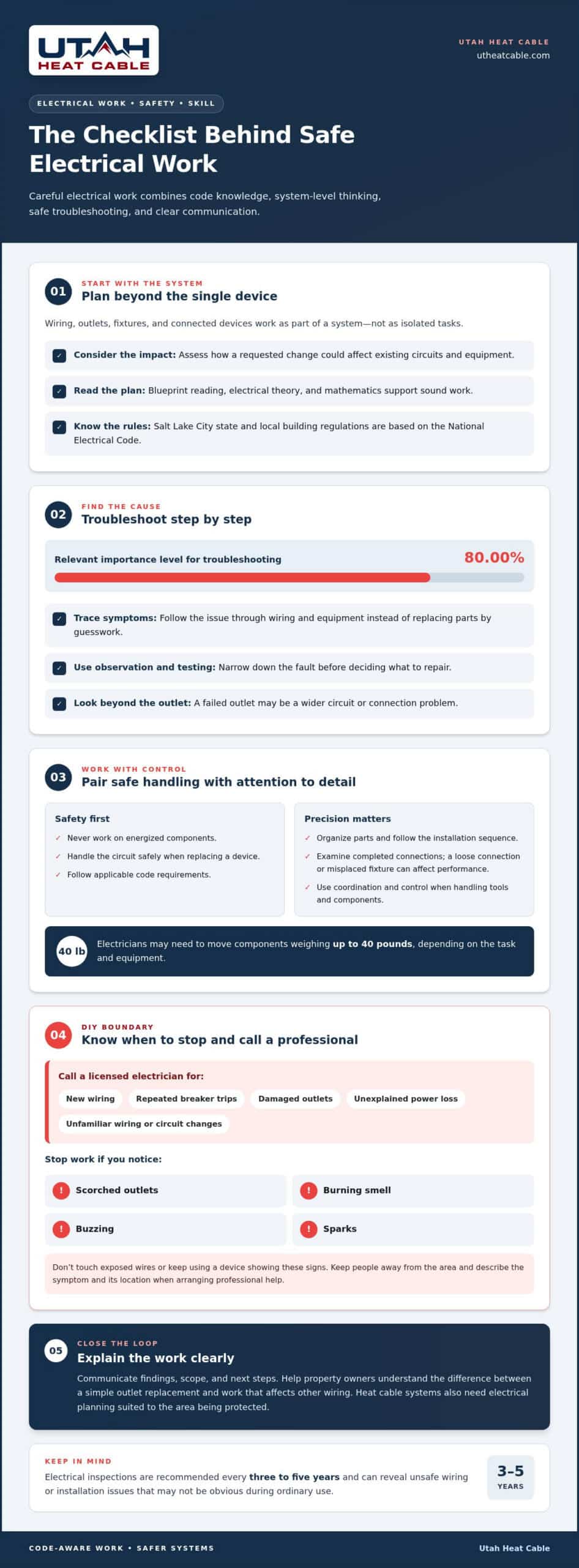
Electrical codes guide the safe installation and maintenance of wiring, circuits, lighting, and devices. In Salt Lake City, state and local building regulations are based on the National Electrical Code.
Electrical Codes
Electrical codes set standards for installing and maintaining electrical systems. State and local building regulations are based on the National Electrical Code, while licenses are issued by individual states rather than through a nationwide system. Apprentices must work under direct supervision. Their technical instruction includes electrical theory, blueprint reading, mathematics, code requirements, safety, and first aid.
Code knowledge helps an electrician assess a circuit change, device replacement, or lighting installation. Electrical inspections are recommended every three to five years. An inspection can reveal problems that aren’t obvious during ordinary use, such as unsafe wiring or installation issues.
DIY Electrical Risks
DIY electrical work means changing or repairing wiring, circuits, or devices without professional training. A mistaken connection can cause shock, damage equipment, or create a fire risk. Electrical workers, including electricians, accounted for 34% of construction-trade-worker electrocutions in the United States between 1992 and 2003.
Call an electrician about unfamiliar wiring, circuit changes, or troubleshooting beyond a visual check. Never work on energized components. Safety training matters: replacing a device requires safe handling of the circuit and compliance with applicable codes.
Demand also underscores the value of trained, code-aware work. The U.S. Bureau of Labor Statistics projects U.S. employment of electricians to grow 9 percent from 2025 to 2035. The U.S. Bureau of Labor Statistics projects 72,700 openings per year for electricians in the United States, on average, over the decade. Training programs build the knowledge needed to read plans, apply code requirements, and work safely around electrical systems.
Essential skills and abilities
An electrician applies practical knowledge to install and assess electrical systems, including wiring, outlets, fixtures, and connected devices. Each component must work as part of a system, not as an isolated task. Before starting, the electrician considers how a requested change could affect existing circuits and equipment.
Troubleshooting is the step-by-step process of locating an electrical fault and its cause. It means tracing symptoms through wiring and equipment instead of replacing parts by guesswork. Among electrician skill areas, troubleshooting has an 80.00% relevant importance level. That skill helps distinguish a failed outlet from a wider circuit or connection problem. Contractors use observation and testing to narrow the fault before deciding what to repair.
Physical capability is the strength and coordination needed to handle tools and components safely. Electricians need enough physical strength to handle tools and components safely. Work in buildings may also require reaching confined areas, maintaining balance, and controlling tools precisely. Attention to detail matters: a loose connection or misplaced fixture can affect system performance. Careful work includes organizing parts, following the installation sequence, and examining completed connections.
Clear communication means explaining the work, findings, and next steps. An electrician may need to distinguish a simple outlet replacement from work that affects other wiring, helping property owners understand the scope. Heat cable systems also need electrical planning suited to the area being protected. For ice-prone pavement, explore sidewalk and driveway deicing systems.
Electricians may also need to move heavy components weighing up to 40 pounds, depending on the demands of a task and the equipment involved.
What are the risks of DIY electrical work and when should I call an electrician?
DIY electrical work means changing, repairing, or installing wiring without professional training. A mistaken connection can cause electric shock, damage equipment, or create a fire hazard. Even removing an outlet cover or replacing a fixture can expose dangerous conductors. Risks increase when work reaches inside a wall, changes a circuit, or involves unfamiliar wiring. Using a tool or tester incorrectly can also create a false sense of safety.
Call a licensed electrician for new wiring, repeated breaker trips, damaged outlets, or unexplained power loss. These symptoms may point to a fault beyond the visible device. Replacing a breaker without finding why it trips, for example, may leave the underlying problem unresolved. Because electrical components connect across a building, a fault in one location can affect another. A trained professional can assess the circuit and determine an appropriate repair.
Stop work if you see scorched outlets, smell burning, hear buzzing, or notice sparks. Don’t touch exposed wires or keep using a device showing these signs. Keep people away from the area, and describe the symptom and its location when arranging professional help. A flickering light in one room differs from power loss across several rooms, so clear details help explain the issue.
For outdoor systems, get professional help before altering wiring or controls. Moisture, weather exposure, and connections to the building’s electrical system all affect safe installation. Review winter electrical planning guidance before deciding how to address recurring ice.
Training is substantial: Typical Canadian electrician apprenticeship programs consist of 80-90% supervised hands-on work and 10-20% classroom training. When hiring an electrician in Fort Worth, Texas, customers can check credentials and verify a license through the Texas Department of Licensing and Regulation website. In the United Kingdom, Part P of the Building Regulations outlines most regulations covering electrical work in dwellings.
Utah Heat Cable: De-Icing Services
Utah Heat Cable provides roof de-icing services for properties with recurring winter ice and snow buildup. For slippery sidewalks or driveways, the company designs and installs sidewalk and driveway deicing systems. Roof snow retention systems help manage snow movement, while controller options support system operation.
The right solution depends on where ice forms and which surface needs protection. Note the trouble spots around your property, such as a frequently icy path or driveway, and describe them when planning a system. Contact Utah Heat Cable to discuss heat cable or de-icing options.
Plan Ahead for a Safer Winter
Before winter returns, identify where snow and ice cause recurring maintenance concerns. This practical first step clarifies which parts of your property need attention and what to discuss during planning. An electrician handles electrical work; a dedicated de-icing system is designed to manage ice around the property.
Utah Heat Cable offers Self Regulating Heat Cable, Constant Wattage Heat Cable, and De-Icing Services. The suitable approach depends on the surface and the protection you need, so start with the trouble spots you want to address. Explore Utah Heat Cable’s solutions and take a considered step toward preparing your property for winter.
Frequently Asked Questions
Do electricians do free estimates?
Electricians differ on whether estimates are free or whether assessment and troubleshooting are charged. Utah Heat Cable offers a free consultation and quote for its heat cable and de-icing work. Explain whether you’re considering roof protection or snow melting for a walkway so the discussion can focus on the areas you want addressed.
What does an electrician do?
An electrician installs, maintains, and repairs electrical systems in homes and other buildings. For example, the work may involve tracing a fault affecting several rooms or connecting equipment to a building’s electrical supply. For a heat-cable project, electrical planning is part of a larger solution for managing ice and snow buildup around a property.
How do I get an estimate and hire an electrician?
Start by describing the property, the work you’re considering, and the problem you want to solve. For a heat cable or de-icing quote, identify the roof, walkway, or driveway area and explain where ice forms. Utah Heat Cable is a licensed electrical contractor serving Utah, Idaho, and Wyoming. Its free consultation and quote are a practical next step for Utah property owners considering these systems.